
In The Media
As one of Australia's leading real estate analysts,
Tim Graham is regularly called upon for commentary and insights into the Australian Real Estate Market
In The Media
Realestate.com.au 6th October 2026
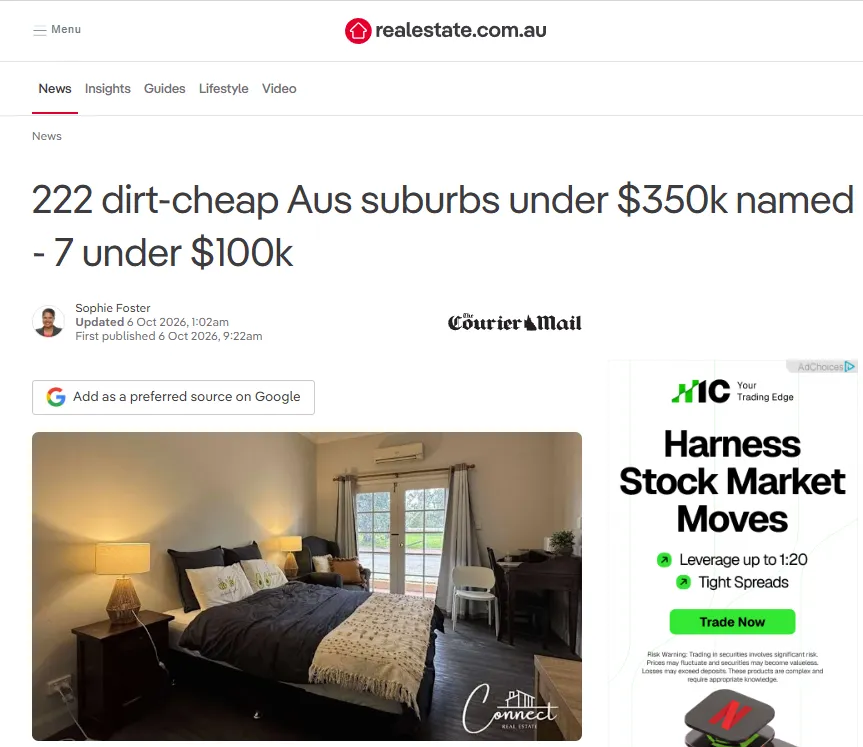
Australia’s brutal capital city home values may be out of reach for millions, but a tiny group of regional strongholds is offering dirt-cheap property as low as $50k – here’s what experts say.
Exclusive national real estate trends data reveals just 222 unique suburbs remain across Australia where homes can still be snagged for $350,000 or less – with the bottom-dollar floor sitting in an agricultural border town where houses cost less than a deposit on a Sydney parking space.
Topping the nation’s bargain basement charts is Boggabilla in NSW’s New England region, where the median house price sits at an astounding $50,000 – though that figure comes off just 11 sales over the past year.
It leads a select group of seven Australian suburbs where homes trade for under $100,000 – often off paper-thin transaction volumes – including Coffs Harbour units in Seelands ($65,000 across 10 sales), Far West NSW farming town Gulargambone ($66,000 across 16 sales), and South Australia’s famous opal-mining dugouts in Coober Pedy ($68,750 across 66 sales) and Andamooka ($70,000 across 13 sales).
The Top 10 cheapest suburbs in Australia
Boggabilla, NSW (Houses) – $50,000 (Yield: 9.7pc)
Seelands, NSW (Units) – $65,000 (Yield: 5.4pc)
Gulargambone, NSW (Houses) – $66,000 (Yield: 13.9pc)
Coober Pedy, SA (Houses) – $68,750 (Yield: 12.2pc | 66 sales)
Andamooka, SA (Houses) – $70,000 (Yield: 11.4pc)
Brewarrina, NSW (Houses) – $72,500 (Yield: 14.4pc)
Collarenebri, NSW (Houses) – $74,000 (Yield: 16.1pc)
Southern Cross, WA (Houses) – $120,000 (Yield: 8.4pc)
Norseman, WA (Houses) – $122,500 (Yield: 10.4pc)
Walgett, NSW (Houses) – $132,000 (Yield: 16.5pc)
Across the border in Queensland, the ultimate affordability floor starts in the Outback town of Cunnamulla ($145,000 across 18 sales), while Victoria’s cheapest dirt sits in the Mallee grain hub of Minyip ($173,500 across 10 sales). Tasmania’s lowest entry point is West Coast mining hub Rosebery ($202,500 across 34 sales), while the Northern Territory kicks off at Dundee Forest ($195,000 across 13 sales).
For yield-hungry property investors facing skyrocketing interest rates, these cheap regional markets look like an absolute goldmine on paper.
Towns like Walgett (NSW) and Collarenebri (NSW) are pumping out jaw-dropping gross rental yields as high as 16.5pc and 16.1pc, while Western Australia’s iron ore town Newman offers 14.3pc yields on $300,000 units.
In Queensland’s resource heartland, mining hotspots like Dysart ($250,000 median) and Middlemount ($180,000 unit median) generate massive rental returns.
However, leading national property analyst and Hotspotting Managing Director Tim Graham warns that chasing extreme yields in single-industry or remote markets can be a dangerous yield trap.
“The sub-$500,000 market won’t disappear overnight, but the quality end of it will,” Mr Graham said. “I’d expect the number of sub-$500k suburbs to be pushed into double digits over the next three to five years, with the genuinely investable markets disappearing first.”
“What tends to be left behind are the small, remote or highly specialised markets where prices are cheap for a reason.”
Cheapest entry suburb in every state
NSW: Boggabilla – $50,000
SA: Coober Pedy – $68,750
WA: Southern Cross – $120,000
QLD: Cunnamulla – $145,000
VIC: Minyip – $173,500
NT: Dundee Forest / Mount Johns – $195,000
TAS: Rosebery – $202,500
Mr Graham warned buyers against confusing a temporary mining boom or high rental return with long-term capital growth potential.
In single-industry towns like Middlemount (where coal mining accounts for over 50pc of employed residents) or Dysart (44pc coal mining), high yields can disappear overnight if global commodity markets or employment models shift.
“The yield can look spectacular right up until the employer, commodity price or workforce model changes,” Mr Graham warned. “Cheap property in a one-industry town is not the same thing as undervalued property in a diversified economy.”
“The lesson from the last mining boom is that a 10 or 12 per cent yield can sometimes be a risk premium, not a bargain. If the local economy is concentrated, the investor has to be paid more for taking that risk.”
Even in agricultural outback towns like Cunnamulla, Mr Graham urged buyers to focus on who will actually buy the house when it comes time to sell.
“At $145,000 or $180,000, the most important question isn’t ‘how cheap can I buy it?’” Mr Graham said. “It’s ‘who is going to buy it from me in seven or ten years?’ Entry price matters, but exit liquidity matters just as much.”
Instead of taking a gamble on single-industry mining towns or ultra-remote outback pockets, Mr Graham urged bargain hunters to look for diversified regional hubs backed by health, education, defence, and infrastructure.
“If I had $500,000 and one shot, I’d rather own a good established house in Rockhampton than chase a double-digit yield in a one-industry town,” Mr Graham revealed. “The price gets you in the door, but the diverse economy gives you a reason for future demand.”
He also pointed to regional powerhouses like Townsville over holiday hubs like Port Douglas. While Port Douglas units ($370,000) boast headline yields of 7.3pc, Townsville units ($500,000 median) are backed by massive institutional infrastructure, including Defence, healthcare, port expansions, and logistics.
“If you asked me to choose between the two, I’d take Townsville,” Mr Graham said. “Port Douglas can give you an excellent headline yield, but Townsville gives me greater confidence in the depth and diversity of the demand sitting underneath the property market.”
“Cheap should be the filter, not the investment thesis,” Mr Graham advised. “The opportunity is to find affordability plus rising demand, employment, infrastructure and tight rental conditions, because that is what gives a cheap market the potential to become a valuable one.”
AUSTRALIA’S SUB-$350k SUBURBS NAMED:
NEW SOUTH WALES (53 Suburbs)
Boggabilla (Houses) — $50,000 (11 sales)
Seelands (Units) — $65,000 (10 sales)
Gulargambone (Houses) — $66,000 (16 sales)
Brewarrina (Houses) — $72,500 (15 sales)
Collarenebri (Houses) — $74,000 (15 sales)
Walgett (Houses) — $132,000 (17 sales)
Thurgoona (Units) — $145,000 (13 sales)
Ungarie (Houses) — $159,950 (16 sales)
Binnaway (Houses) — $169,000 (12 sales)
Lake Cargelligo (Houses) — $180,000 (11 sales)
Ardlethan (Houses) — $181,000 (14 sales)
Moree (Units) — $182,500 (10 sales)
Coonamble (Houses) — $198,000 (59 sales)
Mungindi (Houses) — $200,000 (11 sales)
Bourke (Houses) – $205,000 (30 sales)
Moulamein (Houses) – $207,000 (15 sales)
Ashford (Houses) – $210,000 (24 sales)
Mendooran (Houses) – $217,500 (10 sales)
Nyngan (Houses) – $225,000 (38 sales)
Trundle (Houses) – $226,000 (16 sales)
Urana (Houses) – $239,500 (10 sales)
Broken Hill (Houses) – $250,000 (555 sales)
Jerilderie (Houses) – $250,000 (21 sales)
Lightning Ridge (Houses) – $250,000 (22 sales)
Baradine (Houses) – $254,000 (15 sales)
Whitton (Houses) – $260,000 (10 sales)
Bundarra (Houses) – $272,500 (10 sales)
Trangie (Houses) – $280,000 (21 sales)
Warren (Houses) – $280,000 (33 sales)
Peak Hill (Houses) – $285,000 (17 sales)
Berrigan (Houses) – $290,000 (26 sales)
Barraba (Houses) – $300,000 (41 sales)
Deepwater (Houses) – $300,000 (18 sales)
Deniliquin (Units) – $300,000 (20 sales)
Koorawatha (Houses) – $300,000 (15 sales)
Mathoura (Houses) – $300,000 (17 sales)
Warialda (Houses) – $300,000 (41 sales)
Cobar (Houses) – $310,000 (93 sales)
Hay (Houses) – $310,000 (39 sales)
Coonabarabran (Houses) – $320,000 (79 sales)
Dareton (Houses) – $320,000 (13 sales)
Wee Waa (Houses) – $322,000 (42 sales)
Delungra (Houses) – $322,500 (10 sales)
South Tamworth (Units) – $327,500 (26 sales)
Inverell (Units) – $329,000 (13 sales)
Barooga (Units) – $330,000 (12 sales)
Moree (Houses) – $330,000 (195 sales)
North Albury (Units) – $331,500 (24 sales)
Coleambally (Houses) – $337,500 (16 sales)
Leeton (Units) – $345,000 (25 sales)
Gilgandra (Houses) – $345,500 (57 sales)
Wingham (Units) – $349,000 (12 sales)
Darlington Point (Houses) – $350,000 (29 sales)
NORTHERN TERRITORY (11 Suburbs)
Dundee Forest (Houses) – $195,000 (13 sales)
Mount Johns (Units) – $195,000 (12 sales)
Tumbling Waters (Houses) – $250,000 (19 sales)
The Gap (Units) – $262,500 (26 sales)
Tennant Creek (Houses) – $270,000 (48 sales)
Larapinta (Units) – $305,000 (20 sales)
Sadadeen (Units) – $305,000 (29 sales)
Berry Springs (Units) – $315,000 (19 sales)
Gillen (Units) – $325,000 (29 sales)
Katherine South (Houses) – $330,000 (20 sales)
Stuart (Units) – $332,000 (12 sales)
QUEENSLAND (60 Suburbs)
Cunnamulla (Houses) – $145,000 (18 sales)
Quilpie (Houses) – $162,500 (16 sales)
Middlemount (Units) – $180,000 (13 sales)
Injune (Houses) – $184,500 (12 sales)
Sapphire Central (Houses) – $197,500 (14 sales)
Tara (Houses) – $205,000 (47 sales)
Paget (Units) – $212,500 (10 sales)
Winton (Houses) – $212,500 (12 sales)
Bucasia (Units) – $218,500 (24 sales)
Clermont (Units) – $220,000 (10 sales)
Dolphin Heads (Units) – $222,500 (20 sales)
Haliday Bay (Units) – $225,000 (14 sales)
Mitchell (Houses) – $225,000 (19 sales)
Mount Garnet (Houses) – $235,000 (14 sales)
Scottville (Houses) – $235,000 (15 sales)
Woree (Units) – $240,000 (73 sales)
Baralaba (Houses) – $245,000 (13 sales)
Charleville (Houses) – $245,000 (67 sales)
Menzies (Houses) – $246,000 (14 sales)
Dysart (Houses) – $250,000 (104 sales)
Townview (Houses) – $250,000 (45 sales)
Collinsville (Houses) – $255,000 (44 sales)
Hughenden (Houses) – $255,000 (20 sales)
Winston (Houses) – $258,000 (16 sales)
Pioneer (Houses) – $260,000 (33 sales)
Julia Creek (Houses) – $262,500 (12 sales)
Taroom (Houses) – $265,000 (12 sales)
Wandoan (Houses) – $265,000 (19 sales)
Giru (Houses) – $266,500 (12 sales)
Blackall (Houses) – $271,250 (28 sales)
Cloncurry (Houses) – $280,000 (47 sales)
Happy Valley (Houses) – $280,000 (21 sales)
Koongal (Units) – $280,000 (13 sales)
Ayr (Units) – $285,000 (17 sales)
Karumba (Houses) – $290,000 (15 sales)
Moura (Houses) – $290,000 (48 sales)
Parkside (Houses) – $293,000 (38 sales)
Soldiers Hill (Houses) – $295,000 (53 sales)
Sunset (Houses) – $297,000 (51 sales)
Barcaldine (Houses) – $297,500 (28 sales)
Eidsvold (Houses) – $300,000 (11 sales)
South Johnstone (Houses) – $300,000 (11 sales)
Blackwater (Houses) – $305,000 (145 sales)
Mornington (Houses) – $305,000 (29 sales)
South Gladstone (Units) – $315,000 (73 sales)
The Gap (Houses) – $320,000 (15 sales)
Wongaling Beach (Units) – $321,950 (20 sales)
Mundubbera (Houses) – $327,500 (18 sales)
Cardwell (Units) – $330,000 (19 sales)
Dimbulah (Houses) – $332,500 (14 sales)
Clermont (Houses) – $335,000 (73 sales)
Jandowae (Houses) – $340,000 (24 sales)
Trunding (Units) – $342,500 (12 sales)
Monto (Houses) – $345,000 (39 sales)
Rosslyn (Units) – $345,000 (12 sales)
Texas (Houses) – $345,000 (14 sales)
Queenton (Houses) – $346,500 (20 sales)
Kingaroy (Units) – $346,600 (19 sales)
Ingham (Houses) – $350,000 (95 sales)
Miles (Units) – $350,000 (11 sales)
SOUTH AUSTRALIA (27 Suburbs)
Coober Pedy (Houses) – $68,750 (66 sales)
Andamooka (Houses) – $70,000 (13 sales)
Whyalla Playford (Units) – $205,000 (11 sales)
Goolwa (Units) – $210,000 (15 sales)
Whyalla (Units) – $211,000 (10 sales)
Kimba (Houses) – $242,500 (14 sales)
Peterborough (Houses) – $245,000 (45 sales)
Lameroo (Houses) – $250,000 (11 sales)
Cleve (Houses) – $257,500 (16 sales)
Roxby Downs (Houses) – $265,000 (126 sales)
Wirrabara (Houses) – $285,000 (13 sales)
Whyalla Norrie (Houses) – $290,000 (158 sales)
Whyalla Stuart (Houses) – $300,000 (176 sales)
Nangwarry (Houses) – $307,000 (17 sales)
Wilmington (Houses) – $307,500 (10 sales)
Gladstone (Houses) – $308,000 (12 sales)
Keith (Houses) – $312,500 (27 sales)
Port Pirie West (Houses) – $315,000 (69 sales)
Quorn (Houses) – $315,000 (15 sales)
Booleroo Centre (Houses) – $322,500 (10 sales)
Solomontown (Houses) – $330,000 (44 sales)
Port Augusta (Houses) – $340,000 (138 sales)
Millicent (Units) – $342,000 (10 sales)
Karoonda (Houses) – $342,500 (10 sales)
Fisherman Bay (Houses) – $345,000 (14 sales)
Balaklava (Units) – $349,000 (18 sales)
Cowell (Houses) – $350,000 (15 sales)
TASMANIA (5 Suburbs)
Rosebery (Houses) – $202,500 (34 sales)
Zeehan (Houses) – $210,000 (26 sales)
Queenstown (Houses) – $220,000 (68 sales)
Burnie (Units) – $320,000 (11 sales)
Strahan (Houses) – $342,500 (22 sales)
VICTORIA (50 Suburbs)
Minyip (Houses) – $173,500 (10 sales)
Jeparit (Houses) – $183,000 (15 sales)
Rainbow (Houses) – $190,000 (11 sales)
Korong Vale (Houses) – $205,000 (11 sales)
Wycheproof (Houses) – $216,500 (12 sales)
Kaniva (Houses) – $230,000 (16 sales)
Birchip (Houses) – $238,000 (14 sales)
Sea Lake (Houses) – $250,000 (19 sales)
Willaura (Houses) – $252,250 (10 sales)
Pyramid Hill (Houses) – $260,000 (12 sales)
Glenthompson (Houses) – $265,000 (10 sales)
Portland (Units) – $270,000 (34 sales)
Murtoa (Houses) – $276,000 (19 sales)
Nhill (Houses) – $278,500 (32 sales)
Hamilton (Units) – $290,000 (21 sales)
Ouyen (Houses) – $291,500 (20 sales)
Mooroopna (Units) – $292,500 (38 sales)
Natimuk (Houses) – $294,500 (12 sales)
Warracknabeal (Houses) – $299,000 (57 sales)
Dartmoor (Houses) – $302,500 (10 sales)
Moe (Units) – $306,500 (76 sales)
Donald (Houses) – $310,000 (30 sales)
Newborough (Units) – $310,000 (12 sales)
St Arnaud (Houses) – $310,000 (41 sales)
Albion (Units) – $315,000 (69 sales)
Dimboola (Houses) – $317,500 (36 sales)
Nyah West (Houses) – $317,500 (12 sales)
Casterton (Houses) – $318,500 (62 sales)
Coleraine (Houses) – $320,000 (17 sales)
Maryborough (Units) – $320,000 (34 sales)
Paradise Beach (Houses) – $320,000 (11 sales)
Penshurst (Houses) – $320,000 (11 sales)
Edenhope (Houses) – $322,500 (20 sales)
Seymour (Units) – $322,500 (16 sales)
Numurkah (Units) – $323,000 (15 sales)
Cobram (Units) – $327,500 (20 sales)
Gardenvale (Units) – $328,500 (28 sales)
Charlton (Houses) – $331,000 (35 sales)
Carlton (Units) – $331,503 (366 sales)
Tatura (Units) – $332,500 (16 sales)
Nyah (Houses) – $338,000 (11 sales)
Ararat (Units) – $342,500 (32 sales)
Morwell (Units) – $342,500 (66 sales)
Kerang (Houses) – $345,000 (94 sales)
Benalla (Units) – $350,000 (37 sales)
Corryong (Houses) – $350,000 (29 sales)
Lake Boga (Houses) – $350,000 (17 sales)
Loch Sport (Houses) – $350,000 (91 sales)
Talbot (Houses) – $350,000 (11 sales)
Wedderburn (Houses) – $350,000 (28 sales)
WESTERN AUSTRALIA (19 Suburbs)
Southern Cross (Houses) – $120,000 (20 sales)
Norseman (Houses) – $122,500 (24 sales)
Kambalda East (Houses) – $200,000 (25 sales)
Gnowangerup (Houses) – $215,000 (19 sales)
Coolgardie (Houses) – $237,500 (16 sales)
Leonora (Houses) – $240,000 (10 sales)
Carnamah (Houses) – $245,000 (13 sales)
Kambalda West (Houses) – $245,000 (72 sales)
Morgantown (Houses) – $280,000 (13 sales)
Bruce Rock (Houses) – $287,500 (14 sales)
Withers (Units) – $289,000 (12 sales)
Ravensthorpe (Houses) – $289,500 (10 sales)
Newman (Units) – $300,000 (13 sales)
South Carnarvon (Houses) – $300,000 (21 sales)
Merredin (Houses) – $315,000 (74 sales)
Quairading (Houses) – $315,000 (12 sales)
Boulder (Units) – $320,000 (25 sales)
Moora (Houses) – $330,000 (32 sales)
South Kalgoorlie (Units) – $345,000 (11 sales)
Realestate.com.au 4th October 2026

Desperate buyers are swarming Queensland’s last 180 sub-$500k strongholds – as an expert warns the cheap property clock is officially ticking
Latest realestate.com.au market trends data reveals just 180 suburbs now remain across Queensland where homes can be purchased at medians of $500,000 or less – but leading property analyst and Hotspotting head Tim Graham warns the clock is ticking on cheap property.
He predicts the pool of sub-$500k options will shrink into double digits within three to five years as population growth and supply shortages bite.
At the extreme bottom end – where Outback towns like Cunnamulla ($145,000) and Quilpie ($162,500) top affordability charts – Mr Graham urged buyers to focus on resale reality.
“At $145,000, the most important question isn’t ‘how cheap can I buy it?’ It’s ‘who is going to buy it from you in seven or ten years?’ Entry price matters, but exit liquidity matters just as much,” Mr Graham said.
“Cheap should be the filter, not the investment thesis, because that gives a cheap market potential to become valuable.”
Some of the state’s cheapest prices are in single-industry mining towns like Moranbah ($421,250) and Dysart ($250,000) that generate massive volume off high yields – but Mr Graham cautioned against concentration risk in such places.
“The yield can look spectacular right up until the employer, commodity price, or workforce model changes,” he warned. “Cheap property in a one-industry town is not the same thing as undervalued property in a diversified economy.”
Brisbane Mainland’s Five Cheapest Medians
1. Fortitude Valley Unit $705,000
2. Bowen Hills House $714,250
3. Bowen Hills Unit $720,000
4. Alexandra Hills Unit $720,000
5. Macgregor Unit $725,000
For Brisbane buyers, that sub-$500k entry point has already vanished – with no medians priced under $700,000 on the mainland.
The capital’s cheapest house options are restricted strictly to the Southern Moreton Bay Islands, led by Russell Island ($510,000 median), Lamb Island ($517,500) and Macleay Island ($540,000).
While 50-cent public transport fares make island living look tempting, Mr Graham warned buyers to have their eyes open to reality there.
“The islands can be a genuine lifestyle affordability solution, but the discount isn’t a free lunch,” he said. “You’re exchanging some of the purchase price for transport friction, accessibility, and holding costs.”
Prices take an immediate jump once buyers step off the ferry onto the mainland – where the Brisbane options start at $705,000 for inner-city units in Fortitude Valley (456 sales), Bowen Hills ($714,250 for houses, $720,000 for units), Alexandra Hills and Macgregor ($720,000 –$725,000).
Gold Coast’s Five Cheapest Medians:
1. Stapylton House $529,000
2. Bundall Unit $785,000
3. Nerang Unit $790,000
4. Oxenford Unit $793,500
5. Molendinar Unit $795,000
On the Gold Coast, sub-$500k options have been completely wiped out across 118 suburbs studied. The sole market under $780k is houses in Stapylton ($529,000). Entry-level units start near an $800,000 floor elsewhere, including Bundall ($785,000), Nerang ($790,000), Oxenford ($793,500), and Molendinar ($795,000).
Northern corridor house markets have joined the million-dollar club, led by Pimpama ($1,000,000), Coomera ($1,085,000) and Ormeau ($1,130,000).
Mr Graham said if given $500,000 to invest in a single Queensland market, he would look at Central Queensland’s Rockhampton, where median house prices sit around $420,000 with a 5.3 per cent yield, backed by a $7.6 billion economy.
“If I had $500,000 and one shot, I’d rather own a good established house in Rockhampton than chase a double-digit yield in a one-industry town,” he said. “The price gets you in the door, but the diverse economy gives you a reason for future demand.”
Cairns’ Five Cheapest Medians:
1. Mount Garnet House $235,000
2. Woree Unit $240,000
3. South Johnstone House $300,000
4. Wongaling Beach Unit $321,950
5. Cardwell Unit $330,000
Townsville’s Five Cheapest Medians:
1. Giru House $266,500
2. Ayr Unit $285,000
3. Queenton House $346,500
4. Ingham House $350,000
5. Cungulla House $366,000
Across north Queensland, regional entry points offer low price tags, with varied market depth. In Townsville, Giru ($266,500) and Ayr units ($285,000) lead the cheapest tier, followed by Queenton, Ingham, and Cungulla ($346,500 –$366,000).
In Cairns, Mount Garnet ($235,000) and Woree units ($240,000) represent top entry points, followed by South Johnstone, Wongaling Beach, and Cardwell ($300,000 –$330,000).
Mr Graham identified Townsville as a stronger prospect than holiday hubs like Port Douglas ($370,000 median, 7.3 per cent yield), pointing to Townsville City units ($500,000 median) being supported by Defence, healthcare, education, logistics and hospital expansions.
“If you asked me to choose between the two, I’d take Townsville,” Mr Graham said. “Port Douglas can give an excellent headline yield, but Townsville gives me greater confidence in demand.”
FIVE CHEAPEST SUBURBS IN QLD:
Top 5 Cheapest Medians for Houses
Cunnamulla (Outback) $145,000
Quilpie (Outback) $162,500
Injune (Darling Downs – Maranoa) $184,500
Sapphire Central (Central QLD) $197,500
Tara (Darling Downs Maranoa) $205,000
Top 5 Cheapest Medians for Units
Middlemount (Mackay / Isaac) $180,000
Paget (Mackay / Isaac) $212,500
Bucasia (Mackay / Isaac) $218,500
Clermont (Mackay / Isaac) $220,000
Dolphin Heads (Mackay / Isaac) $222,500
News.com.au 18th September 2026

Mark Bouris has outlined all the “headaches” now involved in buying property as he revealed where he would put a spare $1 million instead.
Australian business icon Mark Bouris has outlined all the “headaches” now involved in buying property in Australia as he revealed where he would be tempted to put a spare $1 million instead.
Speaking on the Property Insights podcast with Hotspotting Managing Director Tim Graham, the Yellow Brick Road executive revealed that the compounding tax burdens, holding costs, and legislative red tape tied to housing have made alternative assets far more attractive.
Want more finance news? Download our new app for even more coverage
“I was talking to someone just before you came in … and we were talking about how hard it is to own property,” he told Mr Graham.
“Like, you’ve got to go buy it, you’ve got to get a lawyer involved, then you’ve got six weeks to settle. Generally speaking, you’re trying to borrow some money because you want some leverage out of it.
“When you buy it, you’ve got to pay stamp duty … a lot. When you own it, you’ve got to pay land tax a lot of the time — and it doesn’t really matter what state you’re in. You got to insure it. Then you’ve got to find tenant. I’m talking about investors. You got to get it now with minimum standards, and you got to, you know, paint it, or there’s a whole series of things you got to do.
There’s a lot to do.”
“And he said to me, then you’ve got the new capital gains tax regime. So, if you buy it now … you’re only going to get indexation on the purchase price.
Realestate.com.au 3rd September 2026
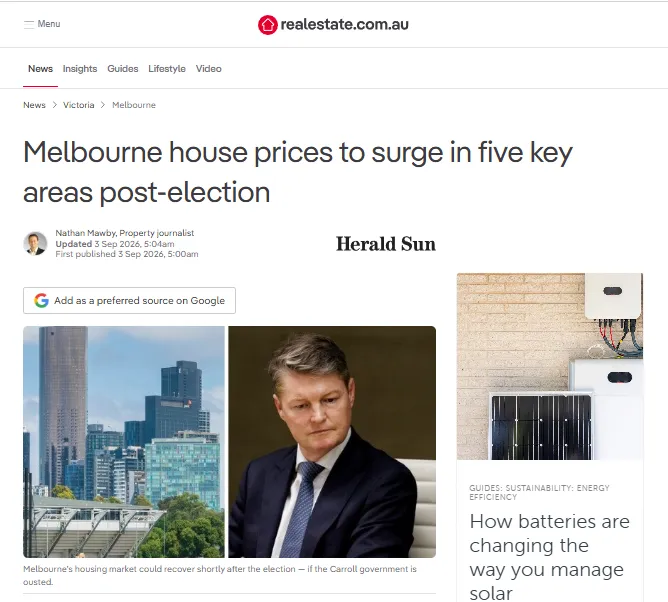
A change of government in Victoria’s looming state election is being touted as a “catalyst” to save Melbourne’s struggling housing market — and turbocharge prices in some areas.
The respected property pundits behind Hotspotting have tipped Melbourne council areas Darebin, Moonee Valley, Frankston, Brimbank and Whittlesea as the best poised to cope with house price pain being caused by the Albanese government’s May budget attack on investors.
But they could also be set to surge if there is a change of government at the November poll.
Earlier this week the REA Group pegged Melbourne’s median house values as lower than the start of spring in 2021, in the latest grim milestone for the city’s housing wealth.
Hotspotting managing director Tim Graham and founder Terry Ryder have identified rising transaction volumes in the five council areas that, with a change in sentiment towards the state’s housing market, they believe could see property prices in those areas outperform.
They are seeing similar trends in regional councils including Warrnambool, Ballarat, the Wodonga and Echuca areas, and Colac Otway Shire.
The locations are featured in Hotspotting’s Top 5 Melbourne and Top 5 Regional Victoria reports released this week.
Mr Ryder added that Melbourne was the nation’s second biggest capital by population and should be its second most expensive, particularly given many of the city’s residents earned higher wages than those in Brisbane and Adelaide where home values boomed in recent years.
Noting the city’s sentiment towards property was among the worst in the country, he said the current ranking as the nation’s sixth most expensive capital was largely due to the state government.
“So a change of government in the November election could be a catalyst,” Mr Ryder said.
“There’s massive infrastructure spending going on, but poor sentiment generated largely by the Victorian government has been largely responsible for the situation.
“Investors have been selling rather than buying in Melbourne. The tenancy laws keep changing, too far in favour of tenants, and there’s also the taxation.”
The property pundit said a November poll that ousted the Labor state government could be enough to kick start a revival for the city’s home values “certainly in the new year”, depending on the policies of the replacement government.
Noting the state had hosted the highest stamp duty in the country, and some of the most challenging land tax arrangements, for years, Mr Ryder said even the city’s current declines could be traced back to the poor sentiment caused by the state government being compounded by impacts from major taxation changes for investors by the Albanese government in May.
“There’s no doubt that there was a belated recovery late in 2025 and early this year, Melbourne was finally reviving,” he said.
“Then we had three interest rate rises and that in itself would have been a negative, but the federal government and all their changes has really stuffed any recovery Melbourne was going to have.”
The Albanese government’s May budget limited negative gearing to new homes, and set a similar boundary for claiming a 50 per cent discount on Capital Gains Tax, with investors who have purchased existing homes since then now only able to access an indexed discount.
In Melbourne, as well as rising transaction numbers, the council areas picked out were also in the path of gentrification, were tightly held, had good transport options or were already experiencing an uptick before the federal government’s budget changes in May.
On the regional front, while not all of regional Victoria was booming, Mr Ryder said these pockets were offering a mix of stronger rental returns, infrastructure spending and their own localised economies.
Most homes in the areas were also comparable affordable to major capitals around the nation, with many house values from $500,000-$650,000.
What You’ll Pay Today In Melbourne Hotspot Areas
Darebin:
Houses – $1.215m
Units – $605,000
Moonee Valley:
Houses – $1.28m
Units – $558,000
Frankston:
Houses – $875,000
Units – $633,750
Brimbank:
Houses – $775,000
Units – $550,000
Whittlesea:
Houses – $749,000
Units – $555,000
What You’ll Pay Today In Regional Hotspot Areas
Warrnambool:
Houses – $655,000
Units – $480,000
Ballarat:
Houses – $610,000
Units – $425,000
Colac Otway
Houses – $570,000
Units – $400,000
Campaspe
Houses – $562,500
Units – $420,000
Wodonga
Houses – $665,000
Units – $435,000
Source: REA Group, Hotspotting
Flatchat.com.au 28thAugust 2026

We’ve had a few successes since Flat Chat came into being in its various iterations, but we were reminded of one big one by a story that came through today.
Back in 2017, Sue Williams was writing about a developer who was planning to use a sunset clause to rescind an off-the-plan sale so that they could put their apartments back on the market and take advantage of a property boom.
In the intervening years since the deal had first been signed, property prices had risen astronomically, so the developer stopped work on the block so they could say it hadn’t been completed. Then they planned to invoke the clause that said if the work wasn’t finish by a certain time the purchaser could be given their deposit back.
The idea was to charge the original purchaser a supplement or put the unit back on the market to take advantage of price rises.
For the purchaser, this was a double whammy. The returned deposit would have lost considerable spending power in a booming market so they were going to be considerably out of pocket either way.
We called the dodgy dealings Sunset Clawbacks. I told then NSW Fair Trading Minister Victor Dominello about it and he sprang into action, issuing a temporary halt on sunset clause actions before pushing through legislation that said if the purchaser didn’t want their deposit back, the developer had to prove in court that there had been genuine delays in the completion of the work.
Nine years on, there’s been another property boom and those sunset clawbacks are back. You can find out what happened to Queensland purchasers who challenged a sunset clause claim, based on the fact that they’d put down their deposits during Covid, by scrolling down into the latest apartment news feed from Leftfield Communications.
Brokernews.com.au 26th August 2026
Hotspotting names 10 affordable markets combining low entry prices with strong growth signals
Property researcher Hotspotting has identified 10 markets across Australia where affordable entry prices are matched by the fundamentals needed to drive future growth — a distinction the firm says separates genuine opportunity from suburbs that are simply cheap.
The list spans New South Wales, Victoria, South Australia, Tasmania, the Northern Territory, and the ACT, split evenly between five metro and five regional locations.
Hotspotting director Terry Ryder (pictured left) said the selections reflect a broader shift toward unit markets, noting that "detached houses in many metropolitan markets have moved well beyond traditional affordable price points," with four of the five city picks being unit markets.
Hotspotting managing director Tim Graham (pictured right) said affordability by itself has never been a reliable investment signal.
"Cheap doesn't mean investable," Graham said. "A true cheapie with prospects is a market where accessible prices are supported by population growth, infrastructure, employment, rental demand, as well as rising sales activity."
He said that combination is increasingly rare, which is why the identified markets stand out from the broader affordable end of the market.
Where the opportunities lie
On the metro side, Carlton anchors Melbourne's affordability story with a median unit price of $321,000, while several surrounding suburbs remain under $500,000 despite rising transaction volumes and tight vacancy rates.
Melbourne sales activity has climbed 21% over the past year, with unit yields reaching as high as 7.5% in Carlton and Melbourne, and eight unit markets across the LGA now returning at least 6%.
Canberra's Gungahlin offers units from $440,000, buoyed by strong population growth and expanding transport and health infrastructure — the district's population surged 85% between 2011 and 2021 and is forecast to grow a further 54% by 2041, with unit yields ranging from 5.2% to 6.5%.
Melbourne's Monash provides rare affordable access to one of the city's strongest employment precincts, with units starting at $435,000 in Notting Hill, where yields reach as high as 7.9% — among the strongest in the report.
Glenorchy in Hobart remains the only capital city house market on the list, with medians ranging from $590,000 to $738,000, backed by a $150 million Cadbury-themed tourism project expected to draw 550,000 visitors annually and a $100 million MONA expansion.
Greater Darwin rounds out the metro cohort with units from $325,000 to $615,000 and some of the highest rental yields nationally, with Karama unit yields reaching 7.9% — though Hotspotting cautions that Darwin's unit prices have already grown substantially, meaning "investors should not assume every market still represents equal value."
Beyond the capitals, the regional side of the list tells a similar story of substance behind affordability.
Ballarat combines scale, economic diversity and rising transaction levels, with houses ranging from $505,000 to $962,500 and a forecast population climb from around 122,000 to more than 164,000 by 2046, underpinned by the $655 million Ballarat Base Hospital redevelopment.
Muswellbrook, priced between $587,500 and $605,000, is riding the Hunter region's shift from coal towards renewable energy and logistics employment, with house sales volumes up 9.7% over the past year.
Devonport's economy is anchored by port expansion and urban renewal — including the $240 million QuayLink upgrade — with houses from around $530,000 and double-digit annual growth recorded across every house market analysed.
The NSW Mid-Coast and Clarence Valley round out the regional cohort, with entry points from $400,000 for units in Taree and $415,000 in Grafton, both supported by rising transaction levels and tight rental vacancies.
Selecting the right asset still matters
Graham cautioned that identifying an affordable market is only half the equation.
"Even in the right market, you still need the right asset," he said, noting that established homes and apartments in well-connected precincts tend to outperform generic investor stock or fringe properties with weaker fundamentals.
This is echoed across the metro picks — Hotspotting specifically favours established apartments over generic high-density stock in Melbourne, and warns against investor-dominated or oversupplied developments in Monash and Darwin alike.
Eliteagent.com.au 26th August 2026
Hotspotting's managing director explains the fundamentals separating genuine growth prospects from suburbs that are simply low priced, across five capital city and five regional markets.
Property researcher Hotspotting has identified 10 affordable Australian markets it says have the fundamentals to become far stronger performers, in new research separating genuine “cheapies” from suburbs that are simply cheap.
The list splits five metropolitan and five regional locations across New South Wales, Victoria, Tasmania, the Northern Territory and the ACT.
Hotspotting Managing Director Tim Graham said affordability on its own was never enough to justify a purchase.
“Cheap doesn’t mean investable,” Tim said.
“A true cheapie with prospects is a market where accessible prices are supported by population growth, infrastructure, employment, rental demand, as well as rising sales activity.
“This is a combination that is becoming harder to find and is why these markets stand out.”
On the metro list, Carlton anchors the City of Melbourne’s affordability story with a median unit price of $321,000, alongside several other suburbs below $500,000 despite rising transactions and tight vacancies.
Gungahlin’s unit market in the ACT begins at $440,000, backed by rapid population growth and Canberra’s expanding transport and health infrastructure.
Glenorchy is the only house market to make the metro cut, with medians ranging from $590,000 to $738,000 across Greater Hobart’s northern suburbs.
Units in Monash start at $435,000, giving buyers access to one of Melbourne’s strongest employment precincts, while Greater Darwin rounds out the metro five with unit medians between $325,000 and $615,000 and some of the country’s highest yields.
Among the regional locations, Ballarat’s house prices range from $505,000 to $962,500, supported by tight vacancies, rising transactions and investment in hospitals, transport and employment.
Muswellbrook’s median house prices of $587,500 to $605,000 reflect a market shifting from coal towards renewable energy, logistics and regional employment.
Devonport’s median house prices start at about $530,000, underpinned by port expansion, new ferries and urban renewal.
The NSW Mid-Coast offers entry points from $557,500, with Taree’s unit market starting at $400,000, while the Clarence Valley closes out the list with a South Grafton median house price of $480,000 and a Grafton unit median of about $415,000, supported by hospital investment and population growth.
Tim described the locations as the “ugly ducklings” of Australian real estate.
“They may not be the markets people talk about at dinner parties, but the data shows they have the fundamentals to become far more desirable over time, including price growth,” he said.
He said the investors and homebuyers who succeed in the current environment will be those who understand the difference between affordability and value.
“Even in the right market, you still need the right asset,” Tim said.
“Established homes and apartments in well-connected precincts consistently outperform generic investor stock or fringe locations with weak fundamentals.
“The opportunities are still there, but they’re just harder to find at present.”
News.com.au 26th August 2026
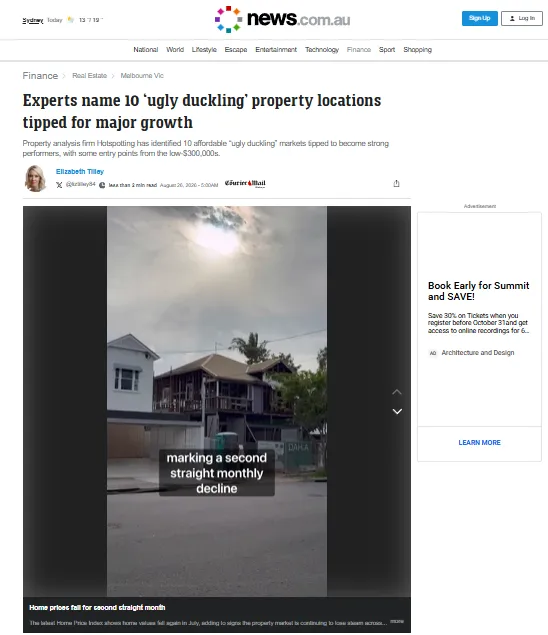
Homehunters looking for an affordable foot on the property ladder have been given a new hit list, with 10 “ugly duckling” locations tipped to have the ingredients to become strong performers.
New research from property analysis firm Hotspotting has identified five city and five regional markets where buyers can still get in at relatively affordable prices.
But Hotspotting managing director Tim Graham warned buyers against assuming a low price tag automatically made a property a good investment.
“Cheap doesn’t mean investable,” Mr Graham said. “A true cheapie with prospects is a market where accessible prices are supported by population growth, infrastructure, employment, rental demand, as well as rising sales activity.”
The 10 locations span NSW, Victoria, South Australia, Tasmania, the Northern Territory and ACT, with some unit markets starting in the low-$300,000s.
The top five metropolitan markets are Carlton in Melbourne, Gungahlin in Canberra, Glenorchy in Hobart, Monash in Melbourne and Greater Darwin.
Carlton is the cheapest of the bunch, with a median unit price of just $321,000, while several suburbs across the City of Melbourne remain below $500,000.
Units in Gungahlin start at $440,000, while Monash units begin at $435,000.
Glenorchy is the only metropolitan market on the list where houses make the affordability cut, with median prices ranging from $590,000 to $738,000.
Greater Darwin also stood out, with unit medians ranging from $325,000 to $615,000 and some of the country’s strongest rental yields.
Regionally, Ballarat, Muswellbrook, Devonport, the NSW Mid-Coast and Clarence Valley made the top 10.
South Grafton is among the cheapest house markets identified, with a median of $480,000, while Grafton units sit at about $415,000.
Devonport houses start around $530,000, while Mid-Coast buyers can enter the unit market in Taree from a median $400,000.
Mr Graham said these markets might not have the prestige of Australia’s property hotspots, but their underlying fundamentals were increasingly attractive.
“They may not be the markets people talk about at dinner parties, but the data shows they have the fundamentals to become far more desirable over time, including price growth,” he said.
However, he warned buyers still needed to be selective about the property itself, favouring established homes and apartments in well-connected locations over generic investor stock or poorly located fringe developments.
Realestate.com.au 26th August 2026

Homehunters looking for an affordable foot on the property ladder have been given a new hit list, with 10 “ugly duckling” locations tipped to have the ingredients to become strong performers.
New research from property analysis firm Hotspotting has identified five city and five regional markets where buyers can still get in at relatively affordable prices.
But Hotspotting managing director Tim Graham warned buyers against assuming a low price tag automatically made a property a good investment.
“Cheap doesn’t mean investable,” Mr Graham said. “A true cheapie with prospects is a market where accessible prices are supported by population growth, infrastructure, employment, rental demand, as well as rising sales activity.”
The 10 locations span NSW, Victoria, South Australia, Tasmania, the Northern Territory and ACT, with some unit markets starting in the low-$300,000s.
The top five metropolitan markets are Carlton in Melbourne, Gungahlin in Canberra, Glenorchy in Hobart, Monash in Melbourne and Greater Darwin.
Carlton is the cheapest of the bunch, with a median unit price of just $321,000, while several suburbs across the City of Melbourne remain below $500,000.
Units in Gungahlin start at $440,000, while Monash units begin at $435,000.
Glenorchy is the only metropolitan market on the list where houses make the affordability cut, with median prices ranging from $590,000 to $738,000.
Greater Darwin also stood out, with unit medians ranging from $325,000 to $615,000 and some of the country’s strongest rental yields.
Regionally, Ballarat, Muswellbrook, Devonport, the NSW Mid-Coast and Clarence Valley made the top 10.
South Grafton is among the cheapest house markets identified, with a median of $480,000, while Grafton units sit at about $415,000.
Devonport houses start around $530,000, while Mid-Coast buyers can enter the unit market in Taree from a median $400,000.
Mr Graham said these markets might not have the prestige of Australia’s property hotspots, but their underlying fundamentals were increasingly attractive.
“They may not be the markets people talk about at dinner parties, but the data shows they have the fundamentals to become far more desirable over time, including price growth,” he said.
However, he warned buyers still needed to be selective about the property itself, favouring established homes and apartments in well-connected locations over generic investor stock or poorly located fringe developments.
Smartpropertyinvestment.com.au 26th August 2026
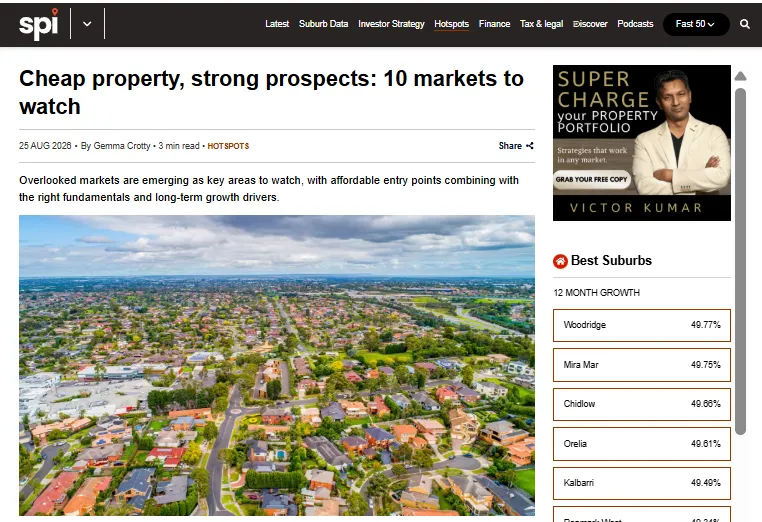
Overlooked markets are emerging as key areas to watch, with affordable entry points combining with the right fundamentals and long-term growth drivers.
New data has pinpointed 10 affordable markets with strong growth potential, supported by rising buyer activity, rental strength, and sustainable long-term demand.
Hotspotting’s Cheapies with Prospects report identified the five metro and five regional markets where units or houses offered both accessible entry points and strong fundamentals for future capital growth.
According to Hotspotting managing director, Tim Graham, certain factors separated a genuine “cheapie with prospects” from a market that was simply affordable.
“A true cheapie with prospects is a market where accessible prices are supported by population growth, infrastructure, employment, rental demand, as well as rising sales activity,” he said.
“This is a combination that is becoming harder to find and is why these markets stand out.”
The top 10 locations were located across NSW, Victoria, South Australia, Tasmania, the Northern Territory, and the ACT.
Capital cities
Melbourne’s suburb of Carlton topped the list with a median unit price of $321,000, with several suburbs still below $500,000 despite rising transactions and tight vacancies.
Meanwhile, units in Gungahlin, Canberra, begin at $440,000, and are supported by rapid population growth and an expanding transport and health infrastructure
Of the entire list, Hobart’s Glenorchy was the only city house market, with medians ranging from $590,000 to $738,000 across the northern suburbs.
In Monash, units start at $435,000, providing easy access to one of Melbourne’s strongest employment precincts.
Greater Darwin completed the metro list, with unit medians ranging from $325,000 to $615,000, and yields being among the highest in the country, above 6 per cent.
Regions
In Ballarat, house prices range from $505,000 to $962,500, in a location offering tight vacancies, rising transactions, and major investment in hospitals, transport, and employment.
Muswellbrook, in the NSW Upper Hunter region, has median house prices of $587,500 to $605,000, reflecting a shift from coal to renewable energy, logistics, and regional employment opportunities.
In Tasmania’s Devonport market, median house prices begin at about $530,000, with the economy underpinned by port expansion, new ferries, and urban renewal.
The NSW Mid-Coast also made the list, with Taree’s unit market beginning at $400,000 and Coomba Park’s median house prices starting from $557,000.
In the Clarence Valley, South Grafton’s median house price sits at $480,000, and Grafton’s unit prices are around $415,00, with the markets supported by hospital investment, population growth, and rising sales activity.
Graham said these markets were the “ugly ducklings” of Australian real estate.
“They may not be the markets people talk about at dinner parties, but the data shows they have the fundamentals to become far more desirable over time, including price growth,” he said.
Ultimately, Graham said investors and home buyers who understood the difference between affordability and value would succeed in the current market.
“Even in the right market, you still need the right asset. Established homes and apartments in well-connected precincts consistently outperform generic investor stock or fringe locations with weak fundamentals.”
“The opportunities are still there, but they’re just harder to find at present.”
Realestate.com.au 23rd August 2026
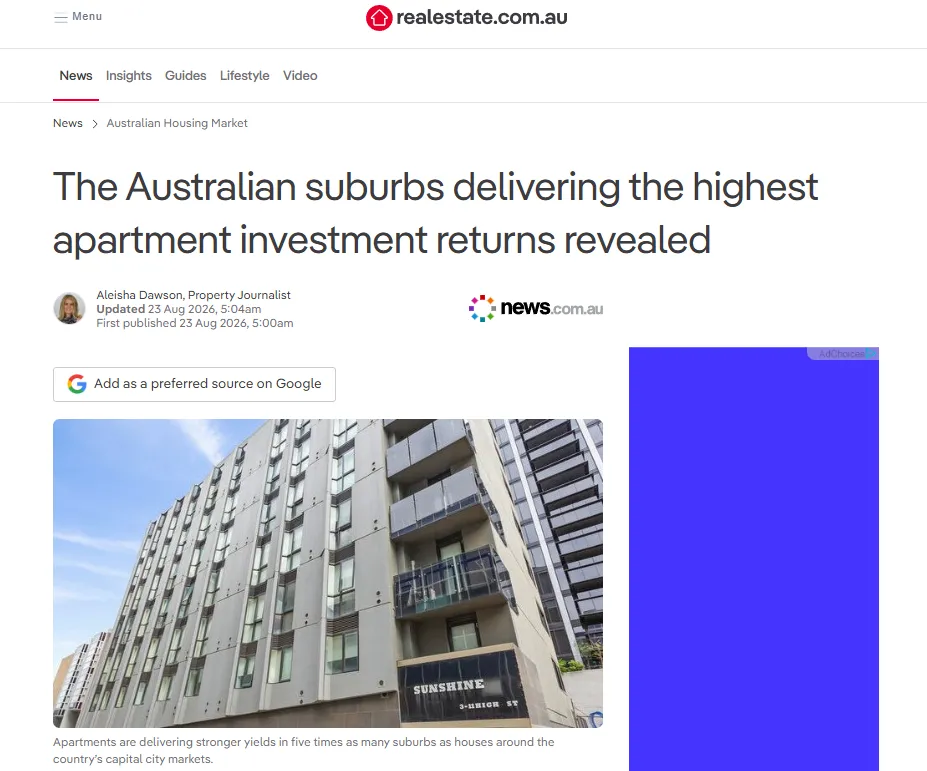
Aussie property investors chasing strong returns have a new road map, with apartments delivering stronger yields in five times as many suburbs as houses.
The August 2026 Rise and Rise of Apartments report from Nuestar and Hotspotting revealed that in Australia’s capital city markets, there were 242 suburb markets where units had yields of 5 per cent or higher compared with just 47 house markets.
Nuestar founder Michael Wilkins said that changes to investment property taxes meant new apartments were in the sights of investors more than ever because of the significantly higher rental returns.
“Overwhelmingly yields for apartment markets are higher than those for freestanding houses,” he said.
“In this climate investors need to secure positively-geared assets.
“Apartments in particular offer lower buy-in prices and stronger yields.
“In the new environment, solid yields have become just as important to investors as capital growth.”
Despite being one of Australia’s more expensive cities, Greater Sydney had the highest number of high-performing apartment markets with 75 suburbs returning yields of 5 per cent or more — because rents have been rising strongly but prices haven’t.
It had nine suburb markets with yields of 6 per cent or higher for apartments, led by Auburn in the Cumberland LGA with a median yield of 6.3 per cent.
Greater Melbourne had 61 apartment markets with yields of 5 per cent or higher – 13 per cent of those were 6 per cent or higher. Its highest yielding apartment market was Travancore in the Moonee Valley LGA which at 8 per cent, had the highest median yield of the markets analysed for this report.
Greater Perth had 48 apartment markets with yields of 5 per cent or more and two with median yields of more than 6 per cent, led by Perth LGA suburbs, Northbridge at 6.3 per cent and Perth at 6.2 per cent.
The ACT had 28 apartment markets with yields of 5 per cent or more and five of those with yields of 6 per cent or higher, led by Gungahlin with a median yield of 6.4 per cent.
Greater Darwin continued to perform well. All 21 of its apartment markets analysed for the report achieved yields above 6 per cent – eight of those had yields above 7 per cent.
The highest was 7.8 per cent in both Coolalinga in Litchfield LGA and Karama in Darwin LGA.
Greater Hobart had six markets above 5 per cent, led by Brighton at 5.4 per cent. Greater Brisbane only had one – Brisbane City with a yield of 5.5 per cent; Greater Adelaide had two – Adelaide at 5.3 per cent and Mawson Lakes in the Salisbury LGA, with a yield of 5.1 per cent.
Hotspotting Founder Terry Ryder said it was more important than ever for investors to seek out markets which delivered strong returns.
“The apartment market has gained strength as a force for property investment and will continue to do so,” he said.
Apartments accounted for almost 30 per cent of sales transactions in the past 12 months. In the ACT and Northern Territory, apartment sales made up 43 per cent and 40 per cent of sales, respectively.
In New South Wales, apartments accounted for 35 per cent of transactions and 29 per cent in both Queensland and Victoria.
The percentages were higher in the capital cities, particularly Sydney.
Realestate.com.au 19th August 2026
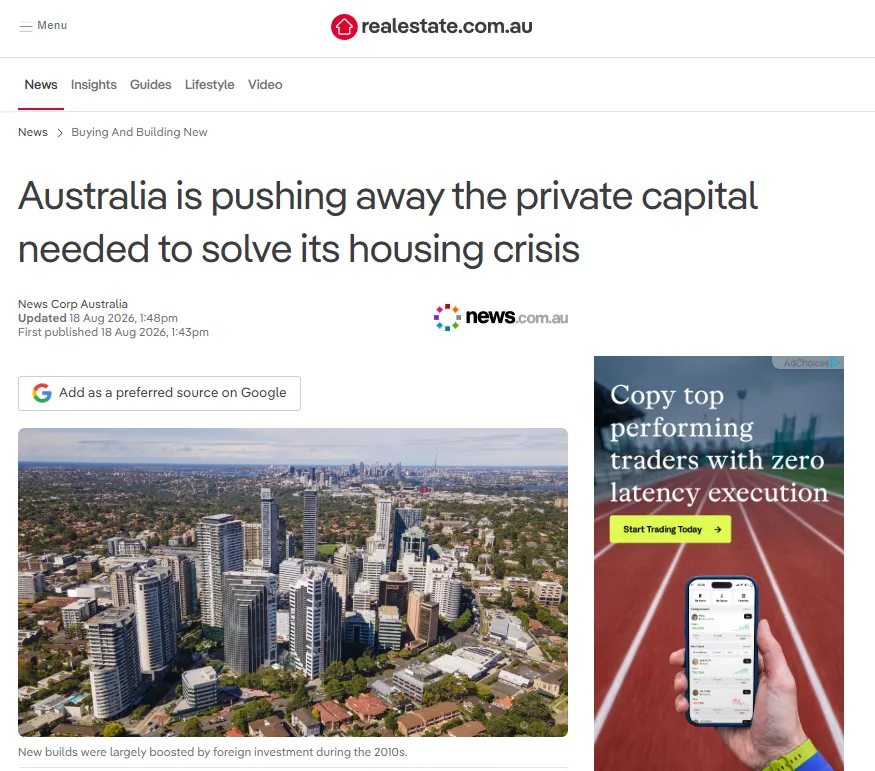
We keep taxing the capital we need to build the homes we don’t have.
For much of my career, I had a front-row seat to one of the least understood forms of global migration.
Not the migration of people – the migration of money.
I spent years working across at least 18 countries, helping developers present projects internationally and sitting opposite high-net-worth families deciding where to place the wealth they had spent a lifetime creating.
Their biggest question was rarely: “Where can I make the highest return?”
It was: “Where will my money be safe?”
For families living in countries affected by corruption, political instability or weak institutions, Australia offered something incredibly valuable: trust.
Our legal system, political stability, economy, education system and property rights made Australia one of the world’s most attractive destinations for capital.
And critically, we largely directed foreign property investment towards new housing.
Foreign buyers were generally restricted from purchasing established homes, meaning much of their money flowed into new apartments, vacant land and developments that increased supply.
At the peak in 2015–16, foreign residential real-estate approvals reached $72.4 billion. The following year, around 88 per cent of approved value related to new dwellings, vacant land or redevelopment.
This wasn’t simply overseas billionaires outbidding Australian families at suburban auctions.
A lot of that capital was funding homes that had not yet been built.
That matters because development relies on capital and pre sales. Developers need purchasers before banks will finance construction. Foreign buyers, particularly through the apartment boom of the mid-2010s, helped make many projects viable.
Then Australia progressively made itself harder and more expensive to invest in.
Foreign-buyer taxes increased. Lending to nonresidents tightened. Vacancy charges were introduced. Investment migration programs were wound back. Chinese capital controls compounded the decline.
There were legitimate reasons behind many of those decisions. But capital does not stop being capital because one country makes investment harder.
It goes somewhere else.
Today, countries such as the UAE and the United States actively use residency and investment programs to compete for internationally mobile wealth.
Australia, meanwhile, has increasingly moved in the opposite direction.
I returned permanently in 2019 after years overseas, and sometimes you have to leave Australia and return again to truly appreciate the opportunities and safety that this country offers.
I had worked in places where families genuinely did not trust their governments to protect their assets. Australia is nowhere near that.
But what concerns me is the direction we’re heading. Foreign investors were the easy target first.
Increasingly, Australian investors are being treated the same way.
And this is happening while Australia faces a housing shortage that should make attracting productive capital a national priority.
We are targeting 1.2 million new homes over five years, yet forecasts suggest we could fall hundreds of thousands short. Rental markets remain extraordinarily tight.
And despite the rhetoric around landlords, the overwhelming majority of Australian renters rely on private investors for their housing.
That creates an obvious contradiction. We need enormous amounts of private capital to build and provide housing, yet we increasingly treat the people supplying that capital as the problem.
The latest federal tax reforms are another example. I actually support the principle of directing negative gearing towards new housing from July 2027.
If government is going to incentivise investment, there is a strong argument for rewarding investment that creates another dwelling. That is essentially what Australia once did with foreign purchasers.
But investors do not look at one tax in isolation.
They look at stamp duty, land tax, finance costs, rental regulation, planning delays, capital gains tax and, perhaps most importantly, whether the rules are likely to change again.
Even Treasury modelling cited by the Grattan Institute suggests the latest tax changes could result in around 35,000 fewer homes being built over the next decade, although Grattan argues other supply measures will offset that reduction.
At minimum, it should make us ask whether our policies are all pulling in the same direction.
Housing is one interconnected system. First-home buyers, renters, investors, developers and lenders do not operate independently.
Make investment less attractive and investors change behaviour. Reduce investor demand for new projects and development feasibility changes.
Reduce rental investment and tenants feel the consequences. Increase policy uncertainty and investors demand a higher return before committing their money.
Capital is not sentimental.
That is one of the clearest lessons I learnt working internationally. It goes where it is wanted, where risk is rewarded and where the rules are predictable and reliable.
For too long, governments have reached for sticks when housing desperately needs carrots.
Encourage foreign capital when it creates genuinely additional housing.
Give Australian investors durable incentives to add to Australia’s rooflines. Reward long-term rental supply. Reduce planning delays.
Create tax settings that improve development feasibility.
And give investors enough certainty to make a twenty-year decision without wondering whether the rules will be rewritten every election cycle.
We also need to stop pretending every property investor is an institutional speculator.
Often it is a nurse, teacher, tradie or small-business owner with one investment property helping provide the rental accommodation Australians depend on.
Most importantly, we need to stop talking about private investment as though housing policy would somehow function better without it – it won’t.
The first sign that a country is losing capital is not billions of dollars suddenly disappearing offshore – it is doubt.
It is an Australian investor sitting at home, seeing opportunities advertised to them on Meta in countries like Dubai or elsewhere, and asking a question that once would have seemed ridiculous:
Would my money be more welcome somewhere else?
For decades, Australia’s proposition to capital was simple:
Bring it here. Play by our rules. Invest productively. Help us grow.
We need a modern version of that proposition again.
Because Australia cannot choose between housing supply and private investment.
We need the investment to build the housing.
Tim Graham is managing director of Hotspotting.
Perthnow.com.au 14th August 2026
The Perth property market is no longer hot, with a major forecaster claiming Bayswater is the only area to make a national top 10 investment list.
Hotspotting claims only about a quarter (23.4 per cent) of all 278 areas assessed in Perth are deemed to be a positive, strengthening market — which was the lowest reading in the country.
About four in ten areas (42.4 per cent) were rated as negative markets, which means the local market is declining in strength.
“Greater Perth, the standout performer of the postpandemic boom, has turned decisively,” said the report.
“Listings are still finding buyers at a reasonable pace — a cycle turn, not a crash,” it said.
An area’s ranking is based only partially on the quarterly change in price, with stock levels, listings sold above the asking price, the vacancy rate and median selling days also factored in.
Hotspotting listed Bayswater as the hottest market in WA and the fifth on a national list.
It gave Bayswater a score of 72 out of 100 - well above the score of 63 for Greater Perth. Anything above 68 is deemed hot.
Property agent Jade Lippiatt said Bayswater appealed to first-home buyers as well as those looking to upgrade or downsize, as well as families and retirees.
The area enjoyed a strong local rail network that was second only to the CBD, proximity to the airport and a beautiful riverfront. It offered both character home and modern houses.
Ms Lippiatt added that Bayswater had recently cracked a record sale of $2.6 million.
Hotspotting’s Terry Ryder said Perth had undergone a “cycle rotation rather than a market collapse”.
“Listings in Perth are still finding buyers at a reasonable pace,” he said. “What’s changed is the underlying demand trend.
‘The volume signal has rolled over, so, we’re witnessing the cooling in real time.
“But it’s not a crisis. Instead, it’s a normal cycle turn happening faster than usual because disruption is hitting buyer sentiment.”
Realestate.com.au 13th August 2026

Hobart is home to two of the hottest LGAs in Australia.
The latest Price Predictor Index by Hotspotting named Glenorchy and Kingborough municipalities in its Top 10 markets.
Hotspotting managing director Tim Graham said Glenorchy has become one of the markets to watch in Hobart.
This follows a McGrath report in July that named Glenorchy LGA as No.1 in Australia in its Local Residential Index Winter/26 report.
Mr Graham said Glenorchy houses remain relatively affordable at about $620,000, yet values were up 8 per cent over the past year, while units rose 11 per cent.
“Add extremely tight rental vacancies and significant new investment into the area and there is a fairly compelling demand story developing there,” he said.
Mr Graham noted that Kingborough has “considerable depth” to its market, particularly around Kingston.
He said Kingston recorded more house sales than any other suburb Hotspotting analysed across greater Hobart.
“And rental vacancies are virtually non-existent,” he said.
“That combination of transaction depth and rental pressure tells us there is genuine underlying demand rather than simply price growth driven by a small number of sales.”
The Price Predictor Index methodology tracks rising sales activity as an indicator of future growth, rather than lagging median price data.
Hotspotting’s Thermometer is a live-market pressure score that rates every LGA and suburb out of 100 based on inventory levels, days on market, sold-above-asking activity, vacancy rates and short-term price momentum.
Glenorchy and Kingston scored 70 out of 100, not far behind Australia’s No.1 LGA, Onkaparinga in South Australia, which scored 77.
Susan Kay, principal at Susan Kay Property Sales & Rentals, confirmed that the Kingborough market has been performing well this year.
However, stock levels are low, Mrs Kay said.
“Well presented properties priced correctly are being snapped up,” she said.
“There is a reluctance to purchase properties that require updating. I attribute this to the cost and time required for renovations.
“However, there are properties that are ripe for an update, family-sized homes that people can put their own stamp on.”
Mrs Kay said properties in the $1m to $1.1m range, family homes and homes priced sub-$750,000 are moving well.
“Kingborough caters to a wide demographic, from families to executives to singles — there is something here for everyone,” she said.
“People love the beach lifestyle and close to the CBD.
“There are buzzy coffee shops, restaurants and bars, swimming, kayaking, bike riding, great parks for children, and coastal walks.”
Hotspotting founder Terry Ryder said a jurisdiction breakdown is essential for understanding risk and opportunity.
“Anyone reading the national headline without looking at the jurisdiction breakdown will misread the market,” he said.
“This is not one market moving in one direction — it’s many markets moving at very different speeds at the same time.”
Mr Graham said the disruption environment is reshaping the national map far more unevenly than headline data suggests.
“This quarter lands in the middle of what we call ‘the mother of all disruption periods’,” Mr Graham said.
“Three RBA rate rises, geopolitical trade uncertainty, cost-of-living pressures and federal budget changes have all hit at once, but the impact isn’t uniform.
“Some markets are cooling sharply, while others are still running incredibly hot with our new Thermometer methodology making those differences visible in real time.”
Smartpropertyinvestment.com.au 12th August 2026
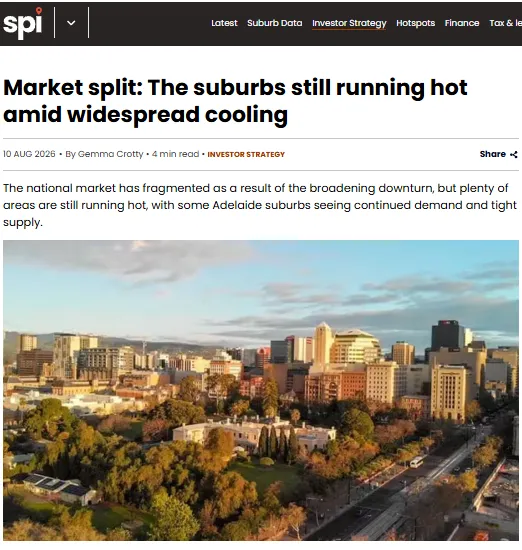
The national market has fragmented as a result of the broadening downturn, but plenty of areas are still running hot, with some Adelaide suburbs seeing continued demand and tight supply.
New data showed that while investment confidence falters, plenty of opportunities remain nationwide as cooler conditions create a split in the property market.
According to Hotspotting’s June 2026 Price Predictor Index (PPI), six of the 10 hottest local government areas (LGA) sat within Greater Adelaide, based on factors such as supply, days-on-market, inventory levels, and price momentum.
Nationally, the analysis showed positive market classifications dropped sharply across the quarter, falling from 52.1 per cent in March to 43.3 per cent in June.
Over the same period, declining markets jumped from 132 to 482, showing a 265 per cent surge in just one quarter, according to the PPI.
Hotspotting managing director, Tim Graham, said that recent market disruptions were reshaping the national landscape more unevenly than the headline data suggested.
“Three RBA rate rises, geopolitical trade uncertainty, cost-of-living pressures and federal budget changes have all hit at once, but the impact isn’t uniform,” he said.
“Some markets are cooling sharply, while others are still running incredibly hot with our new Thermometer methodology making those differences visible in real time.”
Adelaide suburbs take top spots
Onkaparinga, in Adelaide’s south, took the top spot with a score of 77/100, followed by the inner-southern suburb of Mitcham, scoring 76.
Hotspotting founder, Terry Ryder, said Greater Adelaide’s results showed the city had the tightest supply conditions of any capital city market.
“When stock clears quickly, the live-market pressure becomes extreme. Inventory thins, days on market collapse, properties sell above asking, and vacancy disappears,” Ryder said.
In third place, Palmerston, southeast of Darwin, scored 74, despite only 18 per cent of its markets having positive classifications.
Graham said the region had been experiencing subdued volume, but demand was outpacing genuinely scarce stock.
Marion, Adelaide, was in fifth place at 73, followed by Bayswater, Perth, with a score of 72.
Despite one Greater Perth suburb featuring on the list, the report said the June quarter marked a negative turn for the capital, which had been the standout performer in the post-COVID-19 boom.
“Just 23.4 per cent of its 278 scorable markets are now classified as positive, which was the lowest reading of any jurisdiction nationally,” it said.
Next were Adelaide’s suburbs of Tea Tree Gully, with a score of 72, and Campbelltown, achieving a score of 71.
These were followed by Tasmania’s Glenorchy and Kingborough, and the Port Adelaide region of Enfield, all scoring 70.
Diverging market
According to the data, the surge in declining markets was heavily concentrated in Greater Perth, Greater Brisbane, Rest of Queensland, and Rest of Western Australia.
Ryder said the results showed a cycle rotation rather than a market collapse, with the market cooling in real time.
“But it’s not a crisis. Instead, it’s a normal cycle turn happening faster than usual because disruption is hitting buyer sentiment,” he said.
Despite recent headlines about price declines in the major capitals, Melbourne still sat at 49.1 per cent positive markets and Sydney at 47.3 per cent, both well above the national average.
According to Graham, the two cities remained supported by population growth, employment depth, and infrastructure investment, showing that price headlines often missed the underlying fundamentals.
Meanwhile, he said that regional South Australia emerged as the strongest mainland regional performer, recording 49.1 per cent positive rankings across 57 markets.
“It’s consistent, it’s stable, and it’s outperforming every other mainland regional jurisdiction,” Graham said.
Graham also noted that the broader national picture showed the sharpest divergences occurring within states, rather than between them.
“The Rest of Western Australia sits 25.3 points above Greater Perth; Melbourne outperforms the Rest of Victoria by 12.4 points; and Regional South Australia sits 10 points above Greater Adelaide,” he said.
According to Ryder, anyone reading the national headline without looking at the jurisdiction breakdown would misread the market, potentially missing risks and opportunities.
“This is not one market moving in one direction – it’s many markets moving at very different speeds at the same time.”
Allhomes.com.au 12th August 2026

Smart investing is always about working out which areas of the country are best positioned for long-term capital growth – before everyone else jumps on the bandwagon and starts to pump up prices.
For Hotspotting founder Terry Ryder, that means a series of complex calculations around infrastructure investment, local economy strength, population size and trends, employment growth, depth of demand, vacancy rates and affordability.
So when he starts touting areas showing huge potential, it’s certainly worth taking note.
“We apply the same data and metrics to every location in Australia to make sure the best ones tick all our boxes for long-term view,” Ryder says. “It’s about identifying future hotspots; not the ones that are already hot and might be on the verge of cooling.
“Real estate markets are very local. We don’t have a single national market, so it’s very important to measure each area on its own merits.”
His company’s latest list is topped by Greater Hobart, which, he believes, combines affordability, lifestyle appeal and a strong economic base, with critically low vacancy rates and comparably strong yields.
According to the latest Domain House Price Report, it has a median house price of $818,557, up 17 per cent in the June quarter and 11.6 per cent on the year, with units at $573,955, up 1 per cent annually. House rents are now at a record $750 a week, and units at $700, with yields at 4.54 and 4.77 per cent, respectively.
Harcourts Hobart agent Rory Ferguson says investors are starting to flag Greater Hobart as a high-growth area.
“It does reflect the fact that it’s coming off the bottom of the property cycle,” he says. “Post-pandemic, there was a huge correction, but we’re now expecting it to go up again.
“A lot of interstate investors are looking at Hobart as an option, particularly as it’s affordable compared to the rest of the country. You can find a house here for $600,000 which you can’t find in many other places.”
Ryder’s second pick is units in Western Australia’s Belmont, which sits on the Swan River six kilometres east of the Perth CBD. It’s close to the airport and major employment hubs, and benefits from mining company offices, transport, logistics and manufacturing.
Perth’s median unit price is $702,180, up an astonishing 23.9 per cent over the past year on Domain figures, with a record weekly rent of $700 a week, annual growth of 7.7 per cent and a yield of 5.13 per cent.
“But in some areas of Belmont, we’re seeing yields of up to 8 per cent,” says Jasmyn Wright, co-founder of Realestate 88. “In one new development we launched, Bel-Air Apartments in Belmont, we’re seeing one-beds renting for $700 and two beds achieving $850, and one two-bed apartment that was bought for $608,000 18 months ago is reselling for $150,000 more.
“There’s a very high cost of construction and shortages of materials and labour, so supply is low, while the population is still increasing. So why would people worry about negative gearing if they can be so positively geared?”
Hotspotting’s other top favourites include West Torrens in South Australia, Bendigo in Victoria, Queensland’s Sunshine Coast, Muswellbrook in NSW, Dandenong in Victoria, and Sydney’s Parramatta.
Harveyreporter.com.au 11th August 2026
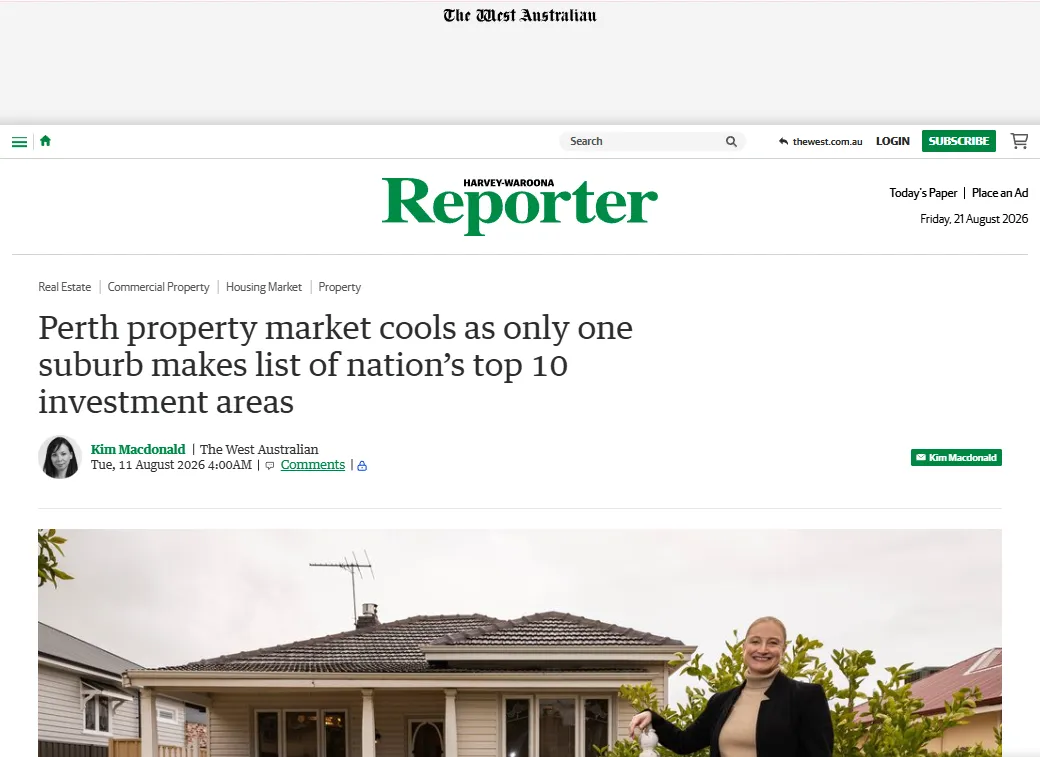
The Perth property market is no longer hot, with a major forecaster claiming Bayswater is the only area to make a national top 10 investment list.
Hotspotting claims only about a quarter (23.4 per cent) of all 278 areas assessed in Perth are deemed to be a positive, strengthening market — which was the lowest reading in the country.
About four in ten areas (42.4 per cent) were rated as negative markets, which means the local market is declining in strength.
“Greater Perth, the standout performer of the postpandemic boom, has turned decisively,” said the report.
“Listings are still finding buyers at a reasonable pace — a cycle turn, not a crash,” it said.
An area’s ranking is based only partially on the quarterly change in price, with stock levels, listings sold above the asking price, the vacancy rate and median selling days also factored in.
Hotspotting listed Bayswater as the hottest market in WA and the fifth on a national list.
It gave Bayswater a score of 72 out of 100 - well above the score of 63 for Greater Perth. Anything above 68 is deemed hot.
Property agent Jade Lippiatt said Bayswater appealed to first-home buyers as well as those looking to upgrade or downsize, as well as families and retirees.
The area enjoyed a strong local rail network that was second only to the CBD, proximity to the airport and a beautiful riverfront. It offered both character home and modern houses.
Ms Lippiatt added that Bayswater had recently cracked a record sale of $2.6 million.
Hotspotting’s Terry Ryder said Perth had undergone a “cycle rotation rather than a market collapse”.
“Listings in Perth are still finding buyers at a reasonable pace,” he said. “What’s changed is the underlying demand trend.
‘The volume signal has rolled over, so, we’re witnessing the cooling in real time.
“But it’s not a crisis. Instead, it’s a normal cycle turn happening faster than usual because disruption is hitting buyer sentiment.”
Realestate.com.au 11th August 2026

Australia’s property market might be cooling, but one state is not just bucking the national trend, but doing it in a pretty major way.
Hotspotting’s June 2026 Price Predictor Indicator, released today, reveals the nation’s hottest markets, and it’s good news if you’re a South Australian homeowner.
The report highlights the nation’s top-performing local government areas, those continuing to run hot despite the national pullback.
And of the top 10 strongest performing LGAs identified, a whopping six can be found in SA, confirming the state as the standout performer in a quarter defined by tightening supply, rising days-on-market pressure, and a sharp rotation in market cycles.
In the report, LGAs are given a score out of 100 based on inventory levels, days on market, sold-above-asking activity, vacancy rates and short-term price momentum.
With a score of 77, Onkaparinga took out top spot, ahead of Mitcham with 76.
Palmerston in the NT came in third with 74 ahead of Marion, SA’s 73 and Western Australia’s Bayswater with 72.
Back in SA, Tea Tree Gully also scored 72, ahead of Campbelltown, while Tasmania’s Glenorchy and Kingborough, and SA’s Port Adelaide Enfield all scored 70.
Hotspotting founder Terry Ryder said Greater Adelaide’s dominance highlighted the fact it has the tightest supply conditions of any Australian capital.
“When stock clears quickly, the live-market pressure becomes extreme. Inventory thins, days on market collapse, properties sell above asking, and vacancy disappears,” Mr Ryder said.
Regional South Australia was revealed as the strongest regional performer, with Mr Ryder saying The Barossa, Clare Valley and Riverland districts continued to show durable conditions rather than boom-cycle volatility.
“Regional SA is the unsung hero of the June quarter,” he said.
“It’s consistent, it’s stable, and it’s outperforming every other mainland regional jurisdiction.”
Brokernews.com.au 11th August 2026

Australia's property market has entered what Hotspotting describes as one of its most disrupted periods in a decade, with new data from the group's June 2026 Price Predictor Index revealing sharp divergence beneath a broadly cooling national picture.
National conditions cool, but pockets stay red hot
The proportion of markets classified as positive fell from 52.1% in March to 43.3% in June, while the number of declining markets surged 265% over the same quarter, from 132 to 482. Eleven of the 15 capital city and regional jurisdictions tracked recorded a fall in positive share, pointing to a broad-based, if uneven, slowdown.
One shift beneath the headline figures: markets carrying a "Rising*" tag — flat on volume but hot on live conditions — fell from 401 in March to just five in June.
Hotspotting managing director Tim Graham (pictured left) said the scale of disruption was reshaping the market unevenly rather than uniformly.
"Three RBA rate rises, geopolitical trade uncertainty, cost-of-living pressures, and federal budget changes have all hit at once, but the impact isn't uniform," Graham said. "Some markets are cooling sharply, while others are still running incredibly hot with our new Thermometer methodology making those differences visible in real time."
Adelaide claims the hottest markets nationally
Six of the country's ten hottest local government areas are within Greater Adelaide, led by Onkaparinga (77/100) and Mitcham (76/100) on Hotspotting's Thermometer scale, which measures live market pressure through inventory, days on market and sold-above-asking activity rather than historical price movement.
Hotspotting founder Terry Ryder (pictured right) attributed the result to acute supply constraints.
"When stock clears quickly, the live-market pressure becomes extreme. Inventory thins, days on market collapse, properties sell above asking, and vacancy disappears," Ryder said.
Perth reverses course as NSW rebounds
Greater Perth told the opposite story, recording the weakest positive share of any jurisdiction nationally at just 23.4%, a sharp reversal for a market that led the post-pandemic boom.
Ryder said listings were still finding buyers at a reasonable pace, but described the shift as a cycle rotation rather than a downturn.
"What's changed is the underlying demand trend. The volume signal has rolled over, so, we're witnessing the cooling in real time," he said. "But it's not a crisis. Instead, it's a normal cycle turn happening faster than usual because disruption is hitting buyer sentiment."
New South Wales was the standout counter-trend performer, lifting from 40.9% to 47.6% positive — the only large state to record a positive shift this quarter — driven by Sydney's inner and middle rings and the Hunter Valley. The ACT posted the second-highest reading nationally at 51.8%, with 45 pure Rising markets out of its 112 tracked.
Graham said the jurisdiction-level breakdown carried practical implications for buyers and brokers alike, noting that in cooling markets, delaying a sales campaign could cost vendors money, while in rising markets, it supported stronger pricing confidence.
Australianconveyancer.com.au 11th August 2026

NEW data has revealed Adelaide to be the standout performer as Australia’s real estate market continues to ease.
The South Australian capital has six of the nation’s 10 hottest LGAs, according to Hotspotting’s latest Price Predictor Index (PPI).
The leader is Onkaparinga in the city’s south, followed by Mitcham, Marion, Tea Tree Gully, Campbelltown and Port Adelaide Enfield.
“Some markets are cooling rapidly,” said Hotspotting MD Tim Graham, “while others are still running incredibly hot with our new Thermometer methodology making those differences visible in real time.”
The Hotspotting Thermometer is a live‑market score that rates every LGA and suburb out of 100 based on inventory levels, days on market, sold‑above‑asking activity, vacancy rates and short‑term price momentum.
Unlike median prices, which records what has already happened, it aims to show market conditions right now and where they are headed next.
Apart from Adelaide, the data shows Palmerston, NT to be another hotspot, along with Bayswater WA and Glenorchy and Kingborough in Tasmania.
The Top 10 Hottest LGA Markets
Onkaparinga, SA — 77/100
Mitcham, SA — 76/100
Palmerston, NT — 74/100
Marion, SA — 73/100
Bayswater, WA — 72/100
Tea Tree Gully, SA — 72/100
Campbelltown, SA — 71/100
Glenorchy, TAS — 70/100
Kingborough, TAS — 70/100
Port Adelaide Enfield, SA — 70/100
Hotspotting Founder Terry Ryder said Greater Adelaide’s dominance reflects the tightest supply conditions of any capital city market.
“When stock clears quickly, the live-market pressure becomes extreme. Inventory
thins, days on market collapse, properties sell above asking, and vacancy
disappears,” Mr Ryder said.
Mr Graham said Palmerston’s position in the national top 10 highlights one of the most
important insights.
“Sales volume is the single best forward indicator of price change, but it has blind
spots at both ends of the cycle,” he said.
“Palmerston looks subdued on volume, but our research shows demand is outpacing
genuinely scarce stock.”
Other greater capital city Thermometer scores included Hobart at 67/100, Perth 63/100, Brisbane 60/100, Sydney and ACT 52/100, and Melbourne 50/100.
Theindiansun.com.au 11th August 2026
ix of Australia’s 10 hottest local government areas are in Greater Adelaide, even as a new housing market index points to a sharp cooling in sales momentum across much of the country.
Hotspotting’s June quarter Price Predictor Index found the proportion of markets classified as “positive” fell from 52.1 per cent in March to 43.3 per cent in June, while the number of markets classified as declining rose from 132 to 482, an increase of 265 per cent.
The result marks a change from the conditions seen earlier this year, although the data also shows large differences between cities, regional areas and individual local government areas.
Onkaparinga in South Australia recorded the highest score on Hotspotting’s new market pressure measure, at 77 out of 100, followed by Mitcham on 76 and Palmerston in the Northern Territory on 74. Marion scored 73, while Bayswater in Western Australia and Tea Tree Gully in South Australia each recorded 72.
Campbelltown, Port Adelaide Enfield, Glenorchy and Kingborough completed the top 10, giving Greater Adelaide six places on the national list.
Hotspotting founder Terry Ryder attributed Adelaide’s performance to limited housing stock and strong competition among buyers.
“When stock clears quickly, the live-market pressure becomes extreme. Inventory thins, days on market collapse, properties sell above asking, and vacancy disappears,” Mr Ryder said.
The ranking is based on Hotspotting’s proprietary “Thermometer”, which scores markets from zero to 100 using inventory levels, the proportion of properties selling above asking price, vacancy rates, days on market and short-term price momentum. It sits alongside a separate classification based on eight quarters of sales-volume trends.
That distinction produces some apparently conflicting results. Greater Adelaide had one of the country’s highest average Thermometer readings, at 69, despite only 39.1 per cent of its markets being classified as positive under the sales-volume measure. Greater Darwin recorded the highest Thermometer score at 71.
“When stock clears quickly, the live-market pressure becomes extreme. Inventory thins, days on market collapse, properties sell above asking, and vacancy disappears”
Hotspotting managing director Tim Graham said rapidly changing economic conditions were affecting markets differently.
“This quarter lands in the middle of what we call ‘the mother of all disruption periods’,” Mr Graham said.
“Three RBA rate rises, geopolitical trade uncertainty, cost-of-living pressures and Federal Budget changes have all hit at once, but the impact isn’t uniform.
“Some markets are cooling sharply, while others are still running incredibly hot with our new Thermometer methodology making those differences visible in real time.”
The index showed one of the clearest changes in Perth, which had been among Australia’s strongest housing markets during the post-pandemic upswing.
Only 23.4 per cent of Greater Perth’s 278 markets were classified as positive in June, the lowest share of any jurisdiction measured in the report. Some 118 Perth markets, or 42.4 per cent, were classified as declining. Its Thermometer score remained at 63, within Hotspotting’s “warm” range, suggesting properties were still selling at a reasonable pace even as the sales-volume trend weakened.
Mr Ryder said the figures pointed to a change in the cycle rather than a collapse.
“Listings in Perth are still finding buyers at a reasonable pace,” he said.
“What’s changed is the underlying demand trend. The volume signal has rolled over, so, we’re witnessing the cooling in real time.
“But it’s not a crisis. Instead, it’s a normal cycle turn happening faster than usual because disruption is hitting buyer sentiment.”
Sydney and Melbourne recorded a different pattern. The index classified 49.1 per cent of Greater Melbourne markets and 47.3 per cent of Greater Sydney markets as positive, both above the national figure of 43.3 per cent. Their average Thermometer scores were 50 and 52 respectively, placing both in Hotspotting’s neutral range.
“These are the two largest transaction markets in Australia,” Mr Graham said.
“They retain the broadest base of positive markets at scale, and their resilience is a reminder that price headlines often miss what’s happening underneath.”
Regional South Australia was the strongest mainland regional jurisdiction under the index’s positive-market measure, with 49.1 per cent of its 57 markets classified as positive. Hotspotting identified the Barossa, Clare Valley and Riverland districts as contributing to the result.
“Regional SA is the unsung hero of the June quarter,” Mr Ryder said.
“It’s consistent, it’s stable, and it’s outperforming every other mainland regional jurisdiction.”
Victoria’s regional markets were considerably weaker. Only 36.7 per cent of markets outside Greater Melbourne were classified as positive, compared with Melbourne’s 49.1 per cent. East Gippsland and Surf Coast were among the three lowest-ranked LGAs nationally on Hotspotting’s Thermometer, scoring 20 and 21 respectively. Wingecarribee in NSW recorded the lowest score at 18.
The report also found the number of markets classified as “consistent” increased from 603 in March to 727 in June, while recovery markets rose from 91 to 142. Rising markets fell from 815 to 744 and the number carrying Hotspotting’s special “Rising*” classification dropped from 401 to just five.
Hotspotting’s findings measure sales activity and current market pressure rather than recorded house-price movements, meaning a market classified as declining is not necessarily experiencing falling property values. The company says its Price Predictor Index is designed to assess whether market conditions are likely to support above-average price growth over the following six to 18 months.
Mr Ryder said relying on a single national measure could obscure those differences.
“Anyone reading the national headline without looking at the jurisdiction breakdown will misread the market,” he said.
“This is not one market moving in one direction – it’s many markets moving at very different speeds at the same time.”
Realestate.com.au 1st August 2026
Queensland’s most resilient property markets have been revealed, with the regions that have repeatedly weathered housing downturns emerging as prime candidates for the next investment boom.
New analysis by PropTrack has identified 11 regions that outperformed the national housing market through each of Australia’s past three major property corrections — cementing their reputation as some of the state’s most resilient places to own property.
The list includes Brisbane Inner City, Gold Coast, Ipswich and Logan-Beaudesert, along with regional Queensland centres including Cairns, Toowoomba, Townsville, Wide Bay, Central Queensland, Darling Downs-Maranoa and Mackay-Isaac-Whitsunday.
The findings come as the Albanese Government ramps up its push to increase housing supply and encourage more new home construction, with industry leaders saying regional Australia could become the proving ground for faster, more efficient ways of building.
While ‘resilient’ doesn’t mean prices never fell, it does mean these markets consistently held up better than the national average during downturns — although the latest downturn is not over yet.
During the latest correction between April and June this year, Darling Downs-Maranoa posted 2.5 per cent growth home price growth, while Cairns rose 1.4 per cent and Toowoomba gained 1 per cent.
Mackay-Isaac-Whitsunday, Townsville and Wide Bay each recorded 0.8 per cent growth, while Central Queensland rose 0.4 per cent.
Even Queensland’s weakest performers during the latest downturn recorded only modest declines, with Brisbane Inner City and Ipswich both easing just 0.4 per cent, Gold Coast slipping 0.7 per cent and Logan-Beaudesert down 0.8 per cent.
During the mid-2000s correction, regional markets performed extremely well. Mackay-Isaac-Whitsunday recorded a whopping 68 per cent growth, followed by Darling Downs-Maranoa (62 per cent), Central Queensland (50 per cent), Townsville (45 per cent) and Cairns (32 per cent).
PropTrack economist Megan Lieu said these markets shared several characteristics that had helped them outperform during periods of uncertainty.
“I think the main driver of their growth has been their relative affordability,” Ms Lieu said. “Housing has been a lot more affordable there and there has been strong population growth… over all the correction periods.
“A lot of affordable areas tend to be more resilient when there are interest rate hikes and there’s a little more uncertainty in the market. There’s a large share of buyers that gravitate towards those markets.”
Hotspotting director Tim Graham said Mackay, Townsville, and Cairns were attracting attention from investors, particularly in the unit sector where rental yields remained appealing.
“However, buyers need careful due diligence,” Mr Graham said. “Insurance risk, flood and cyclone exposure, and proximity to waterways or coastal areas should be assessed thoroughly before purchasing.”
The Brisbane suburbs where investors face $1.4m tax shock under CGT overhaul
*Held value = exceeded the national growth during correction periods
Regions GCCSA Growth from Jan 2024 to Dec 2005 Growth from April 2018 to April 2019 Growth from April 2026 to June 2026
Brisbane Inner City Greater Brisbane 11% -0.5% -0.4%
Cairns Rest of Qld 32% 0.1% 1.4%
Central Queensland Rest of Qld 50% -0.5% 0.4%
Darling Downs – Maranoa Rest of Qld 62% -3.9% 2.5%
Gold Coast Rest of Qld 10% -1.4% -0.7%
Ipswich Greater Brisbane 16% -1.4% -0.4%
Logan – Beaudesert Greater Brisbane 14% -2.6% -0.8%
Mackay – Isaac – Whitsunday Rest of Qld 68% 3.5% 0.8%
Toowoomba Rest of Qld 26% -1.4% 1.0%
Townsville Rest of Qld 45% -2.9% 0.8%
Wide Bay Rest of Qld 22% 0.5% 0.8%
Mr Graham said Toowoomba in the Darling Downs region was one of the state’s most reliable inland regional markets, supported by its size, population base, health, education, agriculture and logistics links, including Wellcamp Airport.
“The $2 billion Toowoomba Hospital is a major long-term driver of economic growth and employment,” he said.
“Bundaberg (in the Wide Bay region) is also compelling — supported by affordability, lifestyle appeal and the $2 billion Bundaberg Hospital.
“Overall, Queensland’s fundamentals remain strong, but the market is becoming more selective. The best opportunities are likely to be found where affordability, yield, tight rental conditions, infrastructure and economic diversity intersect.”
Propertyology founder and head of research Simon Pressley said he did not believe the country was experiencing a “national downturn” now or during previous corrections, because while home prices declined in some areas, they continued to grow in many others.
“Right now and for the foreseeable future, house values in 80 per cent of the 400-plus cities and towns across Australia are increasing,” Mr Pressley said. “Any suggestion of a ‘national’ downturn is factually false.”
Mr Pressley said market risk was influenced most by two factors — the average value of household mortgages within a community and the strength of a community’s local economy.
“Contrary to the assumptions and generalisation of 99 per cent of the public, indisputable evidence confirms that capital city versus regional location has absolutely nothing to do with market risk, neither does the size of a city’s population,” he said.
“Official evidence confirms that over the last 35-years, the cities which have produced the greatest number of calendar years wherein its median house value declined are Australia’s first and fourth largest cities, Sydney and Perth.
“Conversely, cities which boast the most stable median house values include the likes of Dubbo, Bendigo, Toowoomba, Launceston, Orange, Cairns, Albury, Hobart, Adelaide, Brisbane, Wagga Wagga.”
The outlook for many of these markets could also be strengthened by changes in how homes are built.
Australia’s biggest home builder, Metricon, this week unveiled the successful completion of its first prefabricated housing pilot, demonstrating homes can be delivered in just 20 days from slab pour to completion.
Metricon chief executive Brad Duggan said Queensland needed to embrace smarter construction methods if it was serious about solving the nation’s housing supply shortage.
Mr Duggan said prefabricated construction could play a particularly important role in regional markets where labour shortages and stretched supply chains continued to slow traditional building.
“In locations where the supply chain for conventional construction is constrained, offsite construction can bring more homes to market faster,” he said.
That could prove significant for many of Queensland’s strongest-performing regional markets, including Cairns, Townsville, Mackay, Wide Bay and Central Queensland, where demand has remained strong but builders have often struggled to keep pace.
Realestate.com.au 31st July 2026
The suburbs delivering the biggest rental returns are emerging as the new battleground for investors as sweeping tax changes reshape buying behaviour and Brisbane’s property market begins to cool.
With Brisbane home prices now falling for the first time in more than three years, many buyers have hit pause, but research shows those still buying are targeting suburbs where stronger rental yields can help offset the loss of negative gearing concessions.
Brisbane City, Fortitude Valley, Spring Hill, South Brisbane and Woolloongabba currently offer the highest rental yields for units across greater Brisbane, with gross rental returns ranging from 4.6 per cent to 5.2 per cent, according to PropTrack.
For houses, the strongest yields are in more affordable markets including Russell Island, Coochiemudlo Island, Macleay Island, Toogoolawah, and Laidley, where gross rental yields range from 4.5 per cent to 5.3 per cent.
REA Group senior economist Anne Flaherty said changes to negative gearing and the capital gains tax discount would encourage investors to focus less on tax benefits and more on rental income.
“A property that’s going to get a higher rental income is going to become more attractive,” Ms Flaherty said.
She said the reforms meant owning a loss-making investment property no longer carried the same tax advantages, while investors banking on long-term capital growth would also face a higher capital gains tax bill.
Rather than driving investors out of the market altogether, Ms Flaherty said the changes were likely to reshape who was buying and what they were buying.
TOP BRISBANE SUBURBS FOR RENTAL YIELD - UNITS
Suburb Rental yield Median sales price Median weekly rent
Brisbane City 5.20% $760,000 $790
Fortitude Valley 4.80% $660,000 $660
Spring Hill 4.80% $700,000 $650
South Brisbane 4.60% $772,000 $800
Woolloongabba 4.60% $762,000 $720
“Half of property investors don’t negatively gear so there’s still a considerable number of investors who are looking to put their money into something who might be looking for yield more than previously,” she said.
“The kinds of investors who might be more active now are older people who already have a lot of wealth who might be looking to invest that money, not looking to take advantage of negative gearing, which is more attractive to younger people who are still in the workforce.
“For investors looking for negative gearing as an important aspect, they’re probably just not going to be investing in property any more.”
Ms Flaherty said the strongest-performing house markets for rental yield were typically found in regional areas and Brisbane’s outer fringe, where lower purchase prices boosted returns.
“Even though rents are going to be lower further out, relative to the value of the property it can still produce a good income,” she said.
“Generally speaking, regional areas have lower home prices than the capitals, but we don’t see a proportional decline in rents.”
By contrast, the highest-yielding unit markets were concentrated in Brisbane’s inner city, where tight rental supply and strong tenant demand had pushed rents sharply higher while apartment prices remained comparatively affordable.
“Inner city apartments are still pretty competitively priced,” she said. “We also know there’s a dire shortage of rental properties in inner city markets, which means rents have risen quite rapidly in the inner cities and that is helping to achieve higher rental prices.”
TOP BRISBANE SUBURBS FOR RENTAL YIELD - HOUSES
Suburb Rental yield Median sales price Median weekly rent
Russell Island 5.30% $500,000 $450
Macleay Island 4.70% $567,500 $490
Coochiemudlo Island 4.60% $775,500 $550
Toogoolawah 4.50% $650,000 $475
Laidley North 4.40% $664,000 $575
Source: PropTrack
Hotspotting director Tim Graham said the attention was shifting towards units in Greater Brisbane as houses in outer-ring markets were trading at price points that “would have seemed extraordinary only a few years ago”.
“Across Brisbane, Logan, Ipswich and Moreton Bay, units are being supported by affordability pressures, stronger rental yields and very tight vacancy rates,” Mr Graham said.
“Inner Brisbane remains one of the more compelling markets, particularly for apartments, with major employment nodes, lifestyle amenity and infrastructure supporting long-term demand.”
Mr Graham said the Olympic precinct, Cross River Rail and other transport improvements continued to strengthen the case for well-located inner-city unit markets.
“However, Greater Brisbane is no longer a market where investors can buy almost anywhere and expect the same result,” he said.
“Asset selection, rental demand and price discipline matter more than they did two years ago.”
Property Investment Professionals of Australia chair Cate Bakos said Queensland’s investor market remained active but segmented between Greater Brisbane and the state’s regions.
“Greater Brisbane’s affordability constraints are pushing demand into units, while regional hubs such as Rockhampton and Toowoomba stand out with yields above five per cent as well as major infrastructure drivers,” Ms Bakos said.
Ray White chief economist Nerida Conisbee said investor participation in the housing market dropped in the month after the federal budget was delivered, but had since recovered.
“There were 166 investor buyers in the latest four weeks, compared with 149 in the four weeks ending 27 June,” Ms Conisbee said.
“Some of the increase in investor share also reflects continued weakness among owner-occupiers rather than a strong rebound in investor demand.”
Ms Conisbee said there was also no evidence of a post-budget investor sell-off so far.
“The initial fall in investor participation suggests the budget may have influenced buyer behaviour, at least temporarily,” she said
“The subsequent recovery makes the longer-term impact less certain. We do not yet know whether investor participation will continue to rise as auction volumes recover, or whether the post-Budget decline will re-emerge.”
Smartpropertyinvestment.com.au 30th July 2026
Shifting affordability, borrowing constraints, and government tax reforms have created different opportunities across the major capitals, with investors needing to be more selective than ever.
A new analysis from multiple buyer’s agents has shown opportunities still remain across major capital cities as investor confidence takes a hit due to serviceability constraints and federal tax reforms.
According to the Property Investment Professionals of Australia (PIPA)’s July National Market Update, units, regions, and value-add strategies were becoming increasingly popular as investors navigated the shifting market.
PIPA chair, Cate Bakos, said, overall, the national market was cooling, but fundamentals such as infrastructure, affordability, and rental demand continued to underpin long-term resilience.
“The cycle is shifting from momentum-driven growth to selective and strategy-led opportunities,” she said.
Here’s what’s happening in the capital markets:
NSW
Right Property Group director, Victor Kumar, said Sydney’s residential market had moved into a clear cyclical downswing, with several indicators showing momentum had shifted.
He said that dwelling values had slipped from their November peak, and early-June clearance rates fell below 50 per cent for the first time since 2020.
“This softening is being felt most acutely in buyer behaviour, where sentiment has cooled following the federal budget and tightening credit condition,” Kumar said.
Meanwhile, he noted investor activity had fallen sharply, with inspection numbers thinning across the board, and many properties seeing fewer than five attendees.
“This is a meaningful change in market depth and reflects a more cautious and credit-sensitive buyer pool.”
He said sellers still remained optimistic, but buyers were pushing back more firmly as borrowing conditions tightened.
Despite the current slowdown, Victor said the underlying long-term fundamentals remained intact, with chronic housing undersupply, population growth and infrastructure driving demand.
“Overall, NSW is entering a recalibration phase. The slowdown is real, but structural drivers are strong.”
“The next growth cycle will be shaped by affordability, infrastructure delivery and the evolving relationship between buyer sentiment and credit conditions.”
Victoria
Gameplans head of strategy, Joey D’Agata, said while the Victorian property market still remained active, the landscape was changing, particularly when it came to investors.
“We’re seeing meaningful changes in where investors are buying, what they’re buying, and why, largely driven by the federal budget’s changes to negative gearing and the downstream effect on borrowing capacity,” D’Agata said.
“Perhaps the most significant behavioural shift we’re observing is a heightened sensitivity to cash flow.”
D’Agata said investors who may have previously purchased established houses in the $750,000 to $950,000 range, accepting lower yields, were now reconsidering due to scrapped negative gearing benefits.
“Without those tax advantages, the holding costs on lower-yielding Melbourne properties are proving harder to carry.”
Meanwhile, he said serviceability constraints meant someone who could previously secure finance at $900,000 may now find their ceiling closer to $650,000 to $700,000.
“This isn’t just a psychological shift; it’s now a structural one, and it’s reshaping purchasing decisions across the board.”
According to D’Agata, value-add strategies had become an increasingly common solution to issues around cash flow for those still wanting to buy in Melbourne.
“The ability to add a secondary dwelling and the additional rental income that comes with it, is helping investors neutralise negative cash flow positions that might otherwise be extremely negative.”
He also noted there was a two-fold, renewed interest in boutique, low-maintenance Melbourne apartments with limited stock, while townhouses and villas were also gaining favour.
D’Agata said one reason for the shift was that reduced borrowing capacity was pushing some investors into lower price points where apartments were the only viable option.
Secondly, he said yields in the apartment segment generally ranged from 5 to 6 per cent, becoming more attractive as cash flow had become the primary investment lens.
“With body corporate fees offsetting much of the maintenance liability, the net holding cost of a well-chosen boutique apartment is increasingly comparable to that of an older freestanding house.”
Queensland
According to Hotspotting director, Tim Graham, Queensland remained one of the nation’s most active property markets, but Greater Brisbane and Regional Queensland diverged significantly.
In Greater Brisbane, Graham said affordability pressures were constraining demand in the housing market, which was shifting attention towards the unit sector.
“Across Brisbane, Logan, Ipswich, and Moreton Bay, units are being supported by affordability pressures, stronger rental yields and very tight vacancy rates,” Graham said.
He said Inner Brisbane remained one of the more attractive markets for apartments, with major employment hubs, lifestyle amenities and Olympic infrastructure supporting demand.
However, he said the city was no longer a market where investors could simply buy anywhere and expect the same result, with asset selection, rental demand and price discipline being essential in the current market.
On the other hand, Graham said regional Queensland had some of the clearest opportunities emerging, with Rockhampton being the standout performer.
“House yields are around 5 per cent while units are achieving about 5.37 per cent, supported by low vacancies, solid affordability and a strengthening Central Queensland economy linked to resources, agriculture and infrastructure investment.”
He also noted that Mackay, Townsville, and Cairns were attracting attention, particularly in the unit sector where rental yields remained appealing.
“However, buyers need careful due diligence. Insurance risk, flood and cyclone exposure, and proximity to waterways or coastal areas should be assessed thoroughly before purchasing.”
According to Graham, Toowoomba remained one of the state’s most reliable inland regional markets, supported by its size, population base, health, education, agriculture and logistics links, including Wellcamp Airport.
“Overall, Queensland’s fundamentals remain strong, but the market is becoming more selective.”
“The best opportunities are likely to be found where affordability, yield, tight rental conditions, infrastructure, and economic diversity intersect.”
Theindiansun.com.au 29th July 2026
Australia’s housing market has entered a markedly different phase, with buyers becoming more cautious, investors reassessing their strategies and sellers adjusting expectations after a series of economic and policy changes reshaped the market over recent months.
Fresh data from Cotality and the Property Investment Professionals of Australia (PIPA) shows conditions have softened across much of the country. While the slowdown is far from a housing crash, the market that rewarded almost any purchase during the post-pandemic boom has become far more selective.
The clearest sign of the change is the national auction clearance rate. Across the combined capital cities, preliminary clearance rates slipped to 52.4 per cent last week, down sharply from 68.5 per cent a year earlier. Behind those figures lie three interest rate rises this year, changes to negative gearing and capital gains tax announced in the Federal Budget, tighter lending conditions and higher household costs following the conflict in Iran and the resulting rise in fuel prices.
Yet the national picture masks very different stories from one city to another.
Sydney buyers retreat as premium market cools
Sydney remains Australia’s most expensive housing market, but it is also one of the weakest performers in recent months.
Although the city’s preliminary auction clearance rate recovered to 56.1 per cent last week from 47.4 per cent the week before, it remains well below the 66.6 per cent recorded at the same time last year.
More telling is the growing number of vendors choosing not to proceed with auctions.
Almost 30 per cent of scheduled Sydney auctions were withdrawn before going under the hammer, suggesting many sellers are unwilling to test a softer market.
Among homes that did sell, almost two-thirds changed hands before auction day, indicating buyers are negotiating privately rather than competing in heated auction campaigns.
Sydney dwelling values have fallen 1.2 per cent over the past month and are now 4.5 per cent below where they began the year.
Victor Kumar, director of Right Property Group, said the change in buyer behaviour has been dramatic.
Properties that attracted 30 or 40 inspection groups only months ago are now seeing fewer than five, reflecting a buyer pool that has become considerably more cautious and increasingly constrained by borrowing capacity.
The slowdown is not evenly spread across the city.
North Sydney and Hornsby continue to perform relatively well, recording clearance rates above 70 per cent, while the Inner West has also remained resilient. By contrast, the Northern Beaches and Eastern Suburbs have experienced much weaker demand, with some prestige suburbs recording price reductions approaching 10 per cent.
The divergence suggests Sydney is becoming a two-speed market, where relatively affordable middle-ring suburbs continue attracting buyers while premium suburbs face longer selling periods and greater discounting.
One sector remains largely insulated from the residential downturn. Western Sydney’s industrial property market continues to benefit from infrastructure linked to Western Sydney International Airport at Badgerys Creek, with micro-industrial assets still generating yields around 7 per cent.
Melbourne investors change direction
Melbourne has also entered a correction, although the story is becoming increasingly one of changing investment preferences rather than widespread weakness.
The city’s preliminary clearance rate sits at 54.6 per cent, around 15 percentage points below the same period last year, while home values have fallen 4.5 per cent since January.
The city’s economic backdrop has also become more challenging, with Victoria recording the nation’s highest unemployment rate and state debt continuing to climb.
Within Melbourne, however, conditions vary considerably.
The North East remains relatively resilient, recording a clearance rate above 70 per cent, while the North West, home to many Indian-Australian families, has held close to 60 per cent.
Melbourne’s western suburbs have weakened much more sharply, recording one of the lowest clearance rates nationally, while the Mornington Peninsula has also softened considerably.
At the same time, listings have increased almost 20 per cent over the past year, giving buyers more choice than they have enjoyed for several years.
Joey D’Agata, head of strategy at Gameplans, believes Federal Budget changes have fundamentally altered the investment landscape.
Borrowing capacity has fallen substantially for many investors. Someone previously able to finance a $900,000 purchase may now find themselves limited to between $650,000 and $700,000.
He argues this is no longer simply a question of confidence but a structural change that is reshaping investment decisions.
Rather than chasing capital growth, investors are increasingly pursuing stronger rental returns.
Boutique apartment developments are attracting renewed interest, particularly low-rise buildings outside the CBD where rental yields commonly exceed 5 per cent. Townhouses are also proving popular, while recent planning changes allowing granny flats have opened new opportunities for investors seeking additional rental income.
Regional Victoria has also emerged as an increasingly attractive alternative.
Cities including Bendigo, Ballarat, Shepparton and parts of Gippsland continue offering rental yields between 4 and 4.5 per cent, while purchase prices remain substantially below metropolitan Melbourne.
Perth remains strongest, but momentum slows
Perth continues to outperform every other capital city, although even Western Australia’s remarkable housing boom is beginning to lose momentum.
Annual dwelling value growth remains exceptionally strong at 23 per cent, with prices rising almost 9 per cent so far this year.
The city’s median house price has climbed above Melbourne’s for the first time in decades, highlighting the extraordinary strength of Perth’s market since 2021.
Matthew Hughes, chief executive of CPA Group, believes the market is now moving into a more sustainable phase.
Listings have increased by more than one-third over the past year, days on market have almost doubled since February and discounting has become increasingly common.
Around three in ten houses now sell below their original asking price compared with just one in ten earlier this year.
Although Perth’s auction market remains small, buyer confidence has also been affected by higher interest rates, Federal Budget changes and proposed restrictions on limited recourse borrowing arrangements within self-managed superannuation funds.
Longer term, proposed changes to Western Australia’s subdivision rules could create fresh opportunities by allowing many more large residential blocks to be subdivided.
Queensland and Adelaide tell different stories
Queensland’s housing market continues to produce mixed signals.
Brisbane’s auction clearance rate has fallen sharply over the past year, yet dwelling values remain among the strongest in the country, rising almost 16 per cent over twelve months.
Tim Graham, director of Hotspotting, believes the strongest opportunities are no longer in detached housing but in units, where affordability pressures and tight vacancy rates continue supporting demand.
He also points to regional Queensland markets such as Rockhampton, Toowoomba, Bundaberg, Mackay and Townsville, where stronger rental yields and major infrastructure projects continue attracting investors despite softer metropolitan conditions.
Adelaide has experienced one of the sharpest changes in sentiment.
Property commentator Peter Koulizos says the turning point arrived immediately after the Federal Budget, when proposed changes to negative gearing and capital gains tax unsettled investors almost overnight.
Auction clearance rates have eased, selling times are lengthening and vendor discounting has become more common.
Developers who purchased sites during the market’s strongest years expecting continued rapid price growth now face a much more difficult environment.
Despite the slowdown, Koulizos does not believe Adelaide is facing a housing crash.
Employment remains relatively strong, major defence projects continue supporting economic activity and forced selling remains limited.
Opportunities emerging beyond the major capitals
Some of the country’s strongest investment opportunities now lie outside Australia’s largest cities.
Tasmania continues attracting both investors and owner-occupiers seeking comparatively affordable housing, with Launceston and the state’s North West recording particularly strong annual growth.
The Australian Capital Territory has also become more attractive following planning reforms allowing residential subdivision for the first time and the removal of stamp duty for first-home buyers.
These policy changes are beginning to reshape Canberra’s housing market after several years of relatively subdued activity.
A more selective market
PIPA chair Cate Bakos says Australia’s property market is entering a more disciplined stage of the cycle.
Rather than chasing rapid capital growth, investors are increasingly focusing on affordability, infrastructure, rental demand and long-term fundamentals.
The Australian housing market has rarely moved in unison, and the current cycle reinforces that point.
Perth is moderating after extraordinary gains. Sydney and Melbourne remain in correction territory. Brisbane continues to benefit from population growth despite softer auctions. Adelaide is adjusting after several years of exceptional performance, while regional markets across Victoria, Queensland and Tasmania are quietly attracting growing investor interest.
Attention now turns to the June quarter inflation figures and the Reserve Bank’s August meeting, both of which will influence borrowing costs and buyer confidence during the second half of the year.
For investors, however, one message has become increasingly clear. The market now rewards careful selection rather than broad optimism. Cash flow is replacing capital growth as the primary driver of purchasing decisions, while regional markets, boutique apartments and higher-yielding assets are replacing the speculative strategies that dominated during the boom years.
Mpamag.com.com.au 29th July 2026

A joint report by Plenitude Wealth and Hotspotting has identified 10 Australian property markets positioned for capital growth, driven by what it describes as the country's largest sustained period of transport infrastructure investment.
The Roads to Riches Report catalogued 664 transport infrastructure projects each valued at more than $100 million — spanning planned, design, pre-construction and active construction phases — with a combined pipeline value of $1.02 trillion.
"Real estate that lies in the path of progress usually has superior rates of capital growth," said Andrew Courtney, founder of Plenitude Wealth. "The best strategy for investors chasing capital growth is to focus on markets where the spending on new infrastructure, particularly transport infrastructure, is growing."
Courtney (pictured right) said projects of this scale generate significant employment, producing what the report terms a "massive" effect on real estate demand in surrounding areas.
Victoria, New South Wales and Queensland are identified as the states set to benefit most, accounting for nine of the 10 markets on the list.
NSW contributes four markets. Bankstown, in Sydney's south-west, is expected to benefit from an extended metro line, urban renewal activity and an influx of young professionals and families.
Parramatta and St Marys (Penrith LGA) represent two further western Sydney hotspots. Parramatta's growth case rests on both the metro project and the Parramatta light rail, reinforcing its role as Sydney's secondary CBD. St Marys is being redeveloped as a major transport interchange connecting trains, metro and bus services through an $11 billion infrastructure expansion that will link the suburb to the new Western Sydney International Airport.
Raymond Terrace, in the Port Stephens LGA, is set to benefit from the $2.1 billion Pacific Motorway extension, currently under construction and reportedly ahead of schedule, as well as proximity to employment hubs in the Newcastle area.
Three Queensland locations feature on the list. Woolloongabba in Brisbane is positioned alongside the $19.04 billion Cross River Rail project and has been flagged as a priority urban renewal precinct following the 2032 Olympic Games.
Logan Central is expected to gain from motorway and rail upgrades, while Mountain Creek on the Sunshine Coast is linked to The Wave, a $5.5 billion public transport programme.
Victoria accounts for two markets. Ballarat is described as an affordable option for investors, with rail and road upgrades including the $650 million Melton line and the West Gate Tunnel improving its connection to Melbourne.
Sunshine, in the Brimbank LGA, is the subject of a $4.1 billion redevelopment into a "transport super hub" integrating Melbourne Airport rail, the Metro Tunnel, regional services and future electric lines — placing it within 45 minutes of the CBD.
The sole Tasmanian entry is Bridgewater in greater Hobart, underpinned by the $786 million Bridgewater Bridge, which opened to traffic in 2025.
Terry Ryder (pictured right), founder of Hotspotting, said infrastructure spending was among the most consistent indicators of property market outperformance. "Investors seeking long-term growth are well advised to follow the infrastructure trail," he said.
"Many different types of infrastructure, such as hospitals or industrial estates can have a positive impact on real estate markets, but where transport infrastructure is superior is that it dramatically improves connectivity which makes suburbs more accessible and more attractive to renters and buyers."
Realestate.com.au 25th July 2026
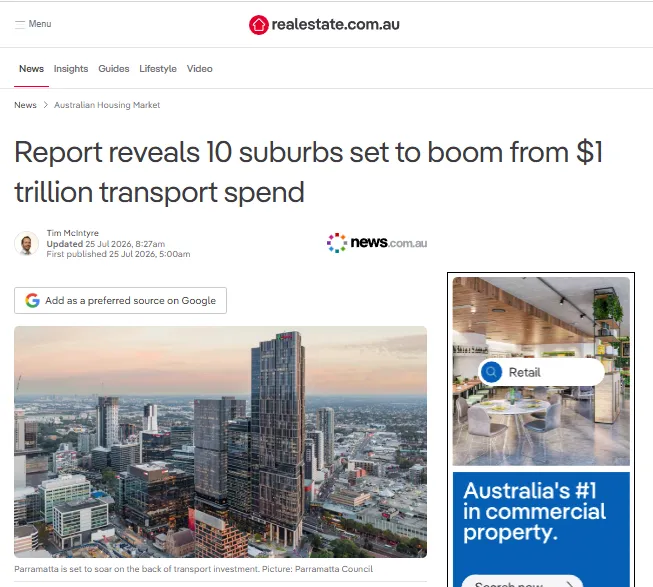
Property markets are experiencing value falls right across Australia, but a new report has identified 10 areas primed for growth on the back of transport infrastructure spend.
The Roads to Riches Report by Plenitude Wealth and Hotspotting has shed light on growth markets to be boosted by the nation’s “largest and most sustained period of transport infrastructure investment”.
The report has identified 664 transport infrastructure projects worth more than $100 million each that are planned, in design, in pre-construction or actively under construction. All up, the pipeline has a value of $1.02 trillion.
Projects of such a scale had “massive” impact on real estate demand in surrounding areas, thanks to the significant employment they generate, said Plenitude Wealth founder Andrew Courtney.
“Real estate that lies in the path of progress usually has superior rates of capital growth,” Mr Courtney said. “The best strategy for investors chasing capital growth is to focus on markets where the spending on new infrastructure, particularly transport infrastructure, is growing.”
Victoria, NSW and Queensland are the states set to benefit the most from the infrastructure investment and the report identified 10 property markets that can expect string value growth as a result.
NSW has four markets on the list, beginning with Bankstown in Sydney’s south west, which is set to benefit from the extended metro line, urban renewal and a movement of young professionals and families to the region.
Parramatta and St Marys (Penrith LGA) were two hotspots in Sydney’s west. Parramatta is also set to benefit from the metro project, as well as the Parramatta light rail, reaffirming its position as Sydney’s second CBD.
St Marys is being transformed into a major transport hub that connects trains, the metro and buses. This $11 billion infrastructure expansion will link the suburb directly to the new Western Sydney International Airport and surrounding job centres.
Further north, Raymond Terrace in the Port Stephens LGA can expect growth on the back of the $2.1 billion Pacific motorway extension, currently under construction and ahead of schedule.
Raymond Terrace is also well located for major employment hubs in the Newcastle area.
Queensland has three locations on the list.
Woolloongabba, Brisbane’s home of test cricket is well placed for the $19.04 billion Cross River Rail project. It’s also a priority area for urban renewal once the 2032 Olympic Games have ended.
Logan Central is also set to benefit from motorway and rail upgrades, while over on the Sunshine Coast, the suburb of Mountain Creek will be boosted by The Wave, a $5.5 billion public transport infrastructure program.
Victoria has two markets on the list. Ballarat is an affordable market for investors and will be linked to Melbourne via new rail and road upgrades, including the $650 million Melton line and the new West Gate Tunnel.
Sunshine, in the Brimbank LGA, is undergoing a $4.1 billion transformation into a “transport super hub”, integrating Melbourne Airport rail, the Metro Tunnel, regional services and future electric lines, putting it within 45 minutes of the CBD for commuters.
The final suburb on the list is Bridgewater in Tasmania’s greater Hobart area, thanks largely to the $786 million Bridgewater Bridge, which opened to traffic in 2025.
Hotspotting founder Terry Ryder, said one of the most common denominators of boom property markets was an elevated level of spending on infrastructure.
“Investors seeking long-term growth are well advised to follow the infrastructure trail,” he said.
“Many different types of infrastructure, such as hospitals or industrial estates can have a positive impact on real estate markets, but where transport infrastructure is superior is that it dramatically improves connectivity which makes suburbs more accessible and more attractive to renters and buyers.”
Realestatebusiness.com.au 24th July 2026

As Australia’s property market fragments, agents have been urged to rely on hyperlocal data to predict movements or risk losing listings, negotiation power, and client confidence.
With Australia’s property market no longer moving in lockstep, agents have been urged to focus on data at local government area (LGA) levels to ensure consistent business and adequate negotiation with sellers and buyers.
According to Hotspotting director Tim Graham, while the Australian property market has been experiencing a downturn, conditions have not been moving uniformly, with jurisdictions now sitting at different stages of the cycle.
With listings dwindling, Graham said that agents who have been relying on national headlines rather than localised conditions would be missing opportunities and making mistakes.
He said agents needed to strengthen both their market analysis and client communication skills to explain where local conditions were heading, rather than relying on historical trends.
“Fundamentally, it’s not about where the market has been, but where it appears to be heading in the months ahead,” Graham told REB.
He said that by pivoting from hindsight to foresight, property professionals would see better results as they will be able to explain the fast-shifting market conditions to their clients with clarity or risk losing their trust.
Whether agents want to go ahead or delay a listing, Graham said they will need the data to back their reasoning with their client.
“Vendors increasingly want to know whether listing now will protect their sale price or whether waiting could deliver a stronger result.”
“Selling agents need to be able to demonstrate why delaying a campaign may reduce the final sale price in cooling markets.”
In warmer markets, Graham said that data at LGA’s level will enable agents to be confident around price guides and campaign strategies.
“It gives agents a clear way to explain urgency and strategy to vendors, which should be backed by current market data rather than hindsight.”
To ensure agents can stay ahead of changing conditions, Hotspotting’s new predictive modelling tool Thermometer analysed pressure to show where each residential market sits today as well as the direction it is heading.
Each market is then scored on a thermometer-style scale, making it easy to see whether conditions are hot, warm, neutral, cooling, or cold.
“Our back-testing over the past five years shows our methodology has achieved more than 90 per cent accuracy when identifying markets moving decisively higher or lower.”
“It turns data into action by giving property professionals and consumers a clearer view of market momentum.”
Similarly, Graham said that buyer’s agents could use the predictive tool as investors, seeking future hotspots rather than already booming ones.
Graham said the strongest investment opportunities often emerge in warming or cooler locations, where momentum is building or value remains, while the hottest areas tend to offer less room for negotiation and greater competition.
He said that by understanding data at a macro level, buyer’s agents could ensure their clients were ready to either act fast, be more patient, or ramp up negotiations.
“It helps separate genuine growth markets from overheated locations where competition may already be too intense.”
“In fast-growing areas, buyers need to be better prepared, more decisive and clearer on strategy before competition intensifies.”
“In cooler markets, agents should be helping clients recognise value-buying opportunities and negotiate more assertively.”
Currently, the Thermometre had identified a clear divide across Australia’s property markets, with several LGAs recording strong growth momentum while others remain firmly in cooling territory.
Across the country, South Australia has been dominating the top rankings, with Onkaparinga recording the strongest outlook with a score of 77, followed by Mitcham and Palmerston in the Northern Territory on 74.
Campbelltown (SA) scored 73, while Darwin, Tea Tree Gully, Marion and Glenorchy rounded out the strongest-performing markets with scores of 72.
Meanwhile, regional areas including Isaac in Queensland, Narrabri in NSW, and several Victorian markets such as Moira, South Gippsland and East Gippsland recorded the weakest momentum.
Similarly, Mount Alexander (VIC) and Bega Valley (NSW) also ranked among the nation’s coolest LGAs, highlighting the widening gap between Australia’s strongest and weakest markets.
Thepropertytribune.com.au 21st July 2026
365 suburbs joined Australia’s million-dollar median club in the past 12 months, lifting the national total to 1,600 markets.
New South Wales leads with 717 million-dollar suburbs, ahead of Queensland (342) and Victoria (227).
Reventon and Hotspotting have named 10 future hotspots tipped to cross the mark, with growth as high as 31%.
Parts of Australia’s property market are continuing to experience very strong price growth, with hundreds of additional markets now recording medians in excess of $1 million.
Analysis by Reventon and Hotspotting reveals 365 markets were added to the list of million-dollar median suburbs in the past 12 months. It also identifies ten of the top future million-dollar median locations for investors across Australia.
In the 12 months to May 2026, there were 1,600 house or unit markets with a median price of $1 million or more, compared with 1,235 in May 2025.
Reventon CEO Chris Christofi said New South Wales topped the list with 717 suburbs with million-dollar medians, 103 of them unit markets. Queensland was next with 342 (including 31 unit markets), followed by Victoria with 227 (including 12 unit markets).
Western Australia had 128 million-dollar median markets, including six unit markets, while South Australia had 133, the ACT had 47, Tasmania had four and the Northern Territory had two.
NSW also had the highest number of new entrants (132), followed by Queensland (101), Western Australia (45), South Australia (42), Victoria (29) and the ACT (13). The Northern Territory doubled from one market to two, and Tasmania doubled from two to four.
“These figures show that, far from slowing down, the number of million-dollar markets continues to rise, with an additional 365 markets added to the list in the past 12 months,” Mr Christofi said.
Hotspotting managing director Tim Graham said there were still plenty of opportunities for investors to find markets set to tip over into million-dollar territory.
“Steady growth in recent years means there are a number of markets where, if the same trajectory continues, they will soon break the million-dollar median barrier.”
Tim Graham, Hotspotting
Mr Graham said many of these were also strong markets for investors, where rents had been rising, yields were solid and vacancy rates were low.
He said the benefit of buying in these markets was their capital growth potential. “These locations have already been proven to be desirable locations where buyers are prepared to pay a premium to secure a property,” he said.
Mr Graham said all locations identified by the analysis had more to offer than just expensive properties. “Generally, what is driving the price growth in these locations is significant infrastructure spending either underway or proposed, and good amenities such as schools, shops, recreational spaces, transport and access to job nodes,” he said.
“Those criteria mean that ongoing demand will lead to further price growth, allowing owners to build their wealth for the future.”
Top ten future million-dollar median hotspots
Suburb State Property type 12-mth sales Median 12-mth growth
Baringa QLD House 127 $940,000 14%
Belmont WA House 93 $920,000 31%
Blair Athol SA House 166 $870,000 24%
Botanic Ridge VIC House 168 $972,500 10%
Brighton Le Sands NSW Unit 125 $925,000 16%
Joondalup WA House 112 $960,000 11%
Loganholme QLD House 105 $905,000 18%
Paddington QLD Unit 68 $995,000 17%
Secret Harbour WA House 200 $920,000 19%
Springfield Lakes QLD House 390 $910,000 15%
Localipswichnews.com.au 4th July 2026
SPRINGFIELD Lakes and Spring Mountain are on the cusp of joining Queensland’s growing list of million-dollar property markets, with new research predicting the booming Ipswich suburbs will soon cross the coveted seven-
figure median house price milestone.
The latest June 2026 Million Dollar Hotspots Report, compiled by Reventon and Hotspotting, has identified both suburbs among Greater Brisbane’s next million-dollar hotspots as southeast Queensland’s property market continues to defy higher interest rates and affordability pressures.
Spring Mountain’s median house price now sits at $995,000, placing it just shy of the milestone, while neighbouring Springfield Lakes has also been highlighted as one of the region’s strongest performers expected to join the million-dollar club.
The report found Queensland added 101 new million-dollar house and unit markets over the past year, taking the State’s total to 342, with Greater Brisbane now accounting for 140 of those suburbs.
- Advertisement -
Reventon CEO Chris Christofi said the continued rise in million-dollar markets demonstrated that strong buyer demand was outweighing broader economic challenges.
“These figures show that far from slowing down, the number of million-dollar markets continues to rise,” Mr Christofi said.
“Locations that have million-dollar medians have already proven to be desirable locations where buyers are prepared to pay top dollar to secure a property.”
Greater Brisbane’s median house price now sits at $1.236 million, joining Sydney and Adelaide as Australia’s million-dollar capital city markets.
Hotspotting founder Terry Ryder said the identified suburbs had demonstrated consistent price growth and remained attractive investment locations.
“They are the markets where price growth has been steady in recent years and where demand remains strong. With that trajectory set to continue, these markets will soon breach the million-dollar barrier,” Mr Ryder said.
Real Estate Buyers Agents Association of Australia Queensland representative Melinda Granzien said buyers had become more cautious throughout 2026 following consecutive interest rate rises, even as population growth and housing shortages continued to underpin the market.
“Conditions are shifting from a strong seller’s market towards a more balanced environment,” Ms Granzien said
Architectureanddesign.com.au 3rd July 2026
New research confirms the Gold Coast is now the nation’s fastest-growing economy, with housing approvals running at less than half the required rate as population growth accelerates and a $91 billion infrastructure pipeline reshapes the region’s built environment.
The Gold Coast has overtaken every Australian capital city to become the nation’s fastest-growing economy, with new research identifying chronic housing undersupply and a $91 billion infrastructure pipeline as the dominant forces reshaping the region’s built environment.
The Gold Coast Property Report 2026, published jointly by COAST Buyer’s Agency and Hotspotting, draws on data from PropTrack, the Australian Bureau of Statistics, Jobs Queensland, Gold Coast City Council and PRD Research. It shows the region’s Gross Regional Product (GRP) has reached $49.4 billion, $775 million above forecast, with growth of 10.07 per cent projected over the next four years against a national rate of 7.91 per cent.
Underlying the expansion is a fundamental shift in the regional economy’s structure. Construction and healthcare have overtaken tourism as the Gold Coast’s largest economic drivers, reflecting a maturing and more diversified economic base.
Population growth is the primary pressure point for the construction sector. More than 420 new residents arrive on the Gold Coast every week, the largest share relocating from higher-priced New South Wales coastal markets. That pace has pushed projections for the region reaching one million residents forward to 2040, six years ahead of earlier modelling.
The supply response has not kept pace. The Gold Coast requires approximately 9,250 new dwellings per year to accommodate current population growth, but approvals reached only 4,091 in the 2025 financial year, well under half the required rate. Rental vacancy has fallen to 1.3 per cent, leaving fewer than 900 properties available across the region.
“The number I’ve always watched is migration, and right now the Gold Coast is absorbing more than 400 people a week into a market that simply isn’t building enough homes,” says Joe Pullos, principal, COAST Buyer’s Agency. “When you’ve got too many people chasing too few houses, there’s really only one direction for prices.”
The $91 billion infrastructure pipeline and forecast of 25,300 new jobs are expected to sustain construction activity and continue drawing interstate migration. The report notes that recent federal budget changes, including a winding back of tax concessions on investment property while the family home retains its capital gains tax exemption, have shifted the economics of residential property ownership further toward owner-occupier demand in the premium segment.
The report identifies four Gold Coast suburbs recording strong price performance in the prestige tier. Mermaid Beach posted the strongest house price growth in the report, up 32 per cent over twelve months to a median of $3.35 million, with five-year average annual growth of 16 per cent. Broadbeach Waters saw its median rise 15 per cent to $2.575 million, alongside a 46 per cent surge in quarterly sales transactions, which the report identifies as a leading indicator of further price acceleration.
Currumbin recorded 28 per cent median growth to $1.8 million, while Palm Beach reached a median of $1.93 million with 14 per cent average annual growth over five years.
“The fundamentals here are as strong as I’ve seen,” says Pullos. “This isn’t a speculative run, it’s a structural shift in where Australians want to live and work.”
News.com.au 27th June 2026

Sydney’s falling property market has a surprising twist – unit prices in several key suburbs have crossed the $1m median mark for the first time, despite values falling across most of the market, new data shows.
Surging demand for more affordable homes, driven by interest rate hikes and the federal government’s First Home Guarantee scheme, has pushed more buyers into the lower-priced end of the market, lifting unit medians in many areas.
While prices are declining across 75 per cent of the market, the cheapest 25 per cent is proving more resilient.
Analysis by Reventon and Hotspotting found 365 markets were added to the national list of suburbs with million-dollar medians over the past year.
Reventon CEO Chris Christofi said NSW topped the list with 717 suburbs with million-dollar medians (103 of those were unit markets).
“These figures show that far from slowing down, the number of million-dollar markets continues to rise, with an additional 365 markets added to the list in the past 12 months,” Mr Christofi said.
The million-dollar median for units became the norm across many Sydney suburbs over the past year including Woolloomooloo ($1.25m), Heathcote ($1.21m), Revesby ($1.15m), Dee Why ($1.09) and Castle Hill ($1.08m).
Hotspotting founder Terry Ryder said there were still plenty of opportunities for investors to find markets that were set to tip over into million-dollar markets.
“They are the markets where price growth has been steady in recent years and where demand remains strong,” he said.
“With that trajectory set to continue, these markets will soon breach the million- dollar barrier.
“They are also strong markets for investors, where rents have been rising, yields are solid and vacancy rates are low.”
Brighton –Le-Sands was spotlighted as a hotspot set to tip into the million dollar territory, with a median unit price of $925,000.
The report pointed to the region meeting growing demand for affordable apartments in near-city locations, with significantly more apartments approved for construction than freestanding houses over the past 20 years.
“Momentum is building in the Bayside LGA, particularly the popular suburbs of Botany and Brighton-Le-Sands,” Mr Reventon said.
“The median unit price rose 16.2% in the past 12 months and if that pace of growth continues, it will surpass the million-dollar median mark within the next 12 months.”
Another suburb below the unit million dollar median is Wentworth Point, at $745,000.
Sydneysider Lily Orminsby and her partner Gerhard Merrick recently purchased an apartment in Wentworth Point towards the start of the year for $925,000, just below the million dollar median.
“It was a little bit more than we wanted to pay but the market was really competitive still at the time we bought,” Ms Orminsby said.
Previously renting in the area and later moving closer to the city, Ms Orminsby has now returned to the suburb with her partner.
“It’s really nice to walk around by the water and all of the parklands and I just found it really convenient, so I suggested it to my partner when we were looking to buy,” she said.
Mr Merrick said the properties were a higher quality than those of the same price in the Inner West, where they had been searching prior.
“For what you could spend to buy a house, the apartments are much more appealing,” he said.
“Especially for first home buyers,” Ms Orminsby added.
“All the houses are in a multimillion range, it’s a bit easier to get into the apartment market first and then move towards a house in the future”
McGrath Strathfield Agent Ania Aquino said Wentworth Point’s appeal factors its convenient location close to Parramatta, the West Connex and the Macquarie Park district.
“We’re seeing that a lot of buyers are enjoying that central position,” she said.
“There’s a mix in Wentworth Point of high rise and low density, but ultimately the buyers are coming here for the lifestyle aspect.”
She added the highest demographic buying into the suburb, according to the last census, were those between 35 to 45 years of age.
“Young urban professionals, say a young couple will come here like Lily and her partner, they fall in love with the area, they establish a network, then they upsize.”
News.com.au 27th June 2026
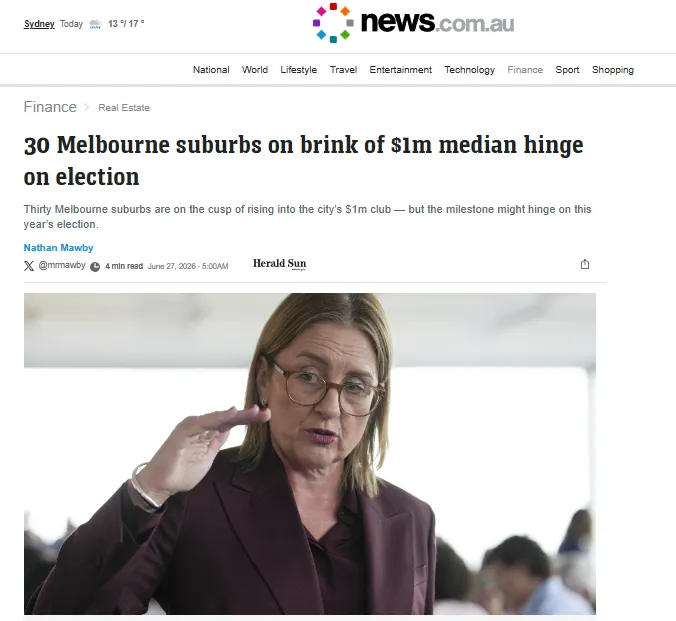
Melbourne has as many as 30 up-and-coming suburbs that could be on their way to joining the city’s million-dollar housing club within a year.
But it could hinge on the November state election, with at least one prominent property pundit claiming Jacinta Allan’s was the “worst state government in the country” when it comes to real estate.
Briar Hill and Botanic Ridge are both $15,000 or less short of their median house price hitting the $1m mark.
PropTrack stats show that in both cases, if they achieve the same level of growth in the year ahead as they did in the past 12 months, both will comfortably be $1m suburbs by June 2027.
Meanwhile typical prices for houses in Altona North and Taylors Lakes, as well as units in Camberwell and Black Rock are all at $980,000 — with enough price growth in the past year to suggest that they too could imminently climb into the seven-figure club.
Separate analysis by financial services firm Reventon and real estate analysis and research website Hotspotting shows Botanic Ridge is the area most likely to next join Victoria’s current list of 215 suburbs with a $1m-plus typical price for houses.
Their data showsanother 12 suburbs have units that are also typically worth $1m or more.
The analysis shows that in the past year typical house prices in 29 Victorian suburbs climbed past the $1m mark, including Airport West, now $1.01m, Gisborne, $1m, and Watsonia, $1.01m.
Reventon chief executive Chris Christofi said the data showed that, despite broad expectations of a market slow down, there were a number of areas that were still gaining ground.
Hotspotting founder Terry Ryder said Melbourne was facing a “period of great uncertainty” amid rising interest rates, conflict in the Middle East and the federal budget – and it was hard to be sure when home price rises would resume adding to the city’s $1m club.
But the respected property pundit said many suburbs’ fortunes would hinge heavily on November’s Victorian election.
Melbourne’s Next $1m House Suburbs
Suburb Type Median Today 2025 Median Projected median, 2027
Briar Hill H $988,500 $970,000 $1,007,282
Botanic Ridge H $985,000 $895,000 $1,084,485
Altona North H $980,000 $919,500 $1,044,680
Taylors Lakes H $980,000 $920,000 $1,043,700
Croydon H $966,000 $885,000 $1,054,872
Watsonia North H $961,000 $870,000 $1,061,905
Gowanbrae H $960,000 $880,000 $1,047,360
Bayswater H $960,000 $880,000 $1,047,360
Keysborough H $960,000 $920,000 $1,001,280
Chirnside Park H $953,775 $851,000 $1,069,182
Reservoir H $950,000 $900,000 $1,003,200
Projected price assumes local house median value will rise in line with past year’s growth.
“At the start of the year Melbourne looked like it would be moving strongly into recovery mode this year; things have changed,” Mr Ryder said.
“But in terms of property markets growing in Melbourne, what they need more than anything else is a change of state government as the state government is not particularly friendly to real estate markets or investors.
“It’s the worst state government in the country, and in some ways it feels like the worst state government ever, as far as real estate goes.
“So that would be a catalyst to property growth.”
PropTrack economist Luc Redman said interest rates would have a significant influence on whether suburbs rose past the $1m mark, as would the property tax changes announced in May’s federal budget.
“Combined, they will lead to a weakening of growth, particularly at the edge of the $1m market,” Mr Redman said.
He noted that his firm was still in the camp that rate cuts would not occur until 2027 at the earliest, and that undesirable consumer price index numbers released this week could even suggest a further rate rise was still ahead.
However, the economist said in Melbourne a $950,000 cap on the federal government’s 5 per cent first home deposit support scheme could lead to enough activity in the bottom half of a suburb’s market that it would help elevate it to a $1m area.
“There are buyers in the market now who know that is their upper limit,” Mr Redman said.
“And you might see buyers with slightly budgets, with a 20 per cent deposit, will be able to go higher and above the $950,000 mark.”
Melbourne’s Next $1m Unit Suburbs
Suburb Median Today 2025 Median Projected median, 2027
Camberwell $980,000 $882,500 $1,088,780
Black Rock $980,000 $955,000 $1,005,480
Blackburn South $970,000 $850,000 $1,106,770
Vermont South $952,000 $830,000 $1,091,944
Toorak $950,000 $895,500 $1,007,950
Surrey Hills $945,000 $870,000 $1,026,270
Templestowe $935,500 $849,000 $1,030,921
Kew East $935,000 $855,000 $1,022,890
Caulfield South $927,500 $811,000 $1,061,060
Briar Hill $881,025 $761,000 $1,020,227
Projected price assumes local unit median value will rise in line with past year’s growth.
While he would not comment on whether a change of government would impact the housing market,Mr Redman said if the Victorian election led to policy offers of first-home buyer stamp duty support being raised to $950,000 in line with the federal scheme, that could compound demand at that level.
“You could see a bring-forward in demand, and we are still seeing that playing out in the market at the moment,” he said.
McGrath agent Leo Widjaja said it really felt like Botanic Ridge wasn’t far off andcould hit the $1m median by the year’s end, despite headwinds.
“You can’t really get anything under the $850,000 mark now for a house,” Mr Widjaja said.
“And once the market recovers I don’t see any problem with it becoming a seven-digit median.”
The agent said the area was attracting buyers from young families to middle-aged locals and even downsizers from other parts of the city moving there to be closer to family — or the area’s enviable golf courses.
“And Melbourne is long overdue for a boom of the market,” he said.
News.com.au 27th June 2026
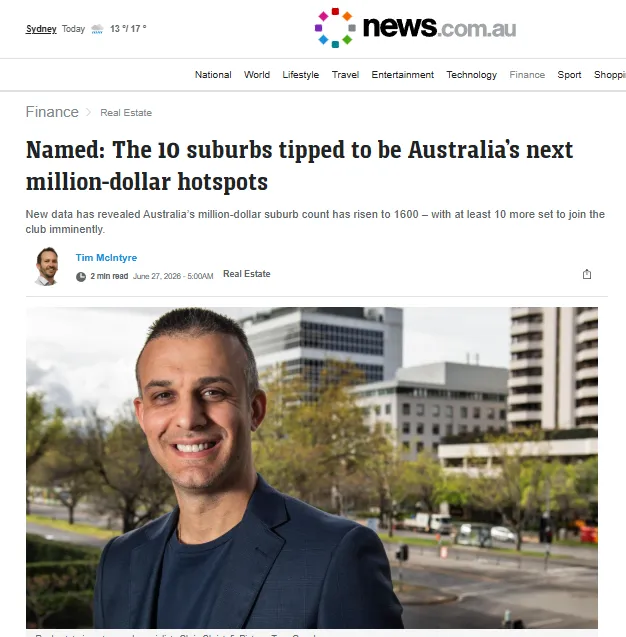
Australia’s housing markets may be slowing down as rising interest rates and new tax changes put a handbrake on capital growth, but a number of suburbs across the country are bucking the trend.
Exclusive new data analysis by Reventon and Hotspotting has revealed 365 Australian suburbs attained million dollar medians for the first time over the past 12 months. That’s one a day.
And at least 10 more look primed to break the seven figure ceiling in the near future.
In the 12 months to May 2026, the numbers revealed there were 1600 house or unit markets with a median price of $1 million or more, compared with 1235 in may 2025.
NSW tops the national count, with 717 million-dollar suburbs, followed by Qld with 342 and Victoria with 227. South Australia has 133, WA has 128, the ACT has 47, Tasmania four and the NT two.
NSW also topped the list for new entrants with 132, while Qld (101) was next. WA (45), SA (42), Victoria (29) and the ACT (13) followed.
Reventon CEO Chris Christofi said the data showed there were many markets still performing strongly.
Hotspotting founder Terry Ryder said there were plenty of opportunities for investors to find the next markets to tip over into million-dollar locations.
“They are the markets where price growth has been steady in recent years and where demand remains strong. With that trajectory set to continue, these markets will soon breach the million-dollar barrier,” Mr Ryder said.
The analysis revealed the top 10 suburbs likely to become the nation’s next millionaire postcodes.
Qld had the most, with Baringa set to advance its house median of $940,000 to seven figures in the year ahead, after 14 per cent growth in the previous year; Loganholme (House median of $905,000); Paddington (unit median of $995,000 and Springfield Lakes (house median of $910,000).
WA had three suburbs on the list in Belmont (house median of $920,000); Joondalup (house median of $960,000); and Secret Harbour (house median of $920,000).
South Australia’s Blair Athol was the only sub $900,000 median on the list, with houses growing 24 per cent in the past year to sit at $870,000; while Victoria’s Botanic Ridge was on the brink with a house median of $972,500.
The sole NSW entry was the unit market at Brighton Le Sands, with a median of $925,000 after 16 per cent growth.
“They are also strong markets for investors, where rents have been rising, yields are solid and vacancy rates are low.”
Mr Christofi said million-dollar suburbs had proven capital growth potential.
“Locations that have million-dollar medians have already proven to be desirable locations where buyers are prepared to pay top dollar to secure a property,” he said.
“The locations identified are the next up-and-coming million-dollar hotspots that have more to offer than just expensive properties.
Generally, what is driving the price growth in these locations is significant infrastructure spending either underway or proposed, good amenities such as schools, shops and recreational spaces, transport and access to job nodes.
“Those criteria mean that ongoing demand will lead to further price growth, allowing owners to build their wealth for the future.”
Realestate.com.au 27th June 2026

Queensland’s property market has minted 101 new million-dollar markets in the past year, defying interest rate hikes and an affordability crisis putting the brakes on the national growth outlook.
Latest data shows the state is now home to 342 house and unit markets with a median price of $1m or more, with 140 of them located in Brisbane.
The June 2026 Million Dollar Hotspots report by Reventon and Hotspotting identified the next wave of suburbs soon to hit the milestone, with four of the nation’s top 10 future picks in the Sunshine State.
Reventon CEO Chris Christofi said the data showed underlying buyer demand was outpacing macroeconomic headwinds, with 365 suburbs added to the national million-dollar list over the last year alone to bring the Australian total to 1,600 markets.
The surge cements Greater Brisbane’s median house price at $1.236m, locking it in alongside Sydney ($1.604m) and Adelaide ($1.025m) as the nation’s million-dollar capitals.
“These figures show that far from slowing down, the number of million-dollar markets continues to rise,” Mr Christofi said.
“Locations that have million-dollar medians have already proven to be desirable locations where buyers are prepared to pay top dollar to secure a property.”
The report highlighted Springfield Lakes, Loganholme and Paddington units are Greater Brisbane’s next hotspots, along with Baringa on the Sunshine Coast.
These areas were all on the verge of breaking through the seven-figure barrier, with infrastructure and lifestyle driving buyer demand.
Hot on their heels were nearby suburbs, Greenbank and Spring Mountain (houses), plus Warana and Hawthorne (units).
Hotspotting founder Terry Ryder said the suburbs were also sound picks for investors, offering rising rents, solid yields, and low vacancy rates.
“They are the markets where price growth has been steady in recent years and where demand remains strong. With that trajectory set to continue, these markets will soon breach the million-dollar barrier,” Mr Ryder said.
While local fundamentals remained robust, a clear shift in nationwide sentiment had emerged as the market contended with three consecutive interest rate hikes.
Separate data from Realestate.com.au’s latest Market Snapshot shows this was tempered by a lack of homes available to purchase.
“Choice for buyers is limited in Brisbane, Perth and Adelaide, with total listings down circa 40 per cent on pre-pandemic levels in all three cities,” REA executive manager of economics Angus Moore said.
It’s created a long-term imbalance of demand over supply, leading to Brisbane home prices skyrocketing by 59 per cent since January 2022, outperforming almost all other capital city markets across the country.
But the Real Estate Buyers Agents Association of Australia (REBAA) warned the Federal Budget’s proposed tax reforms to negative gearing and Capital Gains Tax would cool broader investor confidence.
REBAA Queensland State Representative Melinda Granzien said Southeast Queensland was entering a period of adjustment following years of extraordinary price hikes.
“While population growth, interstate migration and housing undersupply continue to support the market, buyer sentiment has become noticeably more cautious throughout 2026,” Ms Granzien said.
“Conditions are shifting from a strong seller’s market towards a more balanced environment.”
Thepropertytribune.com.au 23rd June 2026

Sydney still offers plenty of investment opportunities, particularly across its more affordable unit market.
Hotspotting Managing Director Tim Graham has identified five Greater Sydney LGAs primed for future price growth.
Federal Budget changes make securing properties with solid rental income and good yields more important than ever.
There are still plenty of opportunities to be found in the Sydney property market for investors, particularly its unit market.
According to Hotspotting Managing Director Tim Graham, Federal Budget changes mean it is more important than ever for investors to secure properties with solid rental income and good yields.
“While Sydney remains Australia’s largest property market, detached houses across much of the city are beyond the reach of many investors,” Mr Graham said.
“Therefore, opportunities increasingly lie in locations offering affordable attached dwellings, stronger yields and access to major economic drivers.”
Mr Graham has identified five LGAs within Greater Sydney which he believes are primed for future price growth: Canterbury Bankstown, Fairfield, Central Coast, Parramatta and Liverpool.
Each location has good employment prospects, population growth, infrastructure investment and rental demand, while providing alternatives to expensive detached houses.
“Canterbury Bankstown LGA is a great example of the opportunities which exist for investors in Greater Sydney,” Mr Graham said.
“It has a large population, established transport connections and major employment, health and renewal projects. Its deep unit market offers lower entry prices, supported by tight vacancies and strong rental demand.”
“It sits in the sweet spot of Sydney’s current market. It has scale, affordability relative to many inner and middle-ring markets, strong transport connections and one of the deepest unit markets in Greater Sydney.”
Tim Graham, Hotspotting
Mr Graham said Fairfield offered a similar opportunity. Its house medians exceeded $1 million but units remained available from the low-$400,000s, with yields above 5%.
“Fairfield also has strong rental demand and its proximity to some of Western Sydney’s largest employment and infrastructure projects means that demand will continue to increase.
“Every significant unit market within the LGA achieved annual price growth, while yields range up to 5.4% in Fairfield. Vacancy rates remain tight across most of the LGA, with rents continuing to rise in many suburbs.”
The Central Coast market offered investors more affordable options, within access of both Sydney and Newcastle and a diverse mix of houses, units and lifestyle markets.
“It has become one of the most important bridge markets between Greater Sydney and Regional NSW. It offers the lifestyle appeal of a coastal region, but with direct motorway and rail connections to Sydney and Newcastle, giving it a strong commuter and migration story,” Mr Graham said.
Parramatta had strong unit turnover and attractive yields which reinforced its relevance in a cash-flow-conscious environment, while Liverpool also had many accessible unit markets.
Smartpropertyinvestment.com.au 12th June 2026
The Gold Coast has become the nation’s fastest-growing economy, with multiple premium suburbs set to deliver strong gains amid record migration and housing shortages.
The Gold Coast Property Report 2026, by COAST Buyer’s Agency and Hotspotting, showed the region’s gross regional product has reached $49.4 billion, $775 million above forecast.
Additionally, the economy is forecast to grow by 10.07 per cent over the next four years, well ahead of the national rate of 7.91 per cent.
COAST principal Joe Pullos said the data showed that the prestige market was the nation’s most thriving growth sector, with price gains continuing to be fuelled by record migration, a $91 billion infrastructure pipeline and a jobs boom.
“The big winners from this wave of economic activity will be prestige homebuyers, with particular suburbs set to outperform the wider market,” Pullos said.
Here are the standout prestige suburbs:
Mermaid Beach
Mermaid Beach recorded the strongest house price growth of any market in the report, rising 32 per cent to a median of $3.35 million in 12 months, with a five-year average annual growth of 16 per cent.
Pullos said the area was where serious buyers went, and a lack of new beachfront land meant the supply of homes in the region would remain fixed.
“When you have buyers competing for a finite pool of trophy homes in a market growing this fast, the only way is up,” he said.
“A blue-chip address like this tends to hold and grow value through every cycle.”
Broadbeach Waters
An enclave known for its wide, north-facing canal frontages, Broadbeach Waters’ median house price has risen 15 per cent to $2.575 million in the past year, joined by a 46 per cent surge in quarterly sales transactions.
According to the report, rising transaction volumes typically preceded price growth, making it one of the clearest leading indicators of a market about to accelerate.
According to Pullos, the 46 per cent jump in transactions in Broadbeach Waters showed that buyers were moving with real conviction.
“For a prestige canal-front home that’s walking distance to the beach, the dining precinct and the light rail – with that kind of momentum behind it, the window to buy well is narrowing fast.”
Currumbin
On the southern end of the Gold Coast, Currumbin has a beachside village atmosphere that has drawn in interstate lifestyle buyers.
The market’s median house price has risen 28 per cent annually to $1.8 million, placing it at the entry point of the prestige tier.
Pullos said Currumbin had a laid-back feel that was hard to find, giving buyers a reasonable price point for a genuine prestige beachside market.
“For buyers who want the lifestyle without the Mermaid Beach price tag, the upside here is substantial.”
Palm Beach
According to Pullos, Palm Beach has undergone a dramatic transformation into a highly desirable suburb, driven by architecturally eye-catching beachfront apartment projects from leading lifestyle developers.
With a median of $1.93 million and 14 per cent average annual growth over five years, Pullos said Palm Beach had matured into a true prestige market, but hadn’t fully repriced the way Burleigh or Mermaid Beach had.
“It remains eminently affordable by comparison, which is exactly why it’s got so much growth potential as the market accelerates. For my money, it’s the one to watch,” he said.
According to the report, the Gold Coast’s economic base has fundamentally shifted over the years, with construction and healthcare overtaking tourism as the biggest drivers.
Pullos said residents in Sydney and Melbourne were migrating to the area in droves to build business and enjoy the lifestyle, whereas Queenslanders used to flock southwards.
He said the shift was underpinned by relentless population growth, with more than 420 new residents arriving on the Gold Coast every week, the largest share from higher-priced NSW coastal markets.
As a result, the region’s population is forecast to reach one million by 2040, six years earlier than previously projected, culminating in a severe housing shortage.
While the Gold Coast requires around 9,250 new homes a year to keep pace, approvals sat at just 4,091 in the 2025 financial year, while rental vacancies have fallen to 1.3 per cent.
Pullos also said the appeal of premium owner-occupier homes had been boosted by federal tax reforms, with investors seeking to deploy capital into high-quality homes in tightly held suburbs.
“We’re already seeing strong interest in certain areas from buyers with around $2 million-plus to spend on a home, and our analysis indicates there is far more growth to come,” Pullos concluded.
Eliteagent.com 11th June 2026
The Gold Coast has officially overtaken every Australian capital city to become the nation’s fastest-growing economy.
Breaking free from its historical reputation as a seasonal lifestyle hub, a permanent structural shift is driving an unprecedented boom in the prestige property sector.
According to the Gold Coast Property Report 2026, a joint publication by COAST Buyer’s Agency and Ryder Property Research (Hotspotting), the region’s Gross Regional Product has hit a staggering $49.46 billion, outperforming forecasts by $775 million to solidify its place as Australia’s largest non-capital economy.
The city’s economy is forecast to expand by 10.07% over the next four years, well ahead of the national rate of 7.91%.
This acceleration is backed by a massive $91 billion infrastructure pipeline, with $54 billion in government projects and $37 billion in private sector investment.
Key Macro Drivers
Industrial Maturation: Construction is now the Gold Coast’s most productive industry ($5.04b), followed by health care ($4.5b) and manufacturing ($3.15b). This has driven unemployment down to a tight 3.5%, well below the Queensland average of 4.2%.
Relentless Demand: Over 420 new residents migrate to the Gold Coast every week , bringing projected population figures to one million by 2040 – six years ahead of schedule.
Systemic Supply Deficits: To meet demand, the city requires 9,250 new homes annually.
However, building approvals for FY2025 sat at a mere 4,091, with the Property Council warning that 58% of approved unit projects are currently at risk of delay or cancellation.
Rental Squeeze: Regional vacancy rates have plummeted to a critical 1.3% , leaving only 900 properties available across the entire region. Median house asking rents rose 8.6% in 12 months.
“The number I’ve always watched is migration, and right now the Gold Coast is absorbing more than 400 people a week into a market that simply isn’t building enough homes. When you’ve got too many people chasing too few houses, there’s really only one direction for prices,” said COAST Buyer’s Agency Principal, Joe Pullos.
Four Standout Prestige Suburbs
Mr Pullos highlighted four distinct geographical markets primed to significantly outperform the wider property sector:
Mermaid Beach: Trophy market and home to “Millionaires’ Row”. House prices surged 32% over the past 12 months to a median of $3.35 million.
“Mermaid Beach is where the serious money goes, and the absence of any new beachfront land means the supply of these homes is fixed. When you have buyers competing for a finite pool of trophy homes in a market growing this fast, the only way is up.”
Broadbeach Waters: Prized for wide canal frontages. The median house price rose 15% to $2.575 million, accompanied by a major 46% spike in quarterly transaction volume.
“If I had to single one out, it’s Broadbeach Waters. That 46% jump in transactions tells you buyers are moving with real conviction… the window to buy well is narrowing fast.”
Currumbin: The competitive entry point of the luxury residential tier , housing values jumped 28% in 12 months to a median of $1.8 million.
“Currumbin has that authentic, laid-back beach-town feel that’s become incredibly hard to find, and increasingly valuable… the upside here is substantial.”
Palm Beach: Driven by striking beachfront developments , the suburb holds a median house price of $1.93 million.
“Palm Beach has matured into a true prestige destination, but it hasn’t yet fully repriced the way Burleigh or Mermaid have. It remains eminently affordable by comparison, which is exactly why it’s got so much growth potential.”
With an additional $2 billion economic injection on the horizon from the 2032 Olympic Games , Mr Pullos concluded: “The fundamentals here are as strong as I’ve seen. This isn’t a speculative run, it’s a structural shift in where Australians want to live and work.”
Mpamag.com 11th June 2026
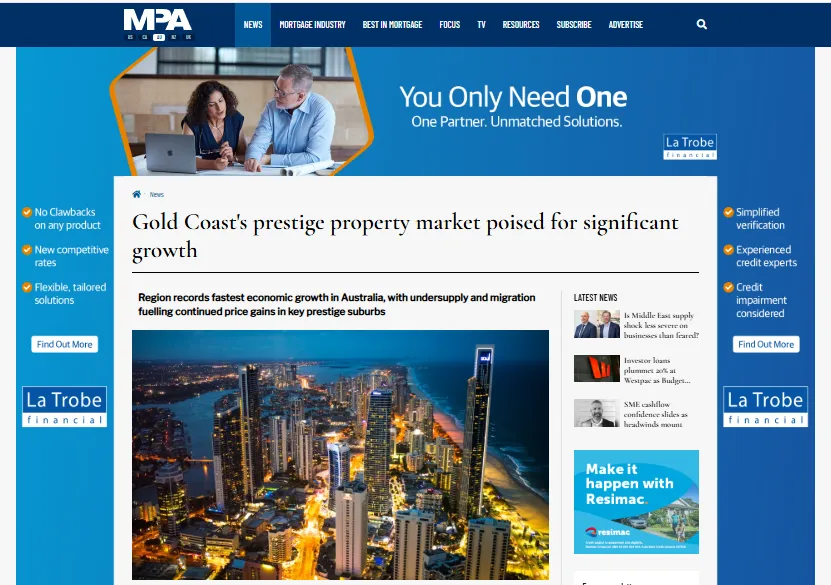
Prestige property buyers on the Gold Coast stand to benefit most from the region's economic expansion, which has outpaced all Australian capital cities.
According to the Gold Coast Property Report 2026, a joint publication by COAST Buyer's Agency and Hotspotting, the region's Gross Regional Product has reached $49.4 billion — $775 million above forecast — with economic growth of 10.07% projected over the next four years, against a national rate of 7.91%. Unemployment sits at 3.5%, compared with 4.5% nationally.
Construction and health care have displaced tourism as the region's dominant economic drivers. A $91 billion infrastructure pipeline and a forecast of 25,300 new jobs are expected to sustain that momentum.
Population growth is adding more than 420 new residents per week, many relocating from higher-priced NSW coastal markets. The region's population is now projected to reach one million by 2040, six years earlier than previously forecast. Housing supply has not kept pace: approvals totalled just 4,091 in the 2025 financial year against an estimated annual requirement of around 9,250 new dwellings, while rental vacancies have fallen to 1.3%.
Joe Pullos (pictured right), principal buyer's agent at COAST Buyer's Agency, said proposed federal Budget changes — which would reduce tax concessions on investment property while preserving the capital gains tax exemption on the family home — had further sharpened demand for owner-occupied prestige stock.
"With the proposed changes making investment property less tax-effective, the family home becomes an even more attractive place to build and hold wealth," Pullos said. "For buyers with capital to deploy, putting it into a high-quality home in a tightly held suburb is an increasingly compelling strategy."
Pullos identified four suburbs as offering the strongest prospects for prestige buyers: Mermaid Beach, Broadbeach Waters, Currumbin, and Palm Beach.
Mermaid Beach recorded house price growth of 32% over 12 months to a median of $3.35 million, with five-year average annual growth of 16%. "Mermaid Beach is where the serious money goes, and the absence of any new beachfront land means the supply of these homes is fixed," the agent said.
Broadbeach Waters posted a 15% rise in median house price to $2.575 million, alongside a 46% increase in quarterly sales transactions — a metric Pullos regards as a leading indicator of further price movement. "If I had to single one out, it's Broadbeach Waters," he said. "That 46% jump in transactions tells you buyers are moving with real conviction."
Currumbin recorded median price growth of 28% to $1.8 million. "Currumbin has that authentic, laid-back beach-town feel that's become incredibly hard to find, and increasingly valuable," Pullos said. "At this price point you're still getting into a genuine prestige beachside market with real room to run."
Palm Beach registered a median of $1.93 million and five-year average annual growth of 14%. Pullos described it as the suburb with the greatest remaining growth potential among his four picks. "Palm Beach has matured into a true prestige destination, but it hasn't yet fully repriced the way Burleigh or Mermaid have," he explained. "It remains eminently affordable by comparison, which is exactly why it's got so much growth potential as the market accelerates. For my money, it's the one to watch."
Theindiansun.com.au 10th June 2026
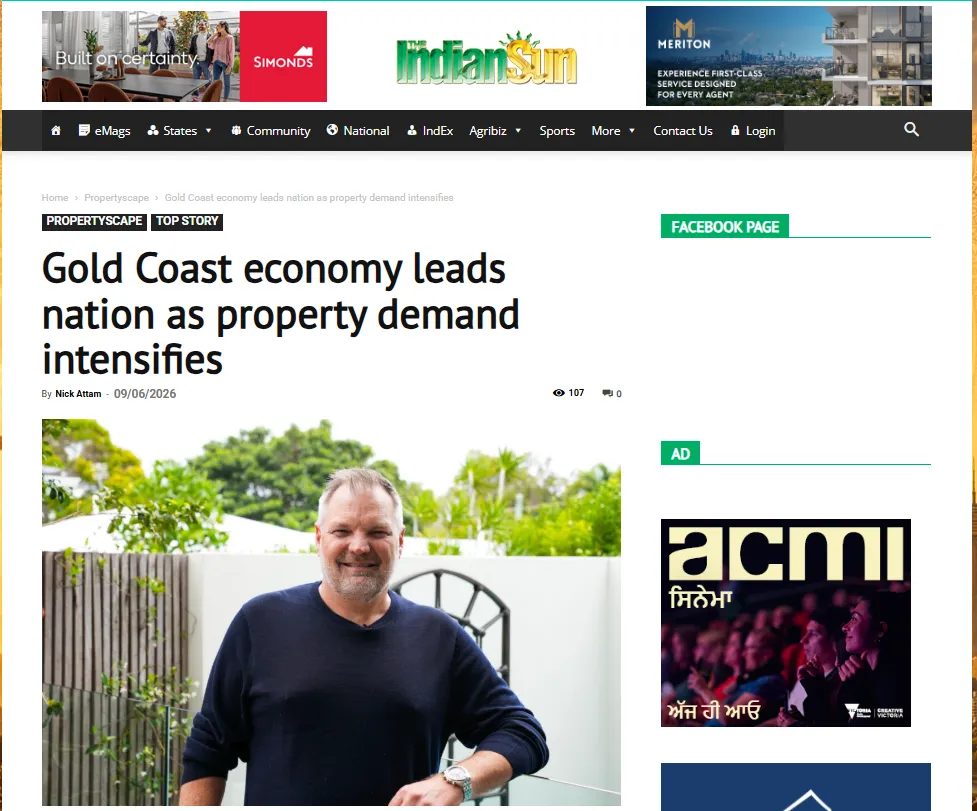
The Gold Coast is projected to record the fastest economic growth in Australia over the next four years, with new research pointing to strong migration, major infrastructure spending and ongoing housing shortages as key drivers of the region’s property market.
A new Gold Coast Property Report 2026, produced by COAST Buyer’s Agency and Hotspotting, forecasts economic growth of 10.07 per cent for the region, ahead of the national growth forecast of 7.91 per cent. The report estimates the Gold Coast’s Gross Regional Product has reached $49.4 billion and identifies more than $91 billion worth of infrastructure projects planned or underway across the city.
COAST Buyer’s Agency principal Joe Pullos said the Gold Coast had developed into one of Australia’s strongest growth markets.
“The big winners from this wave of economic activity will be prestige homebuyers, with particular suburbs set to outperform the wider market,” Mr Pullos said.
The report highlights a shift in the city’s economic base, with construction and health care emerging as major contributors to growth. Construction generated more than $5 billion in economic output, while health care contributed $4.5 billion, according to the research.
Mr Pullos said the city’s changing economy was attracting professionals and business owners from interstate.
“This transformation signals a maturing, diversified economy rather than a seasonal one,
“Growing up in Queensland, the saying was ‘if you’ve got any get up and go, you get up and GO!’ meaning you had to be prepared to move Sydney or Melbourne to advance your career. That’s now completely reversed. Professionals from down south and returning expats are among those moving here in droves to build businesses and enjoy the lifestyle”
Population growth remains a central factor behind housing demand. The report estimates more than 420 people moved to the Gold Coast each week over the two years to January 2024, with overseas migration accounting for most new arrivals. The city’s population is now expected to reach one million by 2040, six years earlier than previous projections.
At the same time, housing supply continues to lag demand. The report estimates the Gold Coast will require around 9,250 new homes annually until 2046, yet only 4,091 building approvals were recorded in the 2025 financial year. Vacancy rates have fallen to 1.3 per cent, with around 900 rental properties available across the region.
“The big winners from this wave of economic activity will be prestige homebuyers, with particular suburbs set to outperform the wider market”
“The number I’ve always watched is migration, and right now the Gold Coast is absorbing more than 400 people a week into a market that simply isn’t building enough homes
“When you’ve got too many people chasing too few houses, there’s really only one direction for prices.”
The report also points to employment growth as another source of demand. More than 25,300 additional jobs are forecast over the next four years, while the local unemployment rate of 3.5 per cent remains below both the Queensland and national averages.
Infrastructure investment is expected to play a major role in shaping the city’s future. Projects include transport upgrades, health precinct developments, residential construction and preparations linked to the Brisbane 2032 Olympic Games, with the report estimating the Games could contribute around $2 billion to the Gold Coast economy.
Mr Pullos said recent policy changes and broader market conditions were increasing interest in owner-occupied homes.
“With the proposed changes making investment property less tax-effective, the family home becomes an even more attractive place to build and hold wealth.
“For buyers with capital to deploy, putting it into a high-quality home in a tightly held suburb is an increasingly compelling strategy.
“We’re already seeing strong interest in certain areas from buyers with around $2 million-plus to spend on a home, and our analysis indicates there is far more growth to come.
“For buyers moving up from Sydney or Melbourne, the value equation is striking. A median house in Bondi is around $4.5 million. For a third of that, you can buy into a comparable coastal lifestyle in Surfers Paradise — and you’re buying into the fastest-growing economy in the country while you’re at it.”
Among the prestige suburbs highlighted in the report are Mermaid Beach, Broadbeach Waters, Currumbin and Palm Beach, which Mr Pullos believes are well placed to benefit from rising demand and limited housing supply.
Looking ahead, he said the Gold Coast’s long-term outlook remained supported by population growth, infrastructure investment and housing shortages.
“The fundamentals here are as strong as I’ve seen. This isn’t a speculative run, it’s a structural shift in where Australians want to live and work. The growth in this market outweighs any of the little blips along the way.”
Propertymarkets.news 10th June 2026
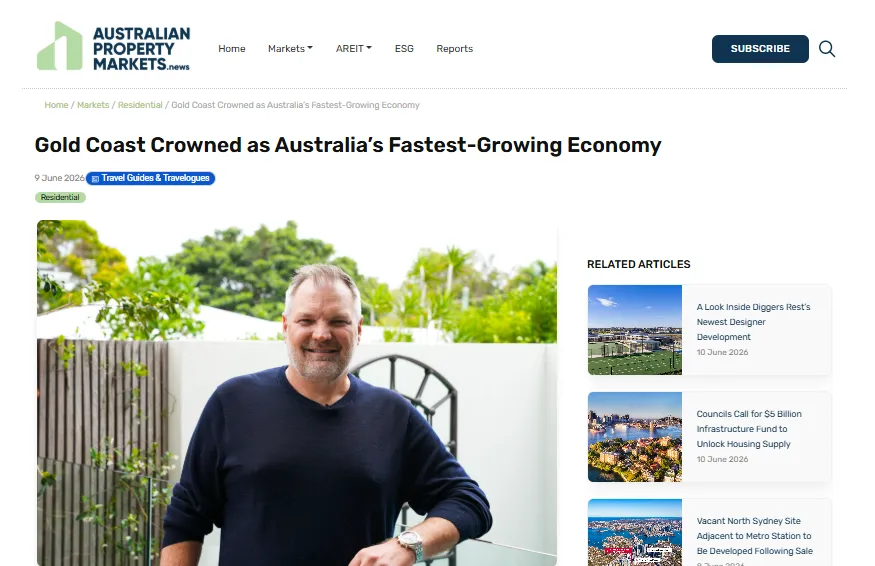
The Gold Coast has overtaken every Australian capital city to become the nation’s fastest-growing economy, and certain GC prestige homebuyers are set to reap the rewards, according to new industry research.
The Gold Coast Property Report 2026, a joint publication by COAST Buyer’s Agency and Hotspotting, shows the region’s economy is now expanding faster than any capital.
COAST Buyer’s Agency principal Joe Pullos said the analysis supports his belief that Gold Coast prestige is the nation’s most exciting growth market, with continued price gains to be fuelled by record migration, a $91 billion infrastructure pipeline and a jobs boom.
Mr Pullos also identified four suburbs he considers most promising for prestige gains.
“The big winners from this wave of economic activity will be prestige homebuyers, with particular suburbs set to outperform the wider market,” Mr Pullos said.
The report reveals the region’s Gross Regional Product has reached $49.4 billion – $775 million above forecast – and growth of 10.07% is forecast over the next four years, well ahead of the national rate of 7.91%.
The study shows the Gold Coast’s economic base has fundamentally shifted, with construction and health care having overtaken tourism as the region’s biggest economic drivers.
“This transformation signals a maturing, diversified economy rather than a seasonal one.
“Growing up in Queensland, the saying was ‘if you’ve got any get up and go, you get up and GO!’ meaning you had to be prepared to move Sydney or Melbourne to advance your career. That’s now completely reversed. Professionals from down south and returning expats are among those moving here in droves to build businesses and enjoy the lifestyle”
Underpinning the surge is relentless population growth. More than 420 new residents arrive on the Gold Coast every week, with the largest share moving from higher-priced NSW coastal markets. This is pushing the region’s population towards one million by 2040, six years earlier than previously projected.
That demand is colliding with a severe housing shortage. The Gold Coast needs around 9250 new homes a year to keep pace, but approvals sat at just 4091 in the 2025 financial year. Rental vacancies have collapsed to 1.3%, leaving barely 900 properties available across the entire region.
“The number I’ve always watched is migration, and right now the Gold Coast is absorbing more than 400 people a week into a market that simply isn’t building enough homes.
“When you’ve got too many people chasing too few houses, there’s really only one direction for prices.”
Mr Pullos said recent federal budget changes had only sharpened the appeal of premium owner-occupier homes. Under the budget’s proposed reforms, tax concessions on investment property are being wound back, while the family home retains its long-standing exemption from capital gains tax.
“With the proposed changes making investment property less tax-effective, the family home becomes an even more attractive place to build and hold wealth.
“For buyers with capital to deploy, putting it into a high-quality home in a tightly held suburb is an increasingly compelling strategy.
“We’re already seeing strong interest in certain areas from buyers with around $2 million-plus to spend on a home, and our analysis indicates there is far more growth to come.
“For buyers moving up from Sydney or Melbourne, the value equation is striking. A median house in Bondi is around $4.5 million. For a third of that, you can buy into a comparable coastal lifestyle in Surfers Paradise — and you’re buying into the fastest-growing economy in the country while you’re at it.”
Four standout prestige homebuyer suburbs
Mermaid Beach
The Gold Coast’s most recognised trophy market and home to the prestigious “Millionaires’ Row”, Mermaid Beach recorded the strongest house price growth of any market in the report – up 32% to a median of $3.35 million in just 12 months, with five-year average annual growth of 16%.
“Mermaid Beach is where the serious money goes, and the absence of any new beachfront land means the supply of these homes is fixed.
“When you have buyers competing for a finite pool of trophy homes in a market growing this fast, the only way is up. A blue-chip address like this tends to hold and grow value through every cycle.”
Broadbeach Waters
A long-established prestige enclave prized for its wide, north-facing canal frontages and direct Broadwater access, Broadbeach Waters has seen its median house price rise 15% to $2.575 million, accompanied by a striking 46% surge in quarterly sales transactions.
That jump in turnover is significant: in property markets, rising transaction volumes typically precede price growth, making it one of the clearest leading indicators of a market about to accelerate.
“If I had to single one out, it’s Broadbeach Waters.
“That 46% jump in transactions tells you buyers are moving with real conviction. For a prestige canal-front home that’s walking distance to the beach, the dining precinct and the light rail – with that kind of momentum behind it, the window to buy well is narrowing fast.”
Currumbin
At the southern, more relaxed end of the Gold Coast, Currumbin offers a sought-after beachside village existence that has drawn a wave of interstate lifestyle buyers. Its median house price is up 28% to $1.8 million, placing it at the entry point of the prestige tier.
“Currumbin has that authentic, laid-back beach-town feel that’s become incredibly hard to find, and increasingly valuable.
“At this price point you’re still getting into a genuine prestige beachside market with real room to run. For buyers who want the lifestyle without the Mermaid Beach price tag, the upside here is substantial.”
Palm Beach
Once regarded by locals as a less glamorous beachside suburb to the south, Palm Beach has undergone a dramatic transformation into one of the coast’s most desirable addresses, driven by a wave of architecturally striking beachfront apartment projects from some of the state’s leading lifestyle developers.
With a median of $1.93 million and 14% average annual growth over five years, Mr Pullos said Palm Beach arguably had the most runway left of his four picks.
“Palm Beach has matured into a true prestige destination, but it hasn’t yet fully repriced the way Burleigh or Mermaid have.
“It remains eminently affordable by comparison, which is exactly why it’s got so much growth potential as the market accelerates. For my money, it’s the one to watch.”
The report concludes that the combination of sustained migration, a diversifying economy, chronic undersupply and a vast infrastructure pipeline has created the conditions for continued price growth well beyond the 2032 Olympic Games, outweighing any short-term market noise from recent federal policy changes.
“The fundamentals here are as strong as I’ve seen. This isn’t a speculative run, it’s a structural shift in where Australians want to live and work. The growth in this market outweighs any of the little blips along the way.”
News.com.au 8th June 2026
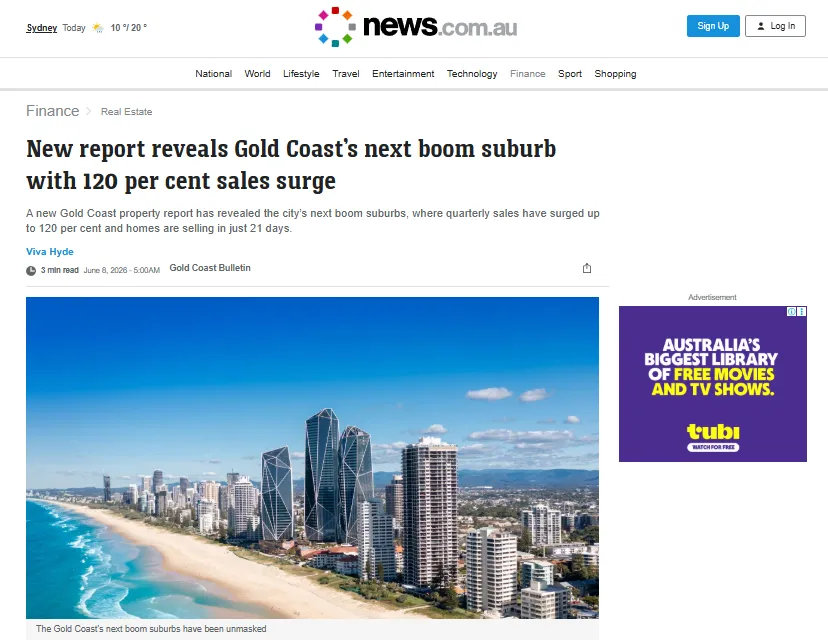
A deep dive into the Gold Coast property market has unmasked the city’s next boom suburbs, where quarterly sales have surged by up to 120 per cent as frantic buyers strip listings in just 21 days.
The Gold Coast Property Report 2026, released today by Coast Buyer’s Agency and Hotspotting, analysed metrics including sudden spikes in quarterly sale volumes along with low days on market, which together act as key indicators of price growth.
Coast Buyer’s Agency principal Joe Pullos said the suburbs to watch were underpinned by growing demand coupled with a lack of overall listings, placing sellers in the box seat.
The report found Tallai recorded the biggest jump in the number of houses sold per quarter, up a whopping 120 per cent over the 12 months to December 2025.
For unit sales, Miami surged 89 per cent, and Molendinar 62 per cent.
Ashmore outperformed for both unit and house transactions, up 57 and 54 per cent respectively.
Meanwhile, shorter days on market signalled “urgency, depth of demand and strong buyer competition”, with 20 house or unit hotspots where properties were selling in four weeks or less.
In front, houses in Upper Coomera and units in Pacific Pines were snapped up in 21 days, Currumbin Waters units in 23 days, and 24 days for houses in Elanora.
“Properties that sell fast achieve closer to their original asking price than those that sit on the market for some time,” Mr Pullos said. “Strong demand is what leads to higher house and unit prices.”
Ten suburbs made the cut as overall top picks for buyers:
Burleigh Waters, Broadbeach, Burleigh Heads, Mermaid Waters, Miami, Broadbeach Waters, Palm Beach, Surfers Paradise, Mermaid Beach, and Southport.
“These suburbs are in demand, have good asking rents and have achieved solid capital growth in recent years, with room for more,” Mr Pullos said.
The report noted a structural transformation across the region. The Gold Coast’s Gross Regional Product (GRP) soared to $49.4bn, with economic growth tipped at 10.07 per cent over the next four years outstripping the national projection of 7.91 per cent.
Mr Pullos said the city has moved past its holiday-town roots, evolving into a diversified, hyper-competitive economic powerhouse.
“This transformation signals a maturing, diversified economy rather than a seasonal one,” he said.
“Growing up in Queensland…you had to be prepared to move to Sydney or Melbourne to advance your career. That’s now completely reversed.
“Professionals from down south and returning expats are moving here in droves to build businesses and enjoy the lifestyle.”
Construction ($5.04bn) and healthcare ($4.5bn) have overtaken tourism as the main economic engines, pushing the city toward a population of one million by 2040 six years ahead of schedule.
“The fundamentals here are as strong as I’ve seen. This isn’t a speculative run, it’s a structural shift in where Australians want to live and work. The growth in this market outweighs any of the little blips along the way,” Mr Pullos said.
But that demand has created a severe housing deficit. The Gold Coast needs 9,250 new homes annually to meet population growth, while building approvals fell to just 4,091 in the 2025 financial year. Rental vacancies are still low at 1.3 per cent, leaving less than 900 properties available across the entire region.
“Right now the Gold Coast is absorbing more than 400 people a week into a market that simply isn’t building enough homes,” Mr Pullos said.
“When you’ve got too many people chasing too few houses, there’s really only one direction for prices.”
Recent federal budget updates scaling back tax concessions on investment properties have further supercharged the luxury owner-occupier space. Because the family home retains its long-standing capital gains tax exemption, premium properties in tightly held enclaves have become wealth safe havens.
“For buyers moving up from Sydney or Melbourne, the value equation is striking,” Mr Pullos said. “A median house in Bondi is around $4.5m. For a third of that, you can buy into a comparable coastal lifestyle in Surfers Paradise, and you’re buying into the fastest-growing economy in the country while you’re at it.”
Report co-author and Hotspotting founder Terry Ryder warned buyers who hesitated would miss out on the incoming wave.
“While the region has achieved extraordinary price growth in the past five years, there is still plenty of fuel in the tank with forecasts for continued growth to 2032 and beyond,” Mr Ryder said.
“It is no longer just a lifestyle market. It is one of Australia’s most competitive and supply-constrained growth markets, delivering consistent gains and high yields for investors.”
News.com.au 7th June 2026
Melbourne’s apartments, units and townhouses, long treated as the cheaper Plan B for buyers priced out of houses could be the surprise winners of rising rates and government tax moves.
A $382,000 gap between the city’s houses and its apartments has the latter expected to catch the eye of increasingly budget-conscious buyers into the future.
Nuestar and Hotspotting analysis of PropTrack data also shows apartment rents are rising faster than house rents in 114 suburbs across Greater Melbourne, the strongest result of any capital city market.
Sydney followed with 104 suburbs, ahead of Brisbane with 69 and Perth with 37.
The shift comes as Melbourne’s median apartment price sits at $633,000, compared with $1.015m for houses, leaving a 46 per cent price gap between apartments and houses at a time when a range of factors are reshaping what buyers can afford.
Melbourne apartment rents rose 4.9 per cent over the year, compared with 4 per cent for houses.
Caulfield South and Briar Hill led Victoria’s apartment rent growth, each up 15 per cent over the year, followed by Patterson Lakes and Mulgrave at 14 per cent.
Meanwhile, student-accommodation-friendly Carlton recorded Greater Melbourne’s strongest apartment yield at 6.8 per cent.
Hotspotting founder Terry Ryder said apartments, units and townhouses were no longer being chosen only because houses were too expensive.
“It’s easier to achieve a really excellent location and an affordable price with apartments than it is with houses,” Mr Ryder said.
“Developers tend to build them in proximity to shops and schools and public transport.
“So more people can get a good location at a relatively affordable price.”
The property pundit said the long-held view apartments were inferior investments reflected how the market had behaved historically, but was becoming outdated.
“We are now seeing attached dwellings competing with houses on capital growth increasingly because there are more and more cohorts opting for attached dwellings,” Mr Ryder said.
He added that apartments were also becoming more attractive to investors because they were cheaper to buy and often delivered stronger rental returns.
Real Estate Institute of Australia president Jacob Caine said the shift came down to a mix of affordability and lifestyle.
Mr Caine said higher interest rates and cost-of-living pressures had stretched household budgets, forcing many to reconsider what sort of home they could afford.
“Buyers who may have originally been hoping for, or were in the market for, a freestanding home have had to seek out alternatives,” Mr Caine said.
“That is where apartments, units and townhouses have become a much more realistic and attractive option for a lot of people.”
But he said smaller homes were not always a reluctant compromise.
“For some buyers, being able to live in a suburb they love, be close to work, restaurants, night-life, schools, transport and community is more important than having a larger home further away,” Mr Caine said.
He noted Melbourne was also attracting interstate investors, with comparable properties in Sydney, Perth and Brisbane often six figures more expensive without significantly higher rents — leaving the Victorian capital in a position to offer good value.
Zara Lend director Stephanie Jordan said borrowing capacity was forcing many young buyers to reset their expectations before they started.
Ms Jordan said most solo buyers were finding their budget would only stretch to a unit.
“That is where the market has moved for a lot of first-home buyers.”
She said many buyers were choosing smaller homes in areas they wanted to live in, rather than stretching for houses further out.
But Ms Jordan warned buyers not to treat every unit or apartment as a smart purchase.
She said older-style, low-rise, solid brick apartments or units in good locations were often a better first step than high-rise apartments with high owners corporation fees and lots of similar stock.
“But if it is an older-style, low-rise, solid brick unit or apartment in a good location, then yes, absolutely,” she said.
Melbourne’s biggest apartment rent rises
Caulfield South: 15 per cent
Briar Hill: 15 per cent
Patterson Lakes: 14 per cent
Mulgrave: 14 per cent
News.com.au 7th June 2026
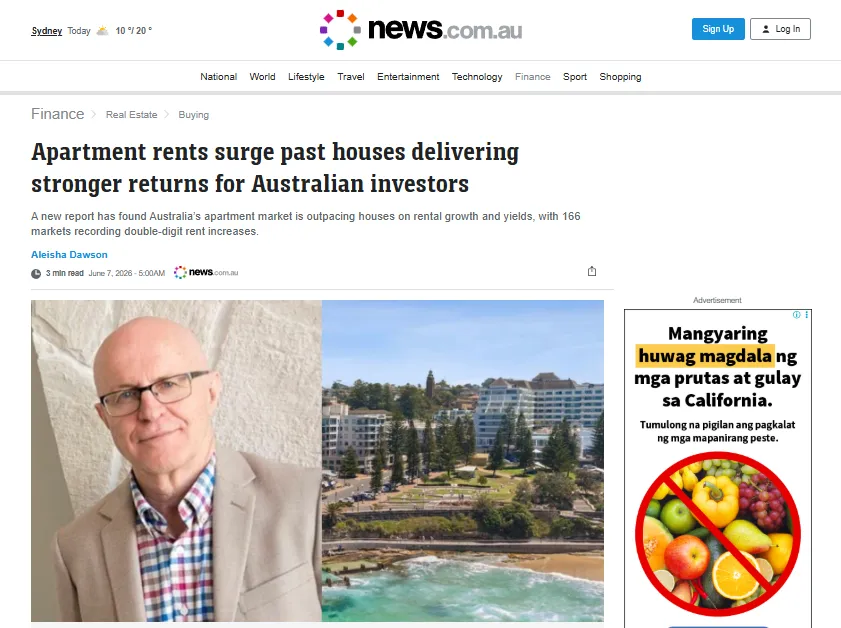
Australia’s apartment market continues to gain strength, delivering higher returns for investors.
The latest Rise and Rise of Apartments report from Nuestar and Hotspotting revealed rental growth for apartments was now outpacing rental growth for houses in many locations around the country.
According to Nuestar founder Michael Wilkins, more than half of the apartment markets across Australia’s key capital cities recorded higher rental growth than their house counterparts.
“More renters are opting for attached dwellings in key markets across the nation, which has driven up rents and returns for investors,” Mr Wilkins said.
“Apartments are not just an affordability play.
“In the right locations, they are a way to secure exposure to high-quality, high-demand markets earlier and at a lower entry point than houses.
“Our analysis of the Australian apartment market revealed that 166 apartment markets achieved double-digit median asking rent growth over the past 12 months.”
Queensland had 53 of those apartment markets New South Wales, 37; Western Australia, 25; Victoria, 20; Northern Territory, 16; South Australia, 10; and Tasmania, 5.
The ACT market did not have any apartment markets with double-digit rent growth - its highest was 7 per cent.
Hotspotting founder Terry Ryder said apartment living was going through a transformative phase throughout the country.
“It’s a whole new paradigm, really” Mr Ryder said.
“I often say the only constant in real estate is change and we’re always looking for those changes; this is a big one.
“In real estate houses on land always showed better growth and were a better investment but that’s changing.
“The demand for units comes from many different reasons - it’s not just affordability.
“It’s the low-maintenance lifestyle, the lock and leave factor, a better location being in an apartment rather than in a house in the suburbs.”
The rise in rents means there were 18 apartment markets that commanded a rent of more than $1000 per week - all but one of which were in New South Wales, led by The Rocks in Sydney, where the median asking rent was $1425 per week, followed by Caringbah South in Sutherland Shire at $1300 per week.
The other top ten entry was in Western Australia, with Pegs Creek in Karratha commanding $1150 per week.
The top asking rent in Queensland can be found in the Noosa apartment market at $959 per week, while in Victoria, Mont Albert North in Whitehorse LGA is $750 per week.
Greater Melbourne led the pack, with 114 suburbs where apartment market rent growth outpaced house rent growth in the past 12 months.
Other regions included Greater Sydney (104 suburbs), Greater Brisbane (69 suburbs), Greater Perth (37 suburbs), Greater Adelaide (27 suburbs), Greater Darwin (12 suburbs), Australian Capital Territory (14 suburbs) and Greater Hobart (three suburbs).
The other top ten entry was in Western Australia, with Pegs Creek in Karratha commanding $1150 per week.
The top asking rent in Queensland can be found in the Noosa apartment market at $959 per week, while in Victoria, Mont Albert North in Whitehorse LGA is $750 per week.
Greater Melbourne led the pack, with 114 suburbs where apartment market rent growth outpaced house rent growth in the past 12 months.
Other regions included Greater Sydney (104 suburbs), Greater Brisbane (69 suburbs), Greater Perth (37 suburbs), Greater Adelaide (27 suburbs), Greater Darwin (12 suburbs), Australian Capital Territory (14 suburbs) and Greater Hobart (three suburbs).
The research found that across the Greater Capital City markets, there were 162 apartment markets with yields of 5 per cent or more compared to just 11 house markets.
The highest yields in the apartment market were overwhelmingly dominated by suburbs within Greater Darwin, which takes out all top ten spots for rental yields, starting at 7.9 per cent in Karama.
In Greater Melbourne, Carlton was the highest with a yield of 6.8%, Curtin in the ACT was 6.5%, Perth was 6.1%, Auburn in Sydney was 6.3 per cent, Brighton in Hobart was 5.5 per cent, Adelaide was 5.3 per cent and Woolloongabba in Brisbane was 4.6 per cent.
“All these fundamentals come together to show that the apartment market is gaining strength as a force for property investment and will continue to do so,” Mr Wilkins said.
In The Media
Realestate.com.au 7th June 2026
A spotlight has been shone on five Tassie hotspots where rents have grown by double-digits.
Over the 12 months to April, three Hobart suburbs and two regional areas recorded huge rental price growth led by Hobart city.
The Hotspotting and Nuestar report, The Rise and Rise of Apartments, showed an 18 per cent increase in Hobart rents in the year to April.
Blackmans Bay was up 12 per cent and New Town climbed 10 per cent higher.
Up north, Newnham rents pushed 15 per cent higher and in Legana they were up by 10 per cent.
With a shortage of supply and continuing low vacancy rates, apartment rent growth is expected to remain strong over the first half of 2026, the report said.
However, it noted that Hobart and Canberra were the only capital city markets where median house rents increased at a faster rate than median apartment rents.
In greater Hobart, the median apartment rent is $517 per week, while houses are $629. Both were the cheapest among the capital city markets.
The annual rental change for apartments was a 3.9 per cent increase, while houses grew by 7.1 per cent.
Hotspotting founder Terry Ryder said rising rents and more affordable buy-in prices than the house market meant stronger returns for investors in the apartment market.
He also said that with the changes to allow future negative gearing only for new builds, apartment assets would be more in demand.
“As a result of the Budget changes, yields will become a higher priority for many investors and as this report shows, the higher yields are to be found in the apartment market,” Mr Ryder said.
Real Estate Institute of Tasmania president Russell Yaxley said when a suburb’s rent increases by a double-digit percentage — like in Hobart and Blackmans Bay — that is a sign of rising demand.
Mr Yaxley said Hobart needs to increase this type of housing.
“Across Hobart we need to consider apartments, units, and townhouses more seriously as attractive housing options as they can be well suited to a range of buyers,” he said.
“It would be great in the near future to see apartments as the norm rather than not.
Nuestar founder Michael Wilkins said apartments are not just an affordability play.
“In the right locations, they are a way to secure exposure to high-quality, high-demand markets earlier and at a lower entry point than houses,” he said.
The research found that across the greater capital city markets, there were 162 apartment markets with yields of 5 per cent or more compared to just 11 house markets.
Brighton was Hobart’s standout performer with a 5.5 per cent yield.
“The apartment market is gaining strength as a force for property investment and will continue to do so,” Mr Wilkins said.
New REIT figures show rents have increased by $40 per week in Hobart over the past year, $100 per week in Launceston and $50 per week on the North West Coast.
Vacancy rates have decreased from 1.9 per cent to 1.2 per cent in Hobart.
Last week, research by FoundIt forecast an increase in greater Hobart rents of $10-$13 per week within three months.
Realestate.com.au 7th June 2026
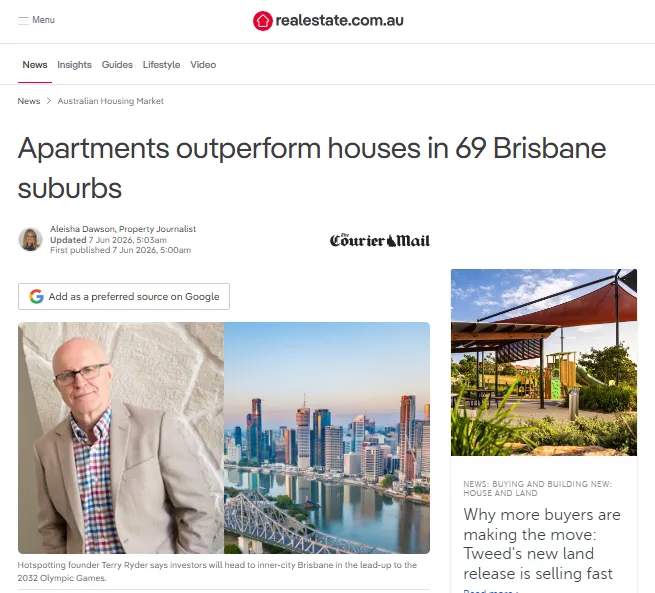
South east Queensland apartments are now beating houses on rent price growth in 69 suburbs – and experts say the Brisbane 2032 Olympics will only accelerate the divide.
The latest Rise and Rise of Apartments report, released today from Nuestar and Hotspotting, showed rental growth for apartments is now outpacing growth for houses in many locations around the country.
It revealed 53 southeast Queensland unit markets also recorded double-digit median asking rent growth over the past 12 months, dominating the national growth.
“Apartments are not just an affordability play,” said Nuestar founder Michael Wilkins.
“In the right locations, they are a way to secure exposure to high-quality, high-demand markets earlier and at a lower entry point than houses.”
Among the Brisbane suburbs where units recorded bigger rental price jumps compared to houses over the past 12 months were Aspley, Greenslopes, Newmarket, Murarrie, St Lucia, Runcorn and Wooloowin.
Slacks Creek, Kippa-Ring, Lawnton, Waterford, Woodridge, Woody Point also recorded bigger percentage jumps for their unit rental markets.
Hotspotting founder Terry Ryder described Brisbane as the “star apartment market” among the capital cities.
“It’s probably going to increase as well because of that Olympic factor,” Mr Ryder said.
“We are going to see people invest in apartments in those inner-city areas of Brisbane because of the Olympics.
“The research shows host cities have an impact on their property market and it’s usually in the lead-up rather than after.”
He said rising rents and more affordable buy-in prices than the house market meant stronger returns for investors in the apartment market.
The report revealed the median house price in Brisbane is $1.227m, while the median unit price is $854,000 — $373,000 (36 per cent) less.
Mr Ryder said that with federal budget changes to allow future negative gearing only for new builds, apartment assets would be more in demand.
“As a result of the budget changes, yields will become a higher priority for many investors and as this report shows, the higher yields are to be found in the apartment market,” Mr Ryder said.
“There are a lot more apartment projects underway and their price point is lower than stand-alone properties, so they appeal to investors, who are generally looking to buy at a lower price point.
“As well as the potential benefits of being able to access negative gearing, new properties offer investors better depreciation benefits.”
“One of the things about apartments is they tend to be better located compared to suburban houses,” he said.
“Young people can find a rental close to the action or where they want to be which is usually quite central.”
Buyers agent Lauren Jones said Brisbane lacked unit and townhouse stock.
“We’ve also got a large issue with the ‘missing middle’,” Ms Jones said.
“Where in the middle ring suburbs is very little medium density style.
“So for those prioritising location, there is very little available — therefore supply and demand is pushing up the price of these units.”
Surfers Paradise on the Gold Coast recorded the most apartment sales in Queensland with 1356 compared to 204 house sales.
Brisbane City recorded 767 apartment sales compared to just eight house sales.
The research found that across the capital city markets, there were 162 apartment markets with yields of five per cent or more compared to just 11 house markets.
The highest yields in the apartment market were dominated by suburbs within Darwin, which takes out all top ten spots for rental yields, starting at 7.9 per cent in Karama.
In Greater Melbourne, Carlton was the highest with a yield of 6.8 per cent, Curtin in the ACT was 6.5 per cent, Perth was 6.1 per cent, Auburn in Sydney was 6.3 per cent, Brighton in Hobart was 5.5 per cent, Adelaide was 5.3 per cent and Woolloongabba in Brisbane was 4.6 per cent.
“All these fundamentals come together to show that the apartment market is gaining strength as a force for property investment and will continue to do so,” Mr Wilkins said.
Realestate.com.au 7th June 2026
Apartments have long offered a more affordable alternative to houses, but new data shows they are could be the next big thing among SA’s investors.
According to the Rise and Rise of Apartments report from Nuestar and Hotspotting, apartments are one of the top-performing investment sectors in the nation, with more than half of the apartment markets around the country recording a higher rental growth over the past 12 months than their house counterparts.
In South Australia, 10 apartment markets have received double-digit growth over the past year, with rent growth surpassing that for houses in 27 suburbs.
Victor Harbor apartments experienced the biggest increase for that period, with rents increasing 17 per cent or $72 to $493.
Harris Real Estate South Coast’s Mark Forde is currently selling a four-bedroom corner penthouse at 29/2-5 Flinders Pde in Victor Harbor for $2m and said Victor Harbor property values were increasing in the area, fuelled partly by the proposed Anchorage Hotel redevelopment and the tourist town’s changing demographic.
Mr Forde expected strong interest in the Flinders Parade penthouse from buyers looking for either a permanent residence or a luxury holiday home.
“Victor (Harbor) is such a wonderful location,’’ he said.
“It’s just over an hour’s drive south of Adelaide and there’s so many exciting things happening there.’’
Victor Harbor’s apartment growth was followed by Modbury and Brooklyn Park where apartment values increased 12 per cent, taking weekly rents to $610 and $480 respectively.
Parkside and Klemzig rounded out the top five with rental growth increases of 11 per cent.
Apartment rent growth across metropolitan Adelaide outpaced houses for the year, with average apartment rent growth up 3.7 per cent compared with 3.5 per cent for houses.
The data showed apartments were 37 per cent cheaper than houses, with metro Adelaide’s house median sitting at $1.016m compared with apartments’ $697,000 – a difference of $319,000.
Nuestar founder Michael Wilkins said apartments just worked – for investors and renters alike.
“More renters are opting for attached dwellings in key markets across the nation, which has driven up rents and returns for investors,” Mr Wilkins said.
“Apartments are not just an affordability play – in the right locations, they are a way to secure exposure to high-quality, high-demand markets earlier and at a lower entry point than houses. “Our analysis of the Australian apartment market revealed that 166 apartment markets achieved double-digit median asking rent growth over the past 12 months.”
Hotspotting founder Terry Ryder said rising rents and more affordable buy-in prices than the house market meant stronger returns for investors in the apartment market.
And he said that with Federal Budget changes to allow future negative gearing only for new builds, apartment assets would be more in demand.
“As a result of the Budget changes, yields will become a higher priority for many investors and as this report shows, the higher yields are to be found in the apartment market,” Mr Ryder said.
“There are a lot more apartment projects underway and their price point is lower than stand-alone properties, so they appeal to investors, who are generally looking to buy at a lower price point.
“As well as the potential benefits of being able to access negative gearing, new properties offer investors better depreciation benefits.”
Yourinvestmentpropertymag.com.au 30th May 2026
New report has identified the next wave of property growth markets, with overlooked metro fringe and regional areas emerging on the back of strong fundamentals.
Hotspotting’s latest National Top 10 Best Buys report identifies the locations across Australia “best positioned for long-term capital growth”.
The May 2026 list includes:
Greater Hobart (TAS)
Belmont (WA)
West Torrens (SA)
Greater Bendigo (VIC)
Sunshine Coast Rail Towns (QLD)
Muswellbrook (NSW)
Greater Dandenong (VIC)
Parramatta (NSW)
Ballarat (VIC)
Wagga Wagga (NSW)
According to the property research firm, the Best Buys methodology focuses on markets with the fundamentals to perform over five to 10 years rather than short-term hype cycles.
These include depth of demand, improving sales activity, tight rental conditions, infrastructure investment, employment growth, population movement, and affordability.
Hotspotting founder Terry Ryder said this approach was deliberately designed to identify markets still in the early stages of a growth cycle.
“Our latest research is about identifying future growth markets before the best years of price growth have been fully priced in, with the latest results demonstrating the strength of that methodology,” Mr Ryder said.
The property research firm cited LGAs identified in March 2024, which it said delivered average capital growth of 27% over two years.
The stronger performers from those selections came from regional Western Australia and Queensland.
Greater Geraldton, Bunbury, and Kingaroy each delivered average two-year growth above 45%.
“The consistency of these results reinforces our focus on long-term fundamentals rather than short-term speculation,” Mr Ryder said.
Yield as a decision driver
One of the clearest themes in the report is the re-emergence of rental yield as a central investment metric.
Several of the identified markets, including Belmont in Perth and Parramatta in Sydney, offer yields in the 5% to 6% range, alongside relatively accessible entry prices.
At the same time, vacancy rates in many locations remain critically tight, often below 1%, particularly in Hobart and key regional centres.
Talking about Greater Bendigo, Mr Ryder said, “Many suburbs remain in the $500,000 to $650,000 range, while yields are solid and vacancy rates remain tight.”
Infrastructure as a key investment signal
Infrastructure is one consistent thread across all 10 locations identified in the report, with major public and private investment reshaping demand fundamentals.
Parramatta is evolving into Sydney’s second CBD, backed by metro rail, light rail, health precinct expansions, and large-scale urban renewal.
West Torrens in Adelaide is benefiting from airport upgrades, a new $3.2 billion hospital, and multi-billion-dollar transport projects.
Sunshine Coast rail towns, meanwhile, are positioned to gain from improved connectivity to Brisbane via significant transport upgrades.
Units are back, but only in the right locations
Also worth noting is the renewed focus on unit markets, particularly in inner-urban and infrastructure-rich locations.
Markets such as Belmont, Parramatta, and West Torrens are highlighted for offering a combination of relatively low entry prices, strong rental yields, and proximity to employment hubs.
However, the report also flags a critical caveat: not all unit markets are equal.
In Parramatta, for example, established, low-density units in well-connected precincts are preferred, while high-rise oversupply remains a risk.
Realestate.com.au 23rd May 2026
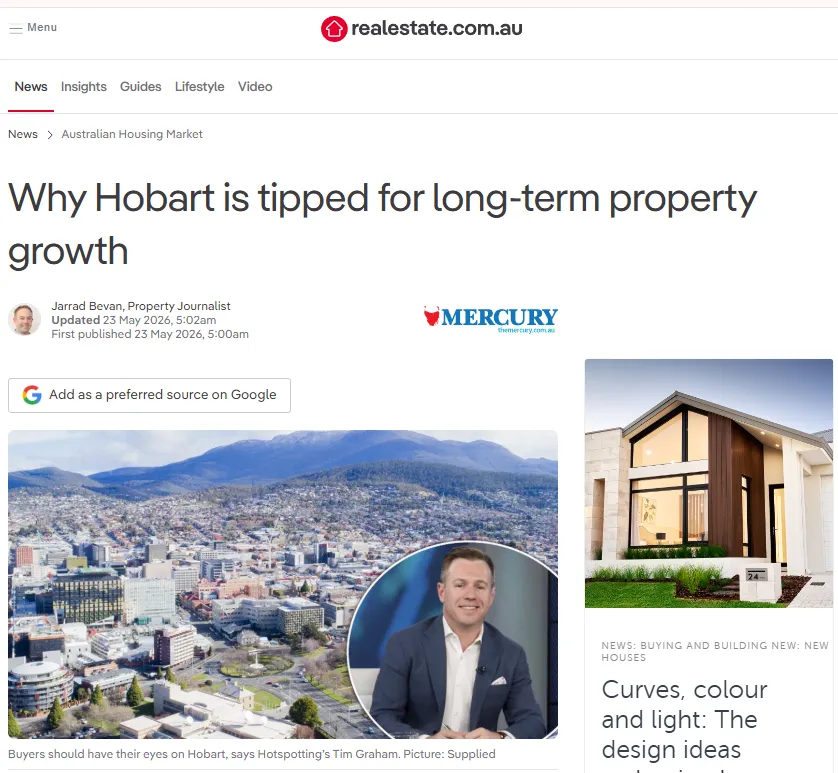
New analysis from Hotspotting has revealed a surprising housing market sits atop the property prospects pile.
Hotspotting’s Top 10 National Best Buys report for May ranked greater Hobart as its No.1.
Director of the real estate research firm Tim Graham said Hobart has re-emerged as one of Australia’s most balanced capital city markets, combining affordability, lifestyle appeal and a deepening economic base.
Hobart’s fundamentals never went away, including affordability, liveability and a pipeline of major projects that underpin confidence, he said.
Mr Graham said momentum is rising across Hobart, Clarence, Glenorchy and Kingborough, supported by a number of major infrastructure projects.
“Vacancy rates remain critically low, with many suburbs sitting below 1 per cent, while yields remain comparatively strong for a capital city,” he said.
“Affordable suburbs such as Glenorchy, Rokeby, Kingston and Howrah continue to attract investors and owner-occupiers.”
Fall Real Estate agent Justin Atkinson said he agreed with the broader view that greater Hobart is well positioned.
“From what I’m seeing on the ground, the areas that really stand out are Warrane, Mornington, Goodwood, Claremont, Chigwell, Sorell and Midway Point,” he said.
“They are attracting a mix of first-home buyers, investors and mainland inquiry because buyers still feel they can secure relative value while remaining within reach of Hobart.
“Warrane continues to perform strongly with house medians around the high $500,000s and rents around $550 per week.
“Mornington is sitting in the mid-$600,000 range with solid rental demand and yields approaching 5 per cent.
“Claremont and Chigwell have also seen renewed momentum as buyers search for affordable family homes with good access back into Hobart and Glenorchy.
“Goodwood has quietly become one of the more interesting value suburbs as well. It remains accessible for buyers but is seeing stronger competition than many expected 12 months ago due to proximity to the city, improving presentation of housing stock and continued buyer demand in the northern suburbs.”
Mr Atkinson said the South East corridor is another area to watch, with Sorell no longer viewed as a fringe market.
“Infrastructure upgrades, population growth and improved connectivity are changing buyer perception quickly,” he said.
“Midway Point is also seeing strong interest from families and relocating buyers wanting lifestyle and space while remaining commutable to Hobart.”
The Best Buys methodology focuses on markets with the fundamentals to perform over five to 10 years, including depth of demand, improving sales activity, tight rental conditions, infrastructure investment, employment growth, population movement and affordability.
Hotspotting founder Terry Ryder said this approach is designed to identify markets before the broader market recognises their potential.
“Our latest research is about identifying future growth markets before the best years of price growth have been fully priced in with the latest results demonstrating the strength of that methodology,” he said.
Mr Atkinson is expecting Hobart’s growth trends to strengthen over the coming months.
“Some of the publicly available statistics are probably lagging behind what’s actually happening on the ground at the moment,” he said.
“There are a number of strong sales across greater Hobart that are either yet to settle or yet to fully hit the recorded data, so I would expect some of the suburb-level figures and growth trends to strengthen.
“In terms of price points, I think the hottest part of the market is still broadly between the high-$400,000s and the mid-$700,000s.
“That bracket is attracting the broadest buyer pool and remains where the value equation still stacks up for owner occupiers and investors.
“Investors are definitely becoming more active again.
“The negative gearing discussion has come up occasionally, but honestly it has not been dominating conversations at inspections.
“Most buyers are still far more focused on interest rates, borrowing capacity and whether the property makes financial sense over the long term.
“Personally, I think Hobart is well positioned moving forward, especially in suburbs offering affordability, low vacancy, practical family housing and access to infrastructure and employment hubs.
“It feels less like a speculative boom and more like the market quietly rebuilding confidence with solid fundamentals underneath it.”
Hotspotting’s top five included Belmont in WA, West Torrens, SA, Bendigo in Victoria and the Sunshine Coast, QLD. Rounding out the list were NSW and Vic localities: Muswellbrook, Dandenong, Parramatta, Ballarat, and Wagga Wagga.
News.com.au 21st May 2026
Australia’s most popular home is yet to find a buyer, despite attracting strong attention for weeks.
The architecturally striking property in the coastal town of Redcliffe, 35km north of Brisbane, was the most viewed property in the country on realestate.com.au this week — for the second time in a month.
But despite the quality of the build, the designer finishes, and the reasonable price tage of offers over $2.9m, the home at 12 Greenup Street is yet to sell — after being on and off the market for nearly a year.
Known as ‘Lantern’, the property reflects the new wave of luxury homes reshaping the Redcliffe peninsula, featuring walnut cladding, cork floors, sculpted Verde Alpi marble benches and etched glass pivot doors.
Owners Hayden Kidd and Dan McKerrow have lived on the peninsula for more than 10 years, gradually upgrading homes as the market surged around them.
The couple started out with more affordable properties they renovated before eventually building their dream home at 12 Greenup Street.
“With each sale, we moved closer to the water,” Mr Kidd told The Courier-Mail. “Eventually we were able to afford a new build.”
The couple enlisted family friend, Nichola Elias, to design the home, despite the architect rarely taking on residential projects.
Features include integrated smart-home technology, solar power, EV charging, dual-zoned ducted airconditioning, automated blinds, irrigation systems and pool controls.
At the centre of the home is a designer kitchen with a sculpted booth, concealed scullery, integrated garden planters and high-end appliances, flowing to a sunken alfresco lounge and natural plunge pool.
Every bathroom features handcrafted Japanese tiles, steel pedestal vanities and rainfall showers, while dual master suites cater to multi-generational living.
But beyond the architecture, the couple say the biggest transformation has been the suburb itself.
“It’s definitely not bogan anymore”,” Mr Kidd said. “It is very much a case of people wishing they had bought earlier. We call it the northern beaches of Brisbane.”
And while they are ready to let someone new enjoy ‘Lantern’, the couple is staying in the Redcliffe area.
The property hit the market with a new agent, Nick Cusick from Bright Estate Agents, more than a month ago.
It comes as Redcliffe Hospital is set to undergo a major $2.1 billion expansion starting this year — a project expected to generate thousands of jobs and further increase housing demand across the peninsula.
Hotspotting founder Terry Ryder said the suburbs of Redcliffe, Clontarf, Kippa-Ring and Woody Point were likely to continue experiencing strong growth as a result.
“The Redcliffe Peninsula is a prime example of an area that is transforming its appeal as well as its property offerings to meet a changing demographic,” Mr Ryder said.
“Extensive levels of public and private investment in the region over the past decade have led to rapid gentrification, with apartment blocks replacing older homes.”
Redcliffe’s median house price has climbed 11 per cent in the past year to $950,000, while annual growth has averaged 14 per cent over the past five years, according to Hotspotting.
Smartpropertyinvestment.com.au 16th May 2026
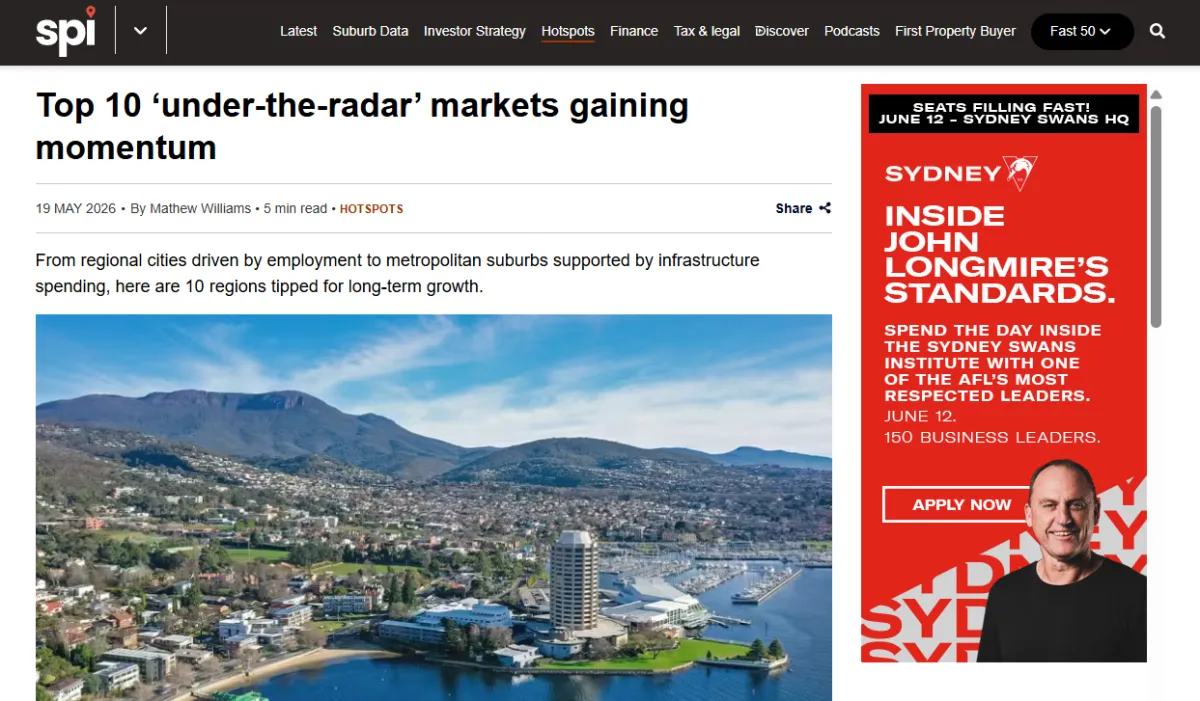
From regional cities driven by employment to metropolitan suburbs supported by infrastructure spending, here are 10 regions tipped for long-term growth.
The latest Hotspotting National Top 10 Best Buys report has identified the nation’s 10 top locations as well-positioned for long-term capital growth.
The suburbs were ranked based on the fundamentals necessary to support growth, including depth of demand, sales activity, rental conditions, and affordability.
Hotspotting founder Terry Ryder said the approach was designed to identify growth regions before they become widely known “hotspots”.
“Our latest research is about identifying future growth markets before the best years of price growth have been fully priced in,” Ryder said.
Here are the top 10 regions where investors can secure long-term growth supported by market fundamentals.
Greater Hobart, Tasmania
Hotspotting director Tim Graham said the Greater Hobart region had re-emerged as one of the country’s most balanced capital city markets, with interest driven by affordability, lifestyle appeal and a deepening economic base.
“Vacancy rates remain critically low. With many suburbs sitting below 1 per cent, while yields remain comparatively strong for a capital city.”
“Affordable suburbs such as Glenorchy, Rokeby, Kingston, and Howrah continue to attract both investors and owner-occupiers.”
Belmont, Western Australia
Located in Perth’s inner east between the CBD and the airport, Ryder said Belmont’s unit market had emerged as one of Perth’s strongest opportunities due to a rare combination of affordability, yield and location.
He said median unit prices remained accessible to a range of buyers, ranging from $580,000 to $615,000, with yields of almost 6 per cent.
“Median unit prices remain accessible at $580,000 to $615,000, while yields sit between the mid-5 per cent and 6 per cent range,” Ryder said.
“Belmont is one of the few Perth markets where affordability and yield still align, and that’s increasingly rare.”
West Torrens, South Australia
To the west of Adelaide’s CBD and benefitting from access to key infrastructure such as the airport and various hospitals, Graham said West Torrens was one of the city’s most strategically located markets.
He said units were an appealing prospect for investors, with an entry point below $500,000 in some areas and strong growth in the surrounding suburbs of Plympton and West Beach.
“West Torrens is one of Adelaide’s most reliable performers because it combines affordability with proximity to billions in infrastructure,” he said.
“Major investment, including the $600 million airport upgrade, the $15 billion T2D tunnel and the $1 billion Southwark Grounds urban renewal project, continues to reshape the region.”
Greater Bendigo, Victoria
Ryder said Greater Bendigo had emerged as one of the top local government areas (LGA) in the nation, with a dozen suburbs showing rising transaction levels.
The city was supported by its affordability, internal migration, and an economy supported by health and education infrastructure, according to Ryder.
“Bendigo is a classic long-term compounder with steady demand, steady population growth and infrastructure investment,” Ryder said.
“Many suburbs remain in the $500,000 to $650,000 range, while yields are solid and vacancy rates remain tight.”
Sunshine Coast Rail Towns, Queensland
Graham said a collection of towns along the Sunshine Coast rail line, including Beerwah, Landsborough, Mooloolah Valley, Nambour, and Palmwoods, all presented opportunities for investors supported by a mix of lifestyle appeal and affordability.
He said that Nambour remained the pick of the bunch, with strong demand from young families and tree-changers.
“Many towns have recorded double-digit average annual growth over five years, supported by tight vacancies and rising rents,” he said.
“The rail towns are the Sunshine Coast’s quiet achievers, and they offer the same economic upside at a fraction of the price.”
Muswellbrook, NSW
The Hunter Valley locality of Muswellbrook was identified as a region with strong growth potential, driven by investment into renewable energy projects.
Ryder said Muswellbrook combined affordability with high yields as the region transitions from coal-fired generation to solar, wind, battery and pumped-hydro projects.
”Muswellbrook is one of the few NSW markets where investors can still secure both value and yield,” Ryder said.
“Rising transaction levels point to future price momentum as the region transitions into a renewable energy hub.”
Greater Dandenong, Victoria
Dandenong in Melbourne’s south east has started to emerge as one of the city’s strongest value-based markets, underpinned by industrial and urban renewal.
The region is one of Victoria’s major manufacturing hubs, with its property market supported by proximity to employment opportunities, according to Graham.
“The combination of affordability, transport access and large-scale urban renewal makes Dandenong one of the most compelling value markets in metropolitan Melbourne.”
City of Parramatta, NSW
As Sydney’s second CBD, Parramatta’s fundamentals for growth are supported by a multi-billion-dollar economy and infrastructure investment, according to Ryder.
He said units in Parramatta offered investors a more affordable entry point than houses, while returning strong yields of above 5 per cent.
“Parramatta is a scale market that includes deep employment, deep infrastructure and deep demand. The key is choosing the right type of unit,” Ryder said.
“Established, low-density units near transport and health precincts offer the strongest long-term performance, while high-rise oversupply remains a risk.”
City of Ballarat, Victoria
The former gold-mining town of Ballarat had emerged as a property market supported by affordability, population growth and infrastructure spending.
Graham said the city’s economy was built on health care, education, tourism, construction and renewable energy.
“Ballarat continues to prove why it’s one of regional Victoria’s most dependable performers,” Graham said.
“Ballarat’s economic diversity and strong livability credentials continue to attract buyers seeking space, value and connectivity to Melbourne.”
Wagga Wagga, NSW
According to Ryder, the regional city of Wagga Wagga was one of the state’s most balanced and resilient markets, driven by employment and infrastructure spending.
Ryder said the city’s combination of median prices significantly below capital city levels and double-digit annual growth over a five-year period has seen more investors flock to the regional hotspot.
“Wagga Wagga has the fundamentals investors look for, including affordability, strong yields and a diverse economic base.”
“Rising transaction levels, population growth and major housing estates will continue to support long-term demand,” Ryder concluded.
In The Media
Mpamag.com.au 16th May 2026
Property research firm Hotspotting has published its National Top 10 Best Buys report for May 2026, identifying local government areas it considers well-placed for sustained capital growth over a five-to-ten-year horizon.
The list features markets with structural fundamentals rather than short-term momentum, including demand depth, sales activity trends, rental market tightness, infrastructure spending, employment growth, population movement, and affordability.
"Our latest research is about identifying future growth markets before the best years of price growth have been fully priced in with the latest results demonstrating the strength of that methodology," said Terry Ryder, founder at Hotspotting.
He pointed to the track record of its March 2024 selections as evidence of the approach's effectiveness. "In March 2024, we identified 10 LGAs we believed were well-positioned for future growth, which subsequently have recorded two-year average capital growth of 275," Ryder said.
The 10 locations selected in the May 2026 report are:
Greater Hobart, TAS: Momentum is building across Hobart, Clarence, Glenorchy and Kingborough, backed by major infrastructure projects, tight vacancy rates and comparatively strong yields for a capital city.
Belmont, WA: Belmont's unit market offers near-city access to Perth's CBD and airport economy, with median prices between $580,000 and $615,000 and yields in the mid-five to six percent range.
West Torrens, SA: West Torrens sits just west of the Adelaide CBD, with billions in committed infrastructure spend — including the $15 billion T2D tunnel and a $600 million airport upgrade — underpinning its investment case.
Greater Bendigo, VIC: Greater Bendigo ranks among the top municipalities in Hotspotting's Price Predictor Index, with a dozen suburbs recording rising transaction levels and most houses priced between $500,000 and $650,000.
Sunshine Coast rail towns, QLD: Towns including Beerwah, Landsborough, Nambour and Palmwoods offer affordable entry points into the Sunshine Coast economy, with connectivity set to improve under the Beerburrum to Nambour Rail Upgrade and the Direct Sunshine Coast Rail Line.
Muswellbrook, NSW: Muswellbrook is drawing renewable energy investment as the Hunter Valley transitions away from coal, with solar, wind, battery, pumped hydro and hydrogen projects lifting economic activity and supporting yields.
Greater Dandenong, VIC: Greater Dandenong is home to more than 5,000 businesses and roughly 10% of Victoria's manufacturing sector, placing it among Australia's top 10 LGA property markets in Hotspotting's Price Predictor Index.
City of Parramatta, NSW: Parramatta's $31 billion economy and extensive infrastructure pipeline — including Sydney Metro West, Parramatta Light Rail and the Westmead Health Precinct — support demand for established, low-density units near transport and health precincts.
City of Ballarat, VIC: Ballarat's diversified economy spans health care, education, manufacturing, tourism and renewable energy, with 15 suburbs currently showing rising transaction levels in Hotspotting's Price Predictor Index.
Wagga Wagga, NSW: Wagga Wagga offers affordable entry points, strong yields and a diversified economic base, with multiple suburbs recording double-digit average annual growth over five years.
Realestate.com.au 11th May 2026
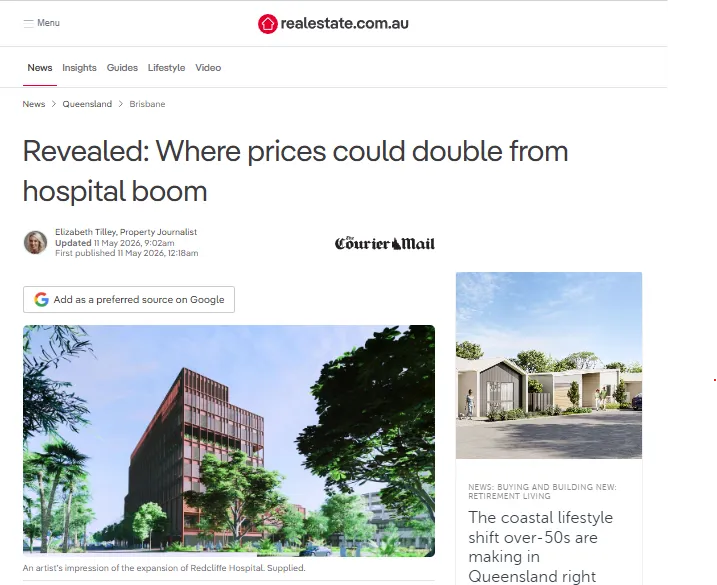
A $160 billion wave of hospital construction is quietly reshaping Queensland’s property market and creating the next generation of real estate hotspots, where prices could double in 10 years.
New analysis by Hotspotting for Fresh Start Advisory reveals the key suburbs expected to benefit from more than 84 major hospital and medical centre projects either underway or in the pipeline across the state in the coming years.
Unlike other infrastructure, experts say hospitals have a unique ability to drive property demand across the entire market — from entry-level units to prestige homes.
Fresh Start Advisory chief executive Frank Ambesi said the impact was both immediate and long-term.
“Hospitals, as a result of the broad nature of their staff cohort, have the ability to create demand across the entire spectrum of the property market from high-end, luxury homes to affordable houses and apartments,” he said.
“Suburbs surrounding medical infrastructure are magnets for renters and buyers who want to live close to where they work.
“Investors seeking long-term growth are well advised to follow the hospital infrastructure trail.”
Hotspotting founder Terry Ryder said the trend was already playing out in parts of Queensland, with the Sunshine Coast emerging as a standout case study.
“Property prices have doubled since the $1.8 billion Sunshine Coast University Hospital opened, and there is significant apartment development continuing,” Mr Ryder said.
“People were coming from other parts of Australia and the world to take these high-paying specialist jobs there, so the markets at the top end (on the Sunshine Coast) had a lot of growth.”
Nationally, $160 billion worth of hospital projecst are either proposed or underway, and Queensland firmly in the spotlight, with 84 major hospital projects either proposed or underway — second only to New South Wales with 122.
Among the hospital infrastructure projects tipped to have the biggest impact on surrounding property markets are Coomera, Toowoomba, Redcliffe, and Bundaberg.
Mr Ryder said the project set to have the greatest impact on home prices was in Coomera — a growth corridor with two major hospitals under construction and proposed.
He expects Coomera, and the surrounding suburbs of Upper Coomera, Pimpama, and Willow Vale, to be the biggest beneficiaries.
Coomera’s median house price has increased 21 per cent in the past 12 months to just over $1m, and has an had annual average price growth of 13 per cent over the past five years.
“Suburbs in the southern Logan City area, as well as the northern Gold Coast precinct, are expected to experience elevated real estate demand,” he said.
“The areas around the new hospital development have numerous large housing estates under development delivering not just new housing stock, but also improved resident amenities and
services.”
Mr Ryder said hospital projects were different to other infrastructure projects because they generated jobs during the building phase and the operational phase.
While major builds created thousands of jobs, the operational workforce could be even larger — often requiring up to 5000 staff once complete.
“When it comes to a hospital, there are lots of jobs in building it, but also lots of jobs in running it,” he said.
“These developments are expected to attract an influx of workers — from doctors and nurses to administration staff and service workers — many of whom will need housing close to their workplace.
“Unlike transport or sporting infrastructure, which can deliver more localised or short-term boosts, hospitals create consistent, long-term demand that reshapes entire suburbs.”
Redcliffe Hospital is also set to undergo a major $2.1 billion expansion starting this year.
Mr Ryder expects Redcliffe, Clontarf, Kippa-Ring, and Woody Point to continue to experience strong property price growth as a result.
Redcliffe’s median house price has risen by 11 per cent in the past year to $950,000, and its average annual price growth over the past five years was 14 per cent.
“The Redcliffe Peninsula is a prime example of an area that is transforming its appeal as well as its property offerings to meet a changing demographic,” he said.
“Extensive levels of public and private investment in the region over the past decade have led to rapid gentrification, with apartment blocks replacing older homes.”
In Toowoomba, a new $2 billion hospital is under construction, with the property markets in the suburbs of Cranley, Harlaxton, Rockville, and Wilsonton Heights set to benefit.
Cranley has a median house price of $750,000, which increased by 12 per cent in the past year, and its annual average price growth over the past five years was 14 per cent.
“The new hospital will have a major impact on the Toowoomba real estate market, in conjunction with other major infrastructure projects, including the new Wellcamp Airport and the upcoming Inland Rail Link hub near the airport,” Mr Ryder said.
News.com.au 10th May 2026
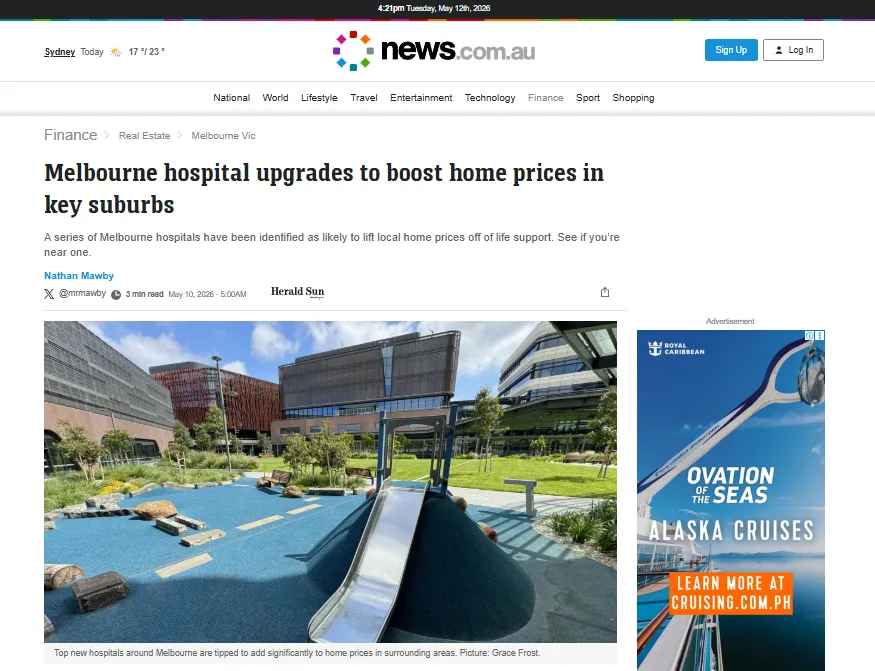
Billions of dollars spent on Melbourne hospital upgrades have been tipped to take pockets of the city’s struggling housing market off life support.
New analysis suggests major health precinct projects in Footscray, Frankston and Melton could also significantly improve the health of the property market in surrounding suburbs.
The three have been named on a list of the nation’s 10 most likely healthcare projects to push up home values nearby in a report titled From Wards to Wealth completed by property market guru and Hotspotting co-founder Terry Ryder and Fresh Start Advisory.
Across the wider state there are another 80 medical precinct projects worth more than $100m individually either being built or planned, including in Warrnambool, Geelong, Ballarat, Epping, North Melbourne, Heidelberg, and a $535m expansion of the Monash Medical Centre in Clayton.
Mr Ryder said it was “no coincidence” that Frankston’s housing market was one of Melbourne’s most successful at the moment.
The $1.1bn Peninsula University Hospital was completed there last year and the suburb’s median price has surged 11 per cent to $838,000 in the past 12 months
Neighbouring Frankston North’s $695,600 typical house is fetching 16 per cent more than it was a year ago, and in Frankston South there’s been a 19 per cent surge in the $834,000 median unit price.
He also noted strong results at auction across the area.
“There’s no doubt that the Frankston area has done well,” Mr Ryder said.
“These sorts of projects do stimulate property markets.”
With Victoria’s housing market having struggled for some time, the property pundit said Melbourne was now far cheaper than it should be by national standards – and there was a good prospect areas with new hospital projects would help lead to its recovery.
The recently opened $1.5bn Footscray Hospital is yet to make a dent in the suburb’s $917,000 median price for its immediate surrounds — though the number of sales in the suburb has risen significantly in what is usually a precursor to a rise in values.
In neighbouring West Footscray prices are up 5 per cent at $990,000 for the past year, while nearby Maidstone’s $867,000 median gained 9 per cent.
Woodards Yarraville director Leo Dardha said there had already been an increase in nurses, doctors and other health professionals inspecting homes in the area around the hospital with nearby Maribyrnong also attracting demand due to its lifestyle offerings.
While the homes being sought did vary, two-bedroom townhouses under $800,000 were a common target, as were houses up to $1.5m.
“And while there’s a lot happening in the economy and around the globe right now, my prediction is that in the next 18 months it will have moved,” Mr Dardha said.
“So buyers need to be active and front and centre now, while it’s still a buyers market.”
The $1.5bn Melton Hospital precinct will be Australia’s first fully electric hospital, though isn’t expected to open until 2029.
Despite this, Cobblebank, the suburb that will host the suburb, has already had an 11 per cent increase in its median house price to $610,000.
Melton and Melton South are also gaining ground with a 9 per cent up tick to $539,000 and $567,500 respectively.
“Investors seeking long-term growth are well advised to follow the hospital infrastructure trail, which is widespread throughout regional and capital cities in Australia,” Mr Ryder said.
Fresh Start Advisory chief executive Frank Ambesi said the wide range of staff associated with hospitals often created demand for everything from luxury homes through to affordable houses and apartments.
“Suburbs surrounding medical infrastructure are magnets for renters and buyers who want to live close to where they work,” Mr Ambesi said.
“Hospital infrastructure development has a long-lasting impact on real estate markets – because while there may be thousands of jobs in the construction phase, there are more in the ongoing operational phase.”
Health Precincts That Could Boost Home Prices
PENINSULA UNIVERSITY HOSPITAL
Suburbs to watch:
Frankston (1117 sales): $838,000 median house price (11%); $565,000 median unit price (3%);
Frankston North (142 sales): $695,600 median house price (16%);
Frankston South (381 sales): $1.21m median house price (6%); $834,000 median unit price (19%);
Langwarrin (471 sales): $885,000 median house price (4%); $650,250 median unit price (12%);
FOOTSCRAY HOSPITAL
Suburbs to watch:
Footscray (650 sales): $917,000 median house price (-2%); $450,000 median unit price (-8%);
Kingsville (109 sales): $1.255m median house price (6%); $422,000 median unit price (-5%);
Maidstone (241 sales): $867,000 median house price (9%); $625,000 median unit price (3%);
Seddon (98 sales): $1,075,500 median house price (-2%);
West Footscray (277 sales): $990,000 median house price (5%); $425,000 median unit price (-10%)
MELTON HOSPITAL
Suburbs to watch:
Brookfield (233 sales): $610,000 median house price (11%);
Cobblebank (119 sales): $631,500 median house price (-1%);
Melton (232 sales): $539,000 median house price (9%); $410,000 median unit price (8%);
Melton South (354 sales): $567,500 median house price (9%); $390,000 median unit price 6%);
Sales numbers reflect 12 month period, percentages show 12 month home value change
Source: From Wards To Wealth (Fresh Start Advisory, Hotspotting).
News.com.au 10th May 2026
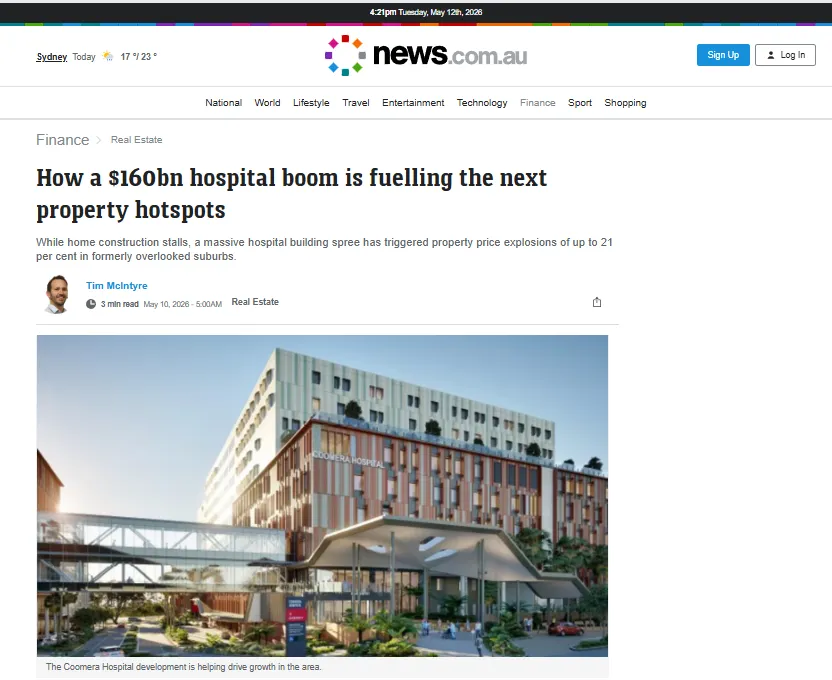
Residential construction is falling behind, but a boom in hospital infrastructure is driving growth in property markets across Australia, new research has revealed.
Hotspotting’s ‘From Wards to Wealth’ report, commissioned by Fresh Start Advisory, has delved into Australia’s hospital and medical centre projects, pinpointing the next areas to benefit from growth thanks to the infrastructure that is planned or already underway.
It highlights Australia’s “unprecedented” level of activity in the space, with 307 hospital and medical centre projects proposed or underway nationwide that are worth at least $100 million.
Together, these projects are worth more than $160 billion, according to Fresh Start Advisory CEO Frank Ambesi, with the bigger projects creating thousands of jobs during construction and thousands more once complete, ranging from clinical staff, to cleaners and administration.
“Hospitals, as a result of the broad nature of their staff cohort, have the ability to create demand across the entire spectrum of the property market from high-end, luxury homes to affordable houses and apartments,” Mr Ambesi said. “Suburbs surrounding medical infrastructure are magnets for renters and buyers who want to live close to where they work.
“Hospital infrastructure development has a long-lasting impact on real estate markets – because while there may be thousands of jobs in the construction phase, there are more in the ongoing operational phase.
“This injects new demand for homes to buy or rent into the immediate area.”
Hotspotting founder Terry Ryder has spent decades analysing the effects of infrastructure on the values of Australian property. He was stunned at how much work was currently in the pipeline.
“I’ve never seen this level of infrastructure development in Australia, it’s unprecedented,” Mr Ryder said.
NSW had 122 of the 307 projects either proposed or underway, while Queensland had 84 of the projects.
Queensland had the most growth potential, however, with four of the top 10 regions predicted to boom in property values.
“The top area, Coomera, is a big growth corridor with two major hospitals,” Mr Ryder said.
“In Qld, these projects are driven by need and driven by population growth.
Interstate migration from the two major capitals has been really strong. Much of that flow has gone to south east Qld.
“Look at the Sunshine Coast University Hospital (SCUH). It was a $1.8 billion project. People were coming from other parts of Australia and the world to take these high paying specialist jobs there, so the markets at the top end had a lot of growth.
“Property prices have doubled since that hospital opened and there is significant apartment development continuing.
You’ve also got that job diversity that filters down to the lower end of the property market too.”
The Coomera Public Hospital is currently under construction, with a 2032 completion date slated and a cost of $2.2 billion, while the Foxwell Private Hospital is also proposed at Coomera at a cost of $1.5 billion.
Coomera’s house median has already increased by 21 per cent over the past year.
Other Qld projects to make the top 10 were Toowoomba Hospital, Redcliffe Hospital and Bundaberg Hospital.
Victoria had 80 projects on the list, including Peninsula University Hospital, in Frankston, which was hotspot number two. This project cost $1.1 billion and was completed in January this year.
“In Frankston, there has been a very noticeable uplift in property interest and results in that area,” Mr Ryder said. “It was all generated by this new hospital, which saw thousands of people looking for places to buy or places to rent. There were immediately big results at auctions.”
Frankston North houses have increased in value by 16 per cent year on year, while Frankston South units are up 19 per cent.
Victoria also had Footscray Hospital and Melton Hospital on the top 10 list.
NSW had the Campsie, Bankstown and Camperdown Hospital precincts combining to take up one local hotspot, while South Australia had the Women’s and Children’s Hospital at Thebarton and Tasmania had the North West Regional Hospital at Burnie.
“Residential construction is much slower, and is being affected by a shortage of tradespeople, many of whom are working on infrastructure projects,” Mr Ryder said.
“Medical infrastructure projects tend to have the greatest effect on property prices because you can get thousands of staff working at them, especially if it’s a hospital.
“That’s what sets it apart from other infrastructure. If you build a motorway, there are jobs in building it, but you don’t need people to run it.
Top 10 hospital growth hotspots
– Coomera Hospital and Health Precinct – Coomera, Queensland
– Peninsula University Hospital – Frankston, Victoria
-Campsie, Bankstown And Camperdown Hospitals, New South Wales
-Toowoomba Hospital – Cranley, Queensland
-Redcliffe Hospital – Redcliffe, Queensland
-Footscray Hospital – Footscray, Victoria
-Women’s And Children’s Hospital – Thebarton, South Australia
-Bundaberg Hospital – Thabeban, Queensland
-Melton Hospital – Cobblebank, Victoria
-North West Regional Hospital, Burnie, Tasmania
Realestate.com.au 10th May 2026
Investment in healthcare facilities has been labelled by one expert as the single biggest driver of property price growth, with homeowners in one key SA area set to win big in the coming years.
Nationwide there are 307 hospital and medical centre projects underway or proposed, each with works exceeding $100m.
Their combined value sits at more than $160bn.
Hotspotting Founder Terry Ryder said, nationally, he had never seen this level of infrastructure development at any one time.
“It’s unprecedented,” he said.
“Medical infrastructure projects tend to have the greatest effect on property prices.
“Residential construction is much slower, and is being affected by a shortage of tradespeople, many of whom are working on infrastructure projects.
“Medical projects create big demand for property, because you can get 7 or 8000 staff working at them, especially if it’s a hospital.”
Of the top ten hospital projects expected to have the strongest impact on property markets, the Women’s and Children’s Hospital in Thebarton came in at number seven.
The under-construction project will cost $3.2 billion, and is expected to be completed in 2030 or 2031.
According to the report, Thebarton’s property market, in which the hospital is situated, isn’t the only one set to benefit, with property values in Adelaide, Bowden, North Adelaide and Underdale tipped to rise.
Thebarton house values have climbed by an average of 14 per cent a year over the past five years, while North Adelaide unitshave shown the greatest price increase of 16 per cent a year over the same period.
Mr Ryder said the effect on demand for properties surrounding a medical hub was long-lasting.
“When it comes to a hospital, there are lots of jobs in building it, but also lots of jobs in running it,” he said.
“That’s what sets it apart from other infrastructure.
“If you build a motorway, there are jobs in building it, but you don’t need people to run it.
“Medical projects have diversity of jobs too – from the cleaners, right up to the top medical specialists.”
LJ Hooker Mile End/Walkerville selling agent Thanasi Mantopoulos said he had already seen inquiry levels pick up in Thebarton as construction activity picked up.
“I’ve seen huge growth in there and the thing in Thebarton is you can still buy a house or a nice maisonette on a good block for a good price,” he said.
“There’s a lot of value there and the liveability index is off the charts.
“I’ve had a lot of inquiry in Thebarton and its surrounding suburbs specifically because of the new hospital.
“I think the number of properties to come on to the market in that area will probably go down now as people try and hold on to them until closest to its completion because they know they’ll get a better price for it.
“Those that can hold it will, and that drop in stock will drive demand and prices.”
Brokernews.com.au 30th April 2026

Australia’s housing market has entered what analysts describe as a rare “all boats rising” phase, with no major jurisdictions classified as underperforming and momentum building across both capital city and regional markets.
Hotspotting’s Autumn Price Predictor Index (PPI), reported by The Courier Mail, shows rising or steady buyer demand in all 14 major market jurisdictions, underpinned by sustained sales activity, tight listings, and population-driven demand.
“Our latest research points to broad-based strength across property markets nationwide, with buyer demand remaining elevated that has resulted in no ‘loser markets’ this edition,” Hotspotting director Tim Graham (pictured) said.
Graham added that “residential property markets throughout the nation are experiencing a level of buyer demand unprecedented in the decade that we have published the Price Predictor Index.”
Graham said 10 of the 14 jurisdictions are now classified as winners, with the remaining four considered steady – a sharp turnaround from a year earlier when the index recorded eight winners, four losers, and two steady markets.
Regional Victoria, and other “winning” markets, stand out
The PPI highlights regional Victoria as one of the standout areas, with quarterly sales volumes lifting from 9,848 to 13,299 over the year. Graham described the shift bluntly: “Regional Victoria is pumping.”
Other “winning” markets include Melbourne, Hobart, regional South Australia, Darwin, Canberra, regional New South Wales, Adelaide, Sydney, and regional Tasmania. Brisbane, regional Queensland, Perth, and regional Western Australia are classified as steady.
Structural drivers, not speculative spikes
Graham attributed the uplift to a combination of record infrastructure spending, strong first-home buyer incentives, and years of elevated migration and internal population movement, arguing these forces are creating “real, sustained demand and not speculative spikes.”
Property Investment Professionals of Australia (PIPA) chair Cate Bakos said the data offers evidence-based reassurance for both homebuyers and investors.
“This data is telling us that most markets are strengthening for real and structural reasons,” Bakos said, noting that Victoria’s resurgence after several flat years is particularly significant.
Separate PropTrack figures, cited in The Courier Mail, show house values rising in about 70% of suburbs and unit values lifting in roughly 71% of suburbs in the March quarter, with cheaper regional locations and outer‑capital suburbs posting some of the strongest gains.
REA Group senior economist Anne Flaherty said, “We’re still seeing outpaced growth at the more affordable end of the market,” even as national price growth moderates.
Against that backdrop, major banks are signalling a cooler pace ahead, with Commonwealth Bank forecasting national prices to rise 5% in 2026 and 3% in 2027, and ANZ tipping smaller gains of 2.8% and 2.1% respectively, alongside the risk of “small falls” in Sydney and Melbourne. Research commissioned by Money.com.au from Primara suggests national dwelling values may not rise in a straight line, with a baseline scenario showing prices peaking in 2027 before easing about 15% by the end of 2030, leaving average values slightly below their 2025 highs.
Mpamag.com.au 30th April 2026

Australia’s housing market has entered a rare period of synchronised growth, with buyer demand rising or holding firm across all major states and territories, according to new research from Hotspotting.
The latest Price Predictor Index found that all 14 major market jurisdictions were classified as either “winner” or “steady” markets. Ten were rated as winners, while the remaining four were steady.
The report links the improvement to sustained sales activity, low stock levels, population growth and infrastructure spending.
“Our latest research points to broad-based strength across property markets nationwide, with buyer demand remaining elevated that has resulted in no ‘loser markets’ this edition,” said Tim Graham (pictured right), director at Hotspotting.
“In fact, residential property markets throughout the nation are experiencing a level of buyer demand unprecedented in the decade that we have published the Price Predictor Index.”
Graham said the market had shifted into what he described as an “all boats rising” phase.
“For the first time in a long time, we’re not seeing clear underperformers – strength is broad-based and demand is consistent across the country,” he added. “There are no loser markets left. This is one of those rare moments where every jurisdiction is moving in the right direction.”
The strongest results were recorded in Regional Victoria, where 70% of markets were given a positive classification. Melbourne also recorded a 70% positive reading, followed by Hobart at 68%, Regional South Australia and Darwin at 67%, and Canberra at 63%.
Regional Victoria’s quarterly sales volumes rose from 9,848 to 13,299 over the past year, according to the index. Hotspotting said activity in that market was now above the level recorded during the COVID-19 property boom.
“Regional Victoria is pumping,” Graham said. “Sales activity is now higher than at the peak of the COVID-19 boom, and 70% of markets have positive classifications, which is a huge turnaround.”
The four markets rated as steady were Brisbane, Regional Queensland, Regional Western Australia and Perth. None of the 14 jurisdictions was classified as a loser market.
The report said demand was being supported by several longer-term factors, including public infrastructure investment, first-home buyer incentives, migration and population movement within Australia.
“We’re seeing the impact of record infrastructure spending, strong government incentives for first-home buyers, years of elevated migration and major population movement within Australia,” Graham said. “These factors are creating real, sustained demand and not speculative spikes.”
According to Property Investment Professionals of Australia chair Cate Bakos (pictured right), the figures gave buyers and investors more evidence that market conditions were improving across a wide range of locations.
“When every jurisdiction is showing positive or steady momentum, it tells us the fundamentals are doing the heavy lifting such as population growth, infrastructure investment, tight supply, and genuine buyer demand,” Bakos said. “This data is telling us that most markets are strengthening for real and structural reasons.”
Bakos noted that Victoria’s improvement was one of the more notable shifts in the latest data. “The Victorian market is clearly entering a new phase,” she said. “After several flat years, the data now shows sustained increases in sales activity across both Melbourne and the regions which is a shift in market dynamics.”
She added that the national spread of improving conditions was also significant for confidence. “When you have every state and territory either rising or steady, it gives homebuyers and investors a level of confidence that we haven’t seen in years,” she pointed out.
Smartpropertyinvestment.com.au 29th April 2026
Broad-based growth supported by strong fundamentals is the story across most jurisdictions nationwide, with the majority of markets tipped to grow according to the latest data.
According to Hotspotting’s Price Predictor Index (PPI) for Autumn 2026, population-driven demand and tightening supply had seen the Australian property market enter one of its most synchronised periods of growth in decades.
The index assigned each capital city and its regional counterpart a ranking based on its predicted price growth and placed it in one of three categories: loser, steady, or winner.
The PPI found that of the 14 regions, 10 were considered winners, with more than 55 per cent recording a positive change in sales volume, while Perth, regional Western Australia, Brisbane, and regional Queensland were all placed in the steady category.
Hotspotting director Tim Graham said it was unusual for the market to be positioned with no losers and all regions growing strongly.
“10 of the 14 major jurisdictions are classified as winners, and the remaining four are steady, which is extraordinary,” he said.
“Only a year ago, we had eight winners, four losers, and two steady markets, so to move from that to zero losers is a dramatic shift in market sentiment.”
The PPI found that Melbourne and regional Victoria recorded the highest percentage of positive results across its markets, with 70 per cent experiencing growth.
Graham said that, with quarterly sales volumes rising from 9,848 to 13,299 over the past year, regional Victoria’s market was amongst the most active in the country.
“Regional Victoria is pumping,” he said.
“Sales activity is now higher than at the peak of the COVID-19 boom, and 70 per cent of markets have positive classifications, which is a huge turnaround.”
Property Investment Professionals of Australia chair Cate Bakos said that the Victorian market was clearly entering a new phase.
“After several flat years, the data now shows sustained increases in sales activity across both Melbourne and the regions, which is a shift in market dynamics,” Bakos said.
Queensland and Western Australia have experienced significant growth in recent years, with PPI indicating that markets were beginning to soften, with between 53 per cent and 46 per cent of jurisdictions achieving positive results.
Sydney saw 56 per cent of its jurisdictions show an increase in buyer demand, while 31 per cent recorded a drop and 13 per cent showed no trend.
Graham said that residential property markets were experiencing buyer demand stronger than anything he had seen in the past decade.
“For the first time in a long time, we’re not seeing clear underperformers – strength is broad-based, and demand is consistent across the country,” he said.
“There are no loser markets left. This is one of those rare moments where every jurisdiction is moving in the right direction.”
Graham said that the market’s strong performance was supported by infrastructure spending, government incentives for first-home buyers and major population movements, which had created sustained demand rather than short-term spikes.
Bakos said the data showed that homebuyers and investors were becoming more confident nationwide, supported by typical growth fundamentals.
“When every jurisdiction is showing positive or steady momentum, it tells us the fundamentals are doing the heavy lifting, such as population growth, infrastructure investment, tight supply and genuine buyer demand.”
“When you have every state and territory either rising or steady, it gives homebuyers and investors a level of confidence that we haven’t seen in years,” Bakos concluded.
Realestatebusiness.com.au 29th April 2026
The Australian property market is experiencing broad-based growth, with Victoria leading the way, as demand increased across the country, according to the latest data.
According to Hotspotting’s Price Predictor Index (PPI) for Autumn 2026, population-driven demand and tightening supply had seen the Australian property market enter one of its most synchronised periods of growth in decades.
The index assigned each capital city and its regional counterpart a ranking based on its predicted price growth and placed it in one of three categories: loser, steady, or winner.
The PPI found that of the 14 regions, 10 were considered winners, with more than 55 per cent recording a positive change in sales volume, while Perth, regional Western Australia, Brisbane, and regional Queensland were all placed in the steady category.
Hotspotting director Tim Graham said it was unusual for the market to be positioned with no losers and all regions growing strongly.
“10 of the 14 major jurisdictions are classified as winners, and the remaining four are steady, which is extraordinary,” he said.
“Only a year ago, we had eight winners, four losers, and two steady markets, so to move from that to zero losers is a dramatic shift in market sentiment.”
The PPI found that Melbourne and regional Victoria recorded the highest percentage of positive results across its markets, with 70 per cent experiencing growth.
Graham said that, with quarterly sales volumes rising from 9,848 to 13,299 over the past year, regional Victoria’s market was amongst the most active in the country.
“Regional Victoria is pumping,” he said.
“Sales activity is now higher than at the peak of the COVID-19 boom, and 70 per cent of markets have positive classifications, which is a huge turnaround.”
Property Investment Professionals of Australia chair Cate Bakos said that the Victorian market was clearly entering a new phase.
“After several flat years, the data now shows sustained increases in sales activity across both Melbourne and the regions, which is a shift in market dynamics,” Bakos said.
Queensland and Western Australia have experienced significant growth in recent years, with PPI indicating that markets were beginning to soften, with between 53 per cent and 46 per cent of jurisdictions achieving positive results.
Sydney saw 56 per cent of its jurisdictions show an increase in buyer demand, while 31 per cent recorded a drop and 13 per cent showed no trend.
Graham said that residential property markets were experiencing buyer demand stronger than anything he had seen in the past decade.
“For the first time in a long time, we’re not seeing clear underperformers – strength is broad-based, and demand is consistent across the country,” he said.
“There are no loser markets left. This is one of those rare moments where every jurisdiction is moving in the right direction.”
Graham said that the market’s strong performance was supported by infrastructure spending, government incentives for first-home buyers and major population movements, which had created sustained demand rather than short-term spikes.
Bakos said the data showed that homebuyers and investors were becoming more confident nationwide, supported by typical growth fundamentals.
“When every jurisdiction is showing positive or steady momentum, it tells us the fundamentals are doing the heavy lifting, such as population growth, infrastructure investment, tight supply and genuine buyer demand.”
“When you have every state and territory either rising or steady, it gives homebuyers and investors a level of confidence that we haven’t seen in years,” Bakos concluded.
Theindiansun.com.au 29th April 2026
Australia’s housing market is showing synchronised strength across every state and territory, with new data indicating rising or steady buyer demand in all major jurisdictions.
Research from Hotspotting’s latest Price Predictor Index shows all 14 key markets are either improving or holding steady, supported by ongoing sales activity, limited supply, and population growth.
Hotspotting Director Tim Graham said the findings point to a rare phase where the entire country is moving in the same direction.
“Our latest research points to broad-based strength across property markets nationwide, with buyer demand remaining elevated that has resulted in no ‘loser markets’ this edition,” he said.
“In fact, residential property markets throughout the nation are experiencing a level of buyer demand unprecedented in the decade that we have published the Price Predictor Index.”
Mr Graham said the current cycle reflects a shift in market conditions not seen for years.
“For the first time in a long time, we’re not seeing clear underperformers – strength is broad-based and demand is consistent across the country,” he said.
“There are no loser markets left. This is one of those rare moments where every jurisdiction is moving in the right direction.”
The report’s classification shows 10 of the 14 jurisdictions ranked as “winners”, with the remaining four assessed as steady. A year earlier, the balance included eight winners, four losers and two steady markets, marking a clear change in activity and sentiment.
Mr Graham said several underlying factors are driving the shift.
“We’re seeing the impact of record infrastructure spending, strong government incentives for first-home buyers, years of elevated migration and major population movement within Australia,” he said.
“These factors are creating real, sustained demand and not speculative spikes.”
Regional Victoria has emerged as one of the strongest areas. Sales volumes have increased from 9,848 to 13,299 over the past year, according to the index.
“Regional Victoria is pumping,” Mr Graham said.
“Sales activity is now higher than at the peak of the COVID19 boom, and 70 per cent of markets have positive classifications, which is a huge turnaround.”
The table shown in the report highlights Regional Victoria leading with around 70 per cent of markets classified as positive, followed by Melbourne at a similar level, while cities such as Sydney and Brisbane also show majority positive or steady readings.
PIPA Chair Cate Bakos said the data provides a clearer picture for buyers and investors.
“When every jurisdiction is showing positive or steady momentum, it tells us the fundamentals are doing the heavy lifting such as population growth, infrastructure investment, tight supply, and genuine buyer demand,” she said.
“This data is telling us that most markets are strengthening for real and structural reasons.”
Ms Bakos said Victoria’s performance marks a shift after several subdued years.
“The Victorian market is clearly entering a new phase,” she said.
“After several flat years, the data now shows sustained increases in sales activity across both Melbourne and the regions which is a shift in market dynamics.”
She said the nationwide consistency stands out.
“When you have every state and territory either rising or steady, it gives homebuyers and investors a level of confidence that we haven’t seen in years,” she said.
The Price Predictor Index tracks trends in sales volumes, which tend to move ahead of price changes, offering an early signal of market direction.
Realestate.com.au 20th April 2026

The 2032 Olympic Games might still be six years away, but the Gold Coast property market has already decided it is time to go for gold.
If you’ve been to a local open home recently, you know the frenzy is real.
But a new joint report from iBuyNew and Hotspotting gives a glimpse into the massive economic engine kicking into gear as the Games get closer.
Just like when the Glitter Strip hosted the Commonwealth Games in 2018, the region is poised to benefit from a lasting legacy well outlasting the two weeks of sport in 2032.
The Gold Coast is currently welcoming 400 new residents every week and is tipped to reach a population of 1 million by 2040.
We are forecast to have the fastest-growing economy in Australia over the next four years, clocking in at 10.07 per cent growth compared to the national average of 7.91 per cent.
Add to that a staggering $60b pipeline of job-creating infrastructure and development already underway or proposed, plus an expected $2b economic boost specifically from the 2032 Games, and you have a recipe for a real estate boom.
Since the Games were announced in 2021, Gold Coast house values have skyrocketed by 68 per cent, according to the report.
Back then, our median house price was a relatively modest $700,000. Today, it has confidently smashed the million-dollar milestone, sitting at $1.175m.
But the real market heroes are local apartments. Gold Coast units have recorded incredible 78 per cent growth since 2021 , pushing the median price from $446,750 to $785,000.
This affordability squeeze is driving buyer demand in key Olympic hotspots. In Arundel, a massive 73 per cent of unit sales over the 12 months to January 2026 went for above the asking price.
Ashmore wasn’t far behind with 62 per cent of units selling at a premium, followed by Labrador at 59 per cent.
The report pinpointed a “golden cluster” of suburbs including Southport, Labrador, Benowa, Ashmore, Molendinar, and Arundel.
These postcodes were all set to reap the biggest rewards from Olympic infrastructure like the Southport Arena, the Benowa Athlete Village, and the Labrador Hockey Centre.
Vacancy rates in each remained well below 3 per cent, with Benowa sitting at just 1 per cent. Meanwhile, Southport houses led the local pack for recent capital growth, jumping 16 per cent in just 12 months.
But iBuyNew CEO Daniel Peterson warned investors to look beyond the stadium lights.
“Proximity to an Olympic venue on its own rarely sustains value,” Mr Peterson said.
“Accessibility, long-term utility and supply discipline do.”
Hotspotting managing director Tim Graham said savvy buyers were looking well past the 2032 closing ceremony, noting demographic shifts surrounding the Games would continue to play out over the next decade.
So, while the world’s best athletes won’t arrive on the Coast for another six years, the race for local real estate has already fired the starting gun.
If you’re waiting for 2032 to make your move, you might just risk spectating from the sidelines.
News.com.au 19th April 2026
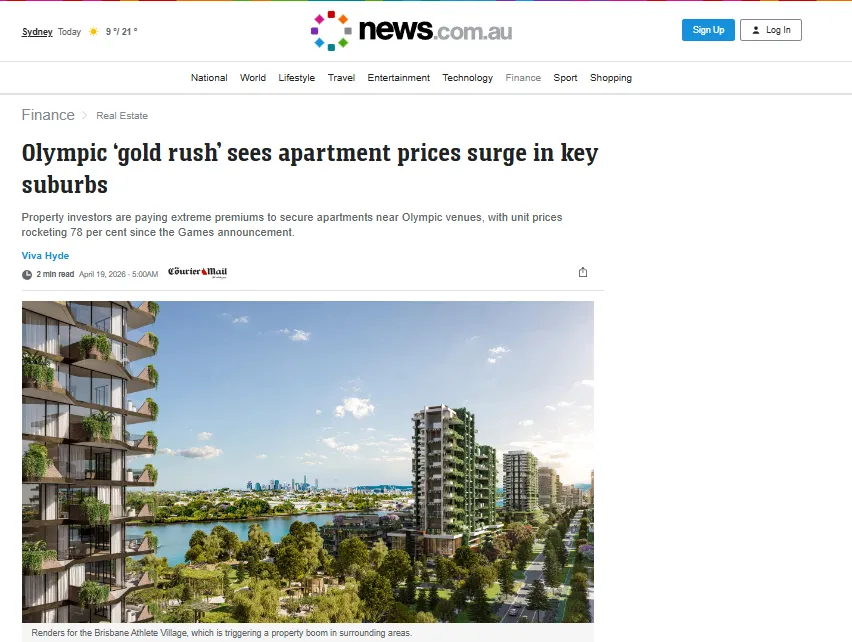
The 2032 Olympic Games are still six years away, but a multi-billion-dollar infrastructure spend has already sparked a real estate gold rush across southeast Queensland.
An exclusive new report by iBuyNew and Hotspotting reveals 27 key suburbs across Greater Brisbane, the Gold Coast, and the Sunshine Coast are riding an estimated $53b economic wave.
Eager buyers were already paying well above asking prices to get into these markets, with unit prices in the host regions skyrocketing by up to 78 per cent since the 2021 Games announcement, the report found.
In the inner-Brisbane suburbs of Dutton Park and Herston, 100 per cent of units sold over the past year for a premium.
East Brisbane was close behind, with 83 per cent of apartments sold above asking price, followed by Bowen Hills at 80 per cent, and Woolloongabba at 72 per cent.
That demand has translated into big wealth gains.
Woolloongabba houses recorded a 30 per cent median price jump in the past 12 months, surging by roughly $354,800 to hit $1.537m.
In Newstead, where houses are snapped up in an average of just 13 days, unit values leaped 25 per cent to $870,000.
iBuyNew CEO Daniel Peterson said the transition of mega-projects into the construction phase was pushing prices to new heights.
He noted unit markets were performing exceptionally well due to relative affordability and scarcity, with apartment prices across the host regions up between 67 per cent and 78 per cent since 2021.
Median house prices in all three regions have now surged past the $1m mark.
Other inner-city hotspots pinpointed by the report to ride the infrastructure wave include Spring Hill, Kelvin Grove, Fortitude Valley, Stones Corner, Coorparoo, and Kangaroo Point.
On the Gold Coast, 73 per cent of Arundel apartments and 62 per cent of Ashmore apartments recently sold above their asking price.
Theindiansun.com.au 16th April 2026

Finding genuinely affordable property across Australia is getting tougher, but new research suggests opportunities still exist for buyers willing to look beyond the obvious.
Hotspotting’s latest “Cheapies With Prospects” list highlights ten locations across capital cities and regional areas where lower entry prices meet what analysts describe as credible long-term demand. The selections span New South Wales, Victoria, South Australia, Tasmania and the ACT, covering both houses and units.
Hotspotting director Tim Graham said affordability has not vanished from major markets, though it now appears in different forms. He pointed to smaller dwellings in established employment hubs and houses on the outer edges of cities where infrastructure and population shifts are reshaping demand.
“The common thread is not just low prices,” he said, noting that buyers should look for areas where rental demand and future buyer interest are likely to hold.
Founder Terry Ryder said the focus has shifted towards identifying value alongside future prospects, rather than chasing low prices alone. In some cases, that means apartments in city markets that have lagged and are beginning to show signs of recovery. In others, it points to fringe suburbs where development and improving amenities are supporting buyer interest.
He described these markets as offering a practical entry point for investors, though he stressed that choosing the right property within each area remains key.
Regional markets, which saw widespread activity during and after the COVID-19 period, are now moving at different speeds. Mr Graham said the earlier broad upswing has eased, leaving a more uneven landscape.
“Some locations have already had their major run, while others are stabilising,” he said, adding that buyers now need to be more precise in their choices.
Among the regional picks, Broken Hill stands out for its low entry price, with houses around $220,000. The town has long been associated with mining, though its economy now includes healthcare, tourism and renewable energy. Analysts say this mix supports rental returns, but they caution that the market suits experienced investors prepared for higher risk.
Port Lincoln in South Australia presents a different regional profile. While its distance from major cities may deter some buyers, its economy is spread across aquaculture, fishing, tourism and agriculture. That diversity, combined with steady demand, has kept interest in its housing market.
Victoria features prominently on the list, with Ballarat continuing to attract attention. Once viewed mainly as a spillover market from Melbourne, it now has a broader economic base, including healthcare, education and manufacturing. Analysts say houses, particularly established homes in well-serviced suburbs, remain the main area of interest due to tight rental conditions.
Wellington Shire in Victoria also appears, offering relatively low house prices and steady rental returns. The presence of service centres such as Sale is seen as supporting ongoing demand, though, as with other regional areas, careful property selection is advised.
In South Australia, Gawler is highlighted as a fringe market that is gradually integrating into Adelaide’s wider urban area. Improved transport links and ongoing development have lifted its profile, while house prices remain lower than much of metropolitan Adelaide.
Closer to capital city centres, several unit markets have made the list. In the City of Melbourne, apartment prices remain comparatively low despite improving sales activity and tightening rental vacancies. Analysts say this reflects a market that underperformed for several years and is now regaining momentum.
Parramatta in Sydney’s west is another unit market attracting attention. Long positioned as a secondary business district, it now has extensive transport links and a growing employment base. While house prices are out of reach for many investors, apartments provide a more accessible option, with rental demand holding steady.
In Tasmania, Glenorchy offers an entry point into the Greater Hobart area at a lower price than neighbouring suburbs. Its proximity to jobs and services, along with tight vacancy rates, has supported consistent demand across both houses and units.
Woden Valley in Canberra rounds out the list, with units providing a relatively affordable way into a market shaped by ongoing urban renewal. Anchored by commercial and health facilities in Phillip, the area continues to attract development and population interest.
Across all locations, analysts stress that affordability alone is not enough. Markets differ widely in terms of risk, demand and long-term outlook, and some, particularly those with lower prices, may require more experience to navigate.
The latest list reflects a shift from broad market momentum to more targeted opportunities. For investors, the message is clear: cheaper options still exist, but they are no longer as easy to find, and choosing carefully matters more than ever.
Mpamag.com 16th April 2026

Ten house and unit markets across Australia have been named in a new top 10 list of locations flagged for their lower entry prices alongside expectations of rental demand and longer-term growth.
The selections come from Hotspotting’s “Cheapies With Prospects” research, which points to pockets of the market where investor borrowing may be supported by more accessible price points without relying on speculative drivers.
According to Tim Graham (pictured top left), director at Hotspotting, the search for inexpensive options in the capitals had become more difficult, but not redundant. “The common thread is not just low prices but an affordable entry into capital city markets where there is still a credible reason to expect future demand, rental strength, and long-term growth,” he said.
“In some locations, that means units in major employment and infrastructure hubs and, in others, it means houses in outer-metro growth corridors where transport upgrades, population growth and new development are reshaping the market.”
Terry Ryder (pictured top right), founder of Hotspotting, said the current focus was on value and fundamentals rather than price alone. “It might be a lower-priced apartment in a major city economy, which is a unit market that has underperformed but is starting to recover or it might be an affordable fringe market still benefiting from strong momentum and expanding amenities,” he added.
“As always, the emphasis is not on buying anything cheap but about buying the right type of asset in the right part of each market. These are the Ugly Ducklings of city real estate, offering investors a realistic entry point into capital city property with both rental appeal and long-term upside.”
Graham said that regional Australia continued to provide a mix of affordability, rental yield and growth potential, although performance had become more uneven. “The broad surge that lifted many regional markets through and beyond the COVID-19 years is no longer happening everywhere at once,” he noted.
“Some locations have already had their major run, others are now stabilising, consolidating or asking investors to be much more precise about where and what they buy. Others, such as Broken Hill, are probably considered ‘roughies’ but deserve their selection in our top 10 list because of its underlying fundamentals.”
The top 10 affordable suburbs with long-term investment potential
Ballarat (VIC) – houses: Median house prices in Ballarat sit between $475,000 and $920,000. The report notes a diversified local economy and significant infrastructure investment, with the main focus on established houses in suburbs with tight vacancies and steady tenant demand.
Broken Hill (NSW) – houses: With a median house price of about $220,000, Broken Hill is identified as a high-yield, higher-risk option for experienced investors, supported by mining, healthcare, tourism and renewable energy activity.
Gawler (SA) – houses: In Gawler, median house prices around $650,000 to $775,000 place it below many parts of metropolitan Adelaide. The area is described as a northern growth corridor, with rising transaction volumes and scope for further price movement as affordability narrows.
Glenorchy (TAS) – houses: Glenorchy, part of Greater Hobart, records median house prices in the range of $551,000 to $700,000. The report highlights its proximity to Hobart’s jobs and services, tight vacancy rates and consistent sales activity across both houses and units.
Melbourne (VIC) – units: Apartments in the City of Melbourne, with median prices from $310,000 to $705,000, are seen as an accessible way into a major employment and education hub after a period of underperformance in the unit market.
Muswellbrook (NSW) – houses: Muswellbrook’s houses, with median prices between $570,000 and $585,000, are linked to both coal and emerging sectors such as renewable energy and transport. The report notes relatively accessible price points paired with strong rental returns.
Parramatta (NSW) – units: Units in Parramatta, where medians range from $510,000 to $850,000, are presented as a lower-cost alternative to houses in Sydney’s “second CBD”, underpinned by transport links, major employment centres and ongoing public and private investment.
Port Lincoln (SA) – houses: Port Lincoln, with a median house price of about $535,000, is described as a regional centre with a broad industrial base including aquaculture, fishing, tourism, manufacturing, agriculture and emerging energy projects.
Wellington Shire (VIC) – houses: In Wellington Shire, median house prices between $377,500 and $575,000 offer one of regional Victoria’s lower entry points. The report notes solid yields, increased transaction activity and the role of Sale as a local service hub.
Woden Valley (ACT) – units: Woden Valley’s unit market, with median prices from $350,000 to $669,000, is highlighted as a comparatively affordable way into the Canberra market, supported by employment, retail, health and education infrastructure centred on Phillip.
Yourinvestmentpropertymag.com.au 16th April 2026

Finding genuine “cheapies” in Australia’s capital cities is becoming harder, but it’s not impossible, according to Hotspotting director Tim Graham.
The top 10 list features houses and units across cities and regional areas in New South Wales, Victoria, South Australia, Tasmania, and the ACT.
“The common thread is not just low prices but an affordable entry into capital city markets where there is still a credible reason to expect future demand, rental strength, and long‑term growth,” Mr Graham said.
“In some locations, that means units in major employment and infrastructure hubs and, in others, it means houses in outer‑metro growth corridors where transport upgrades, population growth and new development are reshaping the market.”
Affordability alone does not necessarily translate to good investment value, as Hotspotting founder Terry Ryder puts it, “the pivot to identifying value as well as the potential for future growth is important”.
A viable prospect could be a lower priced apartment in a major city economy that has underperformed but starting to recover, or an affordable fringe market still benefitting from strong momentum.
Mr Ryder said, “as always, the emphasis is not on buying anything cheap but about buying the right type of asset in the right part of each market.”
Mr Graham added that regional Australia continues to offer strong combinations of affordability, yield and long‑term upside, but opportunities are becoming more selective.
“The broad surge that lifted many regional markets through and beyond the COVID‑19 years is no longer happening everywhere at once,” he said.
“Some locations have already had their major run, others are now stabilising, consolidating, or asking investors to be much more precise about where and what they buy.”
Top 10 ‘Cheapies with Prospects’
Ballarat (VIC)
Median house price range: $475,000 - $920,000
Described as “a cheapie relative to its size”, Mr Ryder said Ballarat remains one of the strongest selections due to its affordability, scale, economic depth, and major infrastructure investment.
“It’s no longer just a regional centre benefitting from Melbourne spillover, but is increasingly a substantial city in its own right, with a diversified economy supported by healthcare, education, logistics, manufacturing, and construction,” he said.
Investment opportunity: Established homes in solid suburbs with tight vacancy rates
Broken Hill (NSW)
Median house price: $220,000
Mr Graham said Broken Hill is an “absolute roughie”, best suited to experienced investors chasing strong cash flow.
“It offers a level of yield and affordability that’s almost impossible to find elsewhere in Australia,” he said.
Once seen as a “one-dimensional” mining town, Broken Hill’s economy is now supported by healthcare, tourism, and renewable energy. However, asset selection and risk tolerance matter greatly.
Investment opportunity: Houses in locations with good tenant quality
Gawler (SA)
Median house price range: $650,000 - $775,000
Gawler remains one of the few capital‑city fringe markets where houses are still relatively affordable, Mr Ryder said.
“Once seen mainly as a historic country town beyond Adelaide, Gawler is now evolving into a major northern growth corridor with better transport, expanding amenity, and substantial residential development,” he said.
While no longer dirt cheap, Gawler remains accessible compared with much of metropolitan Adelaide.
Investment opportunity: Houses-led market, buying a solid stock before affordability erodes
Glenorchy (TAS)
Median house price range: $551,000 - $700,000
Glenorchy offers a relatively affordable entry into the Greater Hobart market, while still benefiting from strong rental demand, improving infrastructure, and a broad economic base.
“The LGA combines proximity to major jobs and services with lower buy-in prices than many neighbouring parts of the capital,” Mr Graham said.
“What makes Glenorchy particularly compelling is that affordability is matched by consistency,” he added.
Transaction levels have remained steady, vacancy rates are extremely tight, and both houses and units continue to offer solid yields, per Hotspotting.
Suitable for: Investors seeking value in a capital city market
City of Melbourne (VIC)
Median unit price range: $310,000 - $705,000
Mr Ryder said the apartment market provides access to Melbourne at prices that remain relatively affordable.
He, however, clarified that “this is not a case of buying cheap for the sake of it”.
“The attraction is that demand is improving in a market where values have largely underperformed for several years,” Mr Ryder emphasised.
Transaction levels have lifted strongly, vacancies are now tight across the LGA, and yields are high by capital city standards.
Muswellbrook (NSW)
Median house price range: $570,000 - $585,000
Muswellbrook combines affordability, strong yields, and an evolving post‑mining economic story.
“The LGA still benefits from mining-related employment and output, but it is also increasingly linked to renewable energy, transport and broader regional industry,” Mr Graham said.
For investors, the property market insights firm says the appeal lies in the ability to buy houses at relatively accessible price points while securing strong rental returns.
Investment opportunity: Established homes with solid liveability and lasting tenant appeal
City of Parramatta (NSW)
Median unit price range: $510,000 - $850,000
The unit market in Parramatta provides an accessible way to buy into “one of Australia’s fastest-evolving city economies”.
“Parramatta is now firmly established as Sydney’s second CBD… with strong transport links, deep employment bases, and major public and private investment,” Mr Ryder said.
Transaction volumes have been rising across a broad range of apartment markets, while rental yields are solid by Sydney standards and vacancies remain relatively tight in many parts of the LGA.
Port Lincoln (SA)
Median house price: $535,000
Despite being considered as a “roughie” due to its remoteness, Mr Graham said Port Lincoln offers a diversified economy and lifestyle appeal.
“One of its key strengths is that the economy is supported by multiple sectors, including aquaculture, commercial fishing, tourism, manufacturing, agriculture, and emerging energy investment,” he said.
“This is not a roughie in the same way as Broken Hill; it is a more balanced regional market with substance behind it.
Investment opportunity: Houses
Wellington Shire (VIC)
Median house price range: $377,500 - $575,000
Mr Ryder said Wellington Shire offers a strong mix of affordability, yield, and future economic momentum in regional Victoria.
“The attraction for investors is that house prices remain affordable and yields are strong, while transaction levels have been rising across the LGA,” he said.
For investors seeking regional value with real economic drivers behind it, Wellington Shire stands out strongly, according to Hotspotting’s report.
Investment opportunity: Houses-led market where selectivity matters
Woden Valley (ACT)
Median unit price range: $350,000 - $669,000
Units in Woden Valley provide a relatively affordable entry into the Canberra market.
“Anchored by Phillip as its main commercial centre, the district combines major employment, retail, health, and education infrastructure with a growing pipeline of residential and mixed-use development,” Mr Graham said.
“Woden, therefore, fits the brief as a cheapies market with real infrastructure, employment, and long-term urban substance.”
Realestate.com.au 30th March 2026
When Alice Calcutt put her home on the market three weeks ago, she didn’t know it would coincide with the start of a war.
But despite fears of a property slowdown, the Brisbane mother-of-three is banking on global uncertainty helping to sell her Chelmer house under the hammer on April 1st.
“I’ve got a firm belief that when there’s uncertainty around world issues, people tend to move their investments into houses,” Mrs Calcutt said. “The saying ‘safe as houses’ is what we’re relying on.
“I also think that there’s such a huge need for housing in Brisbane that it’s going to take something pretty big to upset that. It hasn’t stopped us from wanting to buy a new home, so I can’t see it stopping anyone else.”
Her confidence comes despite fresh warnings Queensland’s property boom is losing steam, with affordability pressures and rising interest rates starting to bite. But not everywhere is feeling the chill.
New data from property investment company, Hotspotting, shows while much of Brisbane is slowing, Chelmer is one of the few suburbs where sales activity is still on the rise.
The Calcutts, a family of five, have lived in their four-bedroom home at 7 Hurlton St for the past seven years, but with the kids now almost all at university, their needs have changed.
“When we moved into this property, we had primary school aged children,” Mrs Calcutt said. “We were very much connected to the community and the area and had lots to do with the local school and families. Now, seven years later, we’ve got uni students and everyone’s travelling out of the area, and life has just changed for us.”
Set just 100m from Chelmer train station — and with 50-cent fares now in play — the home ticks the boxes buyers are increasingly chasing.
“You can walk to everything you need,” she said. “It’s quiet, leafy, and you’re close to the city, but far enough away from the hustle and bustle. Plus, the large block sizes around here are hard to find.”
The family has deep roots in Brisbane’s inner-west, leaving at one point — only to come straight back.
“We moved away for a few years and missed it so much we returned,” she said.
Even flood risk hasn’t been enough to dent demand long-term.
“We’ve seen floods impact the area, but it really only affects prices for a short time,” she said.
“They bounce back quickly — which says how desirable the area is.”
Now, with their children grown and heading to university, the Calcutts are ready for their next move — chasing more space and a semi-acreage lifestyle.
They’ve listed their home with Cameron Crouch and Douglas May of Ray White Sherwood.
News.com.au 30th March 2026
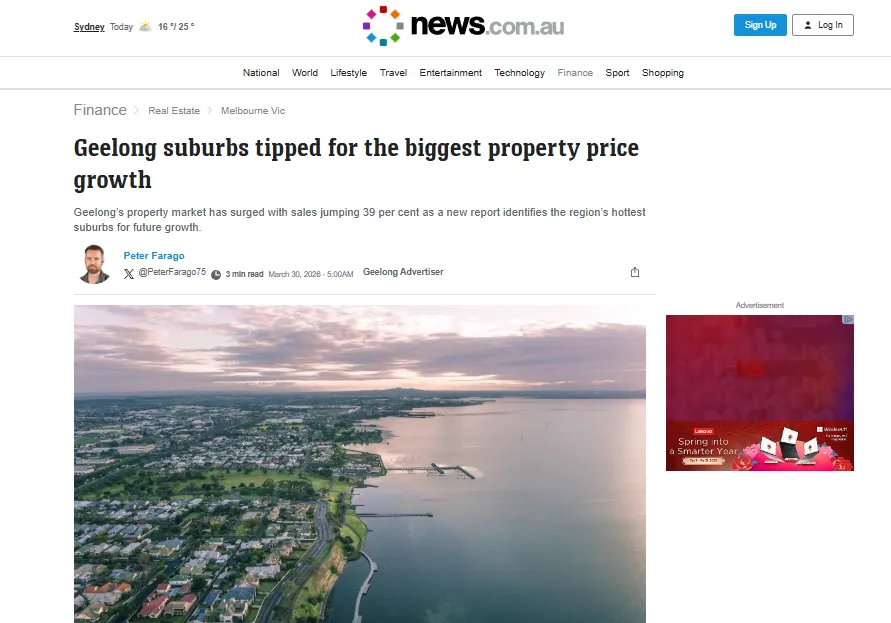
A new report shines a light on the Geelong areas destined for future growth in home prices amid a huge rise in the volume of property sales.
The quarterly volume of residential sales has climbed more than 39 per cent in the past 12 months in Geelong, as real estate analysts Hotspotting reveals regional Victoria as the best market for future growth in its Autumn Price Predictor Index.
The report reveals how widespread and quickly Geelong’s property market has recovered, particularly as young homebuyers and investors return.
It identifies 39 areas in the Geelong region where increasing sales points to future growth.
The report gives a positive rating to all but four suburbs – central Geelong, Waurn Ponds, Torquay and Jan Juc – which are shown to still be in a recovery phase.
Hotspotting identifies Curlewis, Drysdale, East Geelong, Grovedale, Lara and Ocean Grove as among the hottest areas to buy for growth.
Quarterly sales across Geelong grew from 1644 to 2310 over the past year, while Curlewis is a supercharged market, with sales rising from 16 to 43 over six quarters.
Sales in Ocean Grove jumped from 69 to 117 over seven quarters.
“Geelong always scrubs up really well in these reports. It’s a great example of why property prices rise,” Hotspotting founder Terry Ryder said.
“In our view it’s the underlying economy – the local economy, because real estate markets are essentially local.
“And if the local economy is diverse and strong and jobs are being created, then real estate will grow because the strength of the economy and the creation of jobs leads to demand for properties to either rent or buy.”
The Hotspotting report comes as the latest Regional Movers Index revealed Greater Geelong held on to as the nation’s second-most popular regional destination for people leaving capital cities for a new home.
But Greater Geelong’s 6.8 per cent share of net internal migration to regional Australia came as the volume of people moving to the city fell by nearly 14 per cent over the year.
“Geelong is getting a lot people moving there from Melbourne, because it’s close – people do like to stay in touch with their big city, even if they decide to leave it, because more and more people can work remotely,” Mr Ryder said.
“Geelong’s a great place for people to go because it’s relatively affordable, it’s got lifestyle, it’s on a peninsula surrounded by water almost, it’s a good strong economy here there’s jobs being created and you can jump on train or go up the freeway, be back in the centre of Melbourne pretty quickly.”
Melbourne contributed 38 per cent of people leaving a capital city to settle in a regional area, according to the latest report from the Commonwealth Bank and Regional Australia Institute.
CBA regional and agribusiness banking executive general manager Kylie Allen said the RMI findings continue to make a case for investment in regional Australia.
“Long-term RMI trends show solid and consistent growth that we expect to continue. It’s a broadening of regional growth beyond the usual hotspots,” she said.
Ms Allen said that infrastructure, housing and services for regional communities are even more imperative as recent CommBank data shows around a quarter of first-home buyers are making that purchase in a regional location.
“First-home buyers choosing regional or remote areas can often buy a larger home at a more accessible price,” Allen said.
Hotspotting: Geelong’s best suburbs to buy
Rising: Bannockburn, Bell Park, Belmont (houses and units), Breakwater, Clifton Springs, Colac, Curlewis, Drysdale, East Geelong, Fyansford, Geelong (units), Geelong West, Hamlyn Heights (houses), Herne Hill, Highton (Units), Lara (houses and units), Leopold, Lovely Banks, Mount Duneed, Newcomb (houses and units), Newtown (houses and units), North Geelong, Ocean Grove (houses and units), Point Lonsdale, Portarlington, St Albans Park, Thomson, Torquay (units), Winchelsea
Consistent: Anglesea, Barwon Heads, Bell Post Hill, Highton (houses)
Plateau: Armstrong Creek, Charlemont, Corio, Lorne, Manifold Heights, Norlane (houses and units), Whittington (houses and units)
Recovery: Geelong (houses), Jan Juc, Torquay (houses), Waurn Ponds
Realestate.com.au 29th March 2026

What do Invermay and South Launceston have in common?
They were named Tasmania’s hottest housing markets in a new national property report, and listed among the nation’s Top 50 supercharged suburbs.
Hotspotting’s quarterly Price Predictor Index asserts that sales volumes are a forward indicator of price movements.
With median house prices of $500,000 and $600,000, these Tassie suburbs have recorded quarterly sales increasing from 13 to 34 in Invermay and from 12 to 32 in South Launceston; a consistent trend over the past five quarters.
Hotspotting’s autumn report placed Launceston among the nation’s Top 10 municipalities, with the last four quarters rising from 358 sales to 367, 393 and then 440.
Regional Tasmania, 52 markets, was also highlighted in the report, with sales moving from between 1631-1680 in 2024 to between 1838 and 2019.
Hotspotting managing director Terry Ryder said Launceston stands “head and shoulders above the rest”.
He said sales in the latest quarter were 29 per cent higher than one year ago.
“Of the 16 major Launceston markets, 75 per cent have positive classification in the PPI report, including six rising areas and five consistent areas,” he said.
McGrath Launceston principal Josh Hart said across Greater Launceston, stock levels are closer to Covid levels than they are to a typical healthy market.
He said the volume of stock for houses, land, townhouses, units during the pandemic was under 600 properties, whereas a steady market would have up to 1200 listings.
Currently there are 920 properties, Mr Hart said.
“And the unspoken truth is that 30 per cent of those 920 would be under contract, making the figure closer to 700,” he said.
“Strong results are being achieved as buyers prioritise securing a property.
“Longer settlements and rent-back positions are increasing to allow people time to find what they want to buy after selling.”
Mr Hart said FHB and investors are active in the $450,000-$600,000 price bracket, especially with rental stock low, few vacancies and yields high.
“The middle sector is being driven by families, while the prestige market increasingly attracts NSW and QLD buyers relocating because of the climate,” he said.
“Previously, that was Baby Boomers, but now younger enterprising professionals are making the same decision.”
Meanwhile in the south, Hotspotting ranked Hobart on the winner’s side of the Winners and Losers section of the report.
Mr Ryder found Hobart had no markets where transaction levels were declining.
“The Tasmanian capital’s market is more about steadiness, with evidence of moderate growth, rather than a dramatic upsurge,” he said.
“The Glenorchy municipality, popular for affordable options, has recorded steady sales levels in the past six quarters, headed by consistent markets in Lutana and West Moonah (houses) and the suburb Glenorchy (units).”
He noted upward momentum in the Hobart and Clarence LGAs.
“Sales in the inner-city rose by 16 per cent in the last quarter, while Clarence recorded a 14 per cent increase,” he said.
Principal at South Property Group, Nick Cowley said the Hobart market has remained steady over the last six months, slightly trending upward by about 2.5 per cent year-on-year.
“I would expect this momentum to remain the same over the coming months,” he said.
Mr Cowley said investors dominated the market significantly in the sub-$700,000 bracket during the December quarter, increasing more than 100 per cent compared to the previous year.
“Sixty-five per cent of sales were from mainland investors. The relentless pursuit of stock we are seeing daily continues,” he said.
Mr Cowley said with more interest rate hikes predicted, the future of the market will be interesting to see.
“Although this has no bearing on the sub-$750,000 demographic,” he said.
“Low stock numbers will continue to hold up prices through the cooler months.
“The Australian Government’s 5 per cent Deposit Scheme changes and the State Government’s $30,000 First Home Owner Grant will continue to support young buyers.
“We are expecting a multitude of large developments, units and houses, to hit the market by spring — so keep an eye out for those.”
News.com.au 29th March 2026
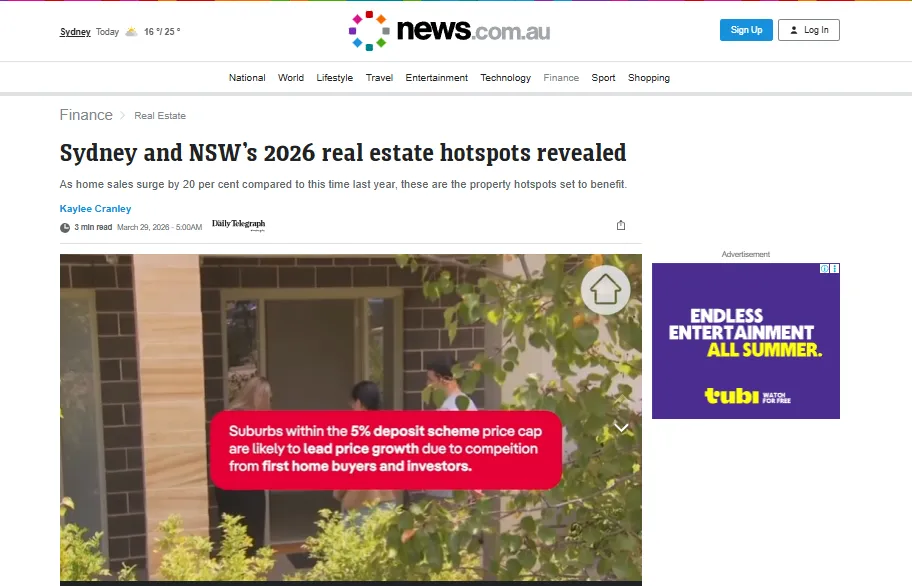
Sydney and New South Wales’ top suburbs poised for home price growth have been revealed, with a new property paradox emerging, as million-dollar postcodes fuel the greatest momentum even as half of all buyers in the Greater Sydney area opt for affordable units.
The Autumn 2026 Price Predictor Index shows Greater Sydney sales activity rose 2.8 per cent over the quarter, sitting 18 per cent higher than a year ago.
The National Hotspotting Report charts quarterly sales activity on the basis of uplift by quarter, spotlighting suburbs likely to see price growth.
Defying a national affordability‑driven trend, Greater Sydney momentum is concentrated in up-market areas including suburbs like Bondi, Rose Bay, Woollahra, Paddington, Potts Point, Vaucluse, Maroubra and Manly.
Hotspotting.com.au founder Terry Ryder said this was contrary to other parts of Australia that were largely led by buyers chasing the affordable end of the market.
“The local government areas with the most uplift over the last nine to 12 months included the Northern Beaches, Woollahra, the Bondi suburbs, the city of Sydney inner city suburbs, and Randwick in the eastern suburbs,” he said.
Buoyant buyer demand was also evident in the Local Government Areas of Parramatta, Canterbury-Bankstown, Strathfield and the Sutherland Shire led by attached dwelling affordability, with units comprising around half of all residential sales in the Greater Sydney market.
“Parramatta is a standout there, about three quarters of all sales in the local government area are units,” Mr Ryder said.
“Canterbury-Bankstown has a very high content of unit sales – you can get into unit markets there in the $400,000s to $500,000s.”
Lynne and Dale Kennedy are moving from their Rouse Hill home of 12 years, downsizing to a penthouse apartment north of Parramatta, in Castle Hill.
“All the apartments are architect-designed and they’re all different,” Ms Kennedy said.
“They’re not cookie cutter and they have nice high end finishes, I don’t feel as though I’m sacrificing anything at all.”
Ms Kennedy said the apartment’s low maintenance and convenient location added to its appeal.
“We’ll be able to go away when we want to and have that freedom,” she said.
“Its very handy to Parramatta, there’s a lot of restaurants that we quite often go to, a great shopping centre there.
“There is a metro, which is a big draw card for us with convenience for city travel.”
Amit Nayak partner and sales agent of McGrath Parramatta said the unit boom in the suburb is driven by its CBD proximity and affordability.
“Particularly with the new upcoming metro – it’s central, a hub for a lot of big companies and offers a great lifestyle with restaurants and shopping,” he said.
“The average price is around $650,000, so it’s a great entry point for many buyers.”
Aaron Del Monte Managing Director of LJ Hooker Double Bay said there has been a rise in buyer interest on properties around $5m and above in many of the up-market momentum suburbs.
“My belief is there’s a whole heap of concern coming up at the moment around capital gains tax,” he said.
“A lot of the owners we are speaking to are saying bugger having an investment and instead are looking into improving their own living standards.”
Infrastructure investment in top-end suburbs like Rose Bay and Woollahra is laying the foundations for long-term growth, Mr Del Monte said, adding that these blue-chip areas should hold up despite the current environment, including conflict in the Middle East.
“They are the most secure real estate,” he said.
“Now with what’s going on, there’s probably a lot more international investment and they will always buy top blue chip real estate.”
Regional hotspots like Newcastle and Wollongong were also standouts.
Mr Ryder said a range of different markets are “coming strong” in regional NSW due to the lifestyle there.
“The biggest regional cities were Newcastle and Wollongong,” he said.
“Some of the iconic lifestyle parts of regional NSW, like the Blue Mountains and Byron Bay are also very strong.”
NSW suburbs in the National Top 50 Supercharged Suburbs
Suburb LGA Property Type Median Price Pattern
Paddington Woollahra House $3,650,000 56, 64, 65, 74, 86
Randwick Randwick Unit $1,280,000 97, 106, 113, 126, 135
Strathfield Strathfield Unit $750,000 47, 57, 70, 75, 82
Alexandria Sydney Unit $960,000 36, 54, 70, 84, 90
Blackheath Blue Mountains House $895,000 29, 28, 33, 44, 60
Broken Hill Unincorporated NSW House $220,000 102, 126, 152, 153,163
Maroubra Randwick House $3,000,000 5, 66, 66, 81, 84
Mudgee Mid-western region House $735,000 47, 68, 65, 60, 75, 98
Coffs Harbour Coffs Harbour Unit $588,000 64, 77, 88, 95, 115
Wentworthville Cumberland Unit $600,000 47, 52, 61, 75, 85
Source: Hotspotting National Research Report Price Predictor Index Autumn 2026
Realestate.com.au 29th March 2026
Melbourne and regional Victoria have been tipped for a two-year supercharged real estate recovery expected to deliver double-digit price growth to owners’ hip pockets.
After years of flatlining, Victorian communities now dominate the list of areas around the country anticipated for a 2026 and 2027 boom, according to research by real estate analysts Hotspotting.
The municipalities of Ballarat, Greater Dandenong, Geelong, Hume, Mitchell and Yarra all made the firm’s list of top 10 Australian council areas for escalating buyer demand, a precursor to price growth.
The report, based on home sales data from PropTrack, states that regional Victoria boasts one of the most upwardly mobile markets in the nation.
It’s on the cusp of returning to the Covid pandemic’s “heady days” when sales boomed in 2021 after recording 13,299 home sales between October and December 2025, a 32 per cent increase compared to 12 months prior.
And the Greater Melbourne market “is one of the most compelling recovery stories in the national dataset” with 34,209 sales in the same time frame, close to its 34,878 sales figure of December 2021.
Hotspotting director Terry Ryder said Victoria’s capital and its regions would likely see improved prices in the next 12 months to two years, based on positive trends in surging sales numbers, even when accounting for interest rate increases and skyrocketing petrol costs.
“Melbourne and regional Victoria have been quite dormant, but the analysis of the sales activity figure suggests that in 2026 we’re going to see prices rising at higher rates than we have in the last few years in most Victorian markets,” he said.
Mr Ryder said he was expecting Melbourne and regional Victoria to deliver double-digit median house value rises.
He added that buyers seeking affordability were driving demand in some Victorian hotspots, including for units in the Yarra suburbs of Collingwood, Fitzroy and Richmond and houses in Hume’s Sunbury, Craigieburn, Greenvale and Broadmeadows, as outlined in the Hotspotting Autumn Price Predictor Index report.
Cohen Handler Buyers Agents’ business director Zac Jacobs said soaring fuel costs and interest rate rises had caused some market disruption in the past fortnight.
However, Melbourne is “absolutely a buyer’s market” at the moment thanks to less competition at auctions and more off-market listings.
“We’ve seen in the last couple of weeks, prices of about 80 per cent of properties are selling in, or at, the lower range of expectations and that’s unusual in a market like this,” Mr Jacobs said.
He said buyers seeking good capital growth should avoid CBD apartments and outer suburban house and land packages, due to an over-saturation of these types of listings.
It’s also smart to check what’s slated in suburbs the state government has earmarked for future large apartment developments, in a moves to tackle the housing crisis.
“Even Brighton, with potentially 12-storey apartment blocks going up, these things will affect your price growth,” Mr Jacobs said.
“Because people are moving there for the lifestyle but if they’re going to be surrounded by apartment blocks and traffic jams, they won’t want to be there anymore.”
Di Battista Real Estate Craigieburn director Daniel Di Battista said there was some uncertainty in the market and sales were taking a bit longer to finalise.
But with plenty of transactions still happening, he reckons median prices are likely to rise.
“The couples who are selling and then saying, ‘We’ll wait out it and see what happens,’ I think they’re playing with fire – I think they might get priced out in the next year or so,” Mr Di Battista said.
He’s seeing many buyers selling and then purchasing a new home within the same suburb or a neighbouring area of Hume.
“We’re also noticing some people from the other side of town downsizing their mortgage, buying a similar house but on this side of Melbourne and then having about half their previous mortgage size,” Mr Di Battista said.
MELBOURNE AREAS SUPERCHARGED FOR FUTURE PRICE GROWTH
Suburb/property type Median price
Dandenong units $445,000
Noble Park houses $831,000
Broadmeadows houses $640,000
Craigieburn houses $705,000
Greenvale houses $885,000
Sunbury houses $710,000
Beveridge houses $650,000
Broadford houses $610,000
Kilmore houses $622,500
Wallan houses $615,000
Collingwood units $615,000
Fitzroy units $773,000
Richmond units $569,000
Clifton Hill houses $1,592,500
7news.com.au 26th February 2026
A leading property analyst has said home buyers and investors should be looking for an often overlooked factor when trying to identify where property prices are set to grow.
"Infrastructure is hugely influential because in markets where it is happening it creates an enormous amount of economic activity," said Hotspotting founder Terry Ryder.
"It generates a huge number of jobs and those jobs create the demand for real estate during construction and in some cases there's even more jobs when the project is finished and it's operating."
It is for that reason that infrastructure spending in an area was a key factor considered in Hotspotting's Ahead of the Herd: Australia's Growth Leaders 2026 report.
"The value of this report is that it identifies future trends and does not rely on the past for guidance," Mr Ryder said.
Launceston leads
A $2.1 billion AI centre in Launceston is just one part of the $36 billion pipeline worth of significant infrastructure across regional Tasmania.
That massive investment is the third highest for any area in the country, and puts property in regional Tasmania in the market for significant growth.
"Launceston presents as a 'second wind market' - one which recorded strong price growth from 2020 to 2022, has paused to catch its breath and now, having got its second wind, is starting to run again," Mr Ryder said.
Overall regional Tasmania ranks highest among all the regional markets of Australia for price growth prospects in 2026 according to the report.
Launceston suburbs that are on the watch list for growth, due to key factors such as how much buyers are paying above asking price, include Norwood and Newnham.
Mr Ryder said along with people being encouraged by infrastructure investment in the area, regional Tasmania was also attracting buyers priced out from Melbourne.
Get in early in regional Victoria
That was also the case for regional Victoria, an area that had seen stagnating property prices in recent years.
"People are chasing that affordable lifestyle in regional Victoria and Tasmania," Mr Ryder said.
"Regional Victoria is really starting to pick up. It's been a little bit flat for two or three years so people are seeing value for money."
Investment in infrastructure across regional Victoria totals $138 billion, with 164 significant infrastructure developments.
"Regional Victoria is not as strong as other areas - yet. But the number of locations with rising demand suggests after a couple of flat years it is starting to revive."
Geelong was noted for continuing to attract strong buyer demand both from investors and home buyers.
The Bendigo suburb of Epsom, which has a median house price of $640,000 was rated as a rising suburb to watch, while units in Wodonga and West Wodonga, with medians around the $390,000 mark made the top 10 suburbs in regional Victoria list.
Will all infrastructure push property prices up?
The Hotspotting growth leaders report looked at infrastructure projects valued at $100 million including transport infrastructure, energy projects and hospitals, educational institutions and data centres.
Mr Ryder said while large infrastructure projects can be "a game changer" in regional areas, some types of projects brought more long-lasting benefits.
He pointed to hospitals and medical projects, with 307 of them currently across the country.
"Right now there is an absolutely extraordinary level of development of major hospitals and expansion of existing ones," Mr Ryder said.
"There are jobs in constructing them, but probably even more jobs in actually running it when it's finished.
"And there are a lot of highly paid medical specialists, people who have good incomes plus those like nurses and orderlies who aren't earning such big money but they're all looking for somewhere to live.
Road and rail projects meanwhile brought more people into areas in construction, however long-term benefits were also there.
While they don't create a lot of jobs once they finish there are a lot of jobs in the building.
"Their impact when they are finished is that they improve access to locations, so they can be very influential as well."
News.com.au 23rd February 2026
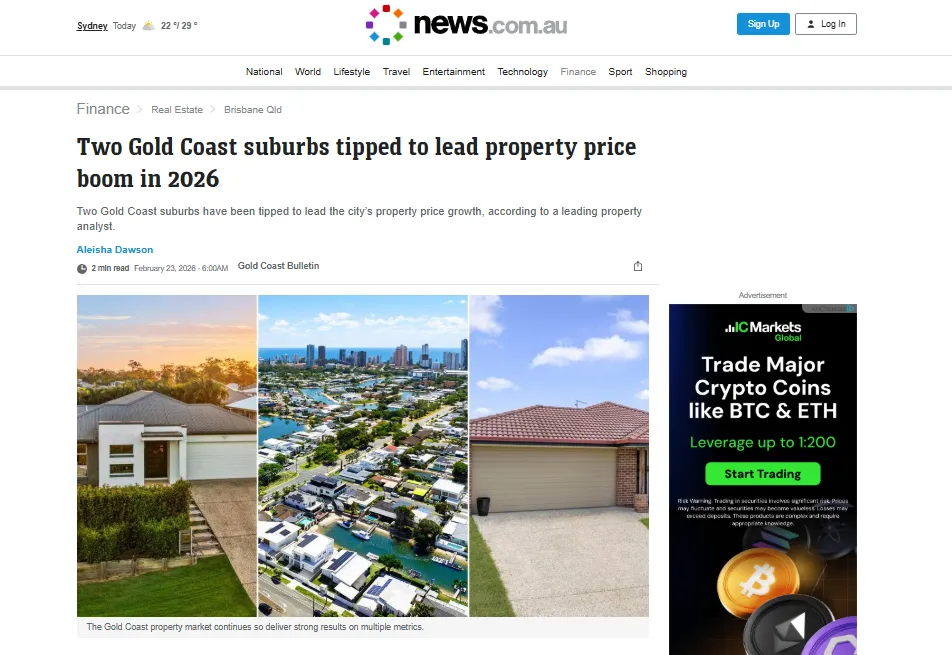
Burleigh Waters and Ormeau are tipped to lead the Gold Coast’s property price growth in 2026, according to a leading property analyst.
The Growth Leaders report — a collaboration between Finance Better and Hotspotting — ranks every Australian capital city and regional market.
While Brisbane came in first across the country, regional Queensland which included the Gold Coast, came in seventh place with the two Glitter Strip suburbs highlighted in the top 10 suburbs for regional Queensland.
The unit market in Burleigh Waters and the house market in Ormeau were both in the top 10 suburbs in regional Queensland expected to outperform in 2026.
Finance Better founder Louis Velasquez, said the analysis showed that key locations on the Gold Coast continued to deliver strong results on multiple metrics.
“The Gold Coast market, which has been rising strongly for five years, continues to deliver,” he said.
“In the Burleigh Waters unit market 58 per cent of sales were for above the asking price while in the Ormeau house market, 62 per cent of sales were for above asking price,” Mr Velasquez said.
“Both locations have very low vacancy rates below 1 per cent, rents are rising and the time it takes to sell a property is on average 32 days.”
Mr Velasquez said the Gold Coast’s northern growth corridor in particular, including Ormeau, continued to attract home buyers and investors, with major new infrastructure projects having an influence.
Hotspotting founder Terry Ryder said the Gold Coast had been a standout location for some time and that was set to continue in 2026.
“The market in particular benefits from a phenomenon we are seeing in many parts of Australia and that is increasing demand in unit markets,” Mr Ryder said.
“Unit markets particularly in areas such as the Gold Coast offer buyers an opportunity to secure a property in a lifestyle location and often in a better location then most could afford in the house market.”
Other regional Queensland suburbs to make the top 10 included Sunshine Coast’s markets Birtinya (units) and Parrearra (units), Cairns’ Edmonton (houses) and Manoora (units).
Townsville’s Aitkenvale (houses), Mackay’s Bucasia (houses), and Toowoomba’s Newtown (units) also made the top 10 list.
The report also revealed 62 per cent of regional Queensland markets recorded positive ratings with 30 per cent or more of properties sold above the asking price.
eight capital cities and six state regional markets were analysed for the report.
The cities and regional markets were ranked based on six metrics — sales volume, sold above asking price, vacancy rate, days on market, rental growth and infrastructure spending — to gauge the strengths and weaknesses of each place.
Realestate.com.au 19th February 2026
Cash-strapped buyers are rushing to Adelaide’s affordable suburbs as property prices continue to surge – but they won’t stay cheap for long.
Industry experts say buying in areas where values are rising, demand is strong and rental yields are solid is a safe bet to ensure a property is a good investment, though it means there’s a small window to get in at an affordable price.
Hotspotting founder Terry Ryder said it was getting harder to find affordable properties, referring to those under the $850,000 mark.
“Those cheaper areas are the ones that have actually shown the best growth,” he said.
With many willing to give up land to get into a good location, Mr Ryder said units and apartments were becoming a much more appealing option.
“There’s a lot more thought going into the design of them too,” he said.
Hotspotting and Finance Better’s Growth Leaders 2026 report reveals Adelaide’s top 10 suburbs that tick all the boxes.
With all but one having a median house or unit price under $850,000 – Hallett Cove’s was $875,000 – they were considered affordable areas.
Low days on market and vacancy rates, rising yields, as well as the percentage of homes selling above asking price were also considered to determine the list.
The Onkaparinga local government area in the city’s south had the most growth suburbs, with Christie Downs, Christies Beach and Seaford making the list for houses and Morphett Vale for units.
Magain Real Estate agent Scott McPharlin, who sells mainly in the south, said all four suburbs offered great buying options, as well as few smaller neighbouring ones like Hackham West and Huntfield Heights.
“Christie Downs is definitely a hotspot,” he said.
“The other one I really like, and people turn their noses up at, is Hackham West – that’s because it’s really well located.
“A lot of those smaller suburbs get forgotten about.”
Harris Real Estate Wine Coast agent Sam Bennett, who also sells in the southern suburbs, said the lifestyle on offer with beaches, especially surfable ones, and wineries close by also a big drawcard to the area.
While affordability was the goal for many, Mr Bennett said it was also important to consider future plans when choosing where to buy.
Those hoping to upsize in the near future, for example, would need to carefully consider location, he said.
“It’s important to get in the right location so you can get that growth, which means they can upgrade to the home they want,” he said.
Meanwhile, units in Ascot Park, Glenside, Magill and Plympton were considered good buys closer to the city, while houses in Gawler East were a solid contender in the north.
Adelaide ranked 4th in the country when comparing capital cities, mainly because it had the highest number of suburbs with low days on market.
Finance Better founder Louis Velasquez said the analysis by Hotspotting, showed there was broad strength in markets across Australia.
“All 14 jurisdictions have demand drivers that will put upward pressure on dwelling values in 2026,” he said.
Realestate.com.au 14th February 2026
Property price growth has been slow and steady in Hobart, but is this about to change?
The regions primed for the highest property price growth of 2026 have been revealed, with new analysis anointing Brisbane, Hobart and regional Tasmania as Australia’s top three growth leaders for the year.
The Finance Better and Hotspotting report looked at the country’s 14 major market jurisdictions — eight capital cities and six state regional markets — to determine where home values would increase the most.
The report used the key metrics of sales volumes, vacancy rates, days on market, rental growth, infrastructure spending and how many properties sold above asking price to determine growth leaders.
Hotspotting founder Terry Ryder said the value of the Growth Leaders 2026 report was it identified future trends and did not rely on the past for guidance.
“The jurisdictions ranked second and third have not featured among the outperformers in the recent past — Hobart and regional Tasmania,” Mr Ryder said.
“But both are poised to be among the growth leaders in 2026.”
Hobart rates as one of the nation’s leading markets of the past 20 years and, after a pause following its most recent growth spurt, is now on the cusp of another up cycle, the report said.
“Hobart ranks first or second on three of the six key metrics (sales activity, above asking price sales and vacancy rates) and is weak on only one of them — infrastructure investment per capita,” Mr Ryder said.
“Its appeal includes having the cheapest real estate among capital cities in Australia, except for Darwin.”
Of the 52 Hobart markets in the analysis, all but one had 30 per cent or more properties sold for above the asking price; and 88 per cent had vacancy rates below 1.5 per cent.
Three Tassie suburbs were named in the report’s National Top 10 Suburbs for 2026 growth: Launceston’s Noorwood, alongside Hobart’s Moonah and Claremont. Rising buyer demand and relative affordability were common traits among the three areas.
Fall Real Estate agent Justin Atkinson said stock is low in Moonah and Claremont, with only a few listings coming to market each week.
“If that continues, combined with the ongoing drive from mainland investors, I believe we will see continued growth through 2026,” he said.
“Day to day, I’m seeing well-presented homes with realistic quoting that are drawing strong inquiries, and, in many cases, selling at or above expectations.
“Buyers are still discerning, but they are decisive when the home is move-in ready or rent-ready, and the value is clear.
“Days on the market are also feeling like it is getting less and less.”
4one4 Property Co sales agent Aaron Murray described Moonah and Claremont as “healthy” markets where homes that are priced right can sell for “well above asking”.
He said inquiry levels had definitely lifted, especially for properties below $750,000.
“Phones are ringing, and open homes are back to being crazy,” he said.
“The potential for price growth is underpinned by confidence and supply.
“If rates settle with no more increases, and we can actually build more homes without jumping through hoops, that’s when things really take off,” he said.
“Right now, it’s not steady, it’s wild.
“First home buyers trying to get a foot in with the change of the grants, locals upgrading, and investors sniffing around again because rents are strong.
“You also have a fair share of mums and dads trying to purchase properties for their children to help them get in the door.
“Not to mention the amount of interstate buyer agents inquiry is through the roof.”
Finance Better founder Louis Velasquez said the analysis by Hotspotting, showed there was broad strength in markets across Australia.
“All 14 jurisdictions have demand drivers that will put upward pressure on dwelling values in 2026,” he said.
Thewest.com.au 10th February 2026
WA had six of the fastest growing investment suburbs in the nation over the past two years, led by the once-maligned suburb of Armadale.
A new joint report from Hotspotting and Washington Brown said Armadale — up 88 per cent over the past two years — had the highest capital gains of any of the cheaper suburbs in Australia in that time frame.
It was closely followed by Withers in Bunbury (up 85 per cent), Orelia (up 75 per cent), Balga (up 71 per cent) and Midland (up 71 per cent) had the steepest growth of suburbs with a median below $665,000.
Gosnells — up 67 per cent — came in ninth on the national top 10 list of suburbs with a median below $665,000, which means WA took out six of the top ten growth suburbs .
The suburbs appeared to defy Hotspotting’s expectations, which removed Perth suburbs from its list of the nation’s 50 supercharged suburbs more than 18 months ago, claiming the capital had simply run its course and had moved past its peak.
Sadly for first home buyers, prices continued to skyrocket over the past 18 months.
Hotspotting’s Terry Ryder on Monday rejected claims that the company’s mid 2024 analysis was wrong, claiming it had always expected Perth prices to continue growing.
However, he said Hotspotting mid 2024 projections had attempted to forecast suburbs which were expected to be the best property investment over a three to five year time frame - not over the next 18 months.
Realestate.com.au 3rd February 2026
Seven Tasmanian suburbs are among the nation’s top performing areas, new data reveals.
PropTrack analysis reveals 3224 suburbs nationwide experienced price increases exceeding 10 per cent.
December quarter figures show houses in Gagebrook and Mayfield recorded 12 per cent increases, while Chigwell, Sandford, Herdsmans Cove, and Shorewell Park jumped by 13 per cent.
Units in New Norfolk also increased by 13 per cent.
Most of these suburbs have median sale prices in the $400,000s, aside from Chigwell at $557,000 and Sandford at $1.117m. And between $45,154 and $62,894 has been added to the median value in these areas.
The outlier was the more expensive Sandford, where a 13 per cent increase added over $127,000 to its median price.
MORE: Hobart set for new home price record
PropTrack economist Anne Flaherty noted that, at a national level, the majority of these rapidly growing suburbs were more affordable areas, particularly those with prices below $800,000.
“Affordability is driving more people to cheaper suburbs,” she said.
She attributed the heightened demand for more affordable real estate partly to increased activity from investors, who often target units in some of the cheapest capital city suburbs.
These investors have frequently found themselves in competition with first-home buyers, who have been supported since October by the expanded First Home Guarantee Scheme.
This initiative allows eligible buyers to purchase properties with deposits as low as 5 per cent, bypassing the need for costly lender’s mortgage insurance.
Ms Flaherty highlighted that many properties affordable enough to fall within the price caps for this first-home buyer support are the same areas attracting investor interest.
“Investors have been coming back into the market looking for long-term growth. It’s quite clear that we have a housing shortage that will take a while to correct,” she said.
“Investors are seeing that population growth is strong, and we are not building enough, plus there have been interest rate cuts, so there has been an expectation of long-term (value) growth.”
Meanwhile, Hotspotting has named Tasmania’s major population centres in its Top 10 prospects for capital growth.
The National Top 10 Best Buys report identifies future growth markets with a focus on “long-term, lower-risk growth rather than short-term hype”.
Hotspotting founder Terry Ryder said greater Hobart’s combination of physical constraints, high-value industries and a pipeline of investment is set to underpin its future performance.
“Economically, it is anchored by health care, marine science, advanced manufacturing and Australia’s Antarctic research sector, all drivers that create stable employment and consistent housing demand,” he said.
“Glenorchy is a key focus because it is currently carrying much of the momentum across the region and remains one of the more affordable entry points in greater Hobart. Buyer demand is rising.
“Looking ahead, planning targets for additional housing are intended to be met largely through infill and consolidation, which is an approach that supports established suburbs by concentrating new supply where demand is strongest, while preserving the scarcity that underpins long-term growth.”
Hotspotting director Tim Graham said greater Launceston’s diverse economy — as well as its housing affordability by national standards — helps to sustain solid yields and keeps the buyer pool wide.
Mr Graham said with transaction activity improving across multiple suburbs and an accessible price base, Launceston presents a practical, repeatable future growth story for investors seeking momentum without big-city price points.
“The forward drivers in the region are significant with a major, multi-year upgrade of the Launceston General Hospital set to expand health capacity and lift employment,” he said.
“Renewable energy projects proposed and approved across the region add another layer of job creation and investment confidence.
“A standout catalyst is advanced technology investment, including a large AI facility under construction in St Leonards and plans for an AI-focused zone.”
How home prices are faring in your city as we enter 2026.
Looking ahead, Ms Flaherty cautioned that many of the top growth markets of 2025 are unlikely to sustain their rapid pace in 2026, as buyer demand may taper off with continued price increases.
Instead, buyers are expected to gravitate towards new suburbs offering perceived better value, with the focus on affordability continually shifting.
“It’s complex,” she conceded.
“Price growth can continue in very competitive markets because buyers who have been outbid or see very stiff competition are more likely to stretch budgets and offer more than they would have originally planned. But you can get markets reaching a huge level where they are no longer as affordable any more.
“We have seen cases of prices increasing ($200,000) in a year and as these areas become less affordable, there are fewer buyers.”
Ms Flaherty concluded that the First Home Guarantee Scheme will remain a key driver of demand throughout 2026, ensuring strong performance for suburbs that fall within the scheme’s price caps in each state.
Looking ahead, Ms Flaherty cautioned that many of the top growth markets of 2025 are unlikely to sustain their rapid pace in 2026, as buyer demand may taper off with continued price increases.
Instead, buyers are expected to gravitate towards new suburbs offering perceived better value, with the focus on affordability continually shifting.
“It’s complex,” she conceded.
“Price growth can continue in very competitive markets because buyers who have been outbid or see very stiff competition are more likely to stretch budgets and offer more than they would have originally planned. But you can get markets reaching a huge level where they are no longer as affordable any more.
“We have seen cases of prices increasing ($200,000) in a year and as these areas become less affordable, there are fewer buyers.”
Ms Flaherty concluded that the First Home Guarantee Scheme will remain a key driver of demand throughout 2026, ensuring strong performance for suburbs that fall within the scheme’s price caps in each state.
Propertybuyer.com 24th January 2026
The property market in Newcastle – and in nearby locations – enters 2026 with big momentum building.
I’ve just completed my quarterly analysis of sales activity trends for every suburb, town and city across Australia and the rising tide for the Newcastle and Hunter Region markets is one of the standout outcomes.
The Regional NSW market is generally rising, delivering the highest level of sales since the Covid boom in 2021 – and some of the individual locations are pumping strongly. They include the LGAs of Newcastle and neighbouring Lake Macquarie, as well as the wider Hunter Region.
Rising Sales Volumes Signal Strong Price Growth Ahead
I analyse sales volumes, quarter by quarter, because trends with buyer activity are a forward indicator of what will happen with prices in the near future.
In those terms, the City of Newcastle is rising sharply, with quarterly sales increasing from 687 to 746 to 880 in the past six months. Suburbs with rising markets (with median house prices) include Mayfield ($995,000), New Lambton ($1,200,000), Adamstown Heights ($1,180,000) and Wallsend ($830,000), while upmarket Merewether ($2,100,000) and the inner-city Newcastle unit market ($1,030,000) stand out for consistency.
The neighbouring Lake Macquarie LGA has also become busier recently; after several consecutive quarters with 600-650 sales, volumes rose to 750 in the latest quarter. Belmont ($1,000,000), Eleebana ($1,335,000), Wyee ($1,033,000) and Warners Bay ($1,085,000) all have rising markets, while Cameron Park ($930,000), Charlestown ($985,000) and Cooranbong ($947,000) have highly consistent sales.
The Hunter Region (the LGAs of Cessnock, Maitland, Singleton and Muswellbrook) has lifted sales from 904 to 920 to 1,119 in recent quarters. Rising suburbs include Cessnock, Heddon Greta, North Rothbury, Thornton, Rutherford, Ashtonfield, Gillieston Heights and Singleton – while East Maitland, Chisholm and Muswellbrook are notable for their consistency. Median house prices typically range from $500,000 to $750,000, though some suburbs are higher.
Also in the Newcastle region, the Port Stephens LGA is buoyant and quarterly sales have risen from 259 to 286 to 351, led by Nelson Bay, Medowie and Raymond Terrace.
All this points to a strong 2026 in terms of price performance. When buyer demand is rising so strongly, price growth is inevitable.
Why Lifestyle, Connectivity and Affordability Are Driving Sustained Growth
A further attraction for investors is that vacancies throughout the region are typically well below 1%.
The Newcastle and Hunter property markets are underpinned by a very strong and diverse economy, indeed the largest regional economy in the nation.
I highly rate infrastructure investment as a powerful generator of growth in residential property markets and this part of Australia is attracting investment totalling multiple billions of dollars – including the airport, the export port, road links, medical facilities and resources & energy developments.
The proposed fast rail link to Sydney, if and when it happens, will be a powerful additional force in the future.
The other big element attracting buyers to the Newcastle region is lifestyle. One of the big ongoing trends impacting Australian real estate is “the Exodus to Affordable Lifestyle”, with large numbers of big city residents moving to regional centres.
Typically refugees from the biggest cities don’t move very far when they make this transition, so Newcastle and the Hunter Region i a natural beneficiary of this trend.
The region offers wonderful beaches, a range of water environments, one of the nation’s leading wine districts and an iconic horse-breeding region.
All of this adds up to package gift-wrapped for growth – lifestyle and relative affordability, underpinned by a powerhouse economy, within easy striking distance of the nation’s biggest city.
And the five-year capital growth averages prove the point – Mayfield (11% per year), New Lambton (9%), Wallsend (11%), Belmont (10%), Eleebana (9%), Warners Bay (10%) and Cooranbong (11.5%) are examples.
When prices are growing 10-11% per year on average, property values are doubling in 6-7 years.
Realestate.com.au 22nd January 2026

Hobart homeowners hoping for home value growth this year could be in luck.
Experts expect Hobart to be a winner in 2026.
PropTrack figures show Hobart’s 2025 home price growth was 7.6 per cent in the year through November.
This brought the price of a typical home to $699,000.
In PropTrack’s Property Outlook Report, REA Group economists Angus Moore, Eleanor Creagh, and Anne Flaherty forecast Hobart prices to increase by 4-7 per cent in 2026.
If this forecast proves correct, a 4 per cent increase would add $27,960 to the city’s median dwelling value, moving it to $726,960.
At the top end, a 7 per cent increase would push prices up by $48,930 to $747,930.
Both scenarios would set a new peak price for a Hobart home.
The economists expect prices in Australia’s combined capital city markets to grow by between 6-8 per cent. This would be similar to the average pace of growth over the past three decades.
Angus Moore said Hobart has moved through a boom and cooling phase, with home prices yet to recover to its 2022 peak.
He said 2026 was likely to eventuate as a period of consolidation rather than a renewed boom. “Affordability is stretched, with prices still high relative to local incomes,” Mr Moore said.
“Meanwhile, population growth has slowed from its earlier highs.
“That combination points to steady price growth and a likely reclaiming of the 2022 peak in prices, but not a return to the exceptionally fast pace of gains seen in the pandemic boom.”
Meanwhile, Hotspotting’s Price Predictor Index forecasts rising prices as being “a near certainty”.
Hotspotting founder Terry Ryder said the year is set to begin with “enormous momentum”, thanks to elevated buyer demand in all the major market jurisdictions, against a background of supply shortages.
Mr Ryder said the recovery in the Hobart market is confirmed by the latest numbers, with a 22 per cent rise in sales activity in the latest quarter — up 29 per cent on the same time a year ago.
“Suburbs with positive rankings have improved from 53 per cent to 72 per cent, while those with negative rankings have dropped from 29 per cent to 12 per cent in the latest quarter,” he said.
“The more affordable locations in greater Hobart are showing the strongest uplift.
“For example, in the Glenorchy LGA, seven of the nine markets in our analysis had positive rankings, with a 31 per cent rise in sales numbers in the latest quarter.”
Mr Ryder said there’s been a notable uplift in the regional Tasmania market, with a 13 per cent increase in sales in the latest quarter — 23 per cent higher than the same time a year ago.
“Markets with positive rankings are now 63 per cent of the total, up from 51 per cent.
In the Spring edition of the PPI, Hotspotting categorised the Regional Tasmania market as “solid and steady”, he said.
“The upturn in the regional Tasmanian market is most evident in the major centres in the north of the state. Launceston, the second city of Tasmania, has been a highly consistent market with sales volumes until the latest quarter, which saw a 22 per cent quarter-on-quarter increase in sales activity — led by rising markets in Invermay, Newnham and South Launceston.”
In November 2025, SQM boss Louis Christopher’s “base case” forecast for Hobart was a 4-7 per cent increase.
Depending on which factors come into play this year, he said price growth could be just 3 per cent or as high as 10 per cent.
Realestate.com.au 20th January 2026
National analysis has identified the unglamorous suburbs quietly building wealth – and it’s the opposite of everything you’re being told to chase.
Latest figures show an unsexy truth that the best investment suburbs may not necessarily be the ones trending on social media, with celebrity buyers or record auction prices – but those sharing a critical trait, delivering results whether anyone’s paying attention or not.
This according to the Hotspotting Price Predictor Index Summer 2025-26 national research on Australia’s 50 most reliable property investment markets.
From South Mackay in regional Queensland to Cabramatta in Sydney’s west and Devonport in Tasmania, these suburbs may not feature in lifestyle magazines but they sell properties every single quarter – boom times or not., something Hotspotting founder Terry Ryder said reinforced a message he’s championed for decades that consistency will always outperform chaos.
“Some of the best investment suburbs aren’t the ones making headlines during a boom – they’re the ones quietly delivering dependable growth year after year,” he said.
“Chasing hype is a recipe for disappointment because the real strength lies in suburbs with enduring appeal, diverse economies, and stable buyer demand.”
He said the data also dispelled the myth that consistency meant boring returns.
“What this data proves is that consistency isn’t boring – it can be very powerful. These suburbs have consistently performed well over time because they’re underpinned by real demand, real communities, and real economic activity.”
Queensland dominated the list with 19 suburbs. Victoria had 13, NSW 12, while Western Australia and South Australia had two apiece with Tasmania and ACT showing one each.
The most affordable on the list was Biloela in Queensland where the median is $366,000, but other regional areas also featured strongly including Kingaroy, an agricultural hub where the $500,000 median is fed by steady demand, Port Lincoln in South Australia is a seafood industry base with a $520,000.
Houses dominated with 38 suburbs, with the most affordable being Biloela, QLD where the median is $366,000 and the most expensive Wahroonga, NSW at $2.99 million.
There were 12 suburbs on the list for units, with the most affordable being Cabramatta, NSW on $460,000.
The most consistent market in the country was houses in South Mackay, QLD, where the median was $580,000
Property Investment Professionals of Australia (PIPA) chair Cate Bakos said the research provided a crucial counter-narrative to speculative behaviour often seen in the market.
“Too many investors are lured into boom-and-bust locations only to find themselves stuck with underperforming assets,” she said.
“Consistent suburbs generally offer lower risk, stronger fundamentals, and better long-term outcomes, with this research giving investors a road map grounded in evidence and not emotion.”
Ms Bakos warned that many investors learnt that lesson too late.
“Consistent suburbs such as these ones highlight a truth that too many investors learn the hard way – sustainable growth beats short-term spikes every time,” she said.
“These markets don’t rely on hype or one-off events because they’re driven by fundamentals that stand strong through interest rate cycles, policy changes, and market sentiment.”
Among common characteristics of the suburbs were strong owner-occupier appeal meaning real people want to live there, balanced supply pipelines with no oversupply disasters, local employment diversity so they’re not reliant on one employer, pricepoints aligned with broad demand and steady sales every quarter no matter what the rest of the market is doing.
Mr Ryder said “investors who prioritise stability over speculation are the ones who go on to build genuine long-term results”.
THE COMPLETE TOP 50 MOST CONSISTENT SUBURBS
QUEENSLAND (19 suburbs)
Biloela – House – $366,000
Bowen – House – $538,000
Camp Hill – House – $1,830,000
Fernvale – House – $765,000
Forest Lake – House – $900,000
Hope Island – Unit – $890,000
Kingaroy – House – $500,000
Maryborough – House – $500,000
Mermaid Waters – Unit – $880,000
Mount Louisa – House – $650,000
Narangba – House – $895,000
Pacific Pines – House – $1,100,000
Peregian Springs – House – $1,272,500
South Mackay – House – $580,000
Southport – House – $1,150,000
Strathpine – House – $840,000
Urraween – House – $757,500
Woolloongabba – Unit – $722,000
Wynnum – House – $1,300,000
VICTORIA (13 suburbs)
Deer Park – House – $679,500
Doncaster East – Unit – $852,000
Elsternwick – Unit – $730,000
Fitzroy – Unit – $765,000
Frankston South – House – $1,180,000
Greensborough – House – $1,025,000
Moonee Ponds – Unit – $545,000
Cairns Post 20th January 2026
Kingaroy, Maryborough and Urraween on the the Fraser Coast have been included in a top 50 “quiet achiever” suburbs driving long-term property investment across Australia.
Hotspotting founder Terry Ryder said in a statement released on Monday the analysis by Hotspotting featured suburbs across every state and territory that had demonstrated long-term price stability, steady demand via consistent sales volumes over recent years, as well as resilience throughout fluctuating economic conditions.
“Some of the best investment suburbs aren’t the ones making headlines during a boom –they’re the ones quietly delivering dependable growth year after year,” Mr Ryder said. “Chasing hype is a recipe for disappointment because the real strength lies in suburbs with enduring appeal, diverse economies, and stable buyer demand.”
Mr Ryder said the data also dispels the myth that consistency is dull.
“What this data proves is that consistency isn’t boring – it can be very powerful,” he said.
“These suburbs have consistently performed well over time because they’re underpinned by real demand, real communities, and real economic activity.
“It is the investors who prioritise stability over speculation are the ones who go on to build genuine long-term results.”
Property Investment Professionals of Australia chair Cate Bakos said the research provided a crucial counter-narrative to the speculative behaviour often seen in the market. “Too many investors are lured into boom-and-bust locations only to find themselves stuck with underperforming assets,” Ms Bakos said.
“Consistent suburbs generally offer lower risk, stronger fundamentals, and better long-term outcomes, with this research giving investors a roadmap grounded in evidence and not emotion.”
Ms Bakos said the findings highlighted a lesson many investors learn too late, which is to prioritise steadiness over sensationalism.
“Consistent suburbs such as these ones highlight a truth that too many investors learn the hard way – sustainable growth beats short-term spikes every time,” she said. “These markets don’t rely on hype or one-off events because they’re driven by fundamentals that stand strong through interest rate cycles, policy changes, and market sentiment.”
Across the Top 50 Most Consistent Suburbs, common characteristics included strong owner-occupier appeal, balanced supply pipelines, local employment diversity, and price points aligned with broad market demand.
The research found that South Mackay was considered the Most Consistent market because of its steady house sales in every quarter for the past five years as well as affordability and high yields for investors.
The Top 50 Most Consistent Suburbs included Kingaroy houses which now have a median price of $500,000, Maryborough houses which also have a median price of $500,000, Urraween houses which have a median price of $757,500 and Biloela houses which have a median price of $366,000.
Below is the full list of top 50:
Biloela Banana QLD House $366,000
Blakeview Playford SA House $670,000
Bowen Whitsunday QLD House $538,000
Cabramatta Fairfield NSW Unit $460,000
Camp Hill Brisbane QLD House $1,830,000
Campbelltown Campbelltown NSW House $948,000
Caringbah Sutherland Shire NSW Unit $900,000
Caringbah South Sutherland Shire NSW House $2,352,000
Deer Park Brimbank VIC House $679,500
Devonport Devonport TAS House $515,000
Doncaster East Manningham VIC Unit $852,000
Elsternwick Glen Eira VIC Unit $730,000
Fernvale Somerset QLD House $765,000
Fitzroy Yarra VIC Unit $765,000
Forest Lake Brisbane QLD House $900,000
Frankston South Frankston VIC House $1,180,000
Greenfields Mandurah WA House $610,000
Greensborough Banyule VIC House $1,025,000
Homebush West Strathfield NSW Unit $630,000
Hope Island Gold Coast QLD Unit $890,000
Kambah Unincorporated ACT ACT House $870,000
Kingaroy South Burnett QLD House $500,000
Maryborough Fraser Coast QLD House $500,000
Mermaid Waters Gold Coast QLD Unit $880,000
Moonee Ponds Moonee Valley VIC Unit $545,000
Mount Duneed Greater Geelong VIC House $710,000
Mount Eliza Mornington Peninsula VIC House $1,642,50
0 Mount Louisa Townsville QLD House $650,000
Mount Martha Mornington Peninsula VIC House $1,439,000
Narangba Moreton Bay QLD House $895,000
Oran Park Camden NSW House $1,150,000
Pacific Pines Gold Coast QLD House $1,100,000
Peregian Springs Sunshine Coast QLD House $1,272,500
Point Cook Wyndham VIC House $790,000
Port Lincoln Port Lincoln SA House $520,000
Potts Point Sydney NSW Unit $857,700
Rockdale Bayside NSW Unit $695,000
Rosebery Sydney NSW Unit $900,000
Sandringham Bayside VIC Unit $672,500
South Mackay Mackay QLD House $580,000
Southport Gold Coast QLD House $1,150,000
St Clair Penrith NSW House $1,120,000
St Marys Penrith NSW Unit $700,000
Strathpine Moreton Bay QLD House $840,000
Swan View Mundaring WA House $710,000
Urraween Fraser Coast QLD House $757,500
Wahroonga Ku-ring-gai NSW House $2,990,000
Wheelers Hill Monash VIC House $1,460,000
Woolloongabba Brisbane QLD Unit $722,000
Wynnum Brisbane QLD House $1,300,000
7news.com.au 15th January 2026
A new forecast of where to buy as an investor in regional Australia highlights diverse areas across the country, but they also have one common thread.
From Tasmania to Queensland and across NSW and Victoria each centre is set to benefit from major infrastructure projects.
"We're looking for depth of demand, consistent sales activity, tight rental conditions, diverse economies, and clear drivers such as infrastructure investment, employment growth and population shifts," Hotspotting founder Terry Ryder said of the key elements that areas had to make the grade of the company's Top 10 Best Buys report.
Regional hotspots outnumbered city centres, with six of the top 10 outside of the major capital cities.
They were situated across the country, from Queensland's Sunshine Coast to Launceston in Tasmania with Hotspotting director Tim Graham turning the spotlight on great buys in the region.
Major growth on the Sunshine Coast
Mr Graham said the Sunshine Coast has moved well beyond a holiday economy and is maturing into a major growth region.
"Spanning the Sunshine Coast and Noosa LGAs, it is tracking toward a larger population by 2041, with forecasts lifted as migration strengthens," he said.
"That influx is being matched by investment across health, education, tourism and digital infrastructure.
"A defining catalyst is the new city centre at Maroochydore, planned as a long-horizon project and positioned to attract higher-value jobs, premium residential development and technology-led business activity.
"Property demand is broad-based: lifestyle buyers, workers linked to new precincts, and investors drawn by rental conditions."
Mr Graham said the best property investment strategy is to prioritise well-located homes near employment nodes and transport, and to stay alert to supply risk in "frontier growth" areas.
AI investment spurs growth in greater Launceston
Greater Launceston's diverse economy as well as its housing affordability by national standards helps to sustain solid yields and keeps the buyer pool wide according to Mr Graham.
"The forward drivers in the region are significant with a major, multi-year upgrade of the Launceston General Hospital set to expand health capacity and lift employment," he said.
"Renewable energy projects proposed and approved across the region add another layer of job creation and investment confidence.
"A standout catalyst is advanced technology investment, including a large AI facility under construction in St Leonards and plans for an AI-focused zone."
Mr Graham said with transaction activity improving across multiple suburbs and an accessible price base, Launceston presents a practical, repeatable future growth story for investors seeking momentum without big-city price points.
Scale in greater Geelong
Greater Geelong is one of Victoria's most compelling regional city stories because it has shifted from a manufacturing base to a diversified economy with genuine scale.
"The region already supports a large population and is forecast to grow substantially over coming decades, underpinning long-run housing demand," he said.
"That growth is being matched by record infrastructure investment and a widening industry mix across defence, health, education and logistics.
"The pipeline is material. Council capital works are being backed by significant state and federal projects, including major business park development, rail upgrades, health investment and new civic infrastructure."
Mr Graham said the best investment strategy includes focusing on pockets with proven owner-occupier demand, proximity to jobs and transport, and amenities that support resale.
Affordable lifestyle in Latrobe City
Latrobe City is emerging as one of Victoria's standout value markets because it combines affordability, strong turnover and improving economic drivers according to Mr Ryder.
"With several local house markets still below $400,000, Latrobe offers an entry point that is increasingly rare in Victoria, while maintaining the lifestyle appeal that supports ongoing buyer demand.
"For investors, the fundamentals are practical. Yields are strong, vacancy rates are low, and the rental market is underpinned by a broad local employment base as well an evolving economic story that includes diversification."
Moving ahead in Tamworth
Tamworth is a proven regional hub with a diversified economy and an infrastructure pipeline that supports sustained housing demand according to Mr Graham.
"It services a wide northern NSW catchment and benefits from agriculture, mining, tourism, aviation, healthcare and education, reducing reliance on any one industry," he said.
"A major catalyst is the Tamworth Global Gateway Park, including a planned intermodal freight hub that strengthens the city's logistics role and adds employment.
"Tamworth also sits within an emerging renewable energy region, with more than $10 billion of projects proposed or approved, including large-scale storage."
Mr Graham said the best property investment strategy includes focusing on well-located homes with broad owner-occupier appeal and to avoid fringe stock where resale demand is narrower.
Strong population growth in the Hunter Valley
The Hunter region combines genuine economic scale with strong population growth, diverse employment and a major infrastructure pipeline.
"With a Gross Regional Product of $95 billion, it is effectively a national-sized economy, supporting more than 800,000 residents and tracking toward one million by 2031," he said.
"While mining remains a major output driver, the region's employment base is broader than headlines suggest, with healthcare and social assistance the largest employer, alongside agriculture, defence, manufacturing, tourism and a globally significant thoroughbred industry.
"Large road projects, bypass works and planning for faster links between Sydney and Newcastle support accessibility, freight efficiency and commuter demand, which can translate into sustained housing pressure."
Mr Graham said the best property investment strategy includes targeting established hubs and transport-linked communities where demand depth is strongest, while avoiding new-supply micro-markets with weaker resale appeal.
TimeOut 15th January 2026
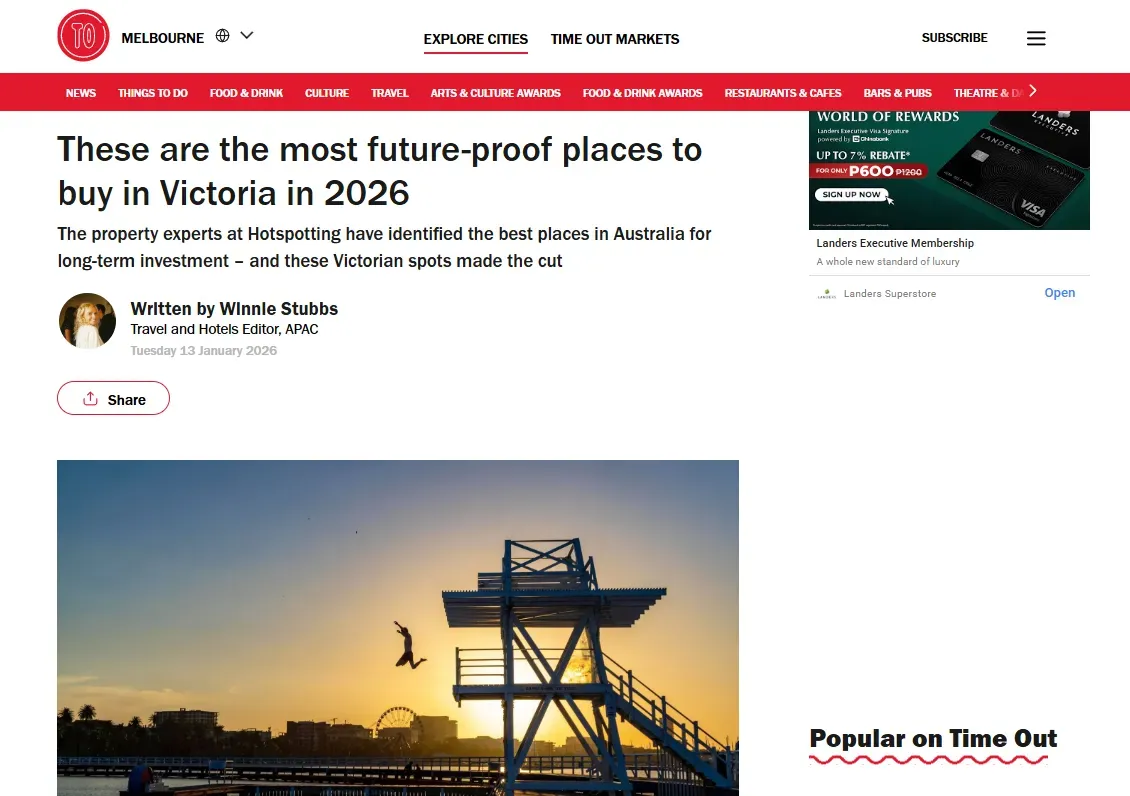
If you’re ready to buy a home in Victoria, and want to invest in a reliable, long-term location, listen up. The property experts at Hotspotting have dropped their National Top 10 Best Buys report for 2026, and there’s good news for Victorians keen to buy in Melbourne’s outer fringe area and regionally. The annual list zeroes in on suburbs and regions tipped for steady, lower-risk capital growth over the next five to ten years – and these three Victorian locations earned a spot among Australia’s best.
Unlike rankings driven by short-term price spikes, Hotspotting Founder Terry Ryder told realestate.com.au that this report is about fundamentals: depth of demand, consistent sales activity, tight rental markets, diverse economies and long-term drivers like infrastructure, jobs and population growth.
Melbourne’s City of Casey (aka suburbs in the southeast like Cranbourne, Narre Warren and Berwick) was highlighted as one of the state’s best long-term prospects, thanks to a rare combination of strong turnover and price points that remain accessible for a wide range of buyers. Median house prices in the low $600,000s – with several suburbs still at $700,000 or below – continue to attract first home buyers, creating a reliable baseline of demand.
According to Hotspotting, that demand is only set to grow. When speaking with realestate.com.au, Ryder pointed to Casey’s rapid population expansion, with forecasts showing substantial growth through to 2041. For buyers and investors, the advice is to be selective: prioritise suburbs with established transport links, schools and services, while keeping a wary eye on oversupply risks in new estate micro-markets across the outer-growth corridor.
Greater Geelong has long been on the radar, but Hotspotting’s report reinforces its status as one of Victoria’s most compelling regional city stories. According to Hotspotting Director Tim Graham (speaking with realestate.com.au), Geelong’s shift from a manufacturing-heavy base to a more diversified economy has given it genuine scale and staying power.
According to the report, the investment sweet spot here lies in pockets with proven owner-occupier demand, strong access to jobs and transport, and lifestyle amenities that support long-term resale. In short, Geelong’s evolution into a well-rounded regional city is translating into consistent housing demand, rather than the boom-and-bust cycles seen elsewhere.
Rounding out the Victorian trio is Latrobe City (which is made up of four central towns: Morwell, Churchill, Moe-Newborough and Traralgon), which has emerged as one of the state’s standout value markets. When speaking with realestate.com.au, Ryder describes Latrobe as combining affordability, strong turnover and improving economic drivers – a combo that’s becoming increasingly rare in Victoria.
With several local house markets still below $400,000, Latrobe offers an entry price that feels almost anachronistic, particularly when paired with lifestyle appeal and growing buyer interest. Ryder characterises the region as a “growth-and-yield” market, where affordability and momentum can work together to support both capital growth and rental returns over time.
From Melbourne’s expanding outer suburbs to regional centres finding their economic footing, these Victorian locations underline a simple truth: long-term growth isn’t about chasing yesterday’s winners. It’s about identifying places with strong fundamentals, room to grow and the kind of steady demand that rewards patience.
These are the best places to buy in Australia for long-term growth, according to Hotspotting:
Victoria
City of Casey
Greater Geelong
Latrobe City
NSW
Tamworth
Parramatta
Hunter Valley
Queensland
Inner Brisbane
Sunshine Coast
Tasmania
Greater Hobart
Launceston
TimeOut 14th January 2026
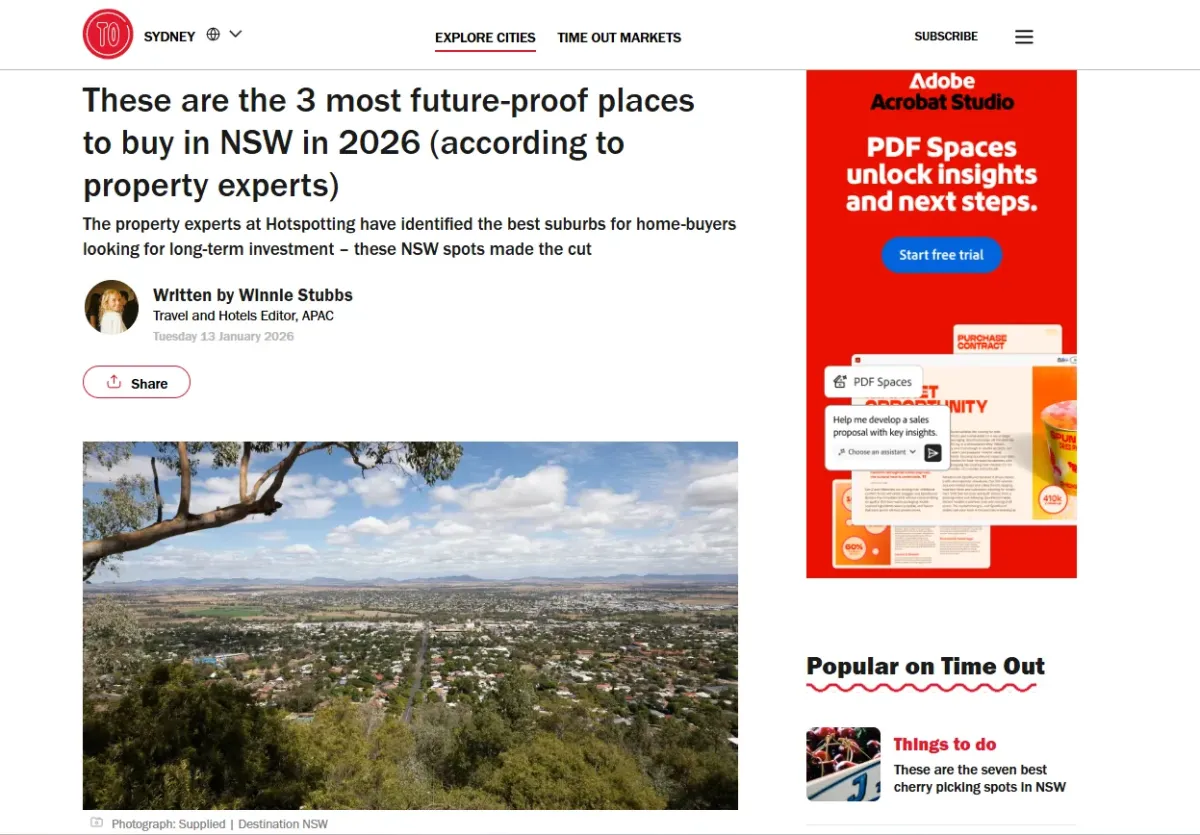
If you’ve been looking for a property purchase in NSW that’s a genuine long-term winner, new research might just point you in the right direction. The property experts at Hotspotting have identified the suburbs and regions across Australia poised for steady, sustainable growth – and three standout NSW locations are on the list.
According to Hotspotting Founder Terry Ryder (speaking with realestate.com.au), this report isn’t about the hottest quarterly performance but rather the long-game: suburbs that promise lower-risk, long-term growth thanks to strong underlying demand, tight rental conditions, infrastructure investment and shifting populations.
First up, Tamworth. Often known as the country music capital of Australia, this northern NSW hub is quietly staking its claim as a property hotspot. Speaking with realestate.com.au, Hotspotting Director Tim Graham highlighted the town's diverse economic mix – agriculture, mining, tourism, aviation, healthcare, and education – which cushions it against over-reliance on any single industry.
Infrastructure is also a big drawcard for people looking to buy in Tam Vegas: projects like the Tamworth Global Gateway Park and the surrounding renewable energy initiatives signal a pipeline of jobs and housing demand for years to come. For investors, Graham recommended homes that appeal to a broad range of owner-occupiers and steering clear of fringe properties where resale demand may be thinner.
If urban excitement is more your style, Hotspotting cited Parramatta as the Sydney suburb to watch – Sydney’s rapidly-growing second CBD. Ryder explained to realestate.com.au that the area’s Gross Regional Product (around $31 billion) is being turbocharged by a dense pipeline of transport, civic, and precinct developments, all of which are boosting jobs and long-term housing demand.
Rounding out the NSW trio is the Hunter Valley – a region perhaps better known for its vineyards but increasingly recognised for its long-term property prospects. With a Gross Regional Product of $95 billion and a population projected to hit one million by 2031, the Hunter combines economic scale with strong population growth and infrastructure expansion.
When speaking with realestate.com.au, Graham recommended targeting established hubs and transport-linked communities to capitalise on depth of demand, while sidestepping new-supply micro-markets that might struggle to resell in the future. It’s a reminder that even in a region famed for weekend getaways, the right property in the right spot can be a serious long-term investment.
These are the best places to buy in Australia for long-term growth, according to Hotspotting
NSW
Tamworth
Parramatta
Hunter Valley
Victoria
City of Casey
Greater Geelong
Latrobe City
Queensland
Inner Brisbane
Sunshine Coast
Tasmania
Greater Hobart
Launceston
Australian Broker 10th January 2026
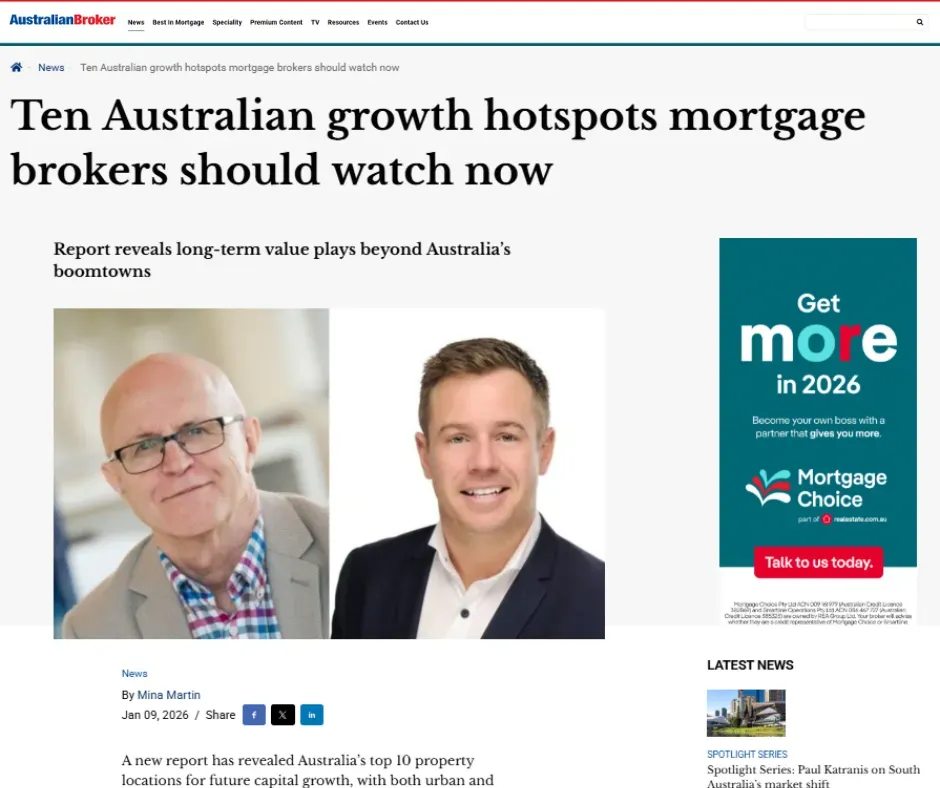
A new report has revealed Australia’s top 10 property locations for future capital growth, with both urban and major regional areas making the list.
Arriving as brokers brace for more consolidation, rising prices, stubborn supply shortages, and possible RBA hikes in 2026, the findings highlight where investors, first-home buyers, and non-banks may stay most active in a tight market.
The latest Hotspotting National Top 10 Best Buys report identifies future growth markets, said to focus on “long-term, lower-risk growth rather than short-term hype,” The Daily Telegraph reported.
Featuring locations in Queensland, NSW, Tasmania, and Victoria, the research considers what the market can deliver over five to 10 years, rather than short-term price spikes, according to Hotspotting founder Terry Ryder (pictured left).
“We’re looking for depth of demand, consistent sales activity, tight rental conditions, diverse economies, and clear drivers such as infrastructure investment, employment growth, and population shifts,” Ryder said.
According to Hotspotting director Tim Graham (pictured right), some of the most recent price growth leaders did not make the cut in the latest research because their prospects for future performance were waning.
“Darwin is a prime example,” Graham said. “It continues to rank strongly, but market heat and competition have lifted to the point that buying well is increasingly difficult.”
Queensland: Inner Brisbane and Sunshine Coast lead
Inner Brisbane and the Sunshine Coast were named as key Queensland markets.
Significant infrastructure spend across Inner Brisbane, including the recently announced $3.8 billion Brisbane Olympic Stadium, was one of its key market strengths, according to Ryder.
“Inner Brisbane is where the city’s infrastructure spend meets the strongest depth of demand,” he said.
Its housing mix was also highlighted, with apartments and townhouses dominant, reflecting the national shift toward attached living in inner locations. House medians are generally above $1 million, with unit medians starting in the high-$500,000s.
According to Graham, the Sunshine Coast has moved well beyond a holiday economy and is maturing into a major growth region.
“Spanning the Sunshine Coast and Noosa LGAs, it is tracking toward a larger population by 2041, with forecasts lifted as migration strengthens,” he said. “That influx is being matched by investment across health, education, tourism and digital infrastructure.
Graham pointed to Maroochydore as a defining catalyst in the new city centre and noted the best property investment strategy is to prioritise well-located homes near employment nodes and transport, and to stay alert to supply risk in ‘frontier growth’ areas.”
Tasmania: Greater Hobart and Launceston in focus
Greater Hobart’s combination of physical constraints, high-value industries and a pipeline of investment is set to underpin its future performance, according to Ryder.
“Glenorchy is a key focus because it is currently carrying much of the momentum across the region and remains one of the more affordable entry points in Greater Hobart which is buyer demand is rising,” he said.
Graham said Greater Launceston’s diverse economy, as well as its housing affordability by national standards, helps to sustain solid yields and keep the buyer pool wide.
“The forward drivers in the region are significant with a major, multi-year upgrade of the Launceston General Hospital set to expand health capacity and lift employment,” he said.
Renewable energy projects and advanced technology investment, including a large AI facility under construction in St Leonards, were also spotlighted in the region.
Victoria: Casey, Geelong, and Latrobe offer value and scale
Casey in Melbourne was highlighted for combining strong turnover with price points that remain accessible for a large buyer cohort.
“Affordability remains a key advantage with median house prices starting in the low-$600,000s and several suburbs still sitting at $700,000 or below, which keeps first home buyers active and supports a reliable baseline of demand,” Ryder said.
“That demand is reinforced by rapid population growth, with Casey forecast to expand substantially through to 2041.”
Investors were pointed toward prioritising suburbs with transport links, schools and services, and to be cautious of oversupply risks in new-estate micro-markets in the outer-growth corridor.
Greater Geelong was said to be one of Victoria’s most compelling regional city stories because it has shifted from a manufacturing base to a diversified economy with genuine scale, according to Graham.
The best investment strategy included focusing on pockets with proven owner-occupier demand, proximity to jobs and transport, and amenities that support resale, he said.
Ryder said Latrobe City is emerging as one of Victoria’s standout value markets as it combines affordability, strong turnover and improving economic drivers.
“With several local house markets still below $400,000, Latrobe offers an entry point that is increasingly rare in Victoria, while maintaining the lifestyle appeal that supports ongoing buyer demand,” he said.
Ryder said Latrobe is positioned as a growth-and-yield market where affordability and momentum can work together.
NSW: Tamworth, Parramatta and Hunter Valley round out the list
Graham pointed to Tamworth as a proven regional hub with a diversified economy and an infrastructure pipeline that supports sustained housing demand.
“It services a wide northern NSW catchment and benefits from agriculture, mining, tourism, aviation, healthcare, and education, reducing reliance on any one industry,” he said.
A major catalyst was said to be the Tamworth Global Gateway Park, and Tamworth also sits within an emerging renewable energy region. Graham said the best property investment strategy includes focusing on well-located homes with broad owner-occupier appeal and avoiding fringe stock where resale demand is narrower.
Ryder said Parramatta is one of the clearest “next decade” stories in Sydney, sitting at the geographic heart of Greater Sydney and rapidly consolidating its role as the second CBD.
“With a Gross Regional Product around $31 billion, the area is being reshaped by a dense pipeline of transport, civic and precinct investment that lifts jobs, amenity and long-term demand for well-located housing,” he said.
The best opportunities include quality apartments in locations close to transport, employment and amenity, while staying alert to oversupplied micro-pockets.
According to Graham, the Hunter Region combines genuine economic scale with strong population growth, diverse employment and a major infrastructure pipeline.
“With a Gross Regional Product of $95 billion, it is effectively a national-sized economy, supporting more than 800,000 residents and tracking toward one million by 2031,” he said.
The best property investment strategy was said to include targeting established hubs and transport-linked communities where demand depth is strongest, while avoiding new-supply micro-markets with weaker resale appeal.
Smart Property Investment - 10th January 2026
In its latest National Top 10 Best Buys Report, Hotspotting identified the top regions likely to experience growth over the next 12 months.
Hotspotting founder Terry Ryder said the identified regions were suitable for long-term investment with lower risk than short-term performance.
“We’re thinking about what the market can deliver over five and 10 years, not whether it has had a good recent quarter,” Ryder said.
“We’re looking for depth of demand, consistent sales activity, tight rental conditions, diverse economies, and clear drivers such as infrastructure investment, employment growth, and population shifts.”
Hotspotting director Tim Graham said some markets that had recently emerged as leaders in price growth had already begun to show signs of performance waning.
“Darwin is a prime example. It continues to rank strongly, but market heat and competition have lifted to the point that buying well is increasingly difficult,” Graham said.
Similarly, he said that while some pockets persist, the Perth market had now moved away from its strong performance.
“There are now better ‘next wave’ opportunities elsewhere for buyers who want to get ahead of the cycle.”
Inner Brisbane, Queensland
Ryder said the increase in infrastructure spending and connectivity had driven demand for suburbs within eight kilometres of the Brisbane CBD to new highs.
“What makes this market distinctive is its housing mix – apartments and townhouses dominate, reflecting the national shift toward living in inner locations.”
“This trend matters because it broadens the buyer pool and supports repeatable demand, even when detached homes become out of reach.”
Sunshine Coast, Queensland
Graham said the Sunshine Coast was no longer just a holiday destination, but had established itself as a significant growth region driven by migration.
“That influx is being matched by investment across health, education, tourism and digital infrastructure.”
“Property demand is broad-based; lifestyle buyers, workers linked to new precincts, and investors drawn by rental conditions.”
He added that the new city centre in Marrochydore would attract high-value workers, premium residential development and technology-led business.
To capitalise on the Sunshine Coast’s growth, Graham said the best investment strategy was to prioritise properties near employment nodes with strong transport links.
Greater Hobart, Tasmania
According to Ryder, high-value industries and an investment pipeline constrained by physical limitations would strengthen Hobart’s market.
“Economically, it is anchored by health care, marine science, advanced manufacturing and Australia’s Antarctic research sector, all drivers that create stable employment and consistent housing demand.”
He noted that upcoming housing targets will enhance established suburbs while preserving the scarcity that underpins long-term growth.
He said the suburb of Glenorchy in Hobart’s north was “carrying much of the region's momentum”, whilst still providing an affordable entry point for buyers to enter into the Hobart market.
Greater Launceston, Tasmania
Graham said that, with a diverse economy supported by affordable housing options, Launceston offered investors the prospect of repeatable future price growth without “big-city price points”.
“The forward drivers in the region are significant with a major, multi-year upgrade of the Launceston General Hospital set to expand health capacity and lift employment.”
“Renewable energy projects proposed and approved across the region add another layer of job creation and investment confidence.”
City of Casey, Victoria
According to Ryder, the city of Casey in southeast Melbourne stands out as an investment prospect due to its strong turnover at affordable price points.
“The local government area (LGA) has delivered steady growth for many years and continues to record exceptional sales volumes across multiple suburbs, which is a sign of depth and liquidity rather than a one-pocket story,” he said.
He said the suburb remained affordable for buyers, with median house prices in the low $600,000s, which will keep first home buyers active and support a reliable baseline of demand.
To make the most of investment opportunities in the region, Ryder said that investors should look to suburbs with strong community links, such as schools, transportation and other services.
Greater Geelong, Victoria
Geelong had shifted from a manufacturing base to a diversified economy with genuine scale, making it an attractive prospect for those looking for strong capital growth, according to Graham.
“The region already supports a large population and is forecast to grow substantially over the coming decades, underpinning long-run housing demand.”
“That growth is being matched by record infrastructure investment and a widening industry mix across defence, health, education, and logistics.”
“The pipeline is material. Council capital works are being backed by significant state and federal projects, including major business park development, rail upgrades, health investment and new civic infrastructure.”
Latrobe City, Victoria
Ryder said that Latrobe City had emerged as a standout region in Victoria, positioning itself as both a growth and yield market where buyers are set to benefit from affordability and improving economic drivers.
“With several local house markets still below $400,000, Latrobe offers an entry point that is increasingly rare in Victoria, while maintaining the lifestyle appeal that supports ongoing buyer demand.”
“For investors, the fundamentals are practical. Yields are strong, vacancy rates are low, and the rental market is underpinned by a broad local employment base as well as an evolving economic story that includes diversification.”
Tamworth, NSW
Driven by a diversified economy and supported by a growing infrastructure pipeline, Graham said that Tamworth had all the signs of a property market prepared to surge.
“It services a wide northern NSW catchment and benefits from agriculture, mining, tourism, aviation, health care and education, reducing reliance on any one industry,” he said.
“Tamworth also sits within an emerging renewable energy region, with more than $10 billion of projects proposed or approved, including large-scale storage.”
Parramatta, NSW
According to Ryder, Parramatta was one of the clearest “next decade” stories in Sydney, as it consolidates its role as the city’s second CBD.
“With a gross regional product around $31 billion, the area is being reshaped by a dense pipeline of transport, civic and precinct investment that lifts jobs, amenity and long-term demand for well-located housing,” he said.
“Momentum is being reinforced by major city-making projects including Sydney Metro West and Parramatta Light Rail, the continued build-out of Parramatta Square, and further civic upgrades such as the Civic Link boulevard, parkland improvements and town-centre works.”
Hunter Valley, NSW
With an economy supported by population growth and a major infrastructure pipeline, Graham said the best investment strategy in the region is to target established hubs and communities.
“While mining remains a major output driver, the region’s employment base is broader than headlines suggest, with health care and social assistance the largest employer, alongside agriculture, defence, manufacturing, tourism and a globally significant thoroughbred industry.”
“Large road projects, bypass works and planning for faster links between Sydney and Newcastle support accessibility, freight efficiency and commuter demand, which can translate into sustained housing pressure,” Graham concluded.
Smart Property Investment - 8th January 2026
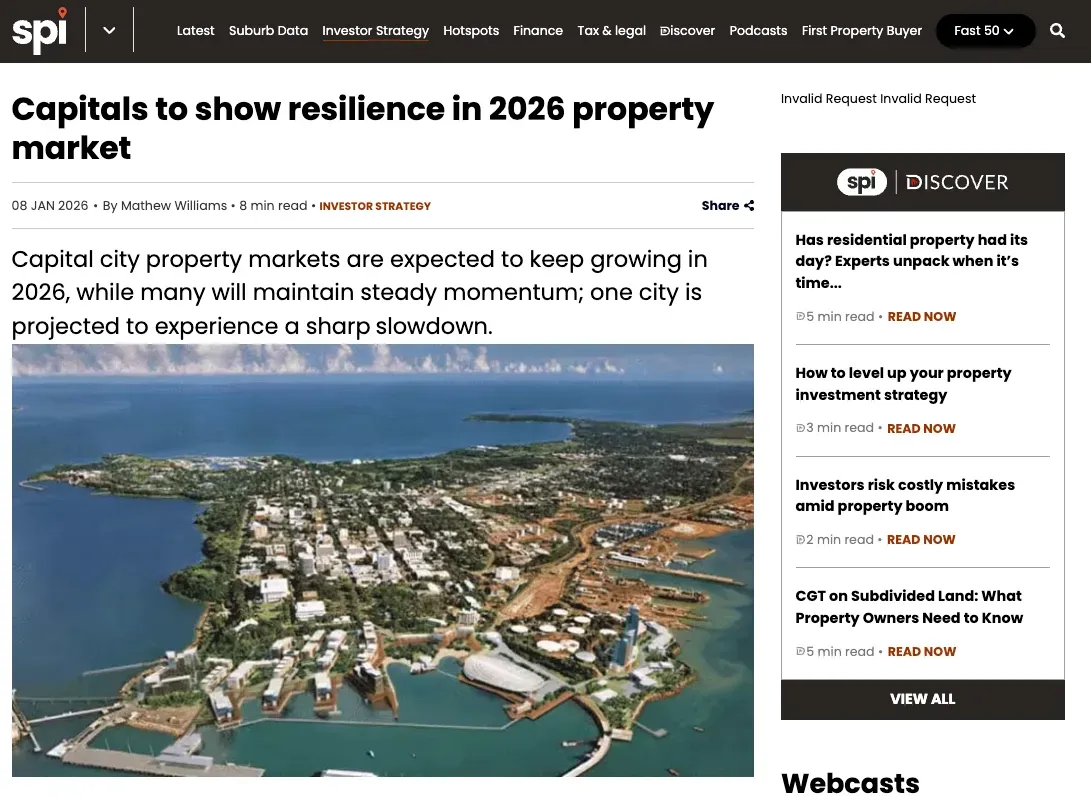
According to the Hotspotting Price Predictor Index (PPI) for Summer 2025-26, most major capital city markets are expected to maintain momentum, supported by elevated demand and supply shortages.
The index assigned each region a ranking based on its predicted price growth for the year and placed it in one of three categories: winners, steady, or losers.
The new year predictions found that while the majority of the nation’s capitals would remain “winners” heading into 2026, Perth was the only one that had fallen to the “steady” category.
Hotspotting founder Terry Ryder said that nationwide, the market was uniquely positioned heading into the new year.
“I see the current situation as highly unusual, with strong buyer demand in all eight capital cities and six regional market jurisdictions assessed – therefore, there are no apparent major market losers as we head into 2026.”
“We have seldom seen such a universal strength in markets nationwide, with no withering major markets anywhere in Australia – not even during that short COVID-19 boom was sales activity so universally strong.”
Hotspotting director Tim Graham said the combination of population growth and heightened demand driven by lower interest rates and the introduction of government schemes had pushed the property market higher.
“The search for affordability is increasingly a driver of buyer demand, placing greater focus on cheaper house markets and on unit markets in locations where houses are very expensive,” Graham said.
“For example, the strongest market sectors in both Melbourne and Brisbane are outer-ring housing markets and near-city unit markets.”
Here is what will happen nationwide in 2026:
Darwin
With a positive ranking of 74 per cent, Graham said that Darwin’s property market remained the hottest in the nation, having risen to unprecedented levels in 2025.
“In the past two years, the Darwin residential market typically recorded between 530 and 640 sales per quarter, but in the past four quarters total sales have more than doubled,” Graham said.“In fact, the latest quarter is 147 per cent higher than the same time last year.”
“We also highlighted Darwin’s upturn in PPI a year ago, with the startling rise in its market emphatically confirmed three months ago.”
Graham said the uptick in the Darwin market has coincided with a significant increase in unit sales.
Hobart
Ryder said that Hobart's recovery was well underway, with sales activity rising by 22 per cent in the most recent quarter, 29 per cent higher than a year ago.
“Suburbs with positive rankings have improved from 53 per cent to 72 per cent, while those with negative rankings have dropped from 29 per cent to 12 per cent in the latest quarter,” Ryder said.
“The more affordable locations of Greater Hobart are showing the strongest uplift. For example, in the Glenorchy local government area (LGA), seven of the nine markets in our analysis had positive rankings, with a 31 per cent rise in sales numbers in the latest quarter.”
Brisbane
Graham said the latest quarterly results showed Brisbane was at its strongest since the COVID-19 boom.
“A 14 per cent quarter-on-quarter rise in total sales across Greater Brisbane means sales activity is the highest since 2021,” he said.
“Seven out of 10 markets have positive rankings in our analysis, to rank Greater Brisbane as one of the strongest markets in the nation.”
“All five municipalities that make up the Greater Brisbane area have strong numbers with identical patterns of strong increases in sales numbers in the past two quarters.”
Melbourne
Ryder said that Melbourne’s revival had ramped up in the back half of 2025, with 70 per cent of markets recording positive rankings, climbing from 64 per cent three months ago and 51 per cent six months ago.
“The total number of sales has dropped marginally, compared to the previous quarter, but remains 15 per cent higher than six months ago,” he said.
Ryder said that the suburbs with the most activity were outer-ring housing markets that were relatively affordable, such as Casey, Frankston, Dandenong, Hume, Wyndham, Melton, and Whittlesea.
Similarly, he recommended looking into the inner-city suburbs of Melbourne, Yarra, Whitehorse, and Kingston.
Adelaide
After five years of rising property prices, Ryder said Adelaide showed no signs of slowing.
“Indeed, the market has strengthened further in the latest quarter, with another increase in sales volumes and a rise in the number of markets with positive rankings.”
“There are growth markets right across the Greater Adelaide metropolitan area, with few LGAs not showing ongoing strength in buyer demand.
According to Ryder, there was already strong activity going on at the higher end of the market, and it was beginning to pick up in more affordable suburbs.
“At the same time, the lower end of the market continues to attract rising activity, despite the price rises of the past five years, eliminating the cheap buying options that previously prevailed in the city’s northern suburbs.
Sydney
Data showed that total sales activity in Greater Sydney has grown over the past two quarters, with the latest quarter sitting 25 per cent higher than six months ago.
Graham said that Sydney had maintained its “winner” status, with 63 per cent of the city's markets receiving a positive ranking.
“The greater Sydney market had been trending down, hitting the bottom of the cycle in the March 2025 quarter, but has been rising since then,” Graham said.
“Higher buyer demand for attached dwellings is a major factor in the Sydney market revival, with 67 per cent of the Greater Sydney unit markets in our analysis recording positive rankings, compared to 60 per cent of house markets.”
Canberra
Ryder said the Canberra market had moved into a rising phase, noting that it had begun to stir in the Spring report.
“The national capital is now one of Australia’s rising property markets, with residential sales that are now close to the peak of the COVID-19 boom in 2021, driven by significant increases in demand for units,” Ryder said.
“Markets with positive rankings are now 63 per cent of the total, compared with 49 per cent three months ago.”
Units in Canberra have emerged as the standout market, with Belconnen, Bradon, Coombs, Dickson, Greenway, Kingston, Phillip and Wright all set for strong growth in 2026.
Perth
Graham said that, despite a slight rise in sales activity, Perth was the only capital with a positive ranking below 50 per cent, placing it in the “steady” category.
“47 per cent of Perth markets have positive rankings, up from 41 per cent in our Spring report three months ago, but well below the levels achieved by most other market jurisdictions across Australia,”
According to Graham, the Perth market has trended downward in sales volume since peaking in 2023.
“However, the past two quarters have halted that, with small increases in sales,” Graham concluded.
News.com.au - 8th Jan 2026
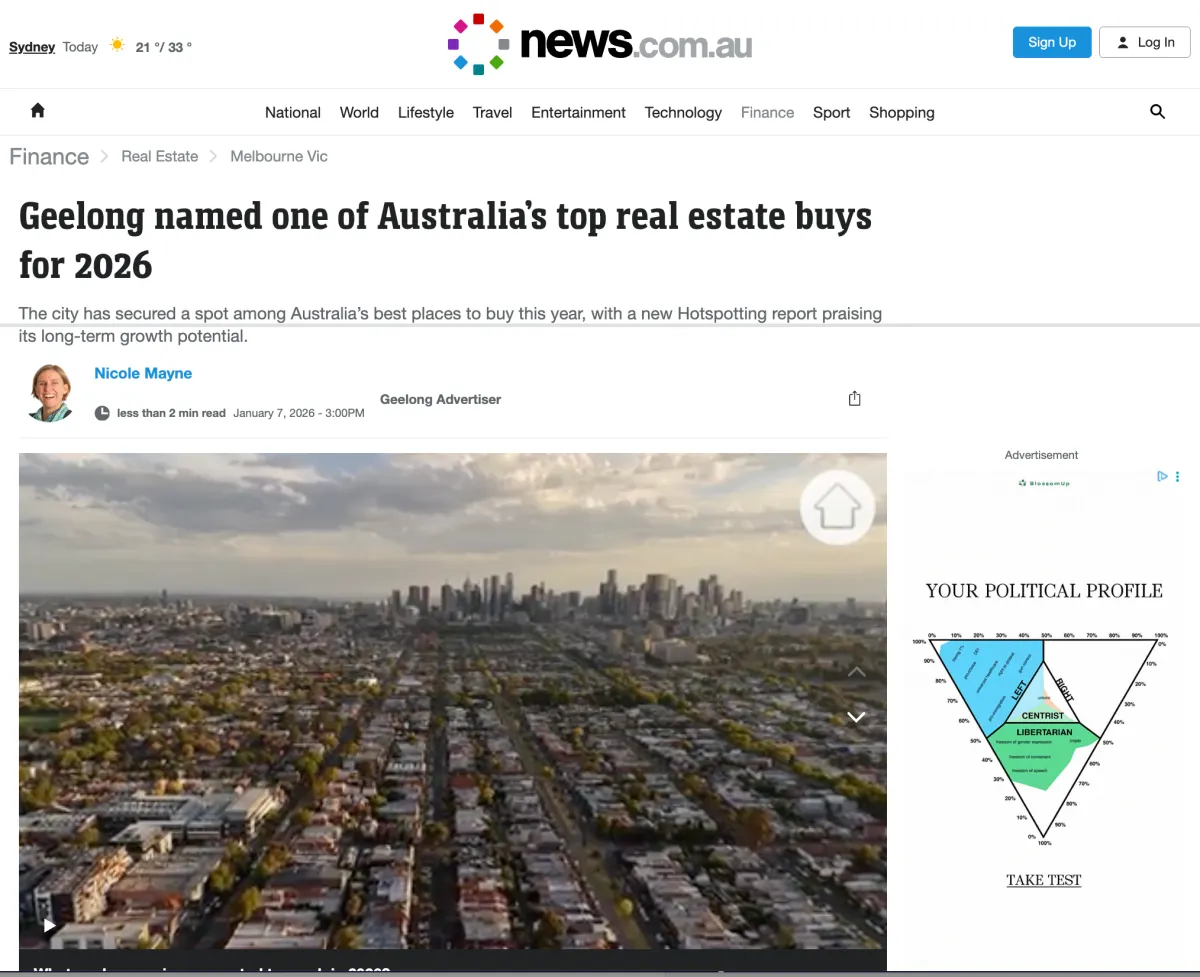
Geelong has been named in Australia’s top 10 real estate buys for 2026.
A new report from Hotspotting singles out the city as among the best bets for buyers seeking long-term growth.
Greater Geelong is one of three Victorian council areas to make the list, along with the City of Casey and Latrobe City.

Hotspotting founder Terry Ryder.
Hotspotting’s latest National Top 10 Best Buys report identifies future growth markets before the crowd arrives and before the best years of priced growth are fully priced in.
Founder Terry Ryder said it focused on long-term, lower-risk growth instead of short-term hype.
“We’re thinking about what the market can deliver over five or 10 years, not whether it has had a good recent quarter,” he said.
“We’re looking for depth of demand, consistent sales activity, tight rental conditions, diverse economies, and clear drivers such as infrastructure investment, employment growth and population shifts.”
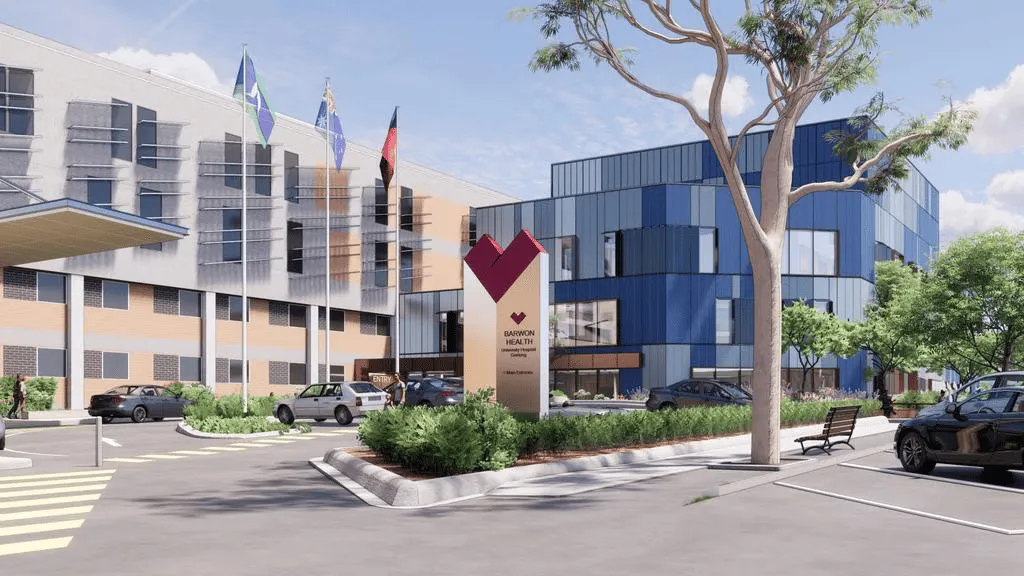
The report pointed to health investment, like construction of the new Barwon Women’s and Children’s Hospital, as a positive sign for Geelong.
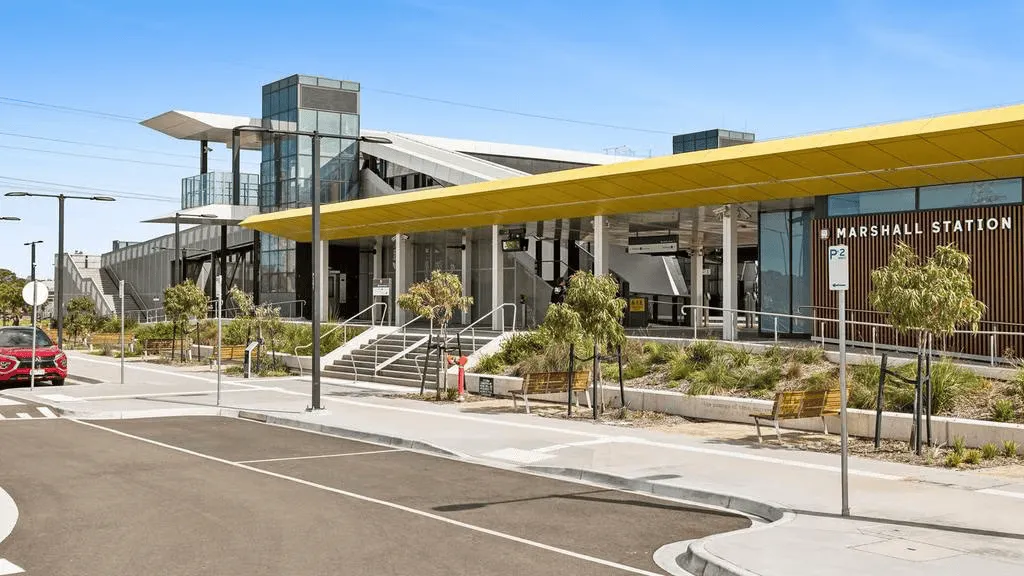
Marshall Train Station was upgraded as part of the recent line duplication between South Geelong and Waurn Ponds.
A pipeline of capital works and forecast population growth underpin Greater Geelong’s standing as one of Victoria’s most compelling regional city stories.
“Geelong is always a contender as it’s such a strong regional economy,” Mr Ryder said.
“It has transitioned over the years very successfully from the old, more smoke stack economy, making cars, etc, to a modern economy where it’s all about education and medical services and IT and those industries.
“It got the lifestyle and great connections to Melbourne and is more affordable than downtown Melbourne – its got a lot to offer so it continues to get really good demand.”

Hotspotting director Tim Graham.
Hotspotting director Tim Graham said focusing on pockets with proven owner-occupier demand, proximity to jobs and transport and amenities was the best strategy for maximising returns.
“The region already supports a large population and is forecast to grow substantially over coming decades, underpinning long run housing demand,” he said.
Other local government area’s included in the Top 10 National Buys are Inner Brisbane, Sunshine Coast, Greater Hobart, Launceston, Tamworth, Parramatta and Hunter Valley.
Realestatebusiness.com.au - 7th January 2026
According to the Hotspotting Price Predictor Index (PPI) for Summer 2025-26, major regional markets are expected to maintain strong momentum into 2026, supported by elevated demand and supply shortages.
The index assigned each region a ranking based on its predicted price growth for the year and placed it in one of three categories: winners, steady, or losers.
The new year predictions found that while none of the regional centres were anticipated to be “losers”, only a third of them will remain “steady” performers, while the remainder will be “winners”.
Hotspotting founder Terry Ryder said the market was in a unique position heading into 2026.
“I see the current situation as highly unusual, with strong buyer demand in all eight capital cities and six regional market jurisdictions assessed – therefore, there are no apparent major market losers as we head into 2026.”
“We have seldom seen such a universal strength in markets nationwide, with no withering major markets anywhere in Australia – not even during that short COVID-19 boom was sales activity so universally strong.”
Hotspotting director Tim Graham said the combination of population growth and heightened demand driven by lower interest rates and the introduction of government schemes had pushed the regional property market higher.
“The search for affordability is increasingly a driver of buyer demand, placing greater focus on cheaper house markets and on unit markets in locations where houses are very expensive,” Graham said.
“For example, the strongest market sectors in both Melbourne and Brisbane are outer-ring housing markets and near-city unit markets.”
NSW
Graham said that the NSW market was rising, with sales reaching their highest level since 2021.
“The market has gone to another level in the latest quarter, with a further 10 per cent rise in sales volumes – 18 per cent higher than six months ago,” Graham said.
“Now 65 per cent of markets have positive rankings and only 16 per cent have negative ones, down from 33 per cent in the Spring report.”Additionally, Graham said the NSW boom was being primarily headlined by the Hunter region, namely Cessnock, Maitland, Singleton and Muswellbrook.
“The nearby City of Newcastle, the Lake Macquarie local government area (LGA) and the Port Stephens LGA also all have buoyant markets.”
Tasmania
Ryder said the data showed a significant uplift in the regional Tasmanian market, with a 13 per cent increase in sales volume in the last quarter, 23 per cent higher than the same time the previous year.
He said that markets with a positive ranking now make up 63 per cent of Tasmania’s total, up from 51 per cent three months ago.
“The upturn in the Regional Tasmanian market is most evident in the major centres in the north of the state,” Ryder said.
He said that Launceston, Tassie’s second city, has been a highly consistent market, which saw a 22 per cent quarter-on-quarter increase in sales activity, led by rising markets in Invermay, Newnham and South Launceston.
Queensland
While the regional Queensland market appeared to be slowing, Graham said that the boom will not end just yet.
“While some regional centres, notably in Central Queensland, are now below their peaks, overall the trend of gradual decline has been short-lived,” Graham said.
Data showed that the latest quarter recorded a revival in total sales numbers in Regional Queensland, up 12 per cent on the same time a year ago and up 20 per cent on the previous quarter.
“This is most evident in the Gold Coast market, which is again the standout location in regional Queensland.”
Victoria
Regional Victoria had been rising quietly since 2024, but Graham said it had gone to another level in the latest quarter.
“Some 62 per cent of Regional Victorian markets have positive classifications, which is up from 58 per cent three months ago,” he said.
Selecting a top five among the regional Victoria LGAs is increasingly difficult because there are many worthy candidates with rising sales activity, as well as highly consistent markets.
“However, the LaTrobe Valley, Baw Baw, Bendigo, Geelong, Ballarat, Shepparton and Mitchell LGAs all have outstanding numbers in terms of sales volumes.”
South Australia
Ryder said South Australia was rarely mentioned in discussions as an investment opportunity, despite significant price growth over the past five years.
“But this latest quarter shows further signs of some of its markets moderating,” he said.
“In this latest quarter, markets with positive rankings have dropped from 64 per cent six months ago and 58 per cent three months ago to 50 per cent.”
“Overall sales numbers across regional South Australia have remained high because most of the biggest markets continue to be rising or consistent.”
Ryder said that the LGAs of Mount Gambier and Murray Bridge appeared to be the hot ticket locations in South Australia.
Western Australia
Ryder said that although the market in regional Western Australia improved slightly in 2025, with sales increasing by 8 per cent, the state would be the lowest performer of 2026.
“Of the 127 markets in our Regional Western Australia analysis, 43 per cent have positive ratings while 40 per cent have negative ones – which is the weakest result among the 14 major jurisdictions, but not a disastrous one.”
“It’s clear from our analysis of sales volumes that some of the key regional cities, heavily targeted by investors over the past three years, are no longer booming,” Ryder concluded.
Realestatebusiness.com.au - 5th January 2026
According to the Hotspotting Price Predictor Index (PPI) for Summer 2025-26, most major capital city markets are expected to maintain momentum, supported by elevated demand and supply shortages.
The Price Predictor Index assigned each region a ranking based on its predicted price growth for the year and placed it in one of three categories: winners, steady, or losers.
The new-year predictions found that while the majority of the nation’s capitals would remain “winners” heading into 2026, Perth was the only one that had fallen to the “steady” category.
Hotspotting founder Terry Ryder said that the nationwide market was uniquely positioned heading into the new year.
“I see the current situation as highly unusual, with strong buyer demand in all eight capital cities and six regional market jurisdictions assessed – therefore, there are no apparent major market losers as we head into 2026.”
“We have seldom seen such a universal strength in markets nationwide, with no withering major markets anywhere in Australia – not even during that short COVID-19 boom was sales activity so universally strong.”
Hotspotting director Tim Graham said the combination of population growth and heightened demand driven by lower interest rates and the introduction of government schemes had pushed the property market higher.
“The search for affordability is increasingly a driver of buyer demand, placing greater focus on cheaper house markets and on unit markets in locations where houses are very expensive,” Graham said.
“For example, the strongest market sectors in both Melbourne and Brisbane are outer-ring housing markets and near-city unit markets.”
Here is what will happen nationwide in 2026:
Darwin
With a positive ranking of 74 per cent, Graham said that Darwin’s property market remained the hottest in the nation, having risen to unprecedented levels in 2025.
“In the past two years, the Darwin residential market typically recorded between 530 and 640 sales per quarter, but in the past four quarters total sales have more than doubled,” Graham said.
“In fact, the latest quarter is 147 per cent higher than the same time last year.”
“We also highlighted Darwin’s upturn in PPI a year ago, with the startling rise in its market emphatically confirmed three months ago.”
Graham said the uptick in the Darwin market has coincided with a significant increase in unit sales.
Hobart
Ryder said that Hobart's recovery was well underway, with sales activity rising by 22 per cent in the most recent quarter, 29 per cent higher than a year ago.
“Suburbs with positive rankings have improved from 53 per cent to 72 per cent, while those with negative rankings have dropped from 29 per cent to 12 per cent in the latest quarter,” Ryder said.
“The more affordable locations of Greater Hobart are showing the strongest uplift. For example, in the Glenorchy local government area (LGA), seven of the nine markets in our analysis had positive rankings, with a 31 per cent rise in sales numbers in the latest quarter.”
Brisbane
Graham said the latest quarterly results showed Brisbane was at its strongest since the COVID-19 boom.
“A 14 per cent quarter-on-quarter rise in total sales across Greater Brisbane means sales activity is the highest since 2021,” he said.
“Seven out of 10 markets have positive rankings in our analysis, to rank Greater Brisbane as one of the strongest markets in the nation.”
“All five municipalities that make up the Greater Brisbane area have strong numbers with identical patterns of strong increases in sales numbers in the past two quarters.”
Melbourne
Ryder said that Melbourne’s revival had ramped up in the back half of 2025, with 70 per cent of markets recording positive rankings, climbing from 64 per cent three months ago and 51 per cent six months ago.
“The total number of sales has dropped marginally, compared to the previous quarter, but remains 15 per cent higher than six months ago,” he said.
Ryder said that the suburbs with the most activity were outer-ring housing markets that were relatively affordable, such as Casey, Frankston, Dandenong, Hume, Wyndham, Melton, and Whittlesea.
Similarly, he recommended looking into the inner-city suburbs of Melbourne, Yarra, Whitehorse, and Kingston.
Adelaide
After five years of rising property prices, Ryder said Adelaide showed no signs of slowing.
“Indeed, the market has strengthened further in the latest quarter, with another increase in sales volumes and a rise in the number of markets with positive rankings.”
“There are growth markets right across the Greater Adelaide metropolitan area, with few LGAs not showing ongoing strength in buyer demand.”
According to Ryder, there was already strong activity going on at the higher end of the market, and it was beginning to pick up in more affordable suburbs.
“At the same time, the lower end of the market continues to attract rising activity, despite the price rises of the past five years, eliminating the cheap buying options that previously prevailed in the city’s northern suburbs.”
Sydney
Data showed that total sales activity in Greater Sydney has grown over the past two quarters, with the latest quarter sitting 25 per cent higher than six months ago.
Graham said that Sydney had maintained its “winner” status, with 63 per cent of the city's markets receiving a positive ranking.
“The greater Sydney market had been trending down, hitting the bottom of the cycle in the March 2025 quarter, but has been rising since then,” Graham said.
“Higher buyer demand for attached dwellings is a major factor in the Sydney market revival, with 67 per cent of the Greater Sydney unit markets in our analysis recording positive rankings, compared to 60 per cent of house markets.”
Canberra
Ryder said the Canberra market had moved into a rising phase, noting that it had begun to stir in the Spring report.
“The national capital is now one of Australia’s rising property markets, with residential sales that are now close to the peak of the COVID-19 boom in 2021, driven by significant increases in demand for units,” Ryder said.
“Markets with positive rankings are now 63 per cent of the total, compared with 49 per cent three months ago.”
Units in Canberra have emerged as the standout market, with Belconnen, Bradon, Coombs, Dickson, Greenway, Kingston, Phillip and Wright all set for strong growth in 2026.
Perth
Graham said that, despite a slight rise in sales activity, Perth was the only capital with a positive ranking below 50 per cent, placing it in the “steady” category.
“47 per cent of Perth markets have positive rankings, up from 41 per cent in our Spring report three months ago, but well below the levels achieved by most other market jurisdictions across Australia,”
According to Graham, the Perth market has trended downward in sales volume since peaking in 2023.
“However, the past two quarters have halted that, with small increases in sales,” Graham concluded.
Ticker News - 22nd December 2025
The Property Tribune - 17th Dec 2025
You can read the original article here.
According to the Hotspotting Price Predictor Index (PPI) for Summer 2025-26, most major capital city markets are expected to maintain momentum, supported by elevated demand and supply shortages.
Analysts predict 2026 could transform investor sentiment and market performance nationwide.
Broad-based growth marks 2026 as a standout year for property returns.
From Darwin to Hobart, 2026 signals a synchronised housing upswing.
2026 is shaping up as a pivotal year for investors, with the property market entering a broad growth phase.
Hotspotting Managing Director Tim Graham revealed that buyer demand is strengthening across nearly all capital cities and major regional markets.
“Normally, across Australia at any one time, we would see some markets booming, others stagnating, and some falling,” Mr Graham said.
“Right now, we’re seeing price growth and rising buyer demand almost everywhere – and that’s highly unusual.”
Mr Graham said every major capital city and regional market was now achieving price growth, supported by strong sales volumes and tight supply.
The markets that were lagging a year ago, including Melbourne, Canberra, Hobart, and Darwin, have recovered, highlighting the speed at which cycles can turn.
“Darwin has gone from virtually zero growth to leading the nation in under 12 months,” Mr Graham said.
“That’s how quickly conditions can change when demand surges and listings collapse.”
Four main forces are underpinning the upswing:
Strong population growth
Government incentives supporting first-home buyers and new construction
Easing interest rates and improving borrowing capacity.
Record infrastructure spending, with close to $900 billion in projects underway or planned
“All of that is having an impact,” Mr Graham said.
“But the most powerful constraint remains the shortage of stock, with national listings for sale down more than 12%.”
Hotspotting’s latest Best Buys report shows what sort of results can be achieved when buying in the right location, before it takes off.
“We also highlighted Darwin’s upturn in PPI a year ago, with the startling rise in its market emphatically confirmed three months ago.”
“Our approach focuses on identifying markets early in their growth phase, allowing investors to benefit from compounding over five to ten years, rather than chasing short-term momentum,” he said.
“Reviewing our Best Buys report from three years ago shows just how successful this approach can be.”
Every location selected in that report has recorded price growth, with average gains of around 50% over three years, equating to roughly 17% per annum.
Many of these gains occurred in locations where median house prices were still in the $300,000 to $400,000 range at the time of selection.
"Most of the heavy lifting in capital growth comes from choosing the right city or region."
-- Tim Graham, Hotspotting
He predicts that prices will continue to rise across most locations in 2026, particularly in parts of Tasmania, Brisbane and some regional Victoria markets.
“The lesson from 2025 is simple,” Mr Graham said. “Markets move faster than most people expect, and the biggest gains usually go to those who position early, not late.”
ABC News - 17th November 2025
TickerNews - 24th Nov 2025
Realestate.com.au - 1st October 2025
Across the country, the property market’s busiest season will see some markets rise while others fall short of previous peaks, according to new data and analysis from Hotspotting’s Price Predictor Index (PPI) for Spring 2025.
The report has revealed the ‘winners’ and ‘losers’ across Australia’s capital cities and regional areas, with some surprising results.
A key trend emerging from the report is a growing confidence among buyers and investors, particularly in capital cities where unit markets are underpinning recovery.
Hotspotting Director Terry Ryder said this edition’s data shows a clear shift in buyer sentiment, especially in cities with properties that offer both affordability and lifestyle.
THE WINNERS
Darwin
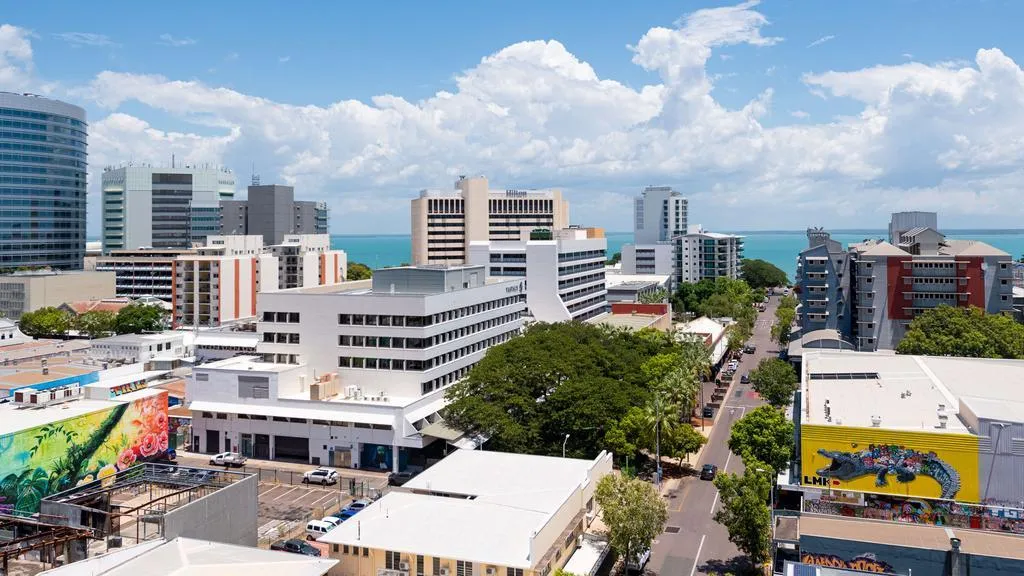
Darwin’s buyer activity has more than doubled in the last year. Picture: Che Chorley.
According to Mr Ryder, Darwin has been a “standout performer” off the back of three consecutive quarters of strong sales activity.
Darwin sales increased by 29 per cent in the June quarter, bringing activity to 122 per cent above the same period last year.
“That’s how quickly conditions can change when demand surges and listings collapse.”
Mr Ryder said this performance makes Greater Darwin one of Australia’s
“most dynamic markets” this spring.
“Underlying demand from the resources sector and a tightening rental vacancy rate have combined to drive buyer urgency,” he said.
“Darwin’s momentum underscores a realignment between affordability and robust economic fundamentals.
“This powerful upswing has been building steadily since late 2024, outpacing many southern markets.”
Brisbane
Brisbane’s units are driving its market forward. Picture: David Clark Photography.
As well as being serial winners in the sporting world, Brisbane is also predicted to be in the property market winner’s circle this spring.
According to Hotspotting’s PPI, 67 per cent of Brisbane suburbs are trending upward, reflecting growing buyer confidence and consistent sales activity.
Greater Brisbane recorded 14,178 sales in the June quarter – a 13 per cent jump from the previous period.
Hotspotting General Manager Tim Graham said two-thirds of Brisbane suburbs were trending upward, while only 18 per cent showed negative sentiment.
“Units now account for one-third of all transactions, highlighting a broadbased recovery across housing types,” he said.
“Brisbane’s consistency is its defining feature with buyers snapping up units and houses alike, driving momentum across the city.”
Brisbane City recorded a median unit price of $710,500 in August.
Melbourne
Melbourne’s affordability is it’s key to success, according to Hotspotting. Picture: Supplied.
The report states that Melbourne is on the up, having posted its strongest quarterly sales since the December 2021 boom.
Almost two-thirds of Melbourne markets registered positive momentum and unit volumes in the June quarter.
Mr Ryder said affordability has been the key catalyst, particularly in Frankston, Hume and the municipality of Melbourne itself.
“These pockets are attracting both first-home buyers and investors seeking value outside the inner east,” he said. “Relative affordability in these areas has underpinned this powerful resurgence. “Unit sales are now at levels only marginally below the peak of the 2021 boom, signalling a durable upswing.”
Sydney
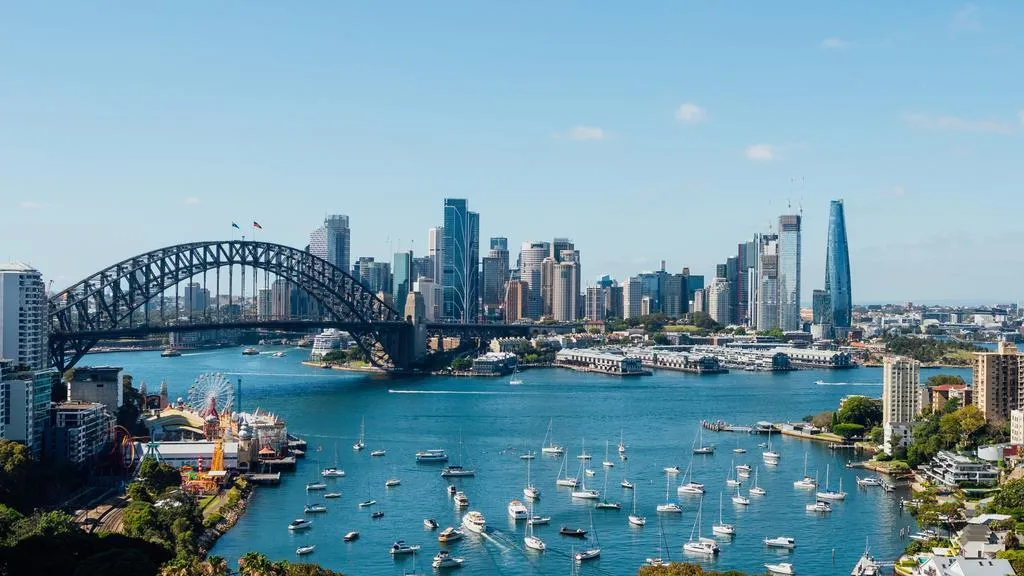
The Greater Sydney market has executed a complete turnaround from last year. Picture: iStock.
Sydney has been transformed from a “loser” in Hospotting’s winter report to a “winner” in this edition, with 64 per cent of markets across Greater Sydney receiving a positive classification in terms of transaction levels.
Sydney’s market sprang back with a 31 per cent quarter-on-quarter rise in sales.
“Unit-led precincts are driving the revival, with Inner West, North Sydney, Ryde and Randwick among the standout LGAs,” Mr Graham said.
“The market-share of units has edged up to 51%, underscoring the importance of apartment stock in the recovery.
“Sydney’s unit-led rebound, with sales surging this quarter, highlights renewed buyer confidence right across the harbour, however, western and southwestern precincts are yet to match the pace of the inner-ring.”
Adelaide
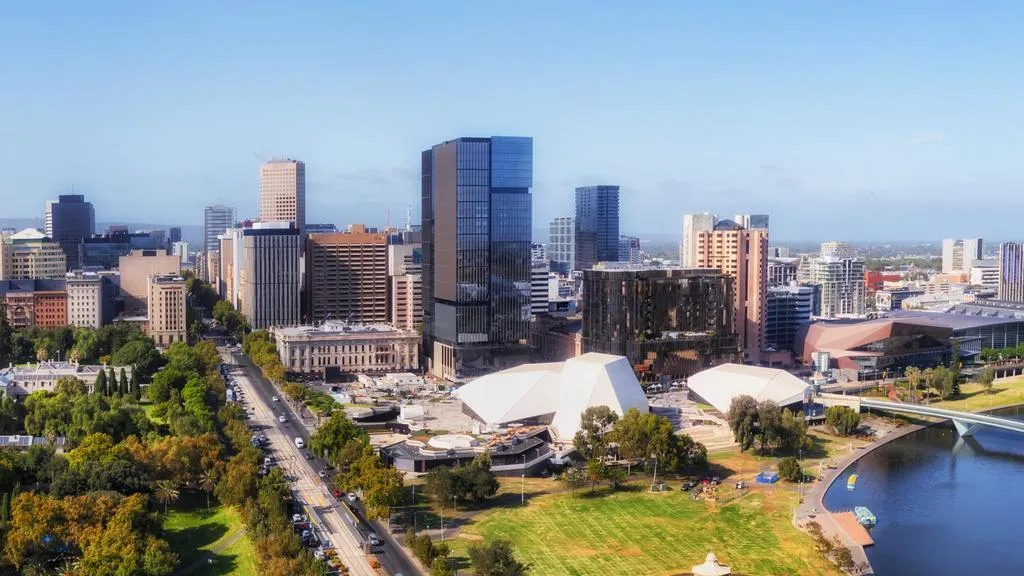
Adelaide’s market is slowly but surely climbing.
South Australia’s capital continued its steady climb, with a 19 per cent increase in quarterly sales and a 24 per cent lift year-on-year, according to the report.
This extends a five-year trajectory of growth in both activity and prices.
The report shows that Adelaide’s northern suburbs remain at the forefront, with Playford and Salisbury leading the charge.
“Playford’s and Salisbury’s performance showcases how sustained demand in affordable markets can defy broader market cycles,” Mr Ryder said.
“The Port Adelaide-Enfield LGA also recorded a 34 per cent spike in sales, reflecting strong local demand for affordable housing.
“Overall, it is Adelaide’s diversity of growth corridors that is underpinning its resilience.”
Regional Victoria
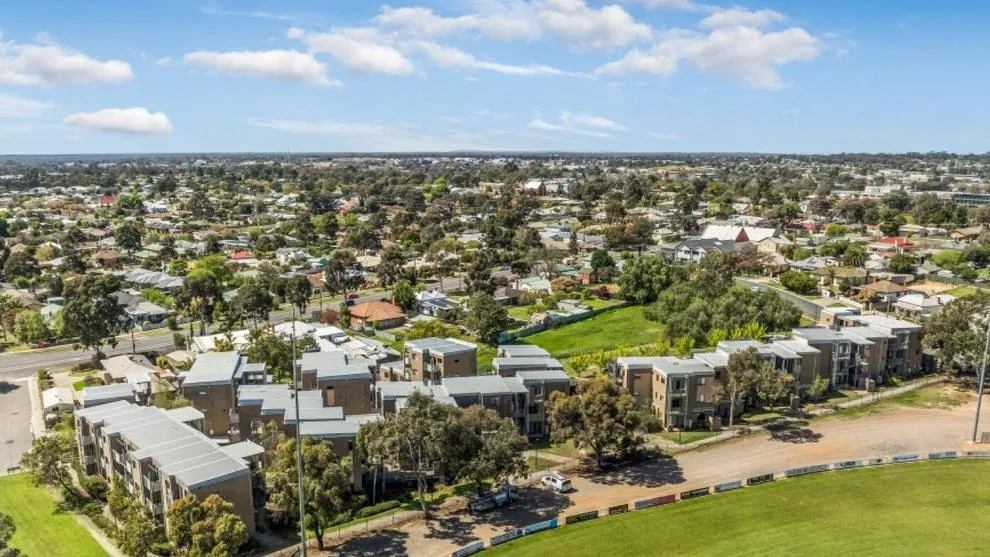
Bendigo is among the town’s spearheading regional Victoria’s market.
Regional Victoria recorded its strongest quarter since the December 2021 boom, with sales volumes 16 per cent higher than a year ago and 28 per cent above two years prior.
According to the report, only five of the 249 tracked towns in Regional Victoria are in decline.
“Bendigo, Geelong, Shepparton and Wodonga are spearheading Regional Victoria’s revival, offering strategic alternatives to crowded metro markets,” Mr Graham said.
“Overall, lifestyle factors and relative affordability are drawing both owner-occupiers and investors to regional Victoria.”
Regional SA
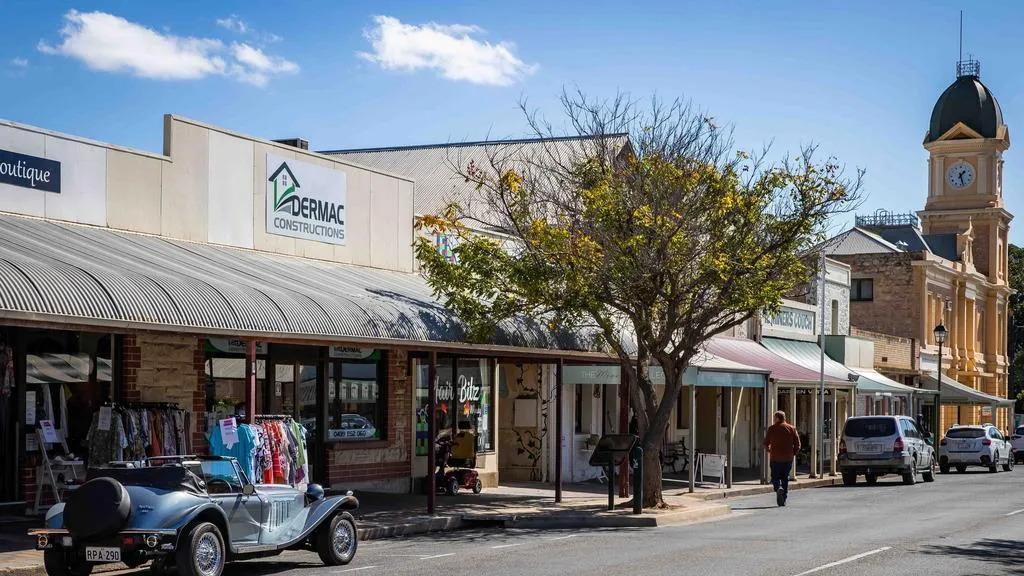
Moonta Bay is one of Regional SA’s rising hotspots. Picture: Tom Huntley.
While not a huge winner, regional South Australia still delivered a solid 12 per cent year-on-year increase in sales, with 58 per cent of its markets now on the rise.
Mr Ryder said quarterly volumes have held near their December 2024 peak, reinforcing a steady recovery.
“Alexandrina and Victor Harbor LGAs remain solid performers, while the Copper Coast’s Moonta Bay and Wallaroo have emerged as rising hotspots,” he said.
“Port Pirie is also notable for its low-price, high-yield profile.”
THE LOSERS
Regional QLD
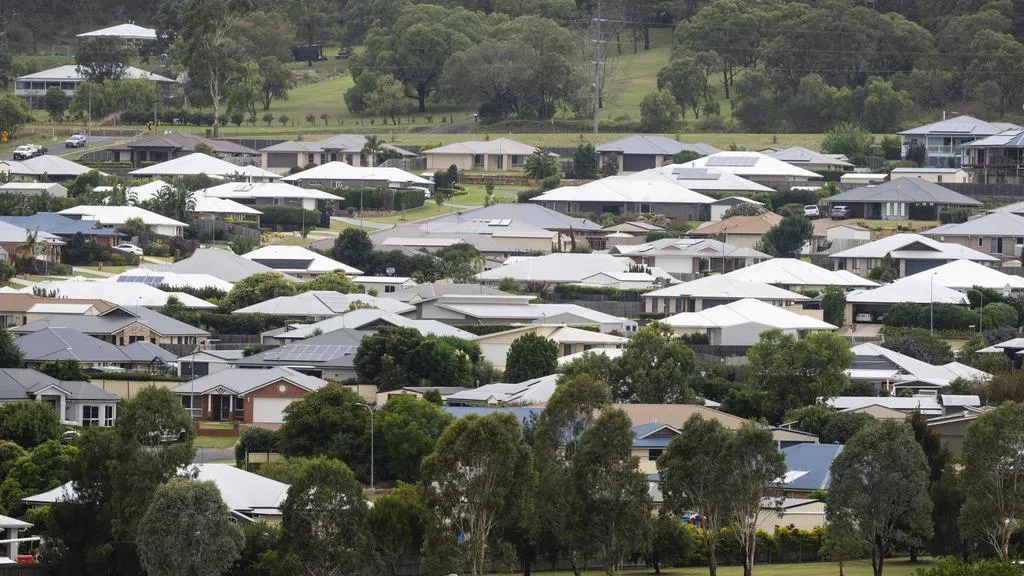
Houses in Westbrook, south west of Toowoomba. Picture: Kevin Farmer.
Regional Queensland is predicted to be the country’s hardest hit market this spring, having endured its third straight quarter of sales decline in the June quarter.
Total sales in regional areas slipped by 2,030 over the past year, highlighting what Mr Ryder called a “widespread cooldown”.
“Rockhampton, Mackay, Gladstone, Toowoomba and Townsville – all once hotbeds of investor activity – have seen gradual but steady falls in turnover,” he said.
“The only standout exception remains the Gold Coast, where 60% of suburbs still post positive trends.
“Regional Queensland is correcting from an overheated peak, so buyers need to be ultra-selective, focusing on supply-constrained coastal pockets rather than broadacre plays.”
Perth
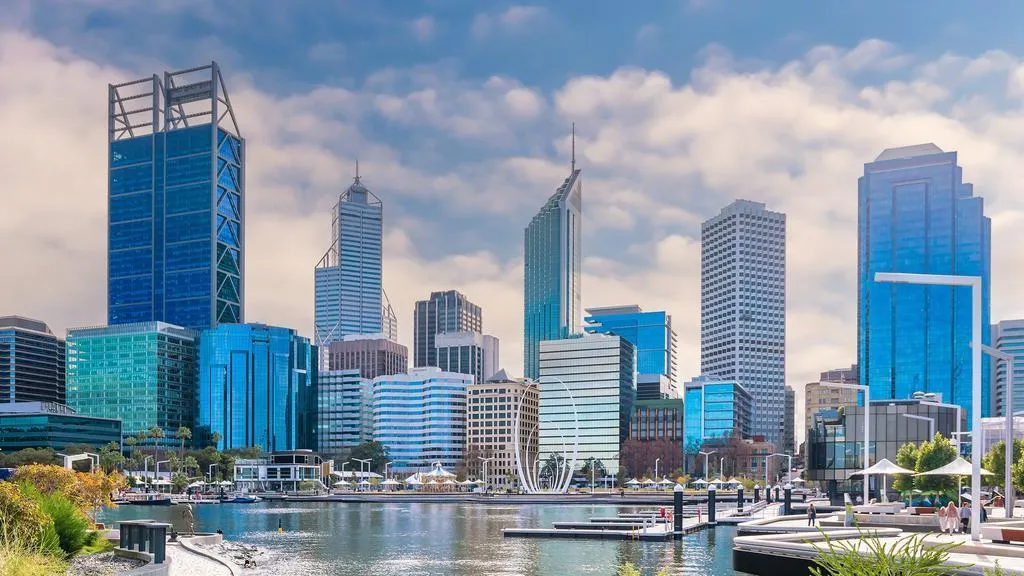
Almost half of Perth’s suburbs were recorded as in decline. Picture: iStock.
A flying market a couple of years ago, Hotspotting’s report shows Perth’s sales were 10 per cent below the December 2023 peak.
Forty-eight per cent of Perth suburbs were recorded as in decline.
Mr Graham said although there is an evident slowdown, the market has not collapsed, thanks to strong state economic and population growth.
“Greater Perth accounts for 16 of the bottom 50 declining markets nationally, yet a subset of precincts continues to hold value,” he said.
“Perth’s cycle is easing, but its fundamental drivers of mining jobs and migration remain intact, so, we’re expecting a soft landing rather than a slump.”
Regional WA
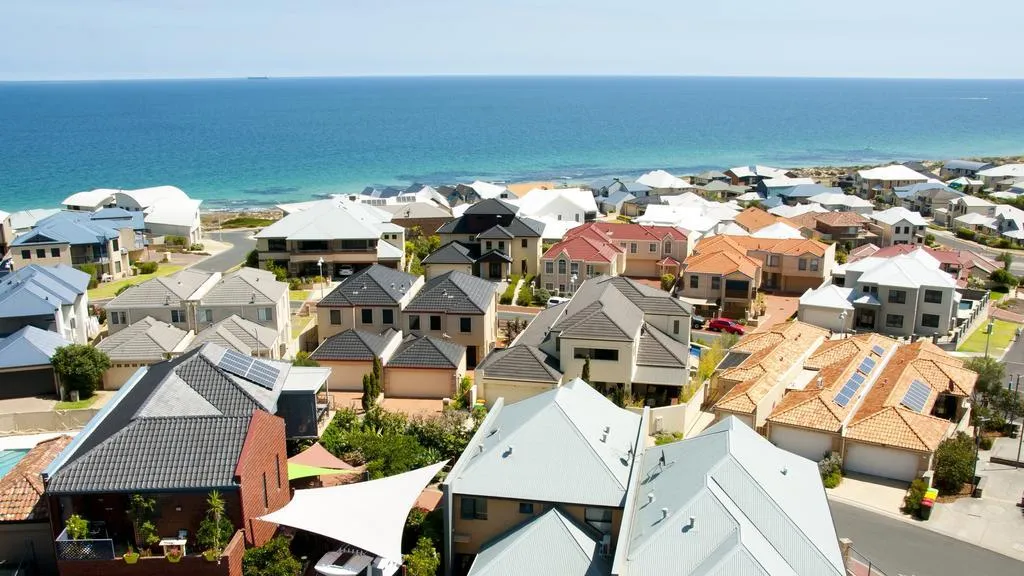
The report claims that Bunbury in WA’s South West has “passed its peak”. Picture: iStock.
Western Australia as a whole is slowing, with Regional WA also predicted to be a “loser” this spring, according to the report.
Regional WA sales have fallen nine per cent over the past 18 months, posting 3,606 transactions in the latest quarter, per Hotspotting.
Only 40 per cent of towns in Regional WA are now classified as rising, while 45 per cent show negative trends, Mr Ryder said.
“Bunbury and Geraldton have clearly passed their peaks, but Mandurah bucks the regional downturn with quarterly sales climbing from 537 to 627 and 12 of its 14 suburbs on the up,” he said.
“Regional WA’s narrative is one of selective strength with Mandurah proving that pockets of opportunity can thrive even as the wider region cools.”
Realestate.com.au - 1st Sept 2025
Queensland hotspots dominate a new list revealing the next wave of high-growth property markets.
Hotspotting released its latest Top 10 National Best Buys Report which reveals the property markets across Australia best positioned for medium to long term capital growth.
The report highlights locations where infrastructure investment, economic momentum, and dwelling type align to create compelling opportunities for investors and homebuyers.
Inner Brisbane tops the list while the Sunshine Coast came in second place.
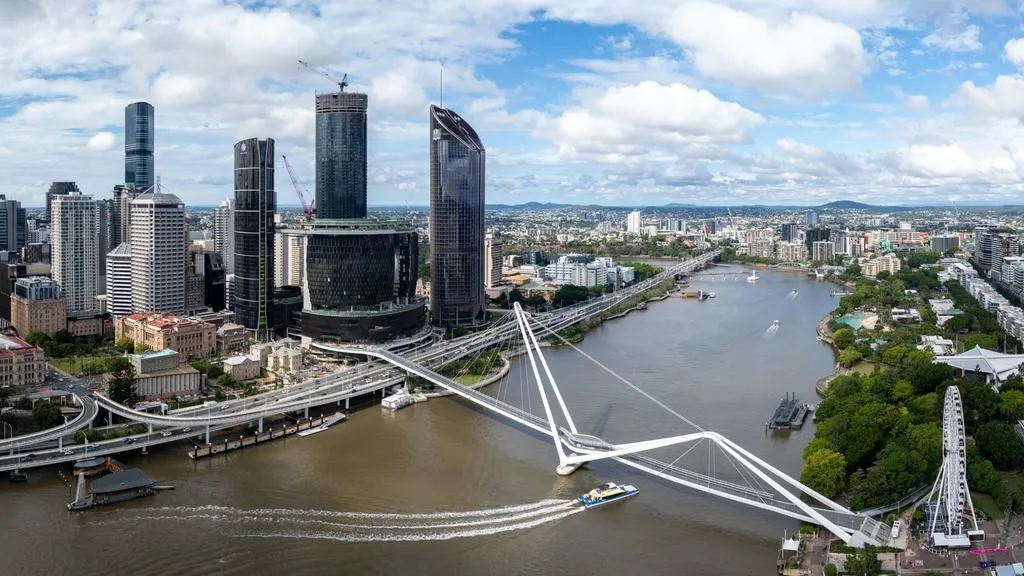
Two Qld hotspots including Inner Brisbane made the list.
Hotspotting Director Terry Ryder said the list was about identifying markets before they peak.
“These are markets where affordability and infrastructure investment are laying the groundwork for sustained capital growth in the years ahead,” Mr Ryder said.
Mr Ryder said Inner Brisbane was undergoing a major transformation ahead of the 2032 Olympics, with infrastructure upgrades like the Cross River Rail and Brisbane Metro driving demand.
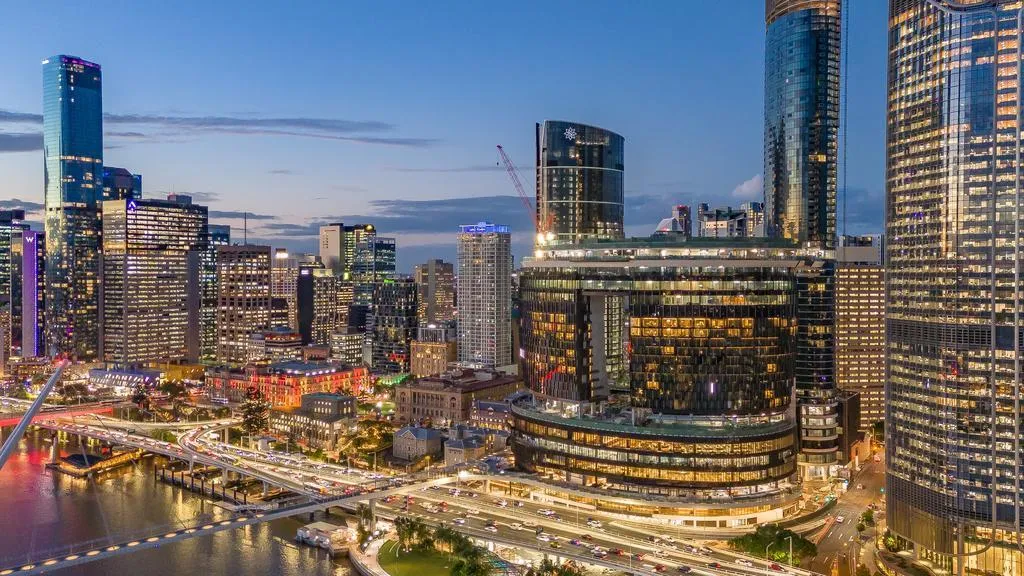
The Star Grand, Brisbane— Inner Brisbane is undergoing a major transformation.
“With nearly 75 per cent of dwellings being apartments or townhouses, the precinct offers affordability and strong rental yields,” he said.
“This is one of Australia’s most dynamic urban markets. It’s where infrastructure meets inner-city lifestyle.
“We’re seeing a generational shift toward apartment living, and Brisbane is leading that trend with confidence.”
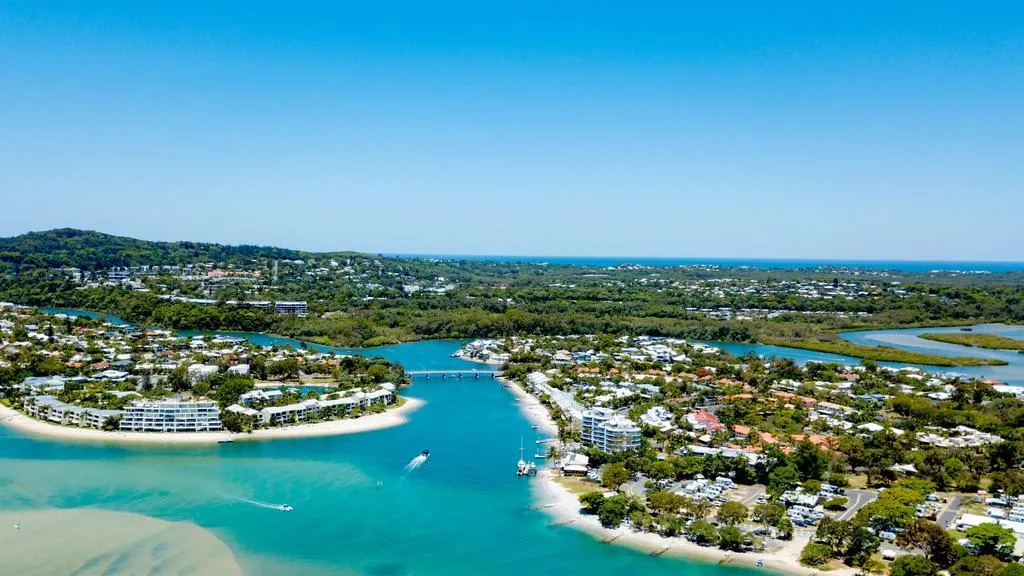
The Noosa River from above — the Sunshine Coast is evolving into a major economic corridor.
Hotspotting General Manager Tim Graham said the Sunshine Coast was evolving into a major economic corridor, supported by projects like the Maroochydore CBD and Sunshine Coast University Hospital.
“Detached homes and townhouses dominate the market, attracting both families and investors,” he said.
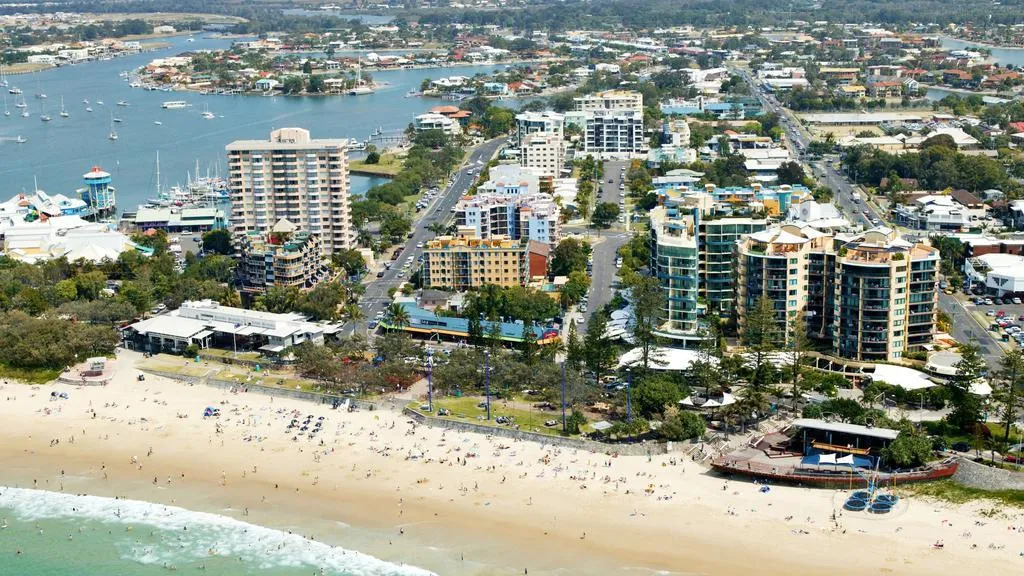
Aerial view of Mooloolaba — the Sunshine Coast is no longer a holiday destination but a growth engine.
“This region is no longer just a holiday destination – it’s a growth engine.
“The scale of infrastructure here rivals some capital cities, and that’s translating into real estate momentum.”
Nationally, Greater Darwin (NT) came in third on the list, followed by City of Frankston (VIC), Launceston (TAS), Greater Geelong (VIC), and Wagga Wagga (NSW).
Greater Hobart (TAS), Badgerys Creek Precinct (NSW), and City of Yarra (VIC) rounded out the top 10.
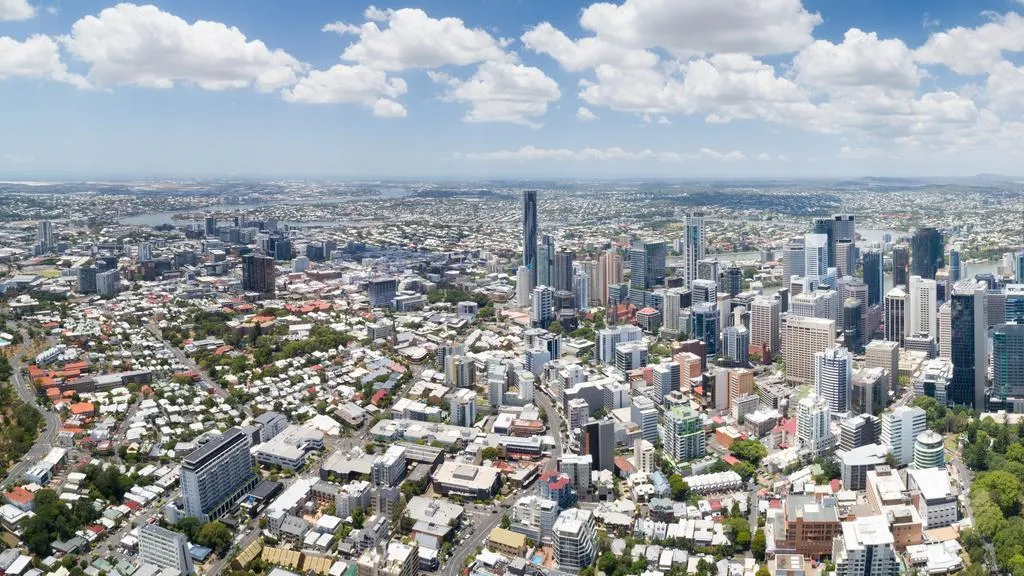
The report forecasts which regions are ripe for transformation.
Mr Graham said the research not only unveiled the regions undergoing transformation, from inner-city regeneration to regional revitalisation, but also the best dwelling types to purchase in each location.
“Markets such as Inner Brisbane, Greater Darwin, and the Sunshine Coast lead the list, with others like Launceston, Wagga Wagga, and the Badgerys Creek Precinct offering compelling value plays,” Mr Graham said.
“We’re not just identifying growth – we’re forecasting transformation.
“These markets are evolving in ways that will reward early movers.
“Some of the most overlooked locations are now outperforming because they’ve quietly built the fundamentals such transport links, job hubs, and planning frameworks that support sustainable property markets.”
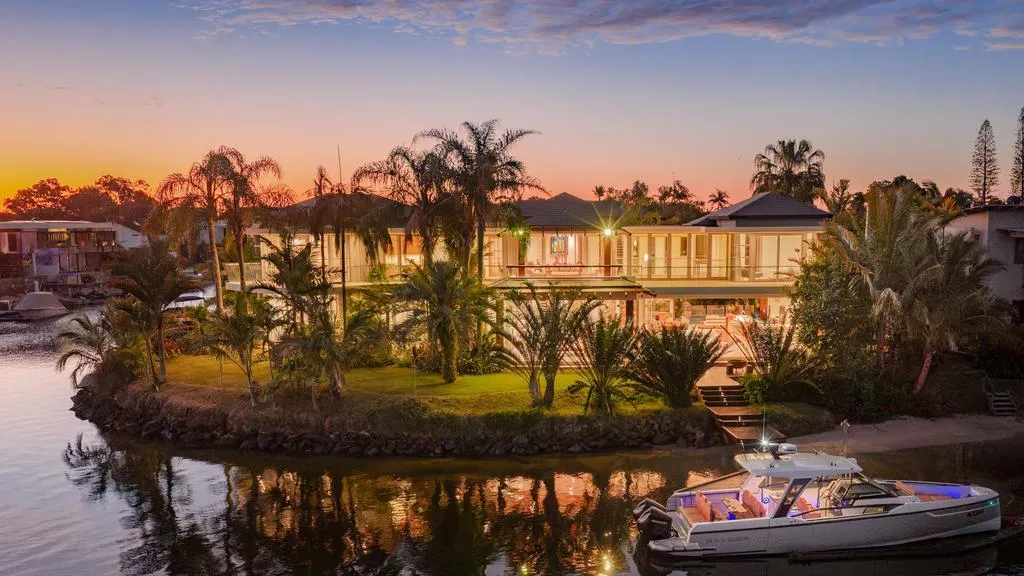
29 Cooran Court, Noosa Heads last week sold for close to $30m.
Hotspotting’s methodology was as much about what was not included in the top 10.
“Markets like Perth, Adelaide, and the Gold Coast have already delivered years of double-digit growth and no longer meet the criteria for future-focused investment,” Mr Ryder said.
“We don’t chase yesterday’s winners because we’re focused on identifying markets before they peak.
REB - 29th August 2025
Victoria’s property market is rebounding, with metro and regional hubs set for strong growth driven by affordability, demand, and major infrastructure – here’s where to keep an eye.
Victoria has landed three cities set for high growth in the latest Hotspotting Top 10 National Best Buys report, more than any other state.
Hotspotting director Terry Ryder said that Victoria’s regional and metropolitan areas have clearly demonstrated signs of recovery and positive growth.
“There’s no doubt that a significant recovery is underway in Melbourne and also in regional Victoria. There has been a strong uplift in sales activity in both jurisdictions since the start of the year,” Ryder told REB.
“Melbourne’s rise is largely driven by a major program of infrastructure development, high population growth from overseas migrants, and relative affordability.
“The only markets I rate as stronger than Melbourne at the moment are Darwin and Brisbane. By the end of 2025, Melbourne is likely to be a national leader on price growth.”
In the report, Hotspotting highlighted the top 10 locations around the country where strong economies, infrastructure growth, and suitable housing options combine to create attractive opportunities for both investors and home buyers.
In Victoria, Frankston, Greater Geelong and Yarra have made the ranking and are forecast for long-term growth and good investment opportunities.
By comparison, Queensland, NSW and Tasmania each had two cities ranked, while only Darwin made the list in the Northern Territory, and Western Australia missed the top 10 entirely.
“These are markets where affordability and infrastructure investment are laying the groundwork for sustained capital growth in the years ahead,” Ryder said.
Hotspotting general manager Tim Graham said that the market will be rewarding early movers.
Graham said Frankston is evolving into a metropolitan hub, with major infrastructure projects and high-rise approvals driving strong demand for both houses and apartments, as buyers are drawn to its coastal lifestyle and connectivity.
“Frankston is Greater Melbourne’s rising star. It’s got the infrastructure and the energy to support long-term growth,” he said.
Similarly, Geelong’s infrastructure investment and strategic planning have helped sustain an affordable and innovative market with a strong demand for detached housing.
“It’s a market with scale, vision, and the kind of planning that supports sustained growth.”
Graham said Yarra’s regeneration has been driven by major apartment projects transforming former industrial sites into vibrant precincts, with affordable prices and proximity to the CBD fuelling investor demand.
“Yarra is rewriting its urban story. It’s a compact municipality with outsized potential. It’s one of the few places in inner Melbourne where affordability and growth still intersect,” he said.
According to Ryder, affordability is driving demand throughout the state, with Melbourne’s strongest markets in Frankston, Casey, Hume and the city’s unit sector, while Bendigo, Ballarat, Geelong and Shepparton lead regional Victoria’s revival with accessible home prices.
While recovery has been evident in the Victorian market, Ryder still warns investors that the taxes in the state remain higher than in any other market.
“Victoria offers opportunities to buy well for future capital growth, but investors need to remember that Victoria has the highest property taxes in the nation, and the state government is particularly hostile to property investors,” Ryder concluded.
The Property Tribune - 2nd July 2025
Buyer demand is rising across key Regional NSW areas, indicating potential future price growth.
Wollongong, Shoalhaven, Wagga Wagga and Port Macquarie are leading the current regional market uptrend.
Market conditions vary widely, highlighting the local nature of real estate across Regional NSW.
The Regional New South Wales property market is on the cusp of becoming one of Australia’s rising property markets.
Data from Hotspotting’s latest Price Predictor Index shows that the number of locations across Regional NSW with rising buyer demand is increasing.
Hotspotting General Manager, Tim Graham, said transaction levels were up markedly in the first quarter of 2025.
“Rising transaction levels are generally a precursor to future price growth,” Mr Graham said.
“Overall, Regional NSW is a solid and steady market, but with outperformance in specific markets.”
Regional NSW markets performing well include Wollongong and neighbouring Shoalhaven, Wagga Wagga and Port Macquarie.
There was also evidence or rising transactions in Orange, Bathurst and Coffs Harbour.
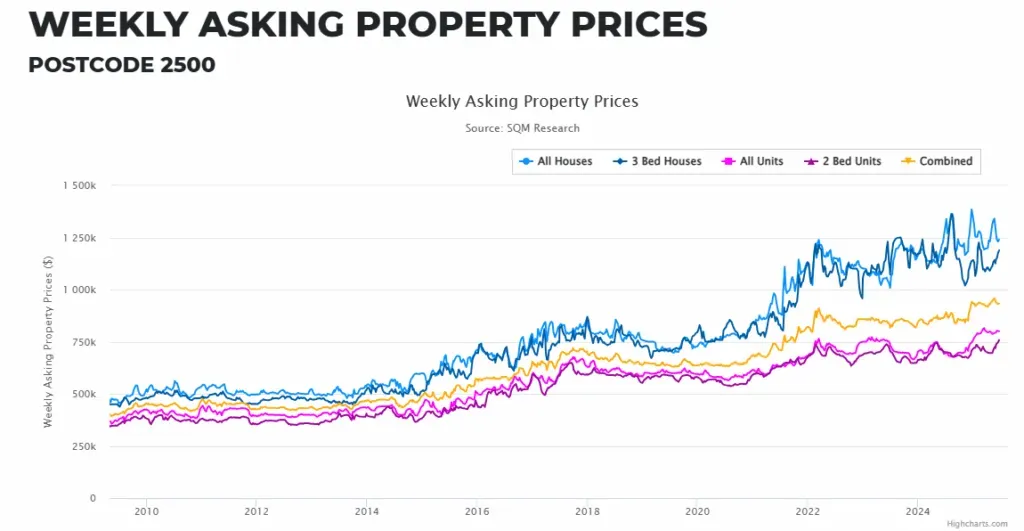
DATA SOURCE: sqmresearch.com.au based on weekly property asking prices for postcode 2500
“Quarterly sales for the City of Wollongong have been rising for the past 18 months, as they have been in the Shoalhaven LGA,” Mr Graham said.
“These are markets that offer lifestyle and relative affordability compared to nearby Sydney.”
Regional NSW offers a mix of lifestyle, affordability, and steady growth — the kind of fundamentals that smart buyers and investors are actively seeking in today’s evolving market.
-- Tim Graham, Hotspotting
While many other Regional NSW markets remain steady, Mr Graham said there were some which had experienced strong demand and growth previously but were now “patchy”.
This included Newcastle, Ballina, the Blue Mountains, Byron Bay, Queanbeyan, Tamworth and the Tweed LGA.
“Given the size and diversity of NSW, it doesn’t surprise that there are several different market scenarios in play,” he said.
“It reinforces the reality that real estate is local in nature and markets arise out of local economies, which vary greatly across NSW and indeed across the nation.”
🎙 TickerNews Interview: Can Investors Still Get Both Cash Flow and Capital Growth? 1st July 2025
At a time when many investors feel forced to choose between yield and growth, Hotspotting’s Pulse Report proves you can still have both—if you know where to look.
In this TickerNews interview, Tim Graham breaks down the insights from the latest Winter 2025 edition of The Pulse Report, revealing 50 Australian suburbs with strong rental yields and solid prospects for capital growth.
Tim also reviews the standout results from the 2024 edition, where featured markets like Townsville’s Aitkenvale and WA’s Midland achieved capital growth of 35–40%, far outperforming the national average of just 3%. 🧠 Key Highlights:
Why the cash flow vs capital growth myth is being debunked
How the 2024 Pulse Report picks outperformed national averages
Why dual-benefit suburbs are ideal for today's investors
Which markets are still under $500k and offer strong yields
Why Sydney is slipping while Melbourne and Regional Victoria show signs of recovery
The surprising comeback of apartments and rising investor confidence
📊 The Pulse Report analyses Australia’s top 50 dual-benefit suburbs—where strong rental yields and future growth potential align.
🔗 Visit https://www.hotspotting.com.au/produc... to purchase the full Winter 2025 Pulse Report.
Realestate.com.au - 25/06/25

A suburb once written off is now Australia’s hottest housing market, and the property rebound is only getting started.
Frankston, in Melbourne’s outer south, has topped a new list of Australia’s 50 most “supercharged” suburbs for price growth, with insiders warning buyers could soon be priced out if they hesitate.
Hotspotting’s Winter 2025 Price Predictor Index highlights suburbs showing surging sales activity, a leading indicator of future price growth.
And it’s not just Frankston making a move.
Melbourne suburbs dominated the list with 18 entries, followed by strong results from the Gold Coast, Adelaide, Darwin and even Sydney’s south.
Melbourne Property Advocates director Simon Murphy said Frankston’s transformation was “just going gangbusters.”
“They’re putting up big apartments, office buildings, the hospital’s been redone … zoning’s been upgraded to three, six storeys in some areas,” Mr Murphy said.
“They’re really trying to make Frankston the place to be”
Mr Murphy warned entry-level buyers were now struggling to get in.
“You really need a purchase price of $800,000 just to get a look into the market,” he said.
“Frankston North’s always the first suburb to go up — and the first to go down — but this time, I think its price will soon catch Langwarrin.”
Melbourne dominates the national list of supercharged suburbs, with Frankston, Carrum Downs and Werribee all posting major growth amid renewed buyer competition. Photo: iStock

Buyers’ advocate Simon Murphy says Frankston is booming on the back of major development and infrastructure upgrades, tipping it to match Langwarrin’s median within two years.
Hotspotting founder Terry Ryder said Frankston’s rise reflected a wider turnaround in Melbourne’s outer zones.
“Frankston has gone from underperformer to frontrunner,” Mr Ryder said.
“Melbourne began recovering in late 2024 and the uplift has only accelerated this year.”
Mr Murphy said demand was now flowing into Carrum Downs, Langwarrin and Werribee, which also made the list.
“Langwarrin’s very family-focused. Carrum Downs has stigma but great value — four-bed homes on good land, double garages,” he said.
“Werribee’s still under $600,000 and just 10 minutes further than Melton. It’s still affordable.”
Hotspotting’s Terry Ryder says lifestyle, affordability and infrastructure access are fuelling the latest wave of demand across Australia’s most in-demand suburbs.
In Sydney, Michelle May Buyers Agent director Michelle May said market momentum had shifted south to the St George and Bankstown corridors, areas now backed by Metro upgrades and comparative affordability.
“The migration from the east has gone to the inner west, and now the inner west demographic is moving down to St George and the Sutherland Shire,” Ms May said.
“We’ve been inundated with inquiry since Q4 2024. There’s a lot of money still out there.
“Clearance rates hit 70 per cent here last weekend for the first time in ages — prices are going up.”
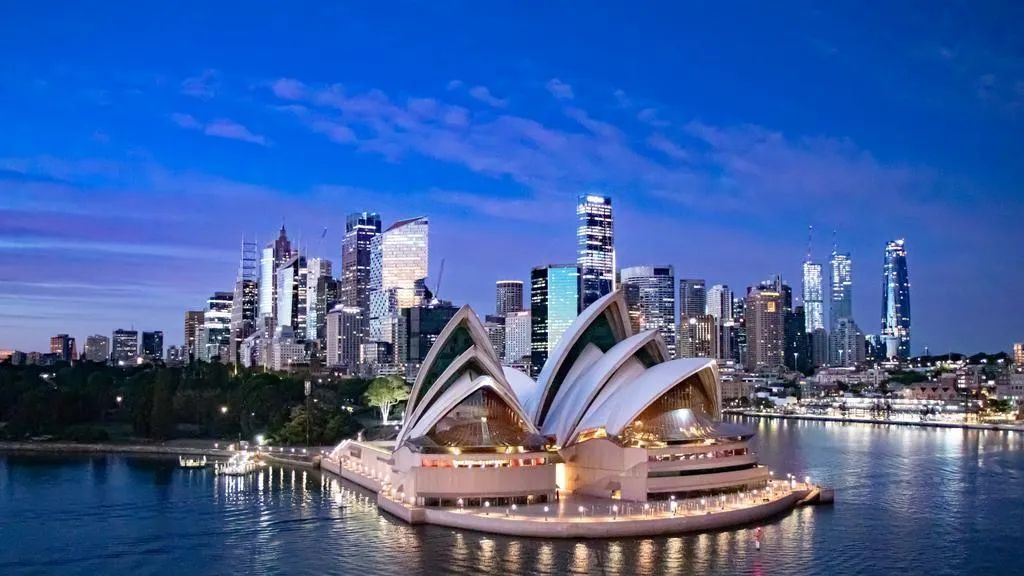
Oversupply of one-bedroom apartments has dampened prices in some Sydney postcodes, but buyers are flocking to St George and the inner west as the metro line reshapes demand.

Michelle May says St George suburbs like Mortdale are surging as buyers seek value and lifestyle across the Cooks River – with three-bedroom apartments hotly contested.
But Ms May warned that supply remained tight — especially for downsizers — and three-bedroom apartments were in short supply.
“Downsizers are competing with young families for the same limited stock. They’ve got deeper pockets — and young families just can’t compete,” she said.
The Sydney buyers agent said Bankstown and Bexley, both on Hotspotting’s list, were benefiting from transport links and better perceived value.
“Cross the Cooks River and you get green space, lifestyle and a 15-20 per cent discount on the inner west,” she said.
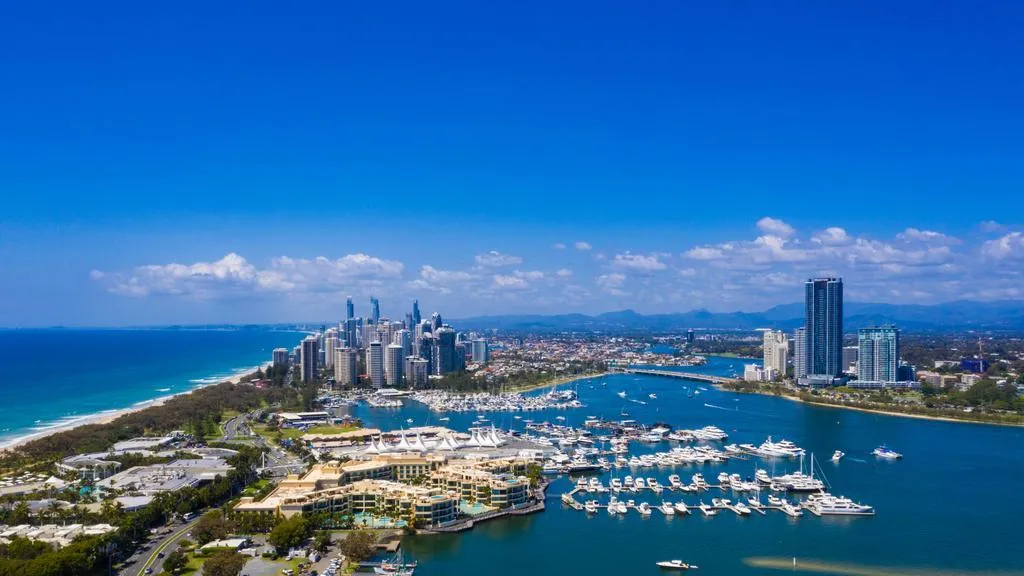
The Gold Coast is attracting both young professionals and prestige buyers, with areas like Elanora, Southport and Hope Island heating up amid tight supply and strong migration.
On the Gold Coast, low stock levels and interstate demand are pushing prices north. Cohen Handler Associate Director Luke Serhan said listings were down up to 40 per cent year-on-year in some suburbs.
“Miami’s still a bit undercooked compared to Mermaid Beach, but Elanora is taking off,” Mr Serhan said.
“Southport’s been huge — it’s central and getting a lot of movement.
“We’re seeing so much buyer interest that anything that hits the market becomes competitive instantly.”
Mr Serhan said confidence surged the weekend after recent rate cuts.
“Buyers are still picky because they’ve been used to choice, but I think FOMO is coming back. They’ll soon have to buy what’s available.”
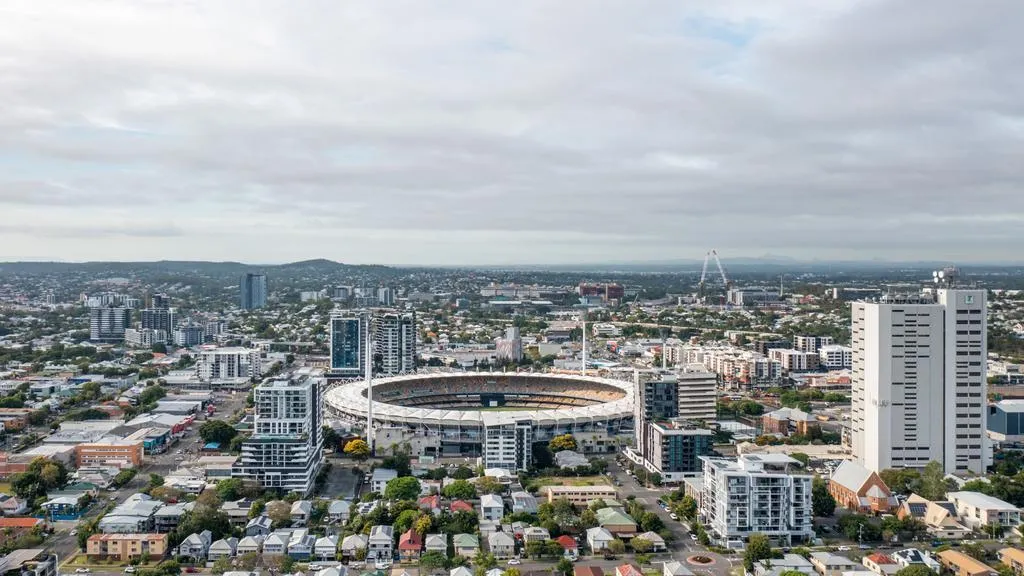
While Brisbane remains competitive, experts say many homebuyers are choosing the beachside lifestyle of the Gold Coast over the city’s established metro centre.

Cohen Handler’s Luke Serhan says buyer activity on the Gold Coast is intensifying, with interstate migration and low listings driving price growth in suburbs like Miami and Mudgeeraba.
The Cohen Handler Associate Director said lifestyle remained the Gold Coast’s trump card.
“People are choosing proximity to the beach over the metro lifestyle of Brisbane. We’re even seeing Brissie locals relocating here,”
South Australia also made a strong showing, with 11 suburbs and towns on the list including Ingle Farm and Christies Beach.
Lands Real Estate’s Matthew Lipari said Ingle Farm had seen sales rise steadily over 18 months.
“It’s in high demand right now because of its price point and development over the past decade,” Mr Lipari said.
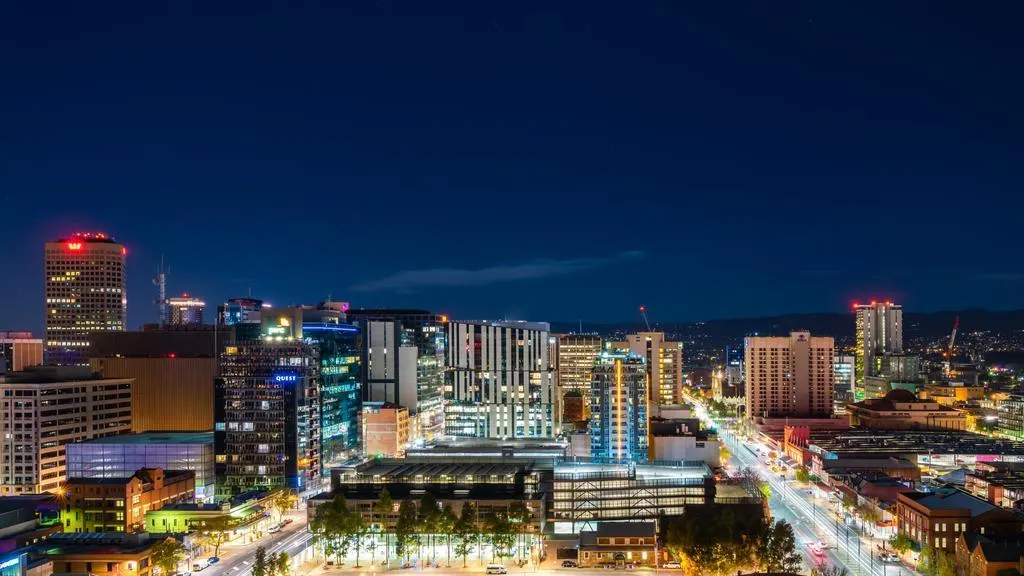
Adelaide suburbs like Ingle Farm continue to offer affordable entry points for families and investors alike, making the city a standout performer in the national growth index.
He said the demographic was changing quickly.
“Older vendors who’ve lived here 20, 30, 40 years are selling to younger buyers. But even some developers are being priced out — we’ve seen buyers miss out multiple times at opens and auctions.”
Mr Ryder said Adelaide remained one of Australia’s most consistent growth cities.
“It’s been rising longer than any other and continues to deliver,” he said.
The surprise twist in this quarter’s index was Darwin, with 92 per cent of suburbs now ranked as rising and none in decline.
Australia’s housing market is shifting fast, with new data revealing which suburbs are recording the strongest growth as demand outpaces supply in key regions.
Hotspotting General Manager Tim Graham said the comeback was real.
“Six months ago we said Darwin was about to boom, and the numbers have proven it,” he said.
With national buyer activity rising and listings still tight, experts say the window for bargain buys is closing.
“People are realising the market isn’t going to come to them,” Mr Murphy said.
“They’re jumping back in, and they’re bringing competition.”
Additional reporting by Jessica Brown
HOTSPOTTING’S TOP 50 SUBURBS FOR CAPITAL GROWTH
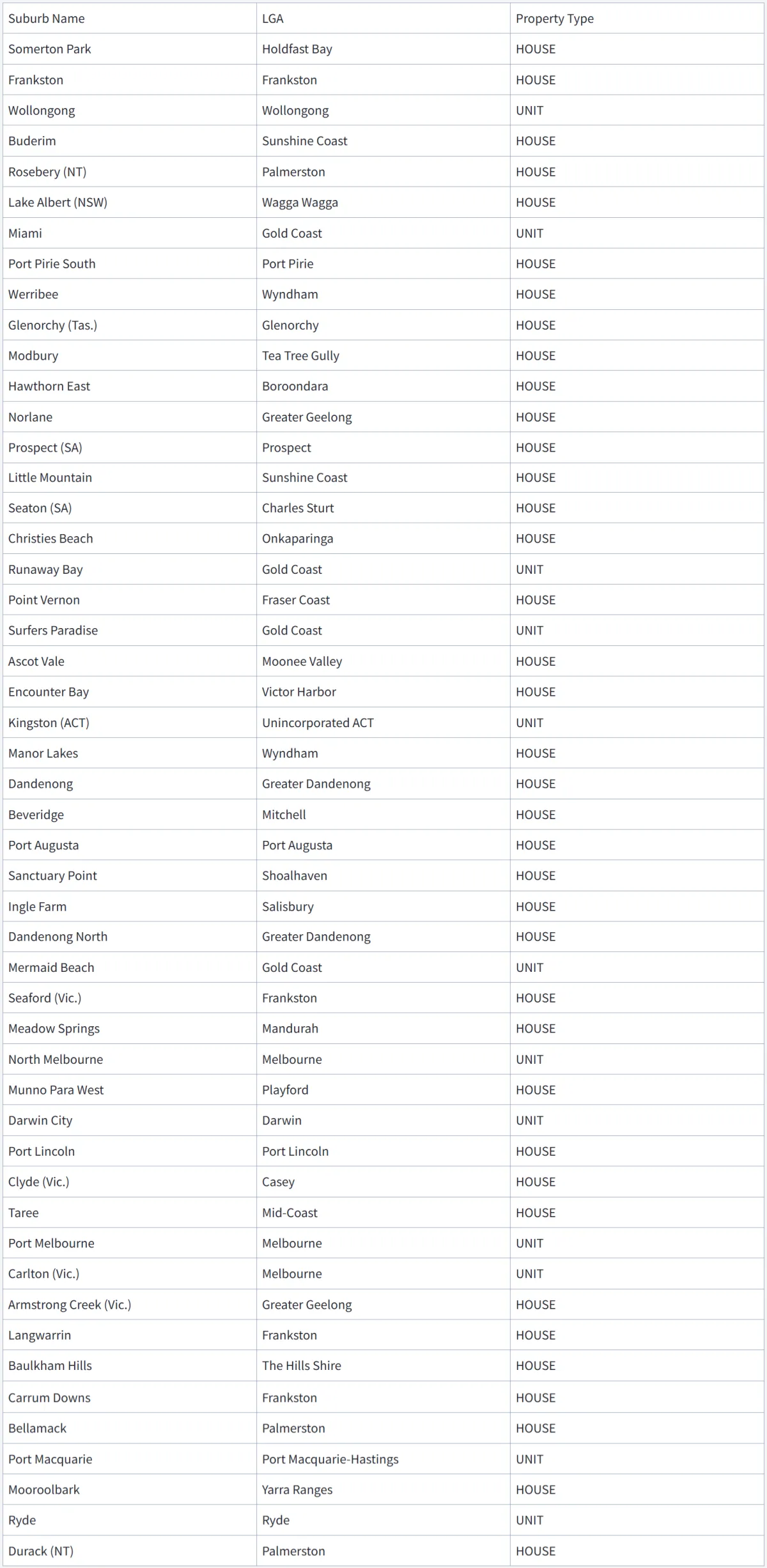
Realestate.com.au - 25/06/25

Almost a dozen South Australian suburbs and towns have been identified as hotspots for house price growth in a new national report.
Hotspotting’s Winter 2025 Price Predictor Index highlights Australia’s 50 ‘supercharged’ areas where rising sale numbers are expected to lead to future price growth.
Of the 11 supercharged areas across SA, seven were in metropolitan Adelaide while the remaining four were regional areas.
Ingle Farm in Adelaide’s north, which has a median house price of $735,000, was one of the supercharged areas, with sales climbing steadily from 40 to 64 over the past six quarters.
Eleven SA suburbs and towns have been identified as supercharged areas in the latest Hotspotting report.
Lands Real Estate agent Matthew Lipari said prices would continue rising as demand increased over the next six to 12 months.
“It’s in high demand at the moment because it’s got a really attractive price point,” he said.
“There’s been a lot of development in the area over the past 10 years too.”
Mr Lipari said it attracted a wide range of buyers, from those looking for their first home and young families to developers and investors.
“We have older vendors in the area who have lived in Ingle Farm for 20, 30, 40 years and they’re moving out then we’ve got younger buyers moving into those properties,” he said.
While many were rushing to the area for affordable homes, Mr Lipari said some househunters were already priced out.
“There are lots of buyers that we’ve met at auctions or opens multiple times and they’re being priced out of the area,” he said.
“Even some developers are being priced out too.”
Christies Beach, Munno Para West and Somerton Park were also among Adelaide’s supercharged areas, while Port Pirie South, Encounter Bay, Port Augusta and Port Lincoln were those identified in SA’s regions.
Hotspotting director Terry Ryder said Adelaide continued its run as one of the most stable growth markets in the country.
“Adelaide has been rising longer than any other and continues to deliver despite a small drop in quarterly sales,” he said.
“The number of rising markets has dipped slightly, but consistent performers are up.
“That means more areas are seeing sustained buyer activity – a key indicator of future price increases.”
🎙️ TickerNews Interview | Can You Trust AI to Pick Property?
In this interview, Tim Graham, General Manager of Hotspotting and host of The Property Playbook, joins TickerNews to unpack the role of AI in today’s property investment landscape.
As AI becomes increasingly common in real estate—from scanning thousands of listings to identifying growth suburbs—Tim offers a grounded perspective: AI is a powerful analyst, but it’s not a substitute for human insight.
💡 In this conversation, we cover:
How AI is transforming the speed and scale of property analysis
Why using ChatGPT alone to make investment decisions can be dangerous
The role of Hotspotting’s AI assistant, Holly, and how she’s trained differently from general-purpose bots
The key difference between where to buy and what to buy, and where human judgment is still essential
Why AI must be viewed as a filtering tool, not a decision-maker
🔍 “AI can shortlist thousands of markets in seconds. But without someone walking through a property, you risk making expensive mistakes.”
Watch as Tim and Ahron Young discuss the risks, rewards, and real-world application of AI in the housing market—and what smart investors should really be asking.
Realestate.com.au - 27th May 2025
With an ever-changing housing market, some of the best places to invest are in places you might not expect.
Property market analyst Hotspotting has uncovered Australia’s top 10 locations for high rental yields, strong growth potential, and affordability with locations spanning across NSW, VIC, QLD, WA and the NT.
Hotspotting Director Terry Ryder said investors are increasingly targeting property markets with strong rental returns alongside long-term growth prospects.
“Among the standout locations in our latest research are Cairns City, offering a 7.7 per cent rental yield for units, and Churchill in Victoria, where houses achieve a 6.5 per cent yield – driven by a thriving economy and affordable prices,” he said.
“Cloverdale in Perth recorded an impressive 7.3 per cent yield for units, buoyed by its strategic location near Perth and major infrastructure developments.”
Hotspotting General Manager Tim Graham said the top 10 list offers prime real estate opportunities for investors seeking both cash flow and capital appreciation.
“Moree in regional NSW leads the ranking with a market-leading 8.3 per cent rental yield for houses, positioning itself as a growing hub for agribusiness and logistics.
“All of these locations have been selected based on a combination of affordability, strong local economies, infrastructure development, and increasing employment prospects.”
Hotspotting national Top 10 positive cash flow hotspots
Cairns City, Queensland (Units)
Median Unit Price: $470,000
12 Month Growth: -10%
Rental Yield: 7.7%
Vacancy Rate: 0.7%
Churchill, Victoria (Houses)
Median House Price: $370,000
12 Month Growth: 6%
Rental Yield: 6.5%
Vacancy Rate: 1.5%
Cloverdale, Western Australia (Units)
Median Unit Price: $490,000
12 Month Growth: 25%
Rental Yield: 7.3%
Vacancy Rate: 2.5%
Darwin City, Northern Territory (Units)
Median Unit Price: $395,000
12 Month Growth: -5%
Rental Yield: 7.5%
Vacancy Rate: 1.0%
Mackay City, Queensland (Units)
Median Unit Price: $345,000
12 Month Growth: 20%
Rental Yield: 7.2%
Vacancy Rate: 1.6%
Melbourne City, Victoria (Units)
Median Unit Price: $440,000
12 Month Growth: -4%
The Urban Developer - 27th May 2025
The stroke of a pen has opened up land for almost 10,000 homes in Tasmania.
The Tasmanian Government this month expanded the Urban Growth Boundary across Greater Hobart, unlocking 615ha for housing.
The expansion includes land at Brighton, Clarence, Kingborough and Sorell.
Hobart’s property market has made a significant recovery this year—according to the Hotspotting Price Predictor Index, 60 per cent of the 35 markets in the island state are now ranked positively.
Hotspotting general manager Tim Graham said transaction levels were up 20 per cent quarter-on-quarter, and 14 per cent higher than the same period last year.
“Leading this growth is the Clarence local government area, where suburbs including Howrah, Lindisfarne, Geilston Bay, Rokeby, and Risdon Vale continue to perform consistently or exhibit rising trends,” Graham said.
“Sandy Bay, North Hobart, New Town and Lenah Valley in the City of Hobart local government area also rank as thriving markets, according to the index.”
Tasmania housing minister Felix Ellis announced the land release during a speech in Hobart at an event hosted by the Committee for Economic Development of Australia (CEDA).
“This release of land in the Southern Region sets us up for significant and sustainable growth,” Ellis said.
“We’re backing in the builders, cutting red tape, and sending a clear message to the construction industry: Tassie is open for business and keen to get building.”
Southern Tasmania Regional Land Use Strategy 2010-2035
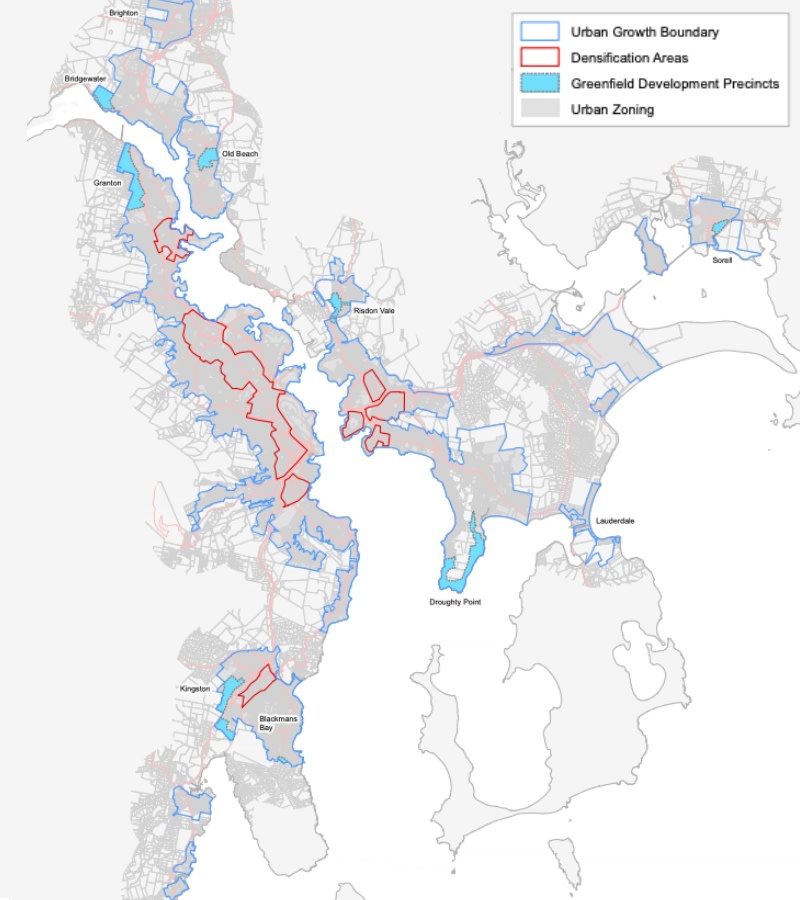
▲ Source: Tasmanian Government
Property Council of Tasmania executive director Rebecca Ellston said the update had been hugely necessary.
“Outdated urban growth boundaries can hinder smart population growth, particularly at a time when our state needs new housing and the growth and economic stimulus this brings to the construction industry,” Ellston said.
The expansion of the boundaries had been prompted by the industry, the Government said.
The state also said it was progressing updates to the Southern Tasmania Regional Land Use Strategy to ensure it remains practical, contemporary, and aligned with population growth.
Consultation for this strategy is expected to begin in the next 100 days, according to the state.
The West Australian - 25th May 2025
Inner-city apartments are finally being endorsed as a hot buy by a major property investment group, as some apartments sell below replacement value.
Investment forecaster Hotspotting claims the inner city apartment market is one of WA’s five hot markets, based on rising sales activity, along with the city of Stirling, the Belmont and Albany local government areas and the Shire of Mundaring.
Hotspotting general manager Tim Graham said city apartments were generally selling below their true value, and below the construction cost required to replace them.
Analysis by The Sunday Times shows some city apartments have this year sold below the price they got more than 15 years ago.
Mr Graham said while the Greater Perth market was beginning to slow after a strong three-year run, the inner-city apartment sector was a bright spot, especially for investors seeking affordability and long-term potential.
“The days of 20 per cent annual house price growth in Perth are behind us, but that doesn’t mean the opportunities have dried up,” Mr Graham said.
“Right now, the smart money is moving into Perth’s affordable and high-yielding unit markets and into regional centres like Albany, where infrastructure and lifestyle appeal are driving impressive growth.”
Inner Perth apartment start in the $200,000s, with one bedroom abode commonly selling in the $300,000s and $400,000s, making it one of the few CBDs of Australia’s capitals with accessible price points for inner-city living.
Mr Graham said the city’s residential appeal was growing, partly because of major projects under the $1.75 billion City Deal, including the Edith Cowan University campus, the WACA ground upgrades, and concert hall redevelopment.
Mr Graham said past prices were not necessarily a good indication of price growth ahead, especially when there had been several changes, including growing acceptance of apartment living.
“Our analysis is suggesting that now is when we believe the timing to purchase is ripe,” he said.
Analysis by The Sunday Times highlights the price drop for some city apartments, including one 120sqm, two-bedroom, two-bathroom apartment on St Georges Terrace which sold for $820,000 in 2009.
It sold again in March this year for $740,000, which represents a $80,000 drop in value over 16 years.
A separate two-bedroom apartment on St Georges Terrace sold in April for $735,000 this year, down $53,000 from the $788,00 price it sold for a decade ago in May 2015.
On Hay St, a two-bedroom apartment that sold for $1.02 million in 2012 has re-sold this year for $915,000.
Another example includes a one-bedroom apartment on Murray St that sold this year for $435,000, down from its last sale price of $500,000 in 2012.
In another Murray St complex, a two-bedroom apartment sold in March this year for $400,000, down from $480,000 in 2013.
But investor fortune differs wildly, with some city complexes increasing in value, with some even doubling in price in the last few years.
“As a buyer, I wouldn’t have any concern at all in buying something that is cheaper today than it was historically — or even from brand new — I’d see that as me buying at good value, providing I’m confident in the market direction,” Mr Graham said.
“And from our research, we see the demand for units in these locations rising due to the affordability factor as well as the lifestyle changes that we are noticing across the country whereby units are often the preferred living arrangement.
“There are so many cohorts of people opting for the lock-up and leave lifestyle that units offer, not to mention the safety, location, building amenities.”
WA property analyst Gavin Hegney said apartments were generally bought by investors for their rental yield, rather than capital growth.
He said that there was an art to choosing to right apartment, with buyers needing to consider whether views can be built out. They should also consider the structural standard of the building, and whether there was enough money set aside by the strata company for repairs.
SmartPropertyInvestment - 21st May 2025
Hotspotting’s latest Price Predictor Index has revealed that smaller markets, such as Darwin and regional South Australia, have surged for price growth during autumn 2025, while Greater Melbourne has moved towards recovery.
Hotspotting general manager, Tim Graham, said that bolstered market sentiment and a broader pattern of recovery and growth had taken place over the last quarter, and driven increases in investor activity and transaction volumes across the nation.
Graham said that Hotspotting’s recent findings showed that demand had shifted with a growing interest towards more affordable unit markets.
“These markets have become a more prominent part of the recovery story in cities like Sydney and Canberra, where attached dwellings are increasingly in demand and leading the growth in some locations,” Graham said.
At the other end of the spectrum, Hotspotting data showed that the momentum in the Greater Perth market halted over the season.
Hotspotting director, Terry Ryder, noted that Darwin and regional South Australia stood out from the other markets over the season by offering the “most positive market fundamentals for home buyers and investors”.
“Darwin emerged as the standout performer, with 79 per cent of its markets ranked positively, driven by surging sales volumes and rising demand,” he said.
The data showed that growth prospects strengthened in various markets across the nation, with two-thirds of markets in regional South Australia being classified as “rising or stable”, and Melbourne’s 63 per cent of suburbs on the upward trajectory marking the market’s “strongest comeback in years”.
Ryder emphasised that the most recent data reinforced the notion that the “best opportunities for growth aren’t always in the largest or loudest markets”.
“Smaller capital cities, such as Hobart and Canberra, are performing better than they have in years, and a number of regional centres are delivering impressive and sustained upward sales momentum,” Ryder said.
Darwin surges to centre stage
Ryder noted that the Darwin market established itself as one of Australia’s most dynamic real estate markets over the most recent season, with a sizeable upswing to sales activity in which a significant 79 per cent of markets registered positive rankings.
“Sales volumes over the past year have skyrocketed, with a 49 per cent increase since the December quarter alone – nearly double the level recorded 12 months ago,” Ryder said.
Hotspotting’s findings showed that prominent growth hotspots included Palmerston suburbs, such as Durack, Gunn, Moulden and Rosebery, alongside areas in Darwin City, such as Leanyer, where house sales surged.
Unit markets in the Top End also thrived over the season, with the Price Property Index recording notable activity in suburbs such as Larrakeyah, Nightcliff, Stuart Park, Rapid Creek, Fannie Bay, Parap and Coconut Grove.
Ryder said that no other region’s market came close to Darwin’s results during this autumn period, which prompted him to forecast a “robust outlook” for the market’s property prices in 2025 that would outshine its performance from recent years.
Regional South Australia posts solid quarterly growth
Activity in regional South Australia continued to thrive from last quarter, with the market continuing to deliver consistent results by recording a 28 per cent boost to sales activity from the December quarter that raised annual growth to levels of 47 per cent.
“Two-thirds of markets in regional South Australia are performing positively in transaction levels, with only one market categorised as declining,” Graham said.
Areas within the coastal Alexandrina region emerged as standout performers, with the Goolwa, Middleton, Hindmarsh Island, and Strathalbyn markets all reporting significant gains in sales activity during the recent autumn season.
The Property Price Index also showed that further growth is on the horizon for regional South Australia, with Victor Harbor and the Copper Coast towns of Kadina, Moonta Bay and Wallaroo earmarked as rising markets according to Hotspotting’s data.
Greater Melbourne runs hot with broad-based activity
After Greater Melbourne’s sales in the December 2024 quarter were the highest since the COVID-19 boom, Ryder said that the region is “experiencing its most optimistic market conditions in years”.
“Sales activity has surged since early 2023, with December quarter levels up by 15.3 per cent compared to the previous year,” Ryder said.
Although sales were strongest in local government areas such as Monash, Moreland, Yarra, Frankston and Mornington Peninsula, heightened activity was still evident across Greater Melbourne, with 63 per cent of the region’s suburbs now ranking as rising markets.
Ryder also noted that attached dwellings such as units and townhouses comprise around 36 per cent of the region’s total residential sales over the season, with higher-density housing activity thriving the most in suburbs such as Bentleigh East, Brunswick, Richmond, St Kilda and Blackburn.
Hobart market rebounds from last quarter
Hotspotting’s data showed that prospects in Hobart’s property market measurably lifted over autumn 2025, with 60 per cent of its 35 markets now ranking positively in the Property Price Index.
Graham said that the Hobart market’s performance substantially improved from previous quarters, noting that the region’s proportion of suburbs with negative rankings dropped “dramatically from 57 per cent to 26 per cent in just one quarter”.
“Transaction levels are up 20 per cent quarter-on-quarter, making them 14 per cent higher than the same time last year,” Graham said.
“Leading this growth is the Clarence LGA, where suburbs such as Howrah, Lindisfarne, Geilston Bay, Rokeby and Risdon Vale continue to perform consistently or exhibit rising trends,” he explained.
The company’s data showed that Hobart’s momentum is expected to persist over the remainder of 2025, with the Sandy Bay, North Hobart, New Town and Lenah Valley areas ranking as thriving markets in the Property Price Index.
Apartment sales keep Canberra moving
Ryder noted that Canberra’s property market is currently on an upwards trajectory, which has been driven by a surge in apartment sales over the past three quarters.
“A year ago, apartments accounted for just 24 per cent of residential sales, but that figure has climbed to 38 per cent over the last two quarters, fuelling a broader increase in sales activity,” Ryder said.
Fuelling the uptick in apartment sales has been enduring activity in suburbs, such as Belconnen, and the inner-city suburbs of Kingston and Phillip, in which Ryder said “unit sales momentum remains strong”.
“Of the 80 markets analysed, 38 have rising transaction levels – many of which are apartment-focused markets,” Ryder said.
Interest in the Canberra market is expected to continue over the year, with Hotspotting’s recent findings showing that 54 per cent of the region’s markets ranked positively, compared to only 18 per cent that registered negatively.
Perth market stumbles for sales activity
Graham stated that Perth’s property market remained under pressure in the autumn season of 2025, with data from the previous December quarter further reflecting the market’s declining sales activity.
“As of the December quarter, 57 per cent of Perth suburbs are exhibiting negative trends, with another 17 per cent showing no clean pattern. Only 26 per cent of suburbs are recording positive sales activity,” he said.
Despite sales activity reducing compared to the past year, Graham said the Perth market still remains resilient.
According to the Property Price Index, the house markets of Como, Dianella, Morley, Piara Waters and Wellard recorded growth, while Cannington, Leederville, Maylands, Wembley, Yokine and West Perth, registered growth for units.
Hotspotting’s findings showed a downturn in sales activity in Greater Perth was fuelled by declines in various suburbs, such as Aveley, Balga, Butler, Cooloongup, Ellenbrook, Mount Lawley, Palmyra, Port Kennedy, Rockingham and Waikiki.
“Notably, the southern municipality of Rockingham, a previously affordable hotspot leading Perth’s boom, now hosts several declining markets, including Baldivis, Port Kennedy, Rockingham and Waikiki,” Graham concluded.
RealEstateBusiness.com.au - 19th May 2025
Two smaller Australian markets led the way in price growth and sales this selling season, while Melbourne saw its strongest rebound in years, driven by rising investor interest and demand for affordable housing nationwide.
Hotspotting’s latest Price Predictor Index has revealed that smaller markets, such as Darwin and regional South Australia, have surged for price growth during autumn 2025, while Greater Melbourne has moved towards recovery.
Hotspotting general manager, Tim Graham, said that bolstered market sentiment and a broader pattern of recovery and growth had taken place over the last quarter, and driven increases in investor activity and transaction volumes across the nation.
Graham said that Hotspotting’s recent findings showed that demand had shifted with a growing interest towards more affordable unit markets.
“These markets have become a more prominent part of the recovery story in cities like Sydney and Canberra, where attached dwellings are increasingly in demand and leading the growth in some locations,” Graham said.
At the other end of the spectrum, Hotspotting data showed that the momentum in the Greater Perth market halted over the season.
Hotspotting director, Terry Ryder, noted that Darwin and regional South Australia stood out from the other markets over the season by offering the “most positive market fundamentals for home buyers and investors”.
“Darwin emerged as the standout performer, with 79 per cent of its markets ranked positively, driven by surging sales volumes and rising demand,” he said.
The data showed that growth prospects strengthened in various markets across the nation, with two-thirds of markets in regional South Australia being classified as “rising or stable”, and Melbourne’s 63 per cent of suburbs on the upward trajectory marking the market’s “strongest comeback in years”.
Ryder emphasised that the most recent data reinforced the notion that the “best opportunities for growth aren’t always in the largest or loudest markets”.
“Smaller capital cities, such as Hobart and Canberra, are performing better than they have in years, and a number of regional centres are delivering impressive and sustained upward sales momentum,” Ryder said.
Darwin surges to centre stage
Ryder noted that the Darwin market established itself as one of Australia’s most dynamic real estate markets over the most recent season, with a sizeable upswing to sales activity in which a significant 79 per cent of markets registered positive rankings.
“Sales volumes over the past year have skyrocketed, with a 49 per cent increase since the December quarter alone – nearly double the level recorded 12 months ago,” Ryder said.
Hotspotting’s findings showed that prominent growth hotspots included Palmerston suburbs, such as Durack, Gunn, Moulden and Rosebery, alongside areas in Darwin City, such as Leanyer, where house sales surged.
Unit markets in the Top End also thrived over the season, with the Price Property Index recording notable activity in suburbs such as Larrakeyah, Nightcliff, Stuart Park, Rapid Creek, Fannie Bay, Parap and Coconut Grove.
Ryder said that no other region’s market came close to Darwin’s results during this autumn period, which prompted him to forecast a “robust outlook” for the market’s property prices in 2025 that would outshine its performance from recent years.
Regional South Australia posts solid quarterly growth
Activity in regional South Australia continued to thrive from last quarter, with the market continuing to deliver consistent results by recording a 28 per cent boost to sales activity from the December quarter that raised annual growth to levels of 47 per cent.
“Two-thirds of markets in regional South Australia are performing positively in transaction levels, with only one market categorised as declining,” Graham said.
Areas within the coastal Alexandrina region emerged as standout performers, with the Goolwa, Middleton, Hindmarsh Island, and Strathalbyn markets all reporting significant gains in sales activity during the recent autumn season.
The Property Price Index also showed that further growth is on the horizon for regional South Australia, with Victor Harbor and the Copper Coast towns of Kadina, Moonta Bay and Wallaroo earmarked as rising markets according to Hotspotting’s data.
Greater Melbourne runs hot with broad-based activity
After Greater Melbourne’s sales in the December 2024 quarter were the highest since the COVID-19 boom, Ryder said that the region is “experiencing its most optimistic market conditions in years”.
“Sales activity has surged since early 2023, with December quarter levels up by 15.3 per cent compared to the previous year,” Ryder said.
Although sales were strongest in local government areas such as Monash, Moreland, Yarra, Frankston and Mornington Peninsula, heightened activity was still evident across Greater Melbourne, with 63 per cent of the region’s suburbs now ranking as rising markets.
Ryder also noted that attached dwellings such as units and townhouses comprise around 36 per cent of the region’s total residential sales over the season, with higher-density housing activity thriving the most in suburbs such as Bentleigh East, Brunswick, Richmond, St Kilda and Blackburn.
Hobart market rebounds from last quarter
Hotspotting’s data showed that prospects in Hobart’s property market measurably lifted over autumn 2025, with 60 per cent of its 35 markets now ranking positively in the Property Price Index.
Graham said that the Hobart market’s performance substantially improved from previous quarters, noting that the region’s proportion of suburbs with negative rankings dropped “dramatically from 57 per cent to 26 per cent in just one quarter”.
“Transaction levels are up 20 per cent quarter-on-quarter, making them 14 per cent higher than the same time last year,” Graham said.
“Leading this growth is the Clarence LGA, where suburbs such as Howrah, Lindisfarne, Geilston Bay, Rokeby and Risdon Vale continue to perform consistently or exhibit rising trends,” he explained.
The company’s data showed that Hobart’s momentum is expected to persist over the remainder of 2025, with the Sandy Bay, North Hobart, New Town and Lenah Valley areas ranking as thriving markets in the Property Price Index.
Apartment sales keep Canberra moving
Ryder noted that Canberra’s property market is currently on an upwards trajectory, which has been driven by a surge in apartment sales over the past three quarters.
“A year ago, apartments accounted for just 24 per cent of residential sales, but that figure has climbed to 38 per cent over the last two quarters, fuelling a broader increase in sales activity,” Ryder said.
Fuelling the uptick in apartment sales has been enduring activity in suburbs, such as Belconnen, and the inner-city suburbs of Kingston and Phillip, in which Ryder said “unit sales momentum remains strong”.
“Of the 80 markets analysed, 38 have rising transaction levels – many of which are apartment-focused markets,” Ryder said.
Interest in the Canberra market is expected to continue over the year, with Hotspotting’s recent findings showing that 54 per cent of the region’s markets ranked positively, compared to only 18 per cent that registered negatively.
Perth market stumbles for sales activity
Graham stated that Perth’s property market remained under pressure in the autumn season of 2025, with data from the previous December quarter further reflecting the market’s declining sales activity.
“As of the December quarter, 57 per cent of Perth suburbs are exhibiting negative trends, with another 17 per cent showing no clean pattern. Only 26 per cent of suburbs are recording positive sales activity,” he said.
Despite sales activity reducing compared to the past year, Graham said the Perth market still remains resilient.
According to the Property Price Index, the house markets of Como, Dianella, Morley, Piara Waters and Wellard recorded growth, while Cannington, Leederville, Maylands, Wembley, Yokine and West Perth, registered growth for units.
Hotspotting’s findings showed a downturn in sales activity in Greater Perth was fuelled by declines in various suburbs, such as Aveley, Balga, Butler, Cooloongup, Ellenbrook, Mount Lawley, Palmyra, Port Kennedy, Rockingham and Waikiki.
“Notably, the southern municipality of Rockingham, a previously affordable hotspot leading Perth’s boom, now hosts several declining markets, including Baldivis, Port Kennedy, Rockingham and Waikiki,” Graham concluded.
Realestate.com.au - 15th May 2025

South Australia’s regional property market is tipped to stand out this year, with a national report revealing its one of the front runners for price growth.
The latest Hotspotting Price Predictor Index for Autumn reveals regional SA and Darwin have the best prospects across the country for homebuyers and investors.
The quarterly report by property analyst and Hotspotting director Terry Ryder analyses sales data in every suburb and town across Australia to determine where prices are likely to rise, decline or remain consistent.
Mr Ryder said research showed regional SA continued to deliver quietly consistent results, with two thirds of the market classified as rising.
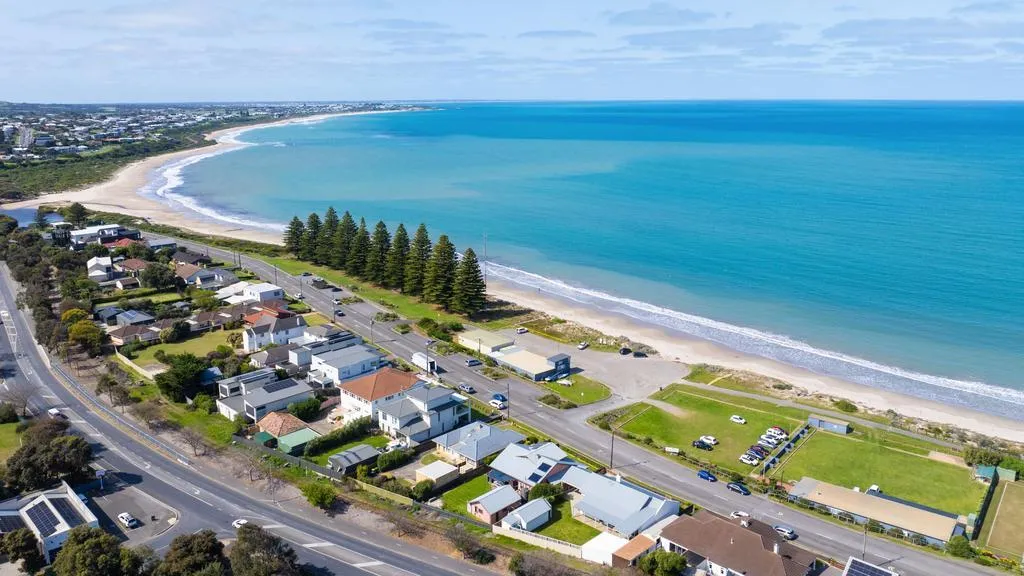
Victor Harbor is one of SA’s regional markets tipped to see price growth this year following strong sales.

Hotspotting director and property analyst Terry Ryder.
“The data also reinforces a growing theme – the best opportunities for growth aren’t always in the largest or loudest markets,” he said.
Hotspotting general manager Tim Graham said sales activity in the state’s regions has increased consistently quarter by quarter, with a 28 per cent jump in the December quarter, bringing overall annual growth to 47 per cent.
“Two thirds of markets in regional SA are performing positively in transaction levels, with only one market categorised as declining,” he said.
Kingston SE’s housing market was declining, while the Alexandrina LGA, Middleton, Hindmarsh Island, Victor Harbor, Moonta Bay and Wallaroo were among the standout regions.
Harris South Coast director Mark Forde said prices across the area had surged over the past few years but any further growth wouldn’t be as rapid.
“We’ve seen unprecedented growth over the last four years and … demand for the area still remains really strong,” he said.
“I don’t see (prices) going backwards but I see them holding.
“We’re coming into a more normal market with the new price points we’ve experienced.”
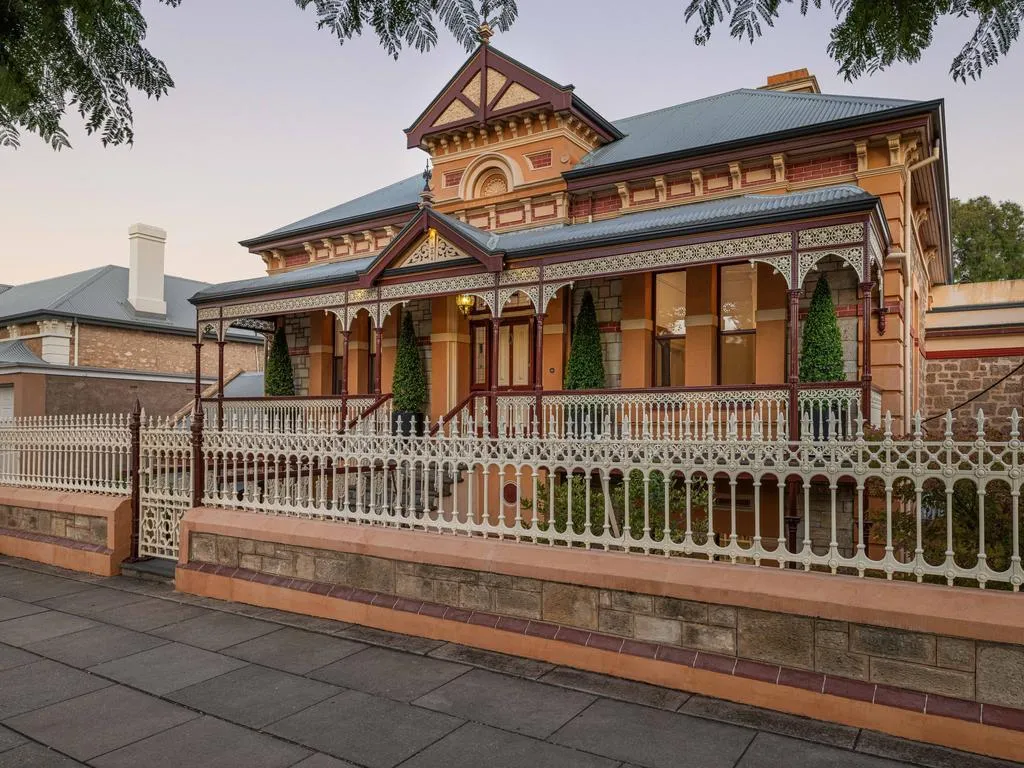

Mr Forde said it was important to remember that demand for certain types of properties would attract high prices but not all.
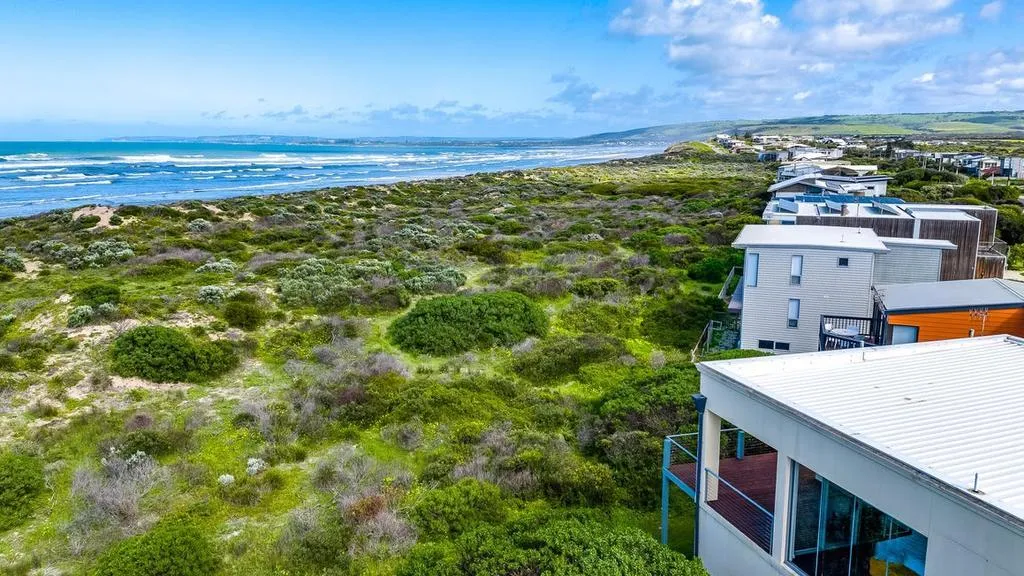
Middleton is another area where property prices are expected to rise in 2025.
“If you’ve got something the market really wants it will take off and there will be multiple buyers for it,” he said.
“For prime waterfront, the demand is very strong.
“What we’re finding is days on market are starting to blow out too.”
Meanwhile, the Hotspotting report said Adelaide was expected to retain its position as one of Australia’s longest-standing growth markets.
“Transaction levels surged by 18 per cent in the December quarter and are now 37 per cent higher than a year ago – outpacing even the 2021 Covid-19 boom,” Mr Graham said.
More than half of Adelaide’s markets are considered rising, with the only declining ones in Blakeview, Elizabeth East, Ferryden Park and Seaford Meadows for houses, and North Adelaide for units.
Marion, Charles Sturt, Mitcham, Onkaparinga, Port Adelaide Enfield, Tea Tree Gully and Salisbury were the city’s leading LGAs.
Domain - 14/05/25
More than half of Perth’s suburbs are now in decline, with property sales sliding and former boom towns like Rockingham and Baldivis turning into real estate bust zones, new data reveals.
Hotspotting general manager Tim Graham said the Autumn 2025 Price Predictor Index showed Perth’s property market remains under pressure, with December quarter data confirming previous reports of declining sales activity.
“As of the December quarter, 57 per cent of Perth suburbs are exhibiting negative trends, with another 17 per cent showing no clear pattern,” he said.
“Only 26 per cent of suburbs are recording positive sales activity.”
Graham said while sales activity had steadily fallen over the past year, some markets remained resilient, with house markets showing growth in Como, Dianella, Morley, Piara Waters, and Wellard, alongside unit markets in Cannington, Leederville, Maylands, Wembley, Yokine, and West Perth.
Conversely, declining suburbs included Aveley, Balga, Butler, Cooloongup, Ellenbrook, Mount Lawley, Palmyra, Port Kennedy, Rockingham, and Waikiki.
“Notably, the southern municipality of Rockingham, a previously affordable hotspot leading Perth’s boom, now hosts several declining markets, including Baldivis, Port Kennedy, Rockingham, and Waikiki,” he said.
One location that rarely takes centre stage has emerged as a front-runner for real estate capital growth prospects this year, according to the Index.
Hotspotting director Terry Ryder said the latest research found Darwin had cemented its place as one of Australia’s most dynamic real estate markets, with a surge in sales activity and an impressive 79 per cent of markets showing positive rankings.
“Sales volumes over the past year have skyrocketed, with a 49 per cent increase since the December quarter alone – nearly double the level recorded 12 months ago,” he said.
“No other region in the country comes close to Darwin’s numbers. These results suggest a robust outlook for property prices in 2025, outshining recent years.”
Ryder said regional WA’s real estate market had maintained stable performance over the past 18 months.
“Bunbury’s market has been declining steadily over the past year, with most suburbs classified as ‘plateau’ or ‘declining’, including former boom leader Withers,” he said.
“Geraldton has also experienced a drop-off in sales activity over the past six months, with only three suburbs showing rising transaction levels compared to five declining or plateau markets.”
Bright spots in regional WA include Karratha, Kalgoorlie-Boulder, Albany, Broome, and Busselton, where sales activity continues to rise.
REIWA regional spokesperson Peta McKenzie said Geraldton was the top-performing regional centre for the March 2025 quarter, according to the latest REIWA data.
Its median house sale price rose 6.5 per cent to $490,000, up from $460,000 in the December 2024 quarter.
McKenzie said investor activity had placed pressure on local buyers.
“REIWA members report investors often secured properties ahead of local owner occupiers by offering slightly more,” she said.
Eight of the regional centres recorded price growth over the quarter. Port Hedland was the only regional centre where the median house sale price declined.
Annually, Bunbury saw the highest growth, with the median house sale price rising 25.9 per cent to $616,995. Geraldton followed closely, up 25.6 per cent over the year to $490,000.
The number of new investment loans fell by 3.7 per cent in the March quarter, while new home loans fell by 3.4 per cent, according to data released on Wednesday by the Australian Bureau of Statistics.
Homeloanexperts.com.au senior mortgage broker Jonathan Preston said despite the dip there was a growing sense of optimism coming to the fore.
He said with interest rates on a downward arc many buyers were already securing pre-approvals so they could move quickly when the moment was right.
“There is no collapse in confidence,” he said.
“Quite the contrary, confidence is booming, and we have people wanting to buy investment properties at a faster pace than in recent times. Once rates come down more, I expect the confidence to flow through to the large owner-occupier mortgages.”
Realestate.com.au 14/05/2025
South Australia’s regional property market is tipped to stand out this year, with a national report revealing its one of the front runners for price growth.
The latest Hotspotting Price Predictor Index for Autumn reveals regional SA and Darwin have the best prospects across the country for homebuyers and investors.
The quarterly report by property analyst and Hotspotting director Terry Ryder analyses sales data in every suburb and town across Australia to determine where prices are likely to rise, decline or remain consistent.
Mr Ryder said research showed regional SA continued to deliver quietly consistent results, with two thirds of the market classified as rising.
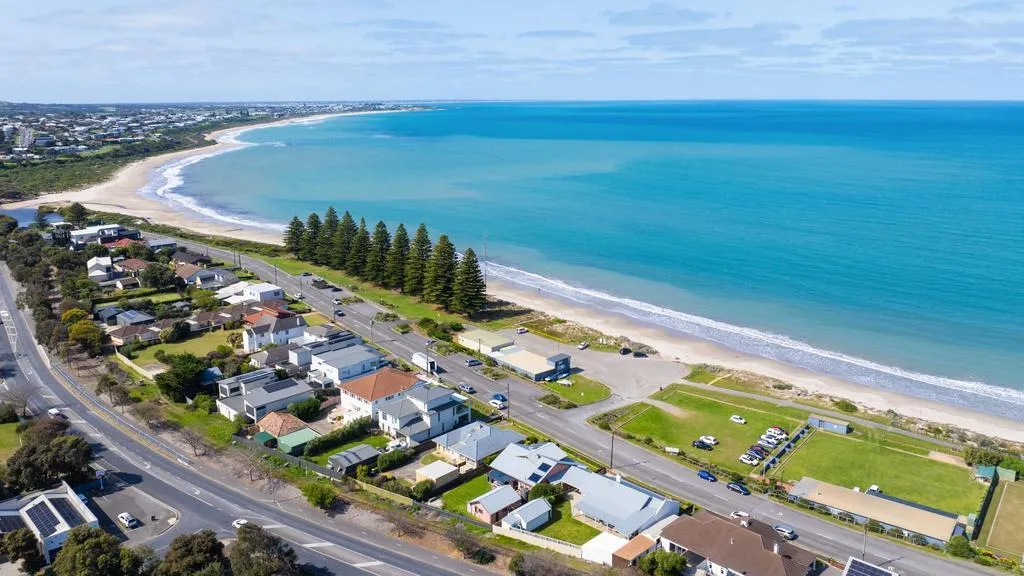
Victor Harbor is one of SA’s regional markets tipped to see price growth this year following strong sales.
Hotspotting director and property analyst Terry Ryder.
“The data also reinforces a growing theme – the best opportunities for growth aren’t always in the largest or loudest markets,” he said.
Hotspotting general manager Tim Graham said sales activity in the state’s regions has increased consistently quarter by quarter, with a 28 per cent jump in the December quarter, bringing overall annual growth to 47 per cent.
“Two thirds of markets in regional SA are performing positively in transaction levels, with only one market categorised as declining,” he said.
Kingston SE’s housing market was declining, while the Alexandrina LGA, Middleton, Hindmarsh Island, Victor Harbor, Moonta Bay and Wallaroo were among the standout regions.
Harris South Coast director Mark Forde said prices across the area had surged over the past few years but any further growth wouldn’t be as rapid.
“We’ve seen unprecedented growth over the last four years and … demand for the area still remains really strong,” he said.
“I don’t see (prices) going backwards but I see them holding.
“We’re coming into a more normal market with the new price points we’ve experienced.”
Mr Forde said it was important to remember that demand for certain types of properties would attract high prices but not all.

Harris South Coast director Mark Forde.
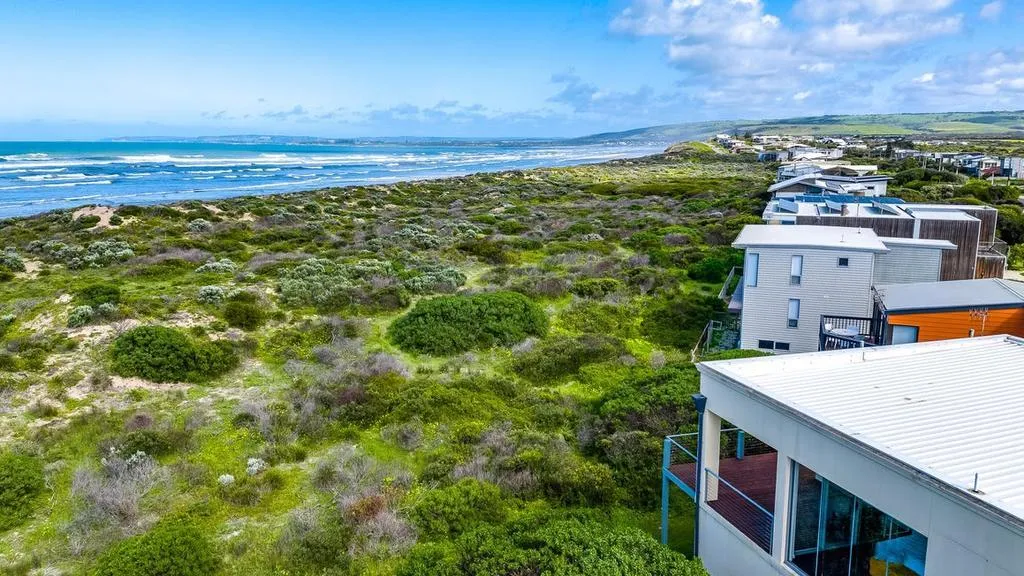
Middleton is another area where property prices are expected to rise in 2025.
“If you’ve got something the market really wants it will take off and there will be multiple buyers for it,” he said.
“For prime waterfront, the demand is very strong.
“What we’re finding is days on market are starting to blow out too.”
Meanwhile, the Hotspotting report said Adelaide was expected to retain its position as one of Australia’s longest-standing growth markets.
“Transaction levels surged by 18 per cent in the December quarter and are now 37 per cent higher than a year ago – outpacing even the 2021 Covid-19 boom,” Mr Graham said.
More than half of Adelaide’s markets are considered rising, with the only declining ones in Blakeview, Elizabeth East, Ferryden Park and Seaford Meadows for houses, and North Adelaide for units.
Marion, Charles Sturt, Mitcham, Onkaparinga, Port Adelaide Enfield, Tea Tree Gully and Salisbury were the city’s leading LGAs.
Tim Graham on TickerNews 25/04/25
With housing affordability now a key battleground in the federal election, Tim Graham, Managing Director of Hotspotting, joins Ahron Young on TickerNews to unpack what the major parties are promising—and whether those policies will make any real difference. In this episode, Tim explains why most policies on offer are short-term, demand-side sugar hits that fail to address the root of Australia’s housing crisis: supply. 🎯 In this episode, you’ll learn: Why tax deductions and super-for-housing schemes may push prices up The unintended consequences of government stimulus for first-home buyers The critical need for supply-side reform and planning overhauls Why medium-density housing and cutting red tape are key to solving the crisis The reality behind housing announcements that never get delivered Why developers are avoiding Victoria—and how to turn that around
📢 A straight-talking look at what’s broken, what’s needed, and how to really fix housing in Australia.
👤 Guest: Tim Graham – General Manager, Hotspotting.com.au
🎙️ Host: Ahron Young – Anchor, TickerNews
🌐 Catch more episodes of Ticker at: https://tickernews.co/shows/the-property-playbook/
The West Australian - 26/04/25

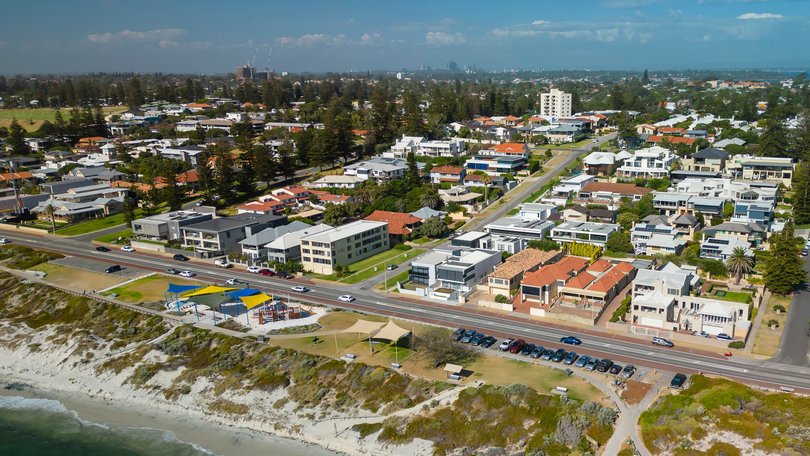
Analyst Tim Graham said the Perth lull was likely to be temporary, forecasting the market would get its ‘second wind; in 18 months to two years time.
Perth’s property market will hit a sweet spot for first home buyers over the next 18 months to two years, according to a major analyst.
Hotspotting’s latest quarterly Winners and Losers report shows Perth is the only market in Australia with more suburbs with a falling or a stagnant number of sales than with rising sales.
More than half of Perth suburbs — 57 per cent — had falling sales volumes.
A further 17 per cent showed inconsistent patterns while only 26 per cent are experiencing rising sales.
The measure is often an indication of stagnating prices, or at least softening price growth. Prices drops are unlikely for most suburbs.
But analyst Tim Graham said the Perth lull was likely to be temporary, forecasting that the market would get its “second wind” in 18 months to two years time.
He said affordability issues would keep a lid on the market until late next year or early 2027, but the anticipated cut in interest rates would then renew growth, amid strong fundamentals including a good jobs market, new infrastructure and high migration.
Mr Graham compared the Perth market to the Sunshine Coast in Queensland, which boomed in 2017/2018 amid a rollout of major new infrastructure. It slowed after COVID hit and affordability constraints kicked in.
“It got its second wind and we are now calling it the hottest market in Australia,” he said.
“Over the next 18 to 24 months, we are likely to see Perth rebound too.”
The regional WA market has been relatively steady over the past 18 months, even with a minor dip in sales activity during the December quarter.
“Roughly 38 per cent of areas are currently showing positive momentum, while 36 per cent are classified as negative — indicating a fairly even performance overall,” he said.
According to Hotspotting’s Price Predictor Index, suburbs with rising demand for houses include Como, Dianella, Morley, Piara Waters and Wellard.
In the unit sector, Cannington, Leederville, Maylands, Wembley, Yokine, and West Perth were still showing signs of growth.
Regional markets where sales activity is still rising included Karratha, Kalgoorlie-Boulder, Albany, Broome and Busselton
On the flip side, weaker markets with falling sales volumes included Aveley, Balga, Butler, Cooloongup, Ellenbrook, Mt Lawley, Palmyra, Port Kennedy, Rockingham, and Waikiki.
Mr Graham noted that Baldivis — the one-time investor favourite — now had fewer than half the quarterly sales it experienced in late 2022.
Nationally, eight of the 14 market jurisdictions are deemed “winners” with rising demand, while five are considered “steady” markets with a plateau in demand.
The Property Tribune - 22nd April 2025
Darwin has emerged as Australia's top property investment prospect with rising sales activity, affordability, and economic growth.
Australia's property market is entering a new phase of confidence, with Darwin leading while Perth shows decline after topping the leaderboard in 2024.
The Australian property market is shifting toward more affordable options in 2025, with infrastructure spending and economic growth driving buyer decisions.
The nature of the property cycle means that most markets eventually get their time at the top of the leaderboard, but an unlikely contender has finally found itself on top, leading Australia’s property investment prospects for the first time.
Hotspotting first noted the beginnings of a Darwin market turn-around in late 2024 when sales activity began to rise.
It is now a market to watch, according to Hotspotting General Manager, Tim Graham.
“All of a sudden, all of the fundamentals are right in Darwin,” Mr Graham said.
“It is Australia’s most affordable capital city property market, and its economy is really gaining traction with projects worth billions underway or in the pipeline.
“This is creating more job opportunities, which leads to further demand for housing and drives up prices.”
Darwin’s property asking prices since 2020

In the second half of 2024, the Darwin market experienced an emphatic rise in transaction levels, which is generally a precursor to future price growth. That lift in transaction levels is continuing in 2025.
“It ticks all the boxes for investment,” Mr Graham said.
“There is infrastructure spending, the economy is growing, and it is producing very high yields.”
Mr Graham said Darwin’s unemployment rate was on the way down, hitting 3.3% in December 2024, which is lower than any other capital city jurisdiction in Australia.
The Northern Territory is now second only to Western Australia for relative annual population growth, which is another key driver of property prices.
“The Australian property market on the whole is entering a new phase of renewed confidence and broad-based momentum,” Mr Graham said.
“The only market showing genuine decline is Greater Perth.”
Mr Graham said Perth, which topped the leaderboard for most of 2024, had definitely passed its peak.
Sales activity has either plateaued or is declining across more than half of its markets, and only about a quarter of Greater Perth markets have positive transaction levels.
Mr Graham said that at a national level, buyers and investors were looking for more affordable options and after solid price growth in the past 18 months, that was not to be found in Perth.
“We are seeing a shift in market sentiment across Australia. The real estate cycle has moved past its correction phase in many areas, setting the stage for a new wave of opportunity and price growth in 2025.”
-- Tim Graham, Hotspotting
TickerNews 7th April 2025
Changing of the Guard: Perth’s Peak and the New Property Leaders
In a recent interview with Ahron Young on TickerNews, Tim Graham, General Manager of Hotspotting and host of The Property Playbook, explored the shifting dynamics of Australia’s real estate market. With markets like Perth slowing down after a period of strong growth, new leaders are emerging, and Tim shared his expert insights on where investors should look next.
Perth: A Market at its Peak
Perth has experienced significant growth in recent years, thanks to a proactive state government and an affordable property market. However, according to Hotspotting’s proprietary Price Predictor Index, the market has now reached its peak. As sales activity begins to slow, prices are expected to follow suit. Tim explains that while Perth once presented strong opportunities, other markets are now starting to shine.
Emerging Market Leaders: The Rise of Melbourne
While Perth's market cools, Melbourne is experiencing a surprising resurgence. Despite the state's economic challenges, including business closures and high interest rates, Melbourne’s affordability compared to Sydney is making it an attractive option for investors. Tim explains that Melbourne’s market, which saw a large correction post-COVID, is now showing positive rankings across numerous suburbs, creating opportunities for new investment.
The Impact of Lifestyle and Affordability
Tim also discussed how affordability is driving people away from capital cities and toward regional areas. Many Australians are choosing the lifestyle benefits of these regions, such as larger homes and cheaper mortgages, without sacrificing quality of life. This "exodus to affordability," which predates COVID, is reshaping the property investment landscape across Australia.
Infrastructure Projects and Their Impact
Infrastructure projects, like Melbourne’s Westgate Tunnel, are playing a crucial role in improving access to previously underserved areas. However, Tim believes that these developments won’t be the game-changer some might expect. While they will ease congestion, the impact on property prices may not be as significant as some anticipate.
Interest Rates and Housing Affordability: The Real Issue
A significant portion of the discussion focused on interest rates and their impact on property prices. Tim highlighted that while the Reserve Bank of Australia (RBA) often adjusts rates to manage inflation, the real issue in Australia’s housing market is a lack of housing supply. With a growing population and fewer properties available for sale, prices are expected to continue rising, regardless of interest rate changes.
Government Policies and Housing Affordability
Finally, Tim discussed the Victorian government's policies aimed at alleviating housing affordability, including stamp duty discounts for new builds. While these incentives may seem like a step in the right direction, Tim points out the unintended consequences. Developers are struggling to get projects off the ground due to rising costs and a shortage of available tradespeople. For these policies to be truly effective, Tim suggests that the government should focus on supporting developers as well.
The Future of Australia’s Property Market
As Perth’s market slows, new opportunities are emerging in other areas, particularly in Melbourne. With a focus on affordability, infrastructure, and government policies, investors should be paying attention to these shifts in the Australian property market. Tim’s insights serve as a valuable guide for navigating the current and future landscape, helping investors make informed decisions.
The Property Tribune - 26th February 2025
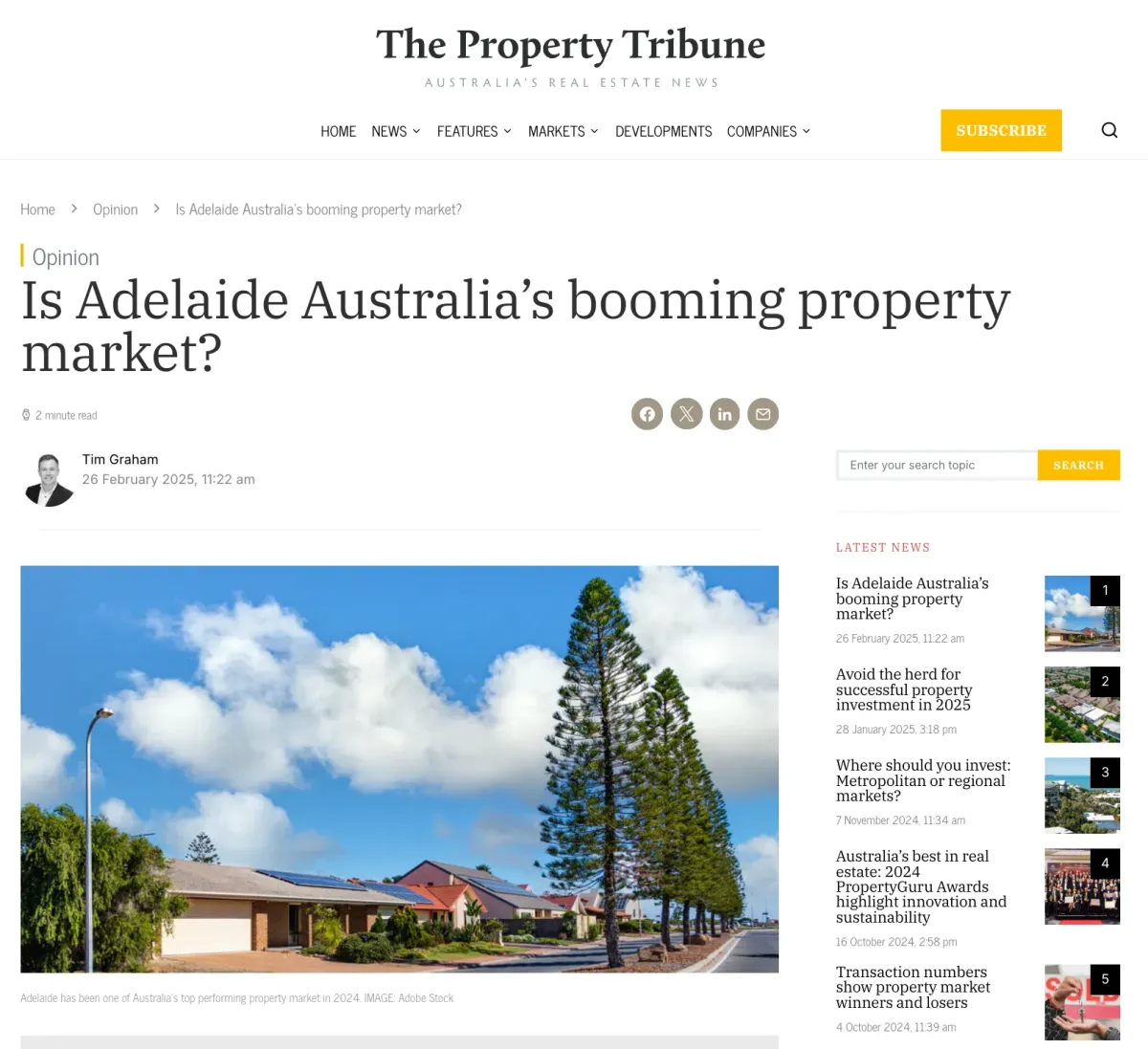
Adelaide’s property market delivers strong, consistent capital growth, outperforming most Australian cities over the past 20 years.
Diversified economy, low vacancy rates, and high buyer demand underpin Adelaide’s rising median dwelling prices.
Despite years of growth, Adelaide’s market remains robust, with prices and demand continuing to rise in 2024.
It may not be on every investor’s radar but it should be – Adelaide is one of Australia’s most remarkable property markets.
The days when no one wanted to buy there because Adelaide was regarded as a no-growth city in a no-growth state economy, are long gone, according to Hotspotting General Manager, Tim Graham.
Mr Graham said Hotspotting analysis of Adelaide showed it achieved long-term capital growth which was superior to most other places in Australia.
And this was backed by its credentials as one of Australia’s leading economies.
“When car manufacturing closed down in Adelaide, everyone wrote that city off as not worthy of investment,” Mr Graham said.
“They all thought the economy would fall off a cliff but it didn’t. Instead, it picked itself up and focused on building its economy in another direction, including technology and submarines, and now it’s a place that investors are wishing they had bought years ago.”
Adelaide is among the top cities for delivering the highest capital growth in the past 20 years, Mr Graham said.
“Most Adelaide suburbs have averaged better than 10% a year over the past five years, with many averaging 15% or more. And in 2024, Adelaide house prices rose 13% while unit prices lifted 17% – only Perth did better.”
Property asking prices for Adelaide over the last decade
Mr Graham said one of the standout characteristics of the Adelaide market was its consistency with buyer demand remaining strong over the past five years and prices continuing to grow.
“Today Adelaide has a median dwelling price higher than Melbourne, as well as Perth, Hobart and Darwin – and not much below Brisbane,” he said.
“Adelaide’s property market offers consistent growth, low vacancy rates, and a strong economy. Outperforming most cities, it’s now a top choice for investors.”
-- Tim Graham, Hotspotting
Mr Graham said the property market was underpinned by a great state economy, which has been consistently ranked the best in the nation over the past 12-18 months in the quarterly editions of the State of the States report by CommSec.
It has a vacancy rate well below 1% and a good record of creating jobs.
“Investors considering Adelaide need to keep in mind that this market has had a number of years of price growth and appears well advanced in the current cycle. But, at this point, buyer demand and prices continue to grow.”
The Property Tribune - 28th Jan 2025

Investors should avoid locations that are already experiencing significant growth and target areas early in their growth cycle.
Perth market shows signs of being past its peak with growing listings and dropping transaction levels.
Melbourne, Darwin, and several regional cities expected to perform well in 2025.
The safest way to pick the best location to invest in 2025 is to ignore what the herd is doing and target locations early in the growth cycle.
It sounds easy, but it’s a fundamental error many who are new to property investing make, according to Hotspotting General Manager, Tim Graham.
Mr Graham said many investors get caught up in the media’s hype that a location is hot, and end up investing in a market that is already overheated.
“If you are reading about it in the paper or someone at a barbecue is telling you a location is hot, that means it’s already undergone significant price growth, and you will end up buying at an elevated price,” he said.
“Perth is a perfect example of this. Properties are selling in ten days or less, which is a big red flag, and many locations have had growth in excess of 20% in the past 12 months. That can’t continue.
“We believe the Perth market is past its peak. Listings are growing and transaction levels are dropping, and that can only lead to one thing – a slowdown in price growth”.
Mr Graham said that buyers should focus on locations that have the fundamentals in place for good growth in 2025 but have not yet taken off.
“The important things for investors to analyse when selecting a location with future investment potential are infrastructure spending, job nodes and growing population. Also important is a trend of rising transaction numbers from quarter to quarter.”
-- Tim Graham, Hotspotting
“Locations with all these factors in place are well positioned for future capital growth.”
In 2025, Mr Graham expects the regeneration of a number of ‘second wind’ markets.
“These are markets that had a period of strong growth which has paused or eased in the past 18 months to two years but are now showing signs of increasing demand in terms of growing transaction numbers,” he said.
“Melbourne did not have a good year in 2023 or 2024, but I believe it will start to rise next year, thanks to the price differential with Sydney and its high population growth. This will occur despite Melbourne having the worst state government and the highest taxes in the nation.”
“Darwin will also begin to show some price growth next year. There are some big infrastructure projects either underway or about to start in the Northern Territory, which will result in job growth and rising demand for property.
“And Darwin still offers investors affordable houses and high rental yields.”
Mr Graham said regional cities such as Albury-Wodonga, Ballarat, Launceston and Burnie were also likely to perform well in 2025.
“If you are buying at the right time, you really can take advantage of buying well and potentially even below asking price,” he said.
“Unfortunately, investors will continue to pile into the frenzied markets, however, the smart money will target locations early in the growth cycle, not at the end.
“You can’t rely on the past to predict the future. Some markets that have not been to the fore in the past 12 months to two years will be the surprise performers.”
News.com.au & Realestate.com.au 8/1/25
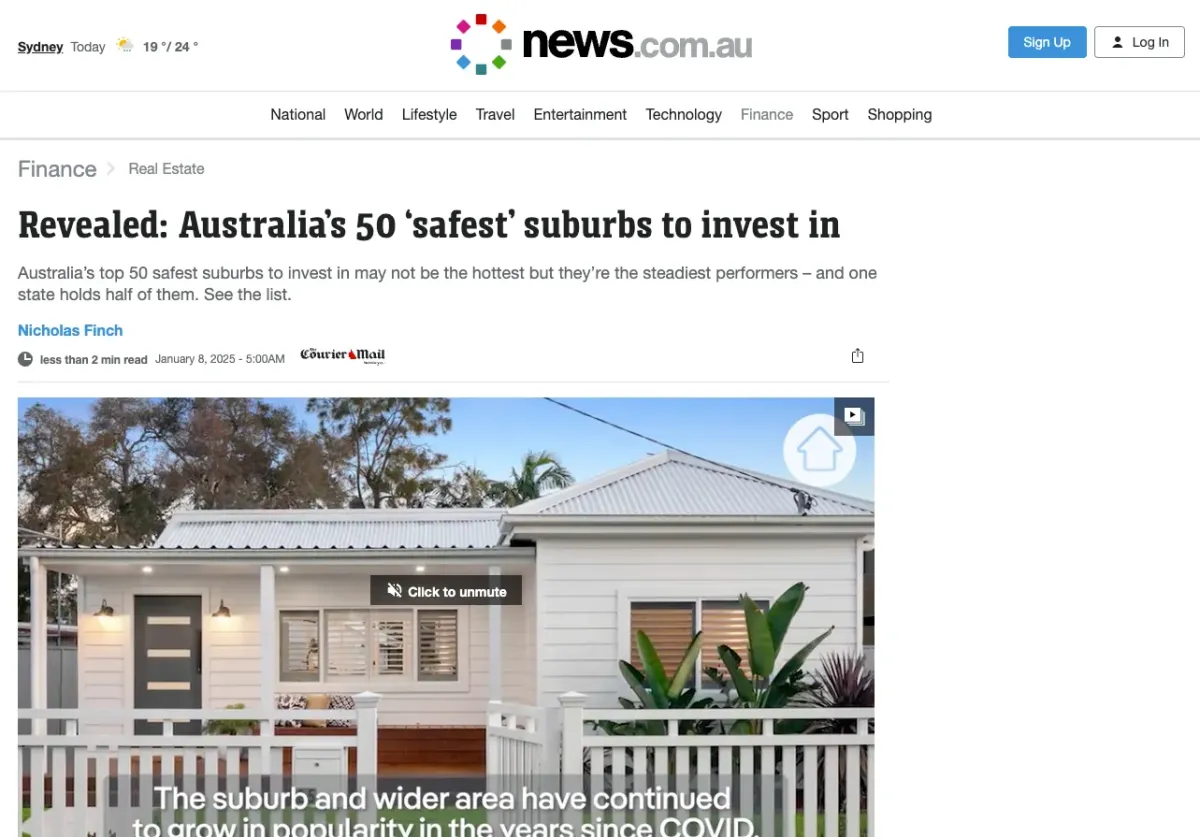

Australia’s top 50 safest suburbs to invest in may not be the hottest but they’re the steadiest performers – and one state holds half of them. See the list.
Queensland has been called home to 29 of Australia’s 50 safest suburbs for investors, with areas from NSW, Victoria and WA making up the remaining 21.
Property analyst Hotspotting announced the data from its Summer 2024 Price Predictor Index, which assessed the suburbs with the steadiest conditions for long-term capital growth.
D BNE Story Ferry CBD Runrise
Queensland has a whopping 29 of the nation’s 50 safest suburbs in Hotspotting’s latest Price Predictor Index.
This found 24 suburbs across Queensland with a consistent market for houses, along with 5 suburbs with consistent market for units.
Meanwhile, NSW saw ten suburbs on the list, with six in Victoria and four in WA.
Hotspotting General Manager Tim Graham said these 50 markets represented safe places for people to invest in that would provide reliable yields.
Hotspotting’s latest safe investor suburbs for Queensland.
“Buderim on the Sunshine Coast, for example, has had remarkably consistent sales volumes for the past three years,” he said. “Its five-year capital growth average is 13.3 per cent per year, with its median house price rising 14 per cent to $1,250,000 in the past 12 months.”
Hotspotting Director Terry Ryder said while consistent markets were not as thrilling as the “supposed next big thing”, they offered safe opportunities for buyers over multiple years for medium to long-term results.
Hotspotting managing director Terry Ryder said these suburbs provided consistent returns and growth, despite not being “the next big thing”.
He added that Queensland’s popularity over 2024 represented a rise in demand across the entire state, not just the Brisbane area.
“Queensland is the biggest beneficiary of internal migration in Australia,” he said. “People are leaving the biggest cities and moving to regional cities for lifestyle and affordability, and Queensland gets the most of that.”
Hotspotting’s latest safe investor suburbs for NSW.
Realestate.com.au 3/01/2025

Albury, Tamworth and Sydney suburb Harris Park have topped a list of surprising NSW locations that property experts claim will outperform the rest of the market this year.
Other locations to watch in 2025, flagged by property market analyst Hotspotting, included Grafton, Parkes, Dubbo, Glen Innes, Leeton and Lithgow.
The research measured investment potential by affordability, housing demand and infrastructure development.
Hotspotting director Terry Ryder said the best buys for next year includes locations with plenty of long-term growth potential excluding spots that “are already hot and frenzied regional areas.”
Where in NSW to invest in 2025.
“[People] wait until they hear reports that a location is hot and decide they want a piece of the action, but by then it’s often too late,” he said. “Prices are already inflated and it is reaching the peak of its price growth.”
The analysis evaluates regions nationwide for capital growth potential, considering infrastructure, employment, urban renewal, lifestyle, and migration factors.
“Those who followed the tips in our report a year ago could have made close to $100,000 in capital gains spending as little as $400,000,” Mr Ryder said.
Hotspotting general manager Tim Graham predicts a resurgence in certain markets that have been quiet for the past few years.
“These ‘second-wind markets’ will reignite in 2025,” he said. “These are regions that experienced significant price growth from 2022 to 2024, took a breather, and are now gearing up for another round of growth.”
Mr Ryder said it was important to find places with strong fundamentals, such as high population growth forecasts, investments in infrastructure and markets for job creation.
“As a general comment, people should not overlook the potential of units and townhouses,” he said. “More and more people are opting for units, townhouses, apartments, and that should not be overlooked.”
Based on the Hotspotting analysis, these are the spots to invest in NSW.
ALBURY- WODONGA
The Albury-Wodonga region is a critical area for several major businesses, making it a prime market to grow in the future.
Being on the border of NSW and Victoria, the spot is within driving distance of both, while still being able to reach states such as Queensland.
“It’s got a wonderful location – lots of big businesses have major distribution centres there,” Mr Ryder said.
The area will also be connected to the $31 billion Inland Rail project under construction, connecting freight trains from Victoria to Queensland.
“That’s another factor in favour of Albury-Wodonga as an affordable city with great growth prospects,” Mr Ryder said.
Albury’s median house price is currently $865,000 while a unit is $450,500.
Lavington unit in the Albury / Wodonga region for $290,000.
MPA Magazine - 19th Dec 2024

Darwin and Melbourne have emerged as unexpected inclusions in Australia’s top property investment hotspots for 2025, according to property market trends and insights provider Hotspotting.
Its Top 10 National Best Buys report highlights regions with long-term growth potential, focusing on areas that are currently undervalued rather than overheated markets.
“We haven’t included any locations that are already hot, which is why there are no Perth, Adelaide, or many of the frenzied regional markets in Queensland included,” said Hotspotting general manager Tim Graham (pictured above left). “Instead, we have nominated places that present good buying opportunities and are not currently hot but with great potential for long-term growth.”
Hotspotting director Terry Ryder (pictured above right) cited affordability and strong fundamentals as key drivers for Melbourne and Darwin’s inclusion in the list.
“Melbourne faced challenges in 2023 and 2024, but it’s poised for a comeback next year,” he said. “Its price gap with Sydney, combined with high population growth, makes it an attractive option despite high state taxes and governance issues.”
“Demand for attached dwellings in Melbourne is driving rent growth, price increases, and new dwelling approvals,” Graham said. “The City of Casey remains a strong market with consistent long-term growth, particularly for first-home buyers.”
Meanwhile, Darwin’s appeal, according to Ryder, lies in its affordable housing and high rental yields. He noted that Darwin is undergoing a market recovery, particularly in suburbs such as Zuccoli, Gunn, Bellamack, Durack, and Woodroffe.
“Darwin is showing signs of price growth and is becoming more appealing to investors,” Ryder said. “Its market recovery over the past six months is notable, with increased sales activity and population growth.”
The 2025 investment hotspots include Melbourne, Casey, Ballarat, and Albury-Wodonga in Victoria; Sydney, Tamworth, and Albury-Wodonga in New South Wales; the Sunshine Coast and Redland City in Queensland; Darwin in the Northern Territory; and Launceston in Tasmania.
Graham predicted a revival in regional markets that have been relatively quiet in recent years.
“These ‘second-wind markets’ will reignite in 2025,” he said. “These are regions that experienced significant price growth from 2022 to 2024, took a breather, and are now gearing up for another round of growth.”
Regions expected to rebound include Albury-Wodonga and Tamworth in New South Wales, the Sunshine Coast and Hervey Bay in Queensland, Bendigo and Ballarat in Victoria, and Launceston and Burnie in Tasmania.
Realestate.com.au - 16th Nov 2024
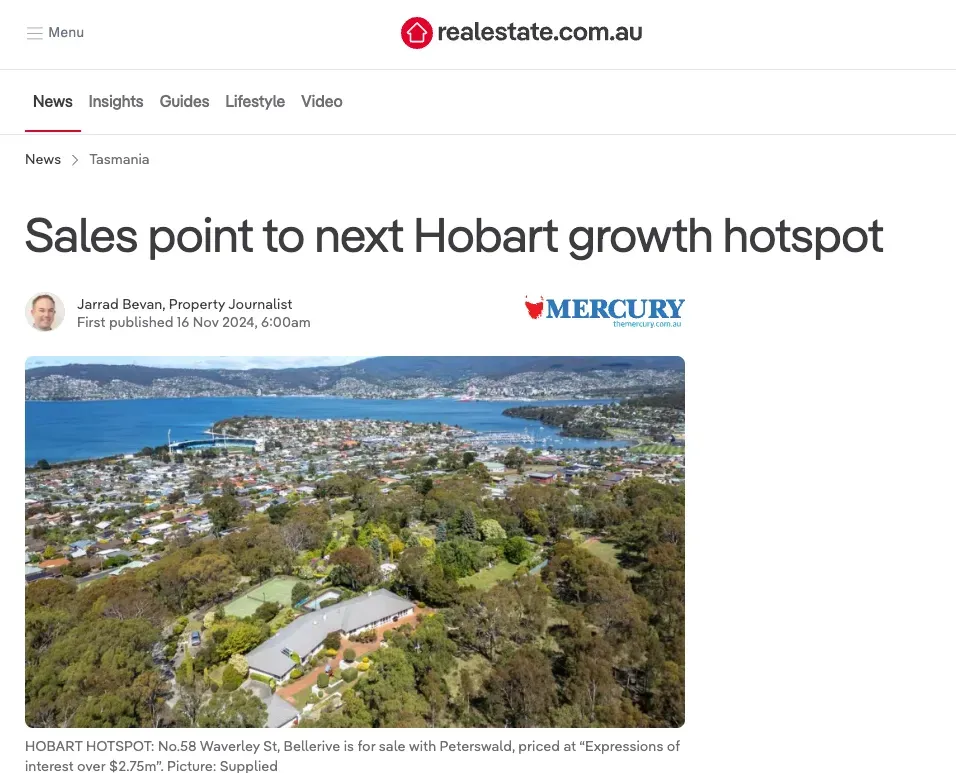
Hotspotting’s latest Price Predictor Index has revealed that Clarence, on the Eastern Shore, is a market that is on the move.
The Index tracks housing sales volume rather than the industry’s common measurement of median price changes and asserts that sales are a superior indicator of future growth.
In the Spring 2024 report, Hotspotting director Terry Ryder said Clarence has shown “notable improvement in market activity”.
“In Clarence, sales volumes in the latest quarter were 26 per cent higher than a year earlier,” he said.
“Bellerive’s median house price ($860,000) is ranked as a rising market, although the numbers remain a little muted, while more affordable Geilston Bay ($690,000) is notable for its consistent sales activity.”
No.14 Mildura St, Bellerive is on the market with Harcourts Signature, priced at $1.1m-plus.
Nest Property has No.6 Sarean Ct, Geilston Bay listed at “Offers over $1.249m”.
PropTrack’s Market Trends report shows 51 house sales in Bellerive over the past 12 months with the median price rising by 2 per cent. Compared to five years ago, it is 45 per cent higher.
In Geilston Bay there were 49 sales and a 5.4 per cent reduction in the annual median price. It also remains substantially higher than five years ago by 38 per cent.
No.2/74 Clinton Rd, Geilston Bay is priced between $595,000-$635,000, contact Petrusma Property for details.
No.15 Hill St, Bellerive is for sale with Petrusma Property, priced at “Offers over $1.3m”.
While property markets never stay at the top or bottom of cycles forever, Hotspotting general manager Tim Graham described Hobart and regional Tasmania’s housing markets as “sluggish”.
He said there were some signs of recovery in regional Tasmania.
“Around half of locations across regional Tasmania have positive rankings of rising, recovery or consistent, which represents a solid position but well short of a strong one,” Mr Graham said.
“This is reflected in the price data, with the median house price for regional Tasmania rising 2 per cent in the past 12 months and the median unit price moving 1 per cent.”
Mr Ryder said while Hobart has been the weakest performing capital city market, there were “glimmers of recovery” and “signs of life”.
“However, sales volumes in greater Hobart remain at similar levels as the same time last year, and below the peaks in 2020-2021 when the city was a national leader on sales activity and price growth.”
PropTrack’s latest Home Price Index showed flat movement in the southernmost capital, sitting 0.93 per cent lower than the same time in 2023.
The report said Hobart had recovered some of its declines over the past four months.
The Property Tribune - 7th Nov 2024
When it comes to property investment, one of the key decisions is whether to focus on metropolitan or regional markets. While both have merits, understanding each other’s unique strengths and challenges can help investors make a decision that is aligned with their goals, budget, and risk appetite.
Hotspotting General Manager, Tim Graham, said just a few years ago the regional market was not on the radar of most investors, although that is no longer the case.
“Our regions have undergone significant price growth since the start of the pandemic and with people continuing to move to the regions seeking out a more affordable lifestyle while they work remotely, those property markets are now in demand,” he affirms.
“In Hotspotting’s recent National Top 10 Best Buys report, five out of the ten top local government areas (LGAs) were in regional areas.”
When it comes to choosing an investment location, it’s important to look at which location has all the right fundamentals in place for price growth, whether that be a metropolitan or regional market.
Below are some of the pros and cons investors should weigh up.
Metropolitan markets – Pros and Cons
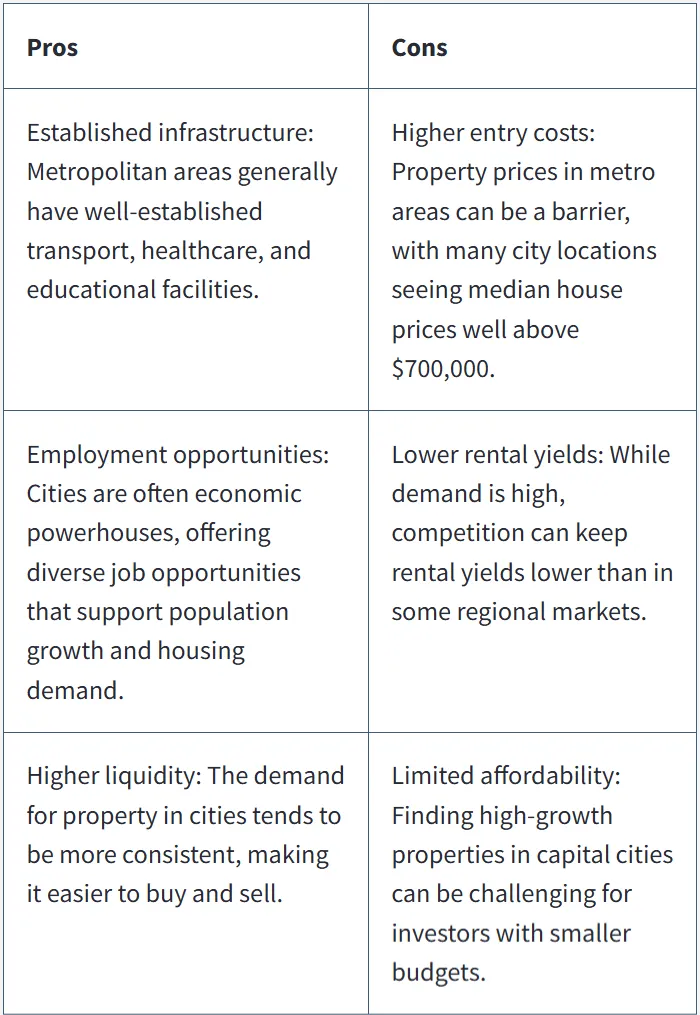
Regional markets – Pros and Cons
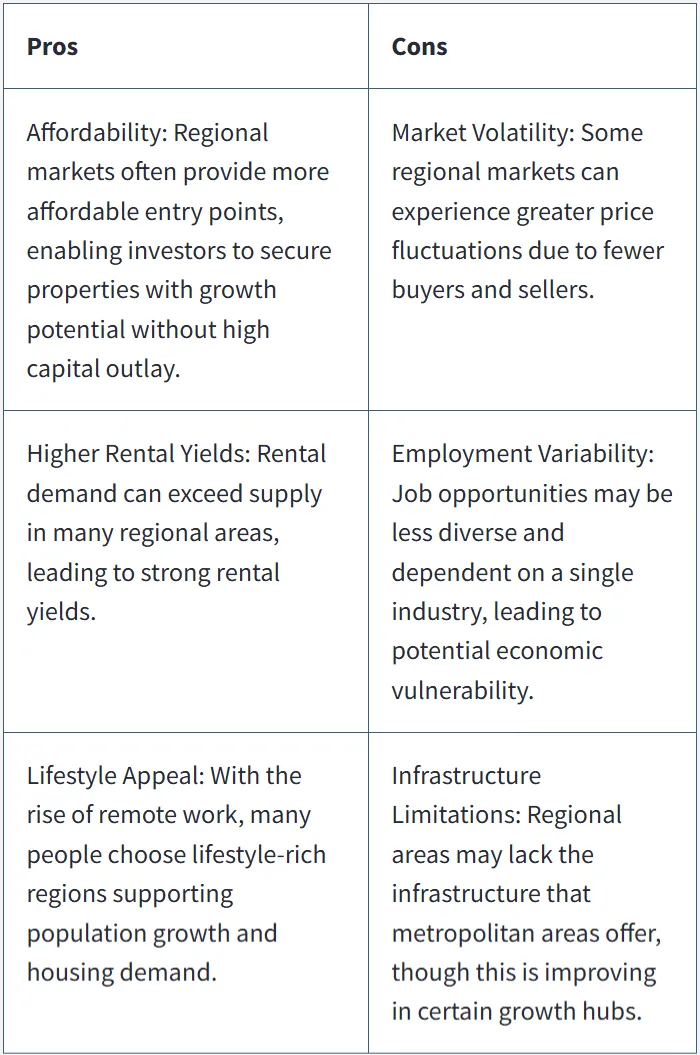
Mr Graham mentioned that often, budget was a deciding factor for where to invest, and regional locations often gave buyers more “bang for their buck.”
“In our experience, entry costs play a significant role in determining which markets investors can access,” he said.
“Capital cities may offer a better fit for those with higher budgets. However, regional areas can provide excellent returns for those with tighter budgets, and we’ve seen significant growth potential in select regional locations across Australia.”
-- Tim Graham, Hotspotting
No matter where investors decide to buy and their budget, Mr Graham said it was essential to use a data-driven approach.
“Whether evaluating metropolitan or regional locations, we always rely on our EMPIRICAL formula, a data-driven approach, designed to identify areas with long-term growth potential while minimising risk,” he affirms.
The EMPIRICAL formula
Economy: A strong, diverse economy is essential.
Market size: A minimum of 50 house sales in the past 12 months.
Population: The LGA ideally should have a minimum population of 15,000.
Infrastructure: Existing amenities must be robust, with evidence of major new projects.
Rental market: Low vacancies are crucial, as they support upward pressure on rents.
Increasing employment opportunities: Areas with job growth.
Capital growth potential: A location must have the potential for capital growth within five years.
Affordability: Locations should have median house prices below $700,000.
Low risk: Avoid volatile markets that present high risk to consumers.
“Whether you’re looking at a bustling capital city or a promising regional hub, the best investment is one that aligns with your budget, goals, and risk tolerance,” Mr Graham said.
“By considering the pros and cons of each market type and focusing on long-term growth, investors can make informed decisions that support their financial success.”
BrokerNews - 29th October 2024
New South Wales has emerged as the leading state for promising property growth in the upcoming year, according to the latest Hotspotting Top 10 National Best Buys report.
Promising areas identified
The report, produced by Hotspotting, evaluated regions across Australia to highlight those poised for significant capital growth. Key factors considered included economic indicators, infrastructure development, employment opportunities, and lifestyle preferences.
2024 national best buys list
The report showcased four locations in New South Wales, alongside others in Queensland, Victoria, Western Australia, and South Australia:
Inner Brisbane, QLD
Shoalhaven, NSW
Gladstone, QLD
City of Sydney, NSW
Albury/Wodonga, NSW/VIC border
Canterbury-Bankstown, NSW
City of Perth, WA
Mount Barker, SA
Sunshine Coast, QLD
City of Casey, VIC
Resilience amid changing markets
Hotspotting director Terry Ryder (pictured above) noted that NSW has managed to adapt to fluctuating market conditions and has remained resilient during the higher interest rate environment.
“With Sydney our most expensive city by a fair stretch, the fact that dwelling values have held relatively firm over the past two years is testament to the Harbour City’s ongoing desirability,” Ryder said.
He also pointed out that New South Wales continues to attract overseas migrants, with a net gain of 174,200 last financial year, according to ABS, further bolstering its property markets.
Inner Sydney and affordable options
Hotspotting general manager Tim Graham highlighted that while the inner Sydney lifestyle comes at a premium, many residents are willing to pay for it.
“While the median house price may be as high as $1.175 million, there are more affordable options in the large apartment market,” Graham said.
“Despite this, the City of Sydney has emerged as one of the strongest property markets in Greater Sydney. With a high percentage of renters in the area, the demand for property remains high, making it an attractive location for investors.”
Rising demand in Canterbury-Bankstown
Ryder mentioned that the City of Canterbury-Bankstown is witnessing rising buyer demand, with property prices increasing by at least 10% in many suburbs.
“This is mainly due to the relatively affordable apartment prices, which have caught the attention of first-home buyers and investors,” he said.
“The area’s location, only 12 to 30 kilometres from the Sydney CBD, has made it an ideal choice for commuters and has also benefitted from its proximity to the expanding hubs of Parramatta and Liverpool.”
Shoalhaven’s economic growth
Outside of Greater Sydney, Shoalhaven is also becoming a hotspot for home buyers and investors.
“The region boasts a robust local economy driven by industries such as health, construction, and defence force, and is expected to continue growing as a major centre,” Graham said.
Nowra, the administrative hub of Shoalhaven, has been identified by the State Government as a key regional area, preparing for an influx of residents.
“With its affordable housing options, Shoalhaven continues to attract a diverse range of buyers, including first-time homeowners, retirees, and downsizers,” Graham said.
Albury-Wodonga's increasing appeal
On the New South Wales-Victoria border, Albury-Wodonga is seeing a surge in real estate activity, with promising forecasts for property price growth.
“Over the past five years, dwelling values have risen by 60.1%, while rents have increased by 27.3%,” Ryder said.
“However, the region still features suburbs with median house prices below $400,000 and boasts one of the lowest vacancy rates in the country, making it an ideal location for both investors and homeowners.
“The ‘Twin Cities’ of Australia, located on either side of the River Murray, have seen a rise in population as people are drawn to affordable homes, a thriving economy, and a desirable lifestyle within close proximity to Melbourne and Canberra.”
RealEstateBusiness.com.au - 14th October 2024
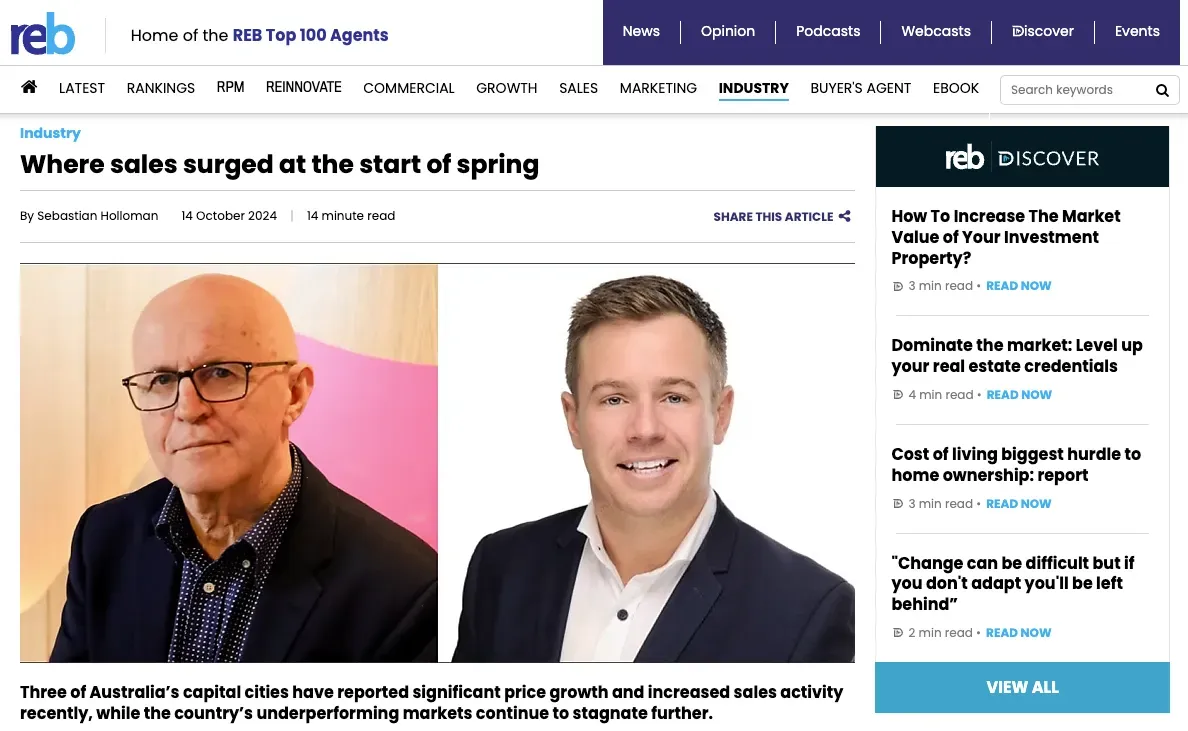
Three of Australia’s capital cities have reported significant price growth and increased sales activity recently, while the country’s underperforming markets continue to stagnate further.
Hotspotting’s Price Predictor Index (PPI) for spring 2024 has revealed that Brisbane, Adelaide and Perth are reporting extraordinary price growth over the spring selling season, with Melbourne and Hobart’s markets falling to the wayside.
Weighing in on the season’s high performers, Hotspotting director Terry Ryder shared that property markets that combine affordability, solid economic growth and diversity of housing and unit stock have seen significant uptake.
“Brisbane, Adelaide and Perth have been the market leaders for dwelling price growth for the past year or two, and this state of play is set to continue – with increasing pivots to units – as well as minor moderations in property price rises,” he said.
Brisbane picks up the pace
Hotspotting general manager Tim Graham reported that listing volumes in Brisbane have recently returned to healthy territory following a drop in the December 2023 and March 2024 quarters, which cased some market stagnation. But with more new properties coming to market, the Sunshine State capital has seen sales start to take off.
This uplift in activity was attributed to “rising buyer demand for attached dwellings”, which Graham stated now accounts for “over half of sales in the Brisbane City LGA”.
“Our analysis shows that 61 per cent of suburb markets across Greater Brisbane have positive rankings, while only 18 per cent have negative ones and 21 per cent have ‘no clear trend’.”
Within the city of Brisbane, Graham pointed to a recent PropTrack research showcasing annual median increases of 13 per cent and 17 per cent for houses and units respectively, and stated that “44 per cent house markets are rated as rising while 53 per cent of unit markets are rising”.
Greater choice keeps Adelaide moving
After Greater Adelaide’s sales in the June 2024 quarter were the highest since mid-2022, Graham said that South Australia has remained “one of the nation’s growth leaders”.
“Across the Greater Adelaide market, suburbs with positive ratings outnumber those with negative rankings three to one.”
Graham noted that the last quarter’s sales figures represented a “25 per cent increase on the March quarter and was 10 per cent higher than the same time in 2023”, even with listings of homes for sales across Adelaide registering as the lowest in the past 15 years, according to SQM Research data.
He added that “the Greater Adelaide area has standout markets across all price ranges, including affordable municipalities like Playford and Salisbury, middle market areas Marion and West Torrens, and the upmarket Unley and Holdfast LGAs”.
Perth
Over in Western Australia, Graham said the “Perth boom remains strong”, even with unfounded fears that the market is overheated. He added that some buyers – mostly investors from the east coast – have been “buying recklessly” without appropriate due diligence.
Graham noted sales volumes in the city remain elevated, even as a shortage of homes on sale was recently replaced by an influx of listings.
Sales activity has been widespread, with many Perth LGAs reporting high sales volumes, particularly within inner-city markets where Graham said “affordable units dominate the real estate landscape”.
“Some of the cheaper housing markets are a little less buoyant than before, with buyers seeking affordable options switching their focus to units in good locations close to the centre of Perth,” he said.
Strongest regional markets
Ryder highlighted that the recent Hotspotting analysis of sales activity for Queensland markets outside Brisbane showed that 64 per cent of markets reveal positive sales patterns, just 13 per cent have negative rankings, and 23 per cent show no clear trend.
He described these conditions as a “common pattern across most regional Queensland cities and municipalities with roughly two-thirds of locations having positive classifications of rising, recovery or consistent, and a minor percentage having negative ones of plateau or declining”.
“This is true for the Gold Coast, the Sunshine Coast, Toowoomba, Rockhampton, Mackay, Gladstone, Bundaberg, Hervey Bay, Townsville and Cairns – all of which have busy or, in some cases, frenzied property markets,” said Ryder.
Down south, the director called regional South Australia the “outperformer that flies under the radar screen of news media and most investors”.
“Current sales levels in regional SA are the highest since the 2021 peak and most of the key regional centres are ranked as rising or consistent,” he said.
He also noted that the number of locations in regional South Australia has increased, and now outnumber negative locations three to one.
“While the regional centres which have been SA mainstays continue to deliver consistent performance – including Mount Gambier, Murray Bridge, Victor Harbor and Port Lincoln – the real stars in 2024 are the Iron Triangle towns of Whyalla, Port Pirie and Port August.”
Weakest capital city markets
On the other end of the property spectrum, Graham stated that the lowest performing markets have stagnated as a result of varying factors, such as Hobart suffering from sluggish median price performance and Melbourne’s new property laws and taxes affecting buyer sentiment.
Ryder reported that Hobart is currently the weakest performer by house price growth among the state and territory capital cities, with CoreLogic’s research revealing the city as the only market with a median house price lower than one year ago.
While the director acknowledged that “there are more signs of life in the Hobart market” compared to three months prior, he described the progress as “well short of the bustling environment evident elsewhere in Australia”.
“Sales volumes in the Greater Hobart area improved in the June quarter, compared to three months earlier, but remain at similar levels as the same time last year – and still well below the peaks in 2020 and 2021, when Hobart was a national leader on sales activity and price growth”.
Over in Melbourne, Ryder stated that price growth data shows that it has continued to stagnate compared to other markets as a result of the “anaemic market that has prevailed there over the past two years and still persists”.
“In the most buoyant markets of Australia, over 60 per cent of locations have positive rankings (rising, recovery or consistent), but across Melbourne it’s 46 per cent,” he said.
Even with an improvement in sales volumes in the latest quarter, the director noted that “one-third of locations have ‘no clear trend’ classifications, which means that the sales activity is not strong”.
“There are some positive sectors, notably outer-ring houses and near-city units, but overall Melbourne is an underachiever, not helped by the Victoria state government’s hostility to investors,” said Ryder.
The Age - 11th October 2024
Home values are languishing below their peaks in a string of Perth suburbs and country towns despite the number of markets recording a million-dollar median value reaching a record high.
The range of historic peaks was wide, with some regional WA markets still below highs from the mining boom of the mid-2000s, and some just starting to slip from record highs reached this year, according to exclusive analysis by CoreLogic.
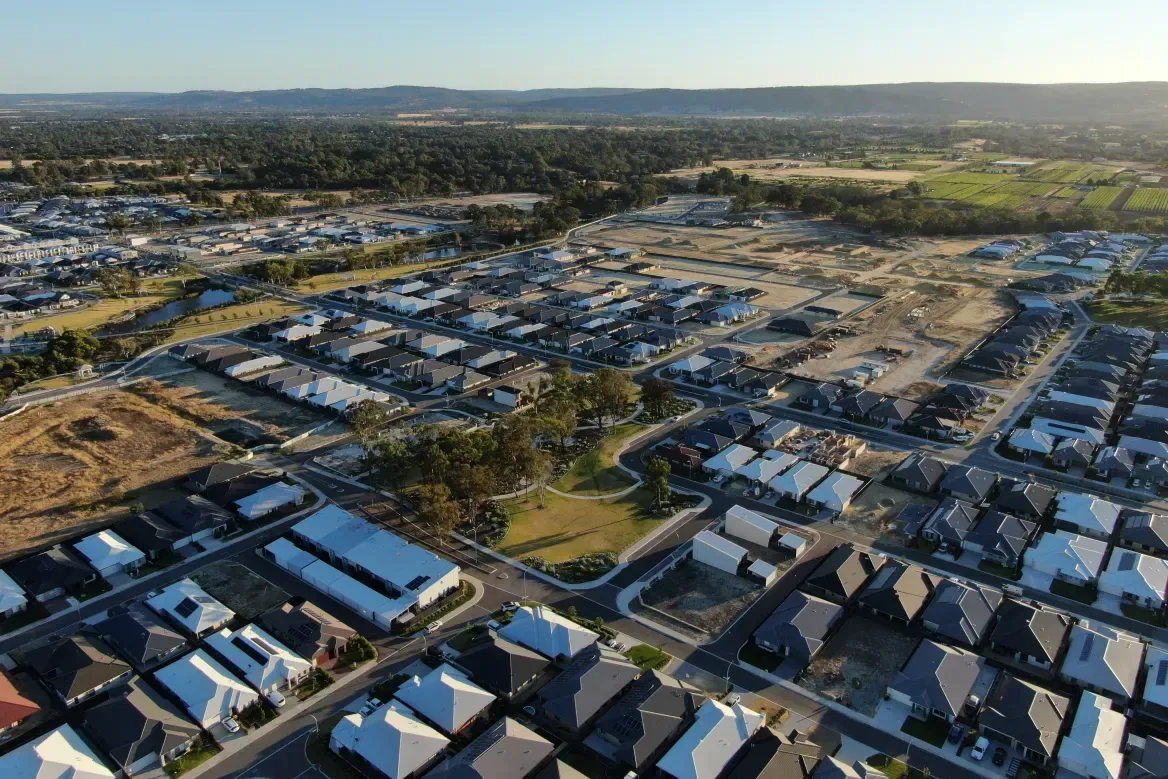
Perth property prices have continued to grow, but some areas have risen faster than others.
There were 38 house markets in Western Australia where values are below their record highs.
In Perth’s metropolitan region, North Dandalup was 17.6 per cent below the peak it reached in February 2007. The median house value has also slumped in Peppermint Grove, where it is 6.2 per cent below the peak it reached in July 2008.
North Coogee was the only other million-dollar Perth suburb to remain below its peak in June 2024.
But the biggest falls have been in WA’s country towns, notably our mining outposts, with South Hedland, Newman and Port Hedland in the Pilbara all down about 50 per cent from their peak in 2012.
The Kimberley towns of Broome and Cable Beach also remain below the heady peaks they reached in 2007.
CoreLogic head of research Eliza Owen said of the 559 house and unit markets measured across WA at the suburb level, 60 were down from historic highs.
“House values in South Hedland were down 57.8 per cent from a high in September 2012, despite being a little higher in the past year, values have a long way to recover, and the recovery trend remains tentative in outback markets,” she said.
“At the other end of the spectrum, it looks as though Erskine units have slipped just 0.1 per cent below the high reached in August this year, as well as houses in York.”
Hotspotting director Terry Ryder said capital city and regional markets never stayed at the top or bottom of market cycles forever, but there were some clear property winners and losers at present.
“Many real estate consumers are herd animals and pile into property markets when the media tells them a boom is happening, which is what happened in Perth this year when it was actually at, or near, the peak of the current cycle,” he said.
“Brisbane, Adelaide and Perth have been the market leaders for dwelling price growth for the past year or two, and this state of play is set to continue – with increasing pivots to units – as well as minor moderations in property price rises.
“It’s important to note that regional markets across Queensland and South Australia are also firing on all cylinders, however, regional WA has a more balanced market but is still one that is outperforming the likes of regional Victoria.”
General manager Tim Graham said the Perth boom remained strong, amid widespread fears that this market was overheated and that buyers, most notably east coast investors, were buying recklessly without appropriate due diligence.
“Nevertheless, sales volumes are still elevated, with the shortage of homes for sale being relieved recently by an increase in listings,” he said.
“Many of the Perth LGAs have high sales volumes, notably inner-city markets where affordable units dominate the real estate landscape.
“Some of the cheaper housing markets are a little less buoyant than before, with buyers seeking affordable options switching their focus to units in good locations close to the centre of Perth.”
Australia’s property market reached a new milestone, with the total value of residential real estate climbing to $11 trillion for the first time, increasing by $900 billion over the past 12 months, according to CoreLogic’s October Monthly Housing Chart Pack.
Economist Kaytlin Ezzy said Perth values reached a record high and experienced the highest monthly, quarterly and annual growth (24 per cent), driven by sustained demand and limited supply.
“As we move through spring, we’re likely to see further moderation in value growth as new listings continue to rise, providing some relief for buyers who have faced intense competition over the past year.”
The Property Tribune - 4th October 2024

Transaction numbers provide better insights into future market trends than changes in median house prices.
Brisbane, Adelaide, and regional areas are showing strong signs of growth.
Hobart, Melbourne, and parts of Tasmania continue to struggle.
In his latest contribution to The Property Tribune, Hotspotting general manager, Tim Graham discusses the anticipated property price growth in Australia’s smaller capital cities and regional towns.
Australia’s smaller capital cities and regional towns are forecast to be the property price growth winners for the remainder of 2024.
Analysis by Hotspotting of transaction numbers throughout Australia for the Spring 2024 Price Predictor Index (PPI), has revealed the markets primed for future growth.
Hotspotting General Manager, Tim Graham, said transaction numbers were a good indicator of how a property market was tracking.
“Changes in sales volumes are far more useful than changes in median house price to determine where prices are poised to rise,”
“History shows there is a correlation between sales volumes and price movements: the number of sales changes first and prices react – with a time lag.”
-- Tim Graham, Hotspotting
Mr Graham said changes in median house prices were more reflective of what had previously happened in the market, not of what was to come.
The transaction number analysis found buyers searched for affordable markets and as a result unit transactions had increased during the June quarter.
The winners
Brisbane
While earlier in 2024 transaction numbers were down as a result of a shortage of properties for sale, listings have increased since then and there has been a notable uplift in sales volumes in the June Quarter. Units were selling well and now account for more than half of sales in the Brisbane City LGA. The report found 44% of house markets had rising sales numbers and 53% of unit markets.
Regional Queensland
Of the Queensland markets outside Brisbane, 64% recorded positive sales patterns. That was a common pattern across most Regional Queensland cities and municipalities including the Gold Coast, the Sunshine Coast, Toowoomba, Rockhampton, Mackay, Gladstone, Bundaberg, Hervey Bay, Townsville and Cairns – all of which have busy (or, in some cases, frenzied) property markets.
Adelaide
Adelaide continues to feature as one of the nation’s growth leaders and sales in the June 2024 quarter were the highest levels in Greater Adelaide since mid-2022. This represented a 25% increase on the March Quarter and was 10% higher than the same time in 2023. The Greater Adelaide area had standout markets across all price ranges, including affordable municipalities of Playford and Salisbury, middle market areas Marion and West Torrens, and the upmarket Unley and Holdfast LGAs.
Regional South Australia
This is the out-performer that often flies under the radar. Sales levels in Regional SA were the highest since the 2021 peak. Sales volumes in the June 2024 Quarter were 23% better than the March Quarter and 25% up on the same time last year. The real stars in 2024 were the Iron Triangle towns of Whyalla, Port Pirie and Port Augusta.
Perth
The Perth boom remains strong, amid widespread fears (which we share and continue to warn about) that this market is overheated and that buyers are not doing appropriate due diligence. Nevertheless, sales volumes were still elevated and many of the Perth LGAs had high sales volumes, notably inner-city markets where affordable units dominated the real estate landscape.
The Losers
Hobart
Hobart is the weakest performer on house price growth. There is a “glimmer of recovery” but it remains well short of the bustling environment evident elsewhere in Australia. Sales volumes in the Greater Hobart area improved in the June Quarter, compared to three months earlier, but remain at similar levels as the same time last year – and still well below the peaks in 2020 and 2021, when Hobart was a national leader on sales activity and price growth.
Regional Tasmania
There are some signs of recovery, but Regional Tasmania continues to lag the performance seen elsewhere in Australia. Around half of locations across Regional Tasmania have positive rankings in terms of transaction numbers which represents a solid position but well short of a strong one.
Melbourne
Melbourne’s anaemic market has prevailed over the past two years and persists. There remains a high level of uncertainty in Greater Melbourne markets, despite improvement in sales volumes overall in the latest quarter. There are some positive sectors, notably outer-ring houses and near-city units, but overall Melbourne is an under-achiever, not helped by the Victoria State Government’s hostility to investors.
Darwin
Darwin continued to build on the signs of revival detected earlier this year with increased buyer demand in the outer-ring precincts of the Darwin region. But buyer demand still remains well below the last market peak in 2021-2022.
The Property Tribune - 24th July 2024
Affordable areas undergoing gentrification are ones to watch out for, promising strong growth.
Hotspotting's 'Cheapies with Prospects' reports shows the top locations set to shine.
Looking for the Ugly Ducklings of city real estate can be a smart move for property investors.
There are still plenty of property markets that offer investors good returns and affordable property prices despite recent price growth.
Analysis by Hotspotting for its latest ‘Cheapies with Prospects’ reports identifies the locations that are set to outperform in the future in both capital city and regional markets.
Hotspotting General Manager, Tim Graham says Cheapies with Prospects are the Ugly Ducklings of city real estate, with strong potential for capital growth.
“Like the fairytale character, they may be initially undervalued but can develop into valuable assets over time,” Mr Graham said.
Many of today’s in-demand property markets, such as Richmond, Balmain, and Bulimba, started out as Cheapies with Prospects—former industrial areas that have been transformed through urban renewal.
“The demand for affordable housing options has led to these areas performing better than more expensive ones in the higher-interest-rate environment,” he states.
“Research shows that these affordable areas experiencing gentrification have some of the strongest price growth in major cities.”
-- Tim Graham, Hotspotting
Mr Graham clarifies that the way to identify potential Cheapies with Prospects was to look for rising sales activity which is generally a precursor to future price growth.
Affordability, strong infrastructure, and proximity to major job hubs are also important.
“We consider this combination of factors as a powerful indicator of real estate investment potential,” he adds.
In regional Australia, he says Burnie in Tasmania is a Cheapie with Prospects. The far north-west suburb is a key city in the Cradle Coast Region. It is known for its abundant agriculture, forestry, minerals, and tourism resources, making Burnie an important hub for cruise ship visitors to Tasmania.
Weekly asking prices for Burnie 7320
Vacancy rates for Burnie 7320
The city’s prosperity is being driven by both the Federal and State Government’s focus on the Port of Burnie, the largest seaport in Tasmania. The Port is currently undergoing major upgrades, along with its road and rail connections to other parts of the state, to support the growing exports of forestry and minerals.
“Burnie’s property market is experiencing renewed activity, with rising house sales and attractive rental yields,” Mr Graham said.
Median house prices start at just $348,000 while yields are mostly in the 5% range and rents are rising.
In the capital cities, Mr Graham said Darwin was a Cheapie with Prospects because of its affordability and high yields.
Its economy is being driven by ongoing infrastructure projects and despite a slow 2023, the property market has seen a resurgence in the past six months with a record 495 dwelling sales in the December quarter.
For investors and owner-occupiers alike, the combination of affordable $500,000 house prices, attractive rental yields, and low vacancy rates make Darwin an attractive choice.
Rental yields for Darwin
Vacancy rates for Darwin
Elite Agent - 17th July 2024
Property market prices may still be rising but there remains a number of affordable opportunities for investors looking for upside capital growth potential.
According to Hotspotting’s Top Cheapies with Prospects research, there are five city and five regional areas where it is still possible to invest in property priced between $300,000 and $600,000.
Hotspotting Director, Terry Ryder, said just because a location had been given the moniker of “cheapie” didn’t mean it was an inferior investment area.
“There is a huge difference between a cheap area that just doesn’t have much going for it from an economic point of view, and locations such as these ones, where there is rising sales activity, new major infrastructure under way, proximity to jobs’ nodes, as well as affordability,” Mr Ryder said.
“Those seeking to buy in a price range between $400,000 to $600,000 can still find possibilities for houses in the cheaper areas of some of our capital cities – and, increasingly, investors who are aware of the current trends can find good options in the market for units and townhouses.”
For investors looking for good buys in the city, houses in Darwin, the City of Melton in Victoria and the City of Salisbury in South Australia all offer solid opportunities.
Those after units should turn to the City of Perth and the Inner Brisbane Precinct.
Mr Ryder said Darwin was an unusual selection in the top five city cheapies as it was generally not on the radar of many property investors.
“Darwin very rarely makes top property investment location lists, but the economic situation in the Northern Territory capital has changed that,” he said.
“Not only does Darwin have serious housing affordability with median house prices in the $300,000 to $400,000 price range, but it also has excellent yields and myriad massive infrastructure projects.
“On top of that, about half of the suburbs in the City of Darwin are classified as positive with rising transactions being recorded over the past year or more.”
Hotspotting General Manager, Tim Graham, said investors had increasingly recognised the opportunities available in regional areas over the past decade in particular.
“There continues to be excellent options in regional Australia where buyers can access houses between $400,00 and $600,000, which also have good prospects for future capital growth,” Mr Graham said.
“Our research shows that investors can buy in regional areas at affordable prices, achieve above-average rental yields, and look forward to good price growth.”
Mr Graham said the City of Geraldton in Western Australia had featured on the top five regional cheapies list for more than a year because it continues to offer solid opportunities for investors.
“Even though the region has recorded price growth of late it remains possible to purchase a house in the area between $300,000 and $400,000,” he said.
“Plus, recent research showed that Geraldton – located about 400 kilometres north of Perth – had 17 of the top 50 suburbs in WA for property value growth.”
The Property Tribune - 28th June 2024
In his latest contribution to The Property Tribune, Tim Graham, general manager of real estate data company Hotspotting, highlights the locations in Australia experiencing strong property price growth.
The pace of property price growth may be slowing in some cities, but a number of Australia’s COVID-19 boom stars are already gaining a second wind.
Analysis by Hotspotting has revealed the locations which experienced extremely high property price growth during Covid that are once again gaining momentum.
Hotspotting General Manager, Tim Graham, said there was plenty of steam left in the market and investors should not discount the potential for further growth in locations that had already performed well.
“Many locations across Australia were at the peak of their up-cycles in 2021 and subsided notably in 2022 and part of 2023,” Mr Graham said.
“We’ve analysed every suburb in Australia for our latest Winter Price Predictor Index and what we’ve come up with is a list of locations which are now getting a second wind and are primed for further price growth.”
Mr Graham said activity was rising in the first part of 2024 for suburbs in:
Sunshine Coast, QLD
Albury, NSW
Hervey Bay, QLD
Geelong, Victoria
Byron Bay, NSW
Ballarat, VIC
Mornington Peninsula, VIC
Canberra, ACT (unit market)
“The Sunshine Coast recorded three years of stellar growth up to 2022 with the top-end suburbs doubling in value in just three years,” Mr Graham said.
“I know it can be hard to believe it has any more to give but our data analysis shows the beginnings of a revival. We predict it is about to take off again.”
Mr Graham said Byron Bay, which he believed overshot its true value during Covid by doubling in two years, was now picking up pace again.
Weekly asking prices for Byron Bay 2481
“We can see evidence in the sales data of a pickup in activity and also the first signs of prices recovering,” he said.
The Mornington Peninsula local government area is also showing significant signs of recovery after having been a national star during the Covid boom. In the past five quarters, transaction numbers have been in the mid to high 800s with Hastings, Blairgowrie, and Balnarring recording increasing transaction numbers which are generally a precursor to price growth.
Albury and Lavington in the New South Wales/Victoria border town of Albury/Wodonga have so much potential that Hotspotting has named them in Australia’s National Top 50 Supercharged Suburbs list.
Weekly asking prices for Albury 2640
Suburbs on that list have the strongest growth patterns and are most likely to deliver future price growth.
“Albury is showing the early signs of revival, while the big three of Regional Victoria – Geelong, Bendigo and Ballarat – are all notable for consistent sales levels and appear to be gaining a second wind,” Mr Graham said.
Demand is still high in these mostly regional locations and with listings remaining extremely low, prices are rising.
“The Price Predictor Index for several years has charted the trend we call The Exodus to Affordable Lifestyle and our analysis suggests the demographic drift from the biggest capital cities is still well and truly evident.”
Elite Agent - 25th June 2024
Sales volumes are on the rise across a host of suburbs in NSW, however, demand in Western Australia might be starting to fall.
The Hotspotting Supercharged Suburbs report looked at suburbs that have seen rising sales volumes for the past four quarters.
New South Wales leads the charge with 26 suburbs making the cut, along with 10 suburbs in Victoria, six in South Australia, five in Queensland, and three in the ACT.
This time last year, Western Australia had more than one-third of all supercharged suburbs, but failed to secure an entry this year.
Some of the top suburbs from NSW include Surry Hills, Woolloomooloo, Paddington, Darling Point, Bondi and Botany.
Top regional suburbs in NSW include Albury, Bomaderry, Brighton-le-Sands, Corrimal, Gregory Hills, Kurri Kurri, Lake Munmorah, Lavington, Nelson Bay, North Nowra, Oxley Park, Sanctuary Point, Sussex Inlet, Swansea, and Taree.
Hotspotting General Manager, Tim Graham, said the market resurgence in parts of Sydney and Regional NSW began last year, with solid activity being reported in a number of locations.
“We believe the top supercharged suburb in the nation is currently Surry Hills in Sydney City, which is indicative of a number of key trends in Australian real estate,” Mr Graham said.
“Surry Hills is a market dominated by apartments, where demand has been rising in keeping with an emerging national phenomenon.
“Sales numbers have been trending sharply upwards, with the March 2024 quarter numbers double those in the March 2023 quarter.”
He said the median unit price has increased 7.1 per cent and the median house price is up 21 per cent.
Rents are also growing strongly, up 14 per cent for units and 16 per cent for houses in the past year.
Hotspotting Director, Terry Ryder, said contrary to the negative market narrative currently prevalent about Melbourne, the Victorian capital city had a number of suburbs with rising sales activity and plenty of upside potential.
He said the top suburbs in Melbourne include Deer Park and Sydenham.
While in regional Victoria they include Bacchus Marsh, Ballarat East, Darley, Harkness, Kennington, Leopold, St Leonards, Torquay.
“The Melbourne market is poised for better price growth in 2024 than the previous two years,” Mr Ryder said.
“The median house price grew only 3 per cent in the 12 months to May, but sales activity revived late in 2023 and early 2024, boosted by a solid economy and high population growth.
“Located less than 20 kilometres from the CBD, Deer Park has recorded five consecutive quarters of rising property sales, with housing affordability one of its calling cards for investors and homebuyers.”
Mr Graham said Adelaide and regional South Australia continued to be two of the nation’s most promising markets, including Glenelg.
He said Ascot Park, Flinders Park, Glenelg, Hove, and Morphettville in Adelaide were the best, along with Wallaroo.
“Adelaide sales activity is 8 per cent higher than a year earlier, despite a 12 per cent annual decline in listings of properties for sale,” he said.
“Generally, the Adelaide market is displaying the consistency that has made it a national leader on price growth, with 31 per cent of its suburbs recording positive ratings in our latest research.
“Glenelg has recorded five consecutive quarters of rising sales volumes, with the suburb home to Adelaide’s most popular beach, which attracts visitors because of its historic jetty, waterfront cafes, restaurants, and boutiques.”
Across Brisbane, Bahrs Scrub and Macleay Island were popular, while Highfields, Kirkwood and Palmview were in demand regionally.
Mr Ryder said no locations in WA made the list and demand was showing signs of drying up.
“We continue to warn investors to be cautious in approaching the Perth market – too many buyers are acting in haste, paying well above the asking price to beat the competition without regard to quality or location,” he said.
“Many will regret decisions made in haste amid the frenzy
“The latest sales volumes data suggests that the Perth market has passed its peak in terms of buyer activity and is unlikely to continue leading the nation on price growth –although the low level of listings of properties for sale is partly to blame.
“Our new analysis shows a significant drop-off in sales across Greater Perth in the past six months.
“There are a number of other signals that the peak has been reached, or passed, in this market – including longer ‘days on market’ in some areas and price decline at the top end of the market.”
Realestate.com.au 24th June 2024
This may be the only list where Qld is beaten by NSW this week, with new research naming 50 suburbs where prices are set to boom, with even SOO2 host Victoria turning up for this one.
The much anticipated Hotspotting Price Predictor Index (PPI) Winter Edition has been released, showing which suburbs are now ripe for price growth picks – thanks to steady increases in sales volumes over more than four consecutive quarters.
Hotspotting director Terry Ryder found that despite record prices being set across many states already, there’s much more to come with New South Wales’ suburbs making up half the top 50 list (26), compared to just five in Queensland.
The Sunshine State was beaten on the price predictor list by Victoria which had 10 suburbs with even South Australia pipping Queensland with six. The only non-state player in the top 50 was the Australian Capital Territory with three superchargers.
Mr Ryder said “history shows that there is a correlation between sales volumes and price movements: the number of sales changes first and then prices react – with a time lag”.
“This is true whether markets are rising or falling and means that investors can buy ahead of price growth, by finding locations where sales volumes are rising but prices have not yet moved.”
Queensland, which has seen some of the strongest pandemic-led growth in prices in the country, saw just five suburbs make the top 50 this time – two of which are in the Greater Brisbane region and among the cheapest places to buy property in the vicinity at present.
Bahrs Scrub in Logan in the Greater Brisbane region’s south has seen sales ramping up steadily from 21 a quarter, to 26, 30, 37 and 36 most recently. Macleay Island in the Redlands, also in the region’s south, is seeing sales spike higher from 27, to 42, 53, 42 and 58. The rest of Queensland’s top 50 superchargers were outside the Greater Capital region, led by Highfields in Toowoomba which had 60 sales in the last quarter compared to 38 more than a year ago, with the other two being Kirkwood in Gladstone and Palmview on the Sunshine Coast.
Bondi is one of the suburbs poised for a boom in price growth according to the Hotspotting.
But the real surge in prices is set to come out of New South Wales according to Hotspotting GM Tim Graham – a resurgence that started last year and continues solidly in 2024.
“In fact, we believe the top supercharged suburb in the nation is currently Surry Hills in Sydney City, which is indicative of a number of key trends in Australian real estate. Surry Hills is a market dominated by apartments, where demand has been rising in keeping with an emerging national phenomenon.”
Woolloomooloo in Sydney City is on the list, as are Woollahra suburbs Darling Point and Paddington, Bondi, Bayside’s Botany and Brighton-Le-Sands, as well as the inner west’s Annadale, Oxley Park in Penrith and Telopea in Parramatta. An array of suburbs up and down the state are set to see regional NSW prices boom including Wollongong’s Corrimal and Figtree, Forster on the Mid-Coast, Kurri Kurri in Cessnock, Nelson Bay in Port Stephens, four suburbs in Shoalhaven – Bomaderry, North Nowra, Sanctuary Point and Sussex Inlet, as well as Toormina in Coffs Harbour among others.
Mr Ryder said the Victorian capital – host to SOO2 – also had several suburbs with rising sales activity and plenty of upside potential, including Deer Park. “The Melbourne market is poised for better price growth in 2024 than the previous two years. The median house price grew only 3pc in the 12 months to May, but sales activity revived late in 2023 and early 2024, boosted by a solid economy and high population growth.”
Their stars include Deer Park 20km from the CBD, Sydenham, Torquay, Ballarat East, Bacchus Marsh and Darley, Harkness, Kennington, Leopold and even St Leonards.
Mr Graham rated Adelaide among the most promising markets, with sales 8pc higher than a year ago, despite a 12pc annual decline in listings of properties for sale. Its six stars were Ascot Park, Flinders Park, Hove, Glenelg, Morphetville and Wallaroo.
The Property Tribune 14/5/24
Regional Victoria hasn't seen the price growth other regional markets have experienced, but that may soon change.
Recent sales data points towards the possible start of a new cycle in regional Victoria.
Subtstantial economic growth and employment opportunities set to bolster the attraction to locations such as Geelong.
Regional property markets still have plenty to offer investors despite almost three years of solid growth; it is also the more sensible option than jumping into long overheated Australian housing markets.
For 2024, I’m picking the regional Victorian property market as a solid performer and avoiding the recent hot favourite, Perth.
In justifying why Perth is no longer the flavour of the month, the reason behind Perth’s recent success can also explain why the regional Victorian property market is about to take off.
Why is Perth’s property market no longer my top pick?
I’d warn investors who are still looking at the Perth market to be wary that they are likely buying at the peak or in a declining market. Investors must look at the markets that will perform well, not those that have already taken off.
Perth is a classic example of that. Buyers are falling over themselves and paying over the odds to secure a piece of that market. Investors should no longer be buying in overheated markets like Perth, but targeting locations with credentials for long-term growth which may be at a current low point in the cycle.
How can this be determined?
The latest sales data indicates that the Perth market has reached its peak in terms of buyer activity and is not likely to continue leading the nation in price growth. The rate of growth is expected to slow down as the year progresses.
A new analysis of sales activity has shown a significant decrease in activity across Greater Perth after three years of strong performance. The market was previously dominated by rising, recovering and consistent suburbs, with no declining markets.
Currently, Hotspotting’s analysis found that only 15 suburbs are classified as rising markets out of 237. Nine months ago, the majority of suburbs had positive classifications, with only three declining ones.
This confirms previous warnings that now is a risky time for investors to buy in the Perth market. Although sales activity has decreased, there are still enough buyers in the market to drive up prices, fueled by media coverage claiming that the boom will continue for several more years.
However, many buyers are making hasty decisions without considering important factors like location, pricing, and due diligence, and may regret their choices later. The sales volume data shows a significant decline in the March 2024 quarter, down by 25% compared to the previous quarter.
These are some exceptions in the Greater Perth market, which has likely reached its peak and will not continue leading the nation in price growth much longer. Regional areas such as Bunbury and Geraldton, have good growth prospects and offer affordability and high rental yields. These markets are supported by strong regional economies.
Early signs of growth for regional Victoria
The market that now meets the criteria for long-term growth which may be at a low point in the property cycle is regional Victoria.
In simple terms, the markets in regional Victoria are situated where Perth was three years ago before prices started to soar.
If you are buying strategically for capital growth, it is a market that is underpinned by one of Australia’s strongest state economies and with strong population growth expected to continue, so too is demand for real estate.
While regional Victoria hasn’t experienced the price growth of other regional markets in the past year, Hotspotting’s latest Top 5 Regional Victorian Hotspots report has identified a big leap in buyer activity across recent months – often a precursor to future property price growth.
Vacancy rates also remain very low and rents are rising.
Top 5 regional Victorian housing markets
City of Greater Geelong
Mitchell Shire
City of Ballarat
Albury/Wodonga
Latrobe Valley
Geelong hailed as a prime opportunity
A rapidly growing economy is one driver behind why Geelong is shaping up to be a great place to invest.
It has had $5.5 billion in recent infrastructure expenditure and a projected $17.4 billion in major investments to come, which fueled job creation and therefore demand for housing.
Geelong’s population and gross regional product growth are above the national average, and the city is in the midst of a major urban expansion plan that will cater to 110,000 new residents and create 35,000 jobs by 2050.
Despite the 2026 Commonwealth Games cancellation, Geelong is still expected to receive planned sporting infrastructure projects. further enhancing the attractiveness of Geelong as both a place to be and invest.
First home buyer activity in the city is also picking up across certain areas of Geelong due to the availability of vacant land.
Employment opportunities to pick up
Hotspotting’s latest report also revealed a growing number of major private firms and international companies choosing Geelong as a place to call home.
In recent decades, the Transport Accident Commission shifted headquarters there, with other major companies such as KPMG, Hanwha, Petstock, Cotton On, Amazon, and Australia Post all setting up shop at Avalon Airport’s industrial and business precinct in 2023.
The airport, more generally, is also expected to be the centre of attention in the years to come, with significant plans on the way.
TickerNews 30/05/24
Why is Perth’s property market no longer my top pick?
Australian Broker News 30/04/24
Recent research by Hotspotting revealed a significant trend: more homebuyers and investors are choosing apartments, townhouses, and units as their preferred type of dwelling – a shift that is pushing up sales volumes and prices in various strategic locations nationwide.
“Buyer demand in locations where units dominate the dwelling mix – or are a significant part of the dwelling mix – has been rising notably for the past 12 months,” said Terry Ryder (pictured above), director of Hotspotting. “In fact, our research shows that suburbs where units dominate the dwelling mix are now among the most powerful markets in Australia.”
Diverse buyers fuel demand
The Hotspotting National Top 10 Apartment Hotspots Report highlighted diverse buyer demographics contributing to the surge, including downsizers, first-time home buyers, lifestyle seekers, and international migrants accustomed to unit-style living.
“We are also seeing lifestyle buyers seeking low-maintenance, lock-up-and-leave options in good locations,” said Tim Graham, general manager of Hotspotting.
Graham also noted the growing appeal of apartments among younger buyers looking for an affordable entry into the property market and investors drawn by high rental yields and affordability.
Capital growth and market trends
The preference for apartments is not just a matter of choice but also an economic decision.
“At Southport on the Gold Coast, for example, apartments are considerably cheaper than houses, sell faster, have higher rental yields, have recorded bigger price growth in the past year – and the long-term capital growth rate is close to 10% per year,” Ryder said.
This pattern of apartments outperforming houses in terms of price growth is evident across Australia, making them a compelling option for a wide range of buyers.
Future outlook for apartment sales
With apartment sales gaining momentum, especially in New South Wales and Greater Sydney, the market is expected to become more competitive. Nearly half of the property sales in New South Wales in the last quarter were apartments, with similar surges in Brisbane.
“With a shortage of supply and several developers moving toward build-to-rent projects, rather than build-to-sell, demand for apartments is expected to become even more competitive, further driving up prices,” Graham said.
The low supply of new apartment stock, coupled with ongoing challenges in construction, suggests that this trend towards apartment living is likely to continue and intensify.
See LinkedIn post here.
Hotspotting's Top 10 Apartment Hotspots include Bowen Hills and Clayfield in Brisbane, QLD; Henley Beach in Charles Sturt, SA; Golden Beach on the Sunshine Coast, QLD; Hawthorn in Borooondara, VIC; Kingston in inner-city Canberra; Newtown in inner-west Sydney, NSW; Southport in the Gold Coast, QLD; Tweed Heads in Tweed Shire, NSW; and Westmead in Parramatta, NSW.
Smart Property investor - 20th March 2024
New analysis from Hotspotting found that regional Queensland has nabbed the “lion’s share” of high cash flow hotspots in Australia.
With strong and diverse economies, high rental returns and affordable price points, regional Queensland towns are increasingly become top choice locations for investors who want a compromise-free investment destination.
Tim Graham, general manager at Hotspotting, stated that some areas of regional Queensland “had previously been over-reliant on the resources sector, which had a positive or negative impact on its property market depending on the strength or weakness of the mining industry at that time”.
Now, however, a burst of smaller projects across a varied array of industries are able to put this turbulence to rest.
One particular hotspot is Glen Eden in the Gladstone region of central Queensland, where the median house price is just $400,000.
“The region has had its share of ups and downs previously, predominantly due to a number of very large resource projects,” Graham reported.
“However, today its economy has a range of smaller projects that are spread more evenly across a range of sectors.”
Annual rental yield currently sits at 6 per cent, while a tight vacancy rate of just 1.2 per cent is set to further tighten in years to come with a 60 per cent population boom forecast in the next two decades.
Meanwhile, Bundaberg is another central Queensland destination with impressive opportunities on offer for property investors.
Despite experiencing annual growth of 17 per cent, the median house price in Bundaberg is just $405,000.
Realestate.com.au - 16th March 2024
Queensland has the ‘lion’s share’ of top spots for investors in Australia, with four suburbs offering affordability, cash flow, and capital growth potential.
And it is the regions that have come out on top, according to the Hotspotting National Top 10 Positive Cashflow Hotspots report.
Hotspotting general manager Tim Graham said regional Queensland’s strong showing in the top 10 was testament to its affordability and the variety of significant major infrastructure projects under way.
“Some areas, such as Gladstone, had previously been overly-reliant on the resources sector, which had a positive or negative impact on its property market,” he said.
“However, today, its economy has a range of smaller projects that are spread more evenly across a range of sectors, which creates a more stable residential property market. “Rockhampton also has not been resting on its laurels and has billions of dollars of major infrastructure projects under way, including transport, defence, resources and energy.
“Plus, its CBD has undergone a revitalisation project as well.”
The analysis looked at several key criteria to source suburbs for investors, finding the top 10 locations with yields above six per cent as well as capital growth potential.
It also looked for suburbs and locations with strong and diverse economies, market size, population, infrastructure, tight rental markets, employment opportunities, capital growth, affordability, and that were considered low risk.
The Property Tribune - 2nd February 2024
Regional Victoria’s housing market is still kicking goals

02 February 2024, 9:31 am
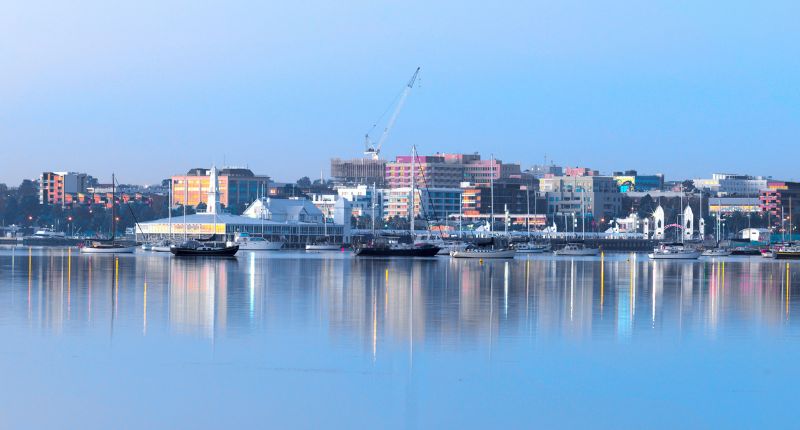
From Geelong to Bendigo, the regional Victorian housing market continues to perform well. Image: Canva.
Locations such as Geelong and Bendigo are still performing well.
Affordable regional cities that are well connected to Melbourne by road or rail are seeing good results.
Investors may be deterred by the latest changes being made to the regulatory environment.
In his second contribution to The Property Tribune, Hotspotting general manager, Tim Graham discusses the regional Victorian real estate market.
Regional Victoria’s property market continues to perform well, with many locations predicted for further price growth in 2024 off the back of solid transaction numbers.
Research by Hotspotting shows that two-thirds of locations are now recording solid transaction numbers, which is a sign of good buyer demand and can lead to further price growth.
Hotspotting general manager, Tim Graham, says while values are not rising as dramatically as the capital city has recently, locations such as Geelong continue to power along.
Weekly asking prices for 3220, including Geelong
“Geelong continues to be a market leader in Victoria, with most of its suburbs on board with the state’s recovery, led by locations such as Armstrong Creek and Charlemont.”
-- Tim Graham, Hotspotting
Weekly asking prices for 3550, including Bendigo
“Bendigo has an equally positive market, with strong buyer demand for affordable suburbs like Eaglehawk, which has a median house price of $515,000 – a price level that’s impossible to find in the Greater Melbourne area.”
Weekly asking prices for Melbourne
Graham said Ballarat was a little less “bullish” but, that was to be expected as it has experienced substantial growth in the past five years.
“The Cardinia LGA on the south-eastern fringe of Greater Melbourne has good momentum, led by the towns of Officer and Pakenham.
“And the Mitchell LGA, on the northern outskirts of Greater Melbourne, continues to attract buyers from the capital city.”
“Overall, these locations provide affordable options in strong, growing regional cities which are well-connected to Melbourne by road and rail.”
Graham said while the market is performing well, he feared more investors will leave the Victorian market in the coming months, as the State Government continues to treat property as a “cash cow” to pay down its Covid debts.
From 1 January 2024, the tax-free threshold on investment properties was reduced from $300,000 to $50,000, and the rate will increase by 0.1% of the value over $300,000.
There will also be a temporary fixed charge for the tax eligible of $500 for land worth $100,000 or below, while more expensive landholding will incur a $975 fixed fee.
From January 1, 2025, a 7.5% levy, will be imposed on properties listed on short-stay accommodation platforms.
“These new fees and charges may help the State Government reduce its bottom line, but effectively they are also making the housing crisis worse but discouraging investors who typically provide the majority of rental properties in Australia,” said Graham.
“We’ve already heard of investors selling up. They are sick of all the additional taxes and charges. Those who retain their properties are also battling high interest rates and those costs will inevitably end up being passed onto renters.”
The Property Tribune - 20th Dec 2023
Perth’s property market momentum has slowed, while Sydney, Melbourne and Brisbane’s are on the rise, according to the Hotspotting Price Predictor Index (PPI) for Summer 2023.
As per the PropTrack Home Price Index November 2023 figures, Perth’s home price recorded the highest annual growth at 12.76%, pushing the median values of Perth homes to $622,000.
Home Price Growth – Annual PropTrack Home Price Index
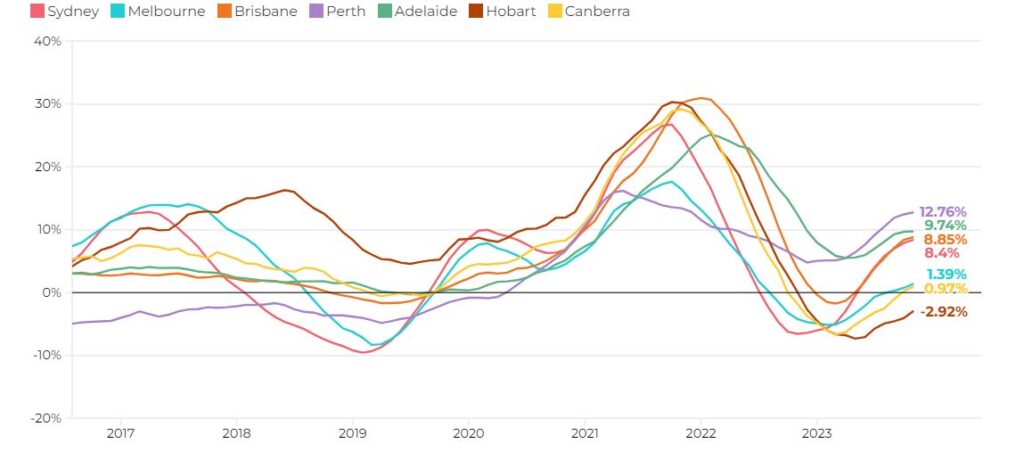
Source: PropTrack.
Hotspotting director, Terry Ryder, said although Perth will finish off 2023 as the best capital city price growth performer, its market momentum stumbled over the past quarter.
“The WA capital has been our strongest market for the past year and a growth market for longer, but this survey finds the first signs of slowdown,” said Ryder.
Perth has stellar 2023
Throughout the year, Perth’s real estate market has demonstrated remarkable resilience even with the significant obstacles of high interest rates, supply issues, and builders going bust.
Throughout the year, Perth’s real estate market has demonstrated remarkable resilience even with the significant obstacles of high interest rates, supply issues, and builders going bust.
Earlier in the year, Ryder pointed to Gosnells, located roughly 20 kilometres from Perth CBD, as a particularly strong location due to its low price point and strong sales activity.
Moreover, affordable homes in Dudley Park in Seville Grove were flying off the market in as little as three days.
As the race to snap up a property intensified, it is no wonder that by the end of September, Perth’s stock was at a drastically low level of fewer than 5,000 listings, a 30-year low.
However, November has seen a slight increase of available stock at just over 7,000, according to SQM research figures.
Perth’s available listings
Interstate investors also latched onto Western Australia’s relative affordability and strong fundamentals. From Q1 2022 to Q1 2023, property investment in WA increased from nine per cent to 32%.
REIWA CEO, Cath Hart, also noted that Perth was the only capital city to record moderate price growth over the financial year despite the medley of interest rate rises.
Melbourne to lead the charge
Nevertheless, Hotspotting’s latest data shows that only 54% of Perth’s suburbs have price momentum now compared to 79% three months ago.
“Perth has lost its position as a national growth leader according to our research – although it will take time before it shows up in the price data,” said Ryder.
Hotspotting general manager, Tim Graham, said Melbourne’s turnaround has been undeniable.
“Six months ago, we reported a glimmer of recovery, three months ago we recorded an emphatic revival and now Melbourne is the nation’s strongest market with 87% of suburbs having positive trends.”
-- Tim Graham, Hotspotting
“The upsurge is seen in most market sectors across the Greater Melbourne Area.”
Brisbane and Sydney are closely following Melbourne, at 85% and 84% of those cities’ suburbs recording positive rankings respectively.
Apartments gaining favour among buyers
Another key finding of the PPI survey was that unit markets were attracting more interest.
“Suburbs where apartments dominate the dwelling mix are among the most powerful markets in Australia,” said Graham.
Part of this could be attributed to a dearth of listings, leading to homebuyers and investors to turn their gaze to unit and strata properties, as seen in Perth.
“The National Top 100 list of Supercharged Suburbs includes 24 in Greater Sydney, of which half are locations dominated by units,” said Graham.
“Inner-city suburbs in Melbourne, Brisbane and Perth also feature prominently on this list.”
Smart Property Investment - 6th Dec 2023
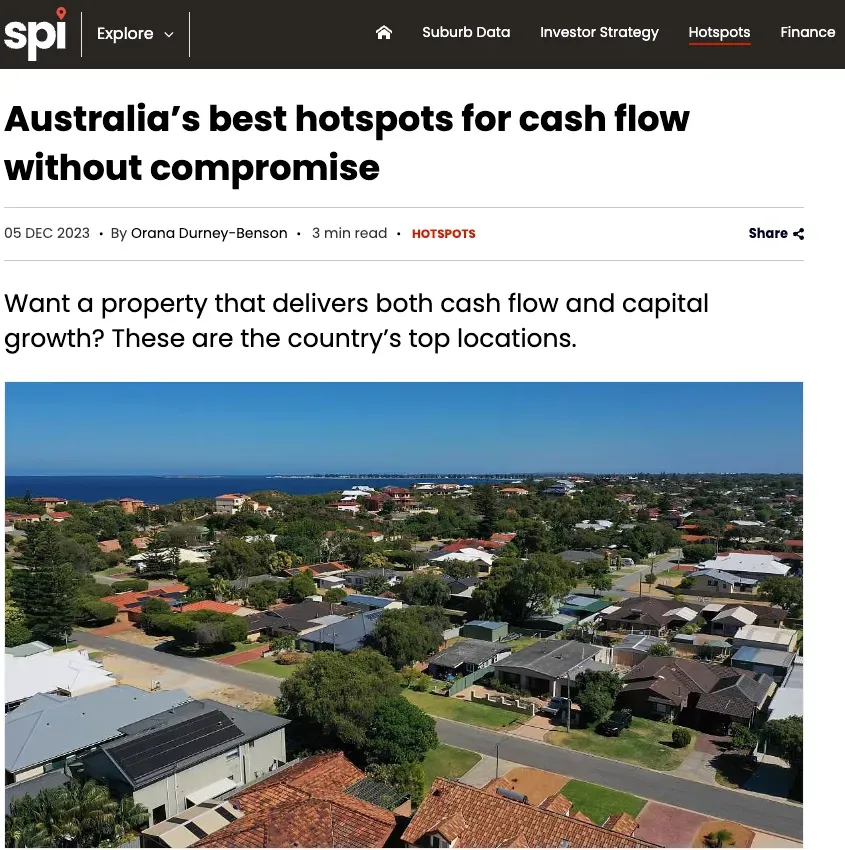
Real estate analysis firm Hotspotting has revealed Australia’s top six regions for investors on the hunt for affordable properties that deliver on cash flow without sacrificing long-term value growth.
“Smart investors understand that cash flow alone may help pay the mortgage, but it won’t make a huge difference to your overall wealth creation efforts in the long run,” said Terry Ryder, director at Hotspotting.
“In days gone by, investors often felt they needed to sacrifice capital growth for cash flow – and vice versa – but that is no longer the case,” he said.
Around the country, strong migrations levels are priming many communities – both urban and regional – for steady market growth over the coming decades.
When it comes to predicting sustainable cash flow, a high rental yield alone is not enough: many high-yield markets are volatile and risky for investors to enter.
According to Hotspotting, the best locations for sustainable future growth have diverse economies, good existing and emerging infrastructure, job growth and affordable house prices.
Hotspotting’s general manager, Tim Graham, stressed that the firm’s top six locations boasted diverse local economies, solid population growth forecasts, and are benefitting from “billions of dollars of major infrastructure projects that are underway or completed”.
And regional markets continue to offer rich investment opportunities, with rising housing costs fuelling ongoing “strong internal and interstate migration around the nation”.
Here are Hotspotting’s top six locations for cash flow and capital growth.
1. Berserker, Qld
Located a short drive from the Rockhampton city centre, the Central Queensland suburb of Berserker offers investors a winning combination of strong population growth and affordable housing.
Rockhampton itself is on the up, with its central business district in the midst of a revitalisation project, and $1 billion being spent on road infrastructure projects in the region.
More extensive community investments, in the form of a $2.5 billion Shoalwater Bay Military Training Centre redevelopment and $495 million Lower Fitzroy River weir, make Berserker a strong contender for those wanting both short-term and long-term benefits.
2. Moulden, NT
Up in the Northern Territory, the small community of Moulden might seem unassuming, but it is primed to benefit from over $40 billion of investment in local infrastructure.
An outer suburb of Palmerston, Moulden is seeing investment in a vast array of industries, from defence to education to renewable energy and aquaculture. The defence sector will see $2.3 billion in miscellaneous projects plus the $510 million Larrakeyah Barracks.
In energy, there is the $4.7 billion Barossa gas project and the $30 billion Australia-ASEAN PowerLink solar project. Charles Darwin University is set for a $250 million expansion, prawn aquaculture will see $2.1 billion for Project Sea Dragon, and a $1 billion new suburb is also on the agenda.
All this is on offer only 24 kilometres from Darwin, making Moulden a strong option for investors keen to head north.
3. Armadale, WA
Armadale, in Perth’s south-east fringe, is another prospect that offers both capital growth in the long-term and strong rental yields.
Housing in Armadale is affordable and population growth is strong, while a plethora of large industrial areas in the local area offer plenty of job options for residents.
Armadale investors can also take advantage of a range of burgeoning upgrades to local infrastructure, namely a $4 billion container port, $1 billion hydrogen port, $635 million rail line and station, and $237 million upgrade to Armadale Road.
4. West Tamworth, NSW
Looking further east, the northern NSW town of Tamworth is a major transport hub, with an airport that offers daily flights to both Sydney and Brisbane.
The town is currently set for a $210 million upgrade to the local hospital, $1.3 billion Dungowan Dam project, and $3.6 billion Narrabri Gas project.
The University of New England is also getting ready to build a $37 million campus in Tamworth – the town is forecast to be a regional freight hub in the future.
This diverse array of projects make Tamworth a strong choice for those seeking stable future growth for their properties.
5. Salisbury North, SA
Salisbury North is 25 kilometres north of Adelaide’s city centre, and offers excellent investment opportunities both now and in the years to come.
As well strong existing train links, Salisbury North will see $885 million be injected into redeveloping its transport corridor, plus the electrification of the Gawler train line.
The suburb is also forecast to see $1.9 billion invested into the Edinburgh Parks Precinct, a $240 million health hub, a $250 million Holden site and over $4 billion worth of defence projects.
6. Mooroopna, Vic
Mooroopna is a suburb of Greater Shepparton, and lies on the banks of the Goulburn River. According to Hotspotting, it benefits from a double whammy advantage of affordable prices and low vacancies, making it attractive to investors who want bang for their buck.
But Mooroopna’s good rental yields won’t need to come at the expensive of capital growth, with the area set to thrive.
Transport is a particular focus for investment, with a $1.3 billion Shepparton Bypass, $100 million freight hub and $757 million in rail upgrades all on the cards.
The $230 million upgrade to the local hospital, combined with the suburb’s good population growth trajectory, prime Mooroopna investors for success.
Geelong Times - 1st Dec 2023
The days of interstate migrants packing up and heading to the beach appear to have flatlined, with more and more buyers seeking out inland affordable regions to call home, according to new research and analysis.
The Hotspotting Exodus to Lifestyle – National Top 10 report for the next six months identified the top affordable lifestyle locations with the best upside potential.
The latest research has found a mix of affordable locations in every major state where buyers can purchase their next homes in the months ahead.
The report considered the combined power of the following property metrics:
Rising sales activity, with potential for capital growth
Plenty of houses at affordable prices
Strong infrastructure, both existing and planned, and
Proximity to major jobs nodes.
Hotspotting Director Terry Ryder said in a period where Australia had just recorded its highest population growth in two decades, many were opting for the bush rather than the beach for affordability and lifestyle reasons.
“Western Australia and Queensland continue to be national leaders in price growth, while the two biggest states on population – NSW and Victoria – continue to lose population through internal migration.
“The biggest part of that trend is people leaving our two biggest cities and moving to smaller cities or to regional areas.
That’s been happening in significant numbers for the past decade and was not caused by the COVID19 lockdowns, as some media reports have suggested.”
Hotspotting general manager Tim Graham said those cities were still growing because of overseas migrants coming into Australia and focusing on Sydney and Melbourne, but their growth rates are dragged down because of the number of residents leaving to move to other parts of the country.
“Queensland and WA are the biggest recipients of this internal migration and it’s why these two states have such consistently strong population growth rates,” Mr Graham said.
“And the latest population figures from the ABS show that the trend is continuing.
“Australians are on the move in search of a different lifestyle at an affordable price, enabled in large part by technology which has allowed more and more people to work remotely.”
Mr Ryder said population data showed all of the biggest growth areas in Australia over the past five years had been in the regions.
“That data showed that the fastest-growing locations among the 50 biggest cities in Australia in the past five years were the Warragul-Drouin region in Victoria, the Sunshine Coast in Queensland, Geelong in Victoria, Victor Harbor in South Australia, Busselton in Western Australia, Hervey Bay in Queensland, and Ballarat in Victoria – and the Gold Coast in Queensland.
“The common feature among most of these strong population growth areas is that they are regional cities within striking distance of a state capital city.
“The core message is that the ‘Exodus to Affordable Lifestyle’ trend continues and is likely to do so for the foreseeable future, as more and more Australians seek to escape the big, conges ted, expensive cities and find a better lifestyle in more affordable and more relaxed locations.”
Mr Graham said a standout was Shepparton, located two hours north of Melbourne and a thriving city at the heart of Australia’s food bowl.
“With its prime location near major rivers and highways, it serves as the commercial and manufacturing hub of the Goulburn Valley region, he said.
“The city’s strong agricultural industry – with 25 per cent of Victoria’s agricultural products being produced – is supported by efficient transportation links.
“Currently, Shepparton is investing $2 billion in transport upgrades and a major freight logistics centre and also focusing on renewable energy, with plans for a Renewable Energy Zone and multiple solar farms.”
Elite Agent - 29th November 2023
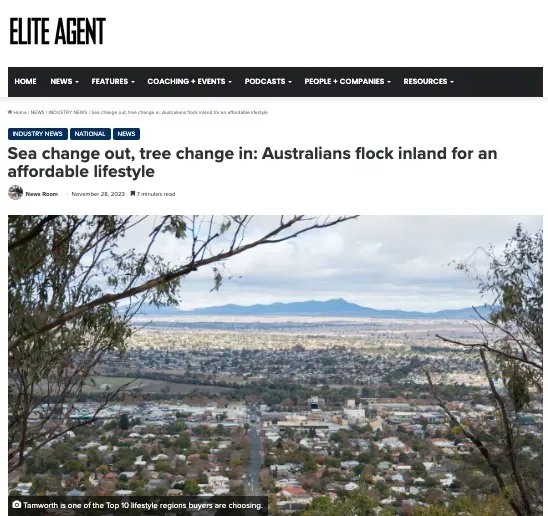
Buyers are swapping the beach for the bush when it comes to relocating to more affordable regional areas, new research reveals.
According to the Hotspotting Exodus to Lifestyle – National Top 10 report, inland regional cities and areas dominate the list of the most affordable locations.
Hotspotting Director Terry Ryder said in a period where Australia has just recorded its highest population growth in two decades, many are opting for the bush rather than the beach for affordability and lifestyle reasons.
“Western Australia and Queensland continue to be national leaders in price growth, while the two biggest states on population – NSW and Victoria – continue to lose population through internal migration,” Mr Ryder said.
“The biggest part of that trend is people leaving our two biggest cities and moving to smaller cities or to regional areas.
“That’s been happening in significant numbers for the past decade and was not caused by the COVID19 lockdowns, as some media reports have suggested.”
The report considered the combined power of several property metrics including rising sales activity, with potential for capital growth, plenty of houses at affordable prices, strong infrastructure (existing and planned) and proximity to major jobs nodes.
Hotspotting General Manager Tim Graham said Sydney and Melbourne were still growing thanks to overseas migrants focusing on our two largest cities, but their growth rates had dropped due to the residents leaving to move to other parts of the country.
“Queensland and WA are the biggest recipients of this internal migration and it’s why these two states have such consistently strong population growth rates,” Mr Graham said.
“And the latest population figures from the ABS show that the trend is continuing.
“Australians are on the move in search of a different lifestyle at an affordable price, enabled in large part by technology which has allowed more and more people to work remotely.”
National Top 10 affordable lifestyle locations
Tamworth, NSW
Mr Ryder said Tamworth was a thriving regional hub in NSW’s Greater Northern region, undergoing significant growth thanks to major infrastructure projects and its reputation as an affordable and rural lifestyle destination.
“Its strong economy, driven by industries such as agriculture and mining, is bolstered by the development of a new intermodal freight hub and plans for a university campus,” Mr Ryder said.
“The city’s tourism and equine industries also contribute to its success, with the annual Tamworth Country Music Festival drawing visitors and its status as the national equine capital attracting investment.”
Mr Ryder said the property market in Tamworth is robust, with a low vacancy rate and high rental yields making it appealing to investors, particularly in the unit market.
“With support from federal and state politicians, the city is well-positioned to accommodate the growing trend of people moving from big cities in search of more affordable housing and a better quality of life,” he said.
Shepparton, VIC
Mr Graham said Shepparton – located two hours north of Melbourne – was a thriving city at the heart of Australia’s food bowl.
With its prime location near major rivers and highways, it serves as the commercial and manufacturing hub of the Goulburn Valley region, he said.
“The city’s strong agricultural industry – with 25 per cent of Victoria’s agricultural products being produced – is supported by efficient transportation links,” Mr Graham said.
“Currently, Shepparton is investing $2 billion in transport upgrades and a major freight logistics centre.”
Mr Graham said the city is also focusing on renewable energy, with plans for a Renewable Energy Zone and multiple solar farms.
“This is creating job opportunities and contributing to its economic growth,” he said.
“Shepparton also offers affordable real estate and low vacancy rates, making it a favourable destination for investors.”
Yeppoon, QLD
Mr Ryder said that in recent years, the Yeppoon property market in coastal North Queensland has been experiencing a surge in both sales activity and demand, even amidst the pandemic.
“This growth is expected to continue throughout 2022 and 2023, with overseas buyers also showing interest in the region,” he said.
“The town is predicted to be a top beneficiary of the long-term trend of people moving to lifestyle locations.
“But, despite this popularity, median house prices in Yeppoon and nearby suburbs remain affordable at around $500,000 to $600,000.”
Mr Ryder said Yeppoon’s status as the principal seat in Livingstone Shire and its proximity to Rockhampton, along with diverse economy, including agriculture, construction, tourism, and resources, make it an attractive location for buyers.
Gladstone, QLD
Mr Graham said Gladstone – a significant regional centre in Australia – is experiencing a positive turnaround from its turbulent past.
Vacancy rates have decreased, rents and sales have risen, and house prices are on the upswing, he said.
“This trend has persisted throughout the pandemic, even as many other areas of the country have seen declining property markets,” he said.
“The city has been recognised as a top-performing municipality and a rising market for both houses and units.
“Gladstone’s growing popularity is also reflected in its ranking as one of the most desirable destinations for people moving within Australia, which is due to an array of factors, including various projects diversifying the economy and creating job opportunities.”
Mr Graham said the city is emerging as a major clean energy hub, with numerous hydrogen projects and a multi-billion-dollar federal program backing its development.
Toowoomba, QLD
Mr Ryder said Toowoomba is a rapidly developing regional city in Australia, with a growing economy and a significant presence in the national stage.
Its large program of infrastructure development, including the privately developed Wellcamp Airport and its inclusion in the2032 Olympics, highlight its strategic importance, he said.
“The city’s location near the Surat Basin’s mining and renewable energy resources, as well as its proximity to tourism, manufacturing, and agricultural industries in the Lockyer Valley, further contribute to its economic growth,” he said.
“In addition, the $1.6 billion Second Range Crossing and the upcoming $31 billion Inland Rail Link solidify Toowoomba’s position as a nationally recognized transport hub.”
Mr Ryder said the city’s appealing parks and gardens, booming health, and education facilities, and affordable housing also attract property buyers to the region.
“With a strong economy, low vacancies, and solid yields, Toowoomba is a prime destination for those looking to invest in the property market,” he said.
“As the city continues to grow and thrive, it remains a key player in shaping Australia’s future economic landscape.”
Lockyer Valley, QLD
Mr Graham said the Lockyer Valley is a fertile farming region that stretches between Brisbane-Ipswich and Toowoomba and is easily accessible by the Warrego Highway, making both cities within a 40-minute drive.
“The area is renowned for its diverse range of commercial fruits and vegetables, earning it the nickname “Australia’s salad bowl,” he said.
“Aside from agriculture, the region is also home to light industry, a university campus and serves as the gateway to the Surat Basin mining precinct and a growing renewable energy sector.
“It is also well-connected with major road links, and its beautiful natural landscape, featuring the Great Dividing Range, makes it a popular tourist destination.”
Mr Graham said the upcoming $15 billion Inland Rail Link is expected to further improve transportation in the area, connecting it to interstate markets and ports.
“With its appealing rural atmosphere and affordable property options, the Lockyer Valley is expected to continue its growth trajectory, with its population projected to increase by 40 per cent by 2041,” he said.
“It is a promising region with opportunities for both residents and businesses.”
Mount Gambier, SA
Mr Ryder said Mount Gambier is a highly desirable regional centre in South Australia for property investment due to its affordable housing, lifestyle opportunities, and strong employment growth.
“The region’s key industry is forestry, with plans for expansion and the establishment of a forestry research centre,” he said.
“The town has also seen an influx of interstate and intrastate residents, attracted by the affordable housing and more relaxed lifestyle.”
Mr Ryder said this growth has put pressure on the town’s infrastructure, especially in terms of public transport, road infrastructure, and medical facilities.
“To address these concerns, there are plans for a $70 million hospital expansion and a $190 million upgrade of the Princes Highway corridor,” he said.
“With a median house price of $376,000 and rental yields above 5 per cent, Mount Gambier is a promising location for property investors.
“Rental availability is also tight, with vacancies remaining below 1 per cent in the town since 2020.”
Murray Bridge, SA
Mr Graham said Murray Bridge in South Australia is a prime investment location due to its rural lifestyle, affordable housing options, and diverse economy.
“It is already the regional centre for Murraylands and a sought-after destination for water activities,” he said.
“With a current population of 23,000 and a projected steady growth over the next 20 years, it is on track to becoming one of the state’s largest regional centres.”
Mr Graham said that in the past, Murray Bridge had an image problem and was often overlooked by investors in favour of the nearby Adelaide Hills.
“However, with ongoing revitalisation of leisure areas and new residential developments, the area is undergoing a positive transformation,” he said.
“It is located less than an hour’s drive from Adelaide, making it attractive to those looking for a more affordable and peaceful lifestyle outside of the city.”
Geraldton, WA
Mr Ryder said Geraldton – the only city on Western Australia’s Coral Coast – has experienced rapid growth in recent years due to its status as a key regional centre and its close proximity to Perth.
This has resulted in a strong economy and a significant increase in population, with housing prices rising as a result, he said.
“In fact, research by Curtin and Monash universities has shown that 17 of the top 50 suburbs in WA for value growth are located in the Geraldton region,” he said.
“However, even with this notable growth, housing prices in Geraldton remain significantly lower than in other regions, with the average price for a house being around $300,000.”
Mr Ryder said Geraldton was recognised as one of the top 5 most affordable locations in regional WA in a report by Canstar.
“This is further supported by Hotspotting’s Price Predictor Index, which has consistently shown the Geraldton region to be a strong market for sales and growth,” he said.
Mandurah, WA
Mr Graham said the property market in Regional Western Australia is experiencing significant growth, with high sales volume and double-digit price increases.
This is due to improvements in the local economy, particularly in lifestyle locations such as the City of Mandurah, which has seen a surge in sales activity, he said.
“While the rest of Perth has experienced economic disruption and downturn, the property market in Mandurah has remained resilient and continues to grow,” he said.
“Several factors are contributing to the success of Mandurah’s property market, including continued price growth, increased demand from first-time home buyers, and population growth driven by the area’s attractive seaside lifestyle, affordable land, and access to job opportunities.”
RealEstateBusiness.com.au - 23rd November 2023
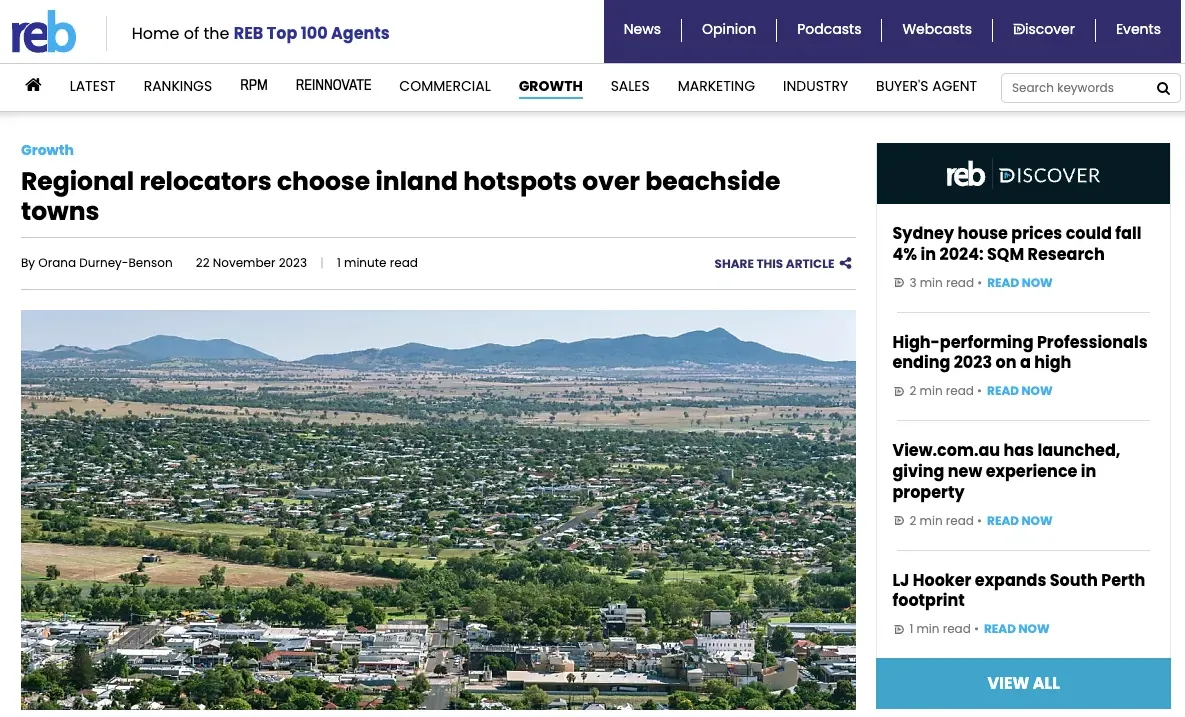
Trees trump sea as Australians increasingly seek out inland rural locations to call home.
Hotspotting’s Exodus to Lifestyle – National Top 10 report has revealed that coastal locations are increasingly falling out of favour for Australians seeking a lifestyle change, with affordability concerns driving many to look inland.
Of the 10 locations that the report identified as prime lifestyle investment hotspots for the next six months, eight are located in inland rural areas. Only two of these destinations are situated near the coast.
While all major states are represented, Hotspotting director Terry Ryder noted that NSW and Victoria are losing popularity.
“Western Australia and Queensland continue to be national leaders in price growth, while the two biggest states on population – NSW and Victoria – continue to lose population through internal migration,” he stated.
In fact, general manager Tim Graham observed that internal migration away from Sydney and Melbourne meant that growth rates in these two famously expensive cities have remained lower than expected, despite a steady stream of overseas immigration to the two capitals.
“Queensland and WA are the biggest recipients of this internal migration, and it’s why these two states have such consistently strong population growth,” Mr Graham explained.
According to CoreLogic, the strongest population growth areas are in regional cities within easy reach of a state capital city.
“The exodus to affordable lifestyle trend continues and is likely to do so for the foreseeable future, as more and more Australians seek to escape the big, congested, expensive cities, and find a better lifestyle in more affordable and relaxed locations,” Mr Ryder concluded.
Here are Hotspotting’s top 10 affordable lifestyle locations across Australia.
1. Tamworth, NSW
Tamworth, of country music festival fame, is the only NSW hub to make its way into Hotspotting’s top 10.
According to Mr Ryder, Tamworth’s affordability, infrastructure and job opportunities have made it a significant growth area.
“Its strong economy, driven by industries such as agriculture and mining, is bolstered by the development of a new intermodal freight hub and plans for a university campus,” Mr Ryder stated.
With a low vacancy rate and high rental yields – particularly for units – he said that Tamworth is “well-positioned to accommodate the growing trend of people moving from big cities in search of more adorable housing and a better quality of life”.
2. Shepparton, Vic
Located two hours north of Melbourne in the heart of Victoria’s food bowl, Shepparton is “the commercial and manufacturing hub of the Goulburn Valley region”, according to Hotspotting.
Mr Graham reported that Shepparton produces 25 per cent of all Victorian agricultural products, is currently investing $2 billion in transport upgrades, and is transforming itself into a renewable energy hub with multiple solar farms.
“This is creating job opportunities and contributing to its economic growth,” Mr Graham stated.
He added: “Shepparton also offers affordable real estate and low vacancy rates, making it a favourable destination for investors.”
3. Yeppoon, Qld
Up in coastal North Queensland, the town of Yeppoon is “predicted to be a top beneficiary of the long-term trend of people moving to lifestyle regions”, according to Mr Ryder.
Its proximity to Rockhampton, its thriving agricultural and tourism economy, and its good transport links mean that Yeppoon “offers plentiful employment opportunities and a calm seaside lifestyle”.
Despite the town’s popularity – and its proximity to the southern Great Barrier Reef – Mr Ryder reported that “median house prices in Yeppoon and nearby suburbs remain affordable at around $500,000 to $600,000”.
4. Gladstone, Qld
Despite its turbulent past, the regional Queensland town of Gladstone is on the up, according to Mr Graham.
He revealed that vacancy rates have decreased, and both rent and sale prices have increased, even as many other areas of Australia have witnessed declining property markets.
“Gladstone is one of the most desirable destinations for people moving within Australia,” he stated.
With a strong presence in heavy industry, manufacturing, construction and clean energy – and the added bonus of its own airport – he shared that “Gladstone is well-positioned for continued growth”.
5. Toowoomba, Qld
Mr Ryder tipped Toowoomba as a rapidly developing regional city, with the 2032 Brisbane Olympics set to put Toowoomba on the international stage.
“With a strong economy, low vacancies and solid yields, Toowoomba is a prime destination for those looking to invest in the property market,” Mr Ryder said.
As well as Olympics infrastructure, Toowoomba benefits from a privately developed airport, over $32 billion of transport funding, good health and education facilities, and affordable housing rates.
“As the city continues to grow and thrive, it remains a key player in shaping Australia’s future economic landscape,” said Mr Ryder.
6. Lockyer Valley, Qld
The fourth Queensland destination to hit the report’s top 10, Lockyer Valley is home to a diverse fruit and vegetable industry, leading some to dub it as “Australia’s salad bowl”.
“Aside from agriculture, the region is also home to light industry, a university campus, and serves as the gateway to the Surat Basin mining precinct and a growing renewable energy sector,” Mr Graham reported.
According to Mr Graham, the Lockyer Valley is projected to experience a 40 per cent population increase by 2041.
“It is a promising region with opportunities for both residents and businesses,” he stated.
7. Mount Gambier, SA
Heading down south, Mr Ryder tipped Mount Gambier as “a highly desirable regional centre in South Australia for property investment due to its affordable housing, lifestyle opportunities and strong employment growth”.
A booming forestry industry – including plans for a forestry research centre – is one of the region’s major drawcards.
“The town has also seen an influx of lifestyle and intrastate residents, attracted by the affordable housing and more relaxed lifestyle,” Mr Ryder noted.
“With a median house price of $376,000 and rental yields above 5 per cent, Mount Gambier is a promising location for property investors, he concluded.
8. Murray Bridge, SA
Murray Bridge is the regional centre for Murraylands and a “sought-after destination for water activities”, features which Mr Graham noted have made the town a favoured area for investors.
He shared that in the past, Murray Bridge had an “image problem” with investors tending to seek out properties in Adelaide Hills instead.
“However, with ongoing revitalisation of leisure areas and new residential developments, the area is undergoing a positive transformation,” he asserted.
With Adelaide less than an hour’s drive away and a median house price in the mid-$300,000s, Mr Graham stated that Murray Bridge is an attractive choice for first home buyers.
“For investors, the low vacancy rate of just 0.5 per cent, which has been consistently under 1 per cent since April 2020, adds to the appeal of investing in the region,” he said.
9. Geraldton, WA
For those who have their sights set on Western Australia, Geraldton could be a strong contender.
According to Mr Ryder, “research by Curtin and Monash universities has shown that 17 of the top 50 suburbs in Western Australia for value growth are located in the Geraldton region”.
He also noted that Canstar recently named Geraldton as one of the top five most affordable locations in regional Western Australia.
Despite being the only city on the Coral Coast, and within close proximity of Perth, “housing prices in Geraldton remain significantly lower than in other regions, with the average price for a house being around $300,000”.
The city is also attractive to a wide range of demographics, with both young families and retirees on the rise in the Geraldton municipal area.
10. Mandurah, WA
“While the rest of Perth has experienced economic disruption and downturn, the property market in Mandurah has remained resilient and continues to grow,” said Mr Graham.
He identified several factors behind the area’s success: increased demand from first home buyers, population growth from sea changers, affordable land and proximity to jobs.
“With strong population growth, the demand for residential properties is expected to remain high for at least 15 years,” Mr Graham revealed.
“Overall, the continued revival of Mandurah’s property market is a promising sign for the region’s economic future.”
The Property Tribune - 11th Nov 2023
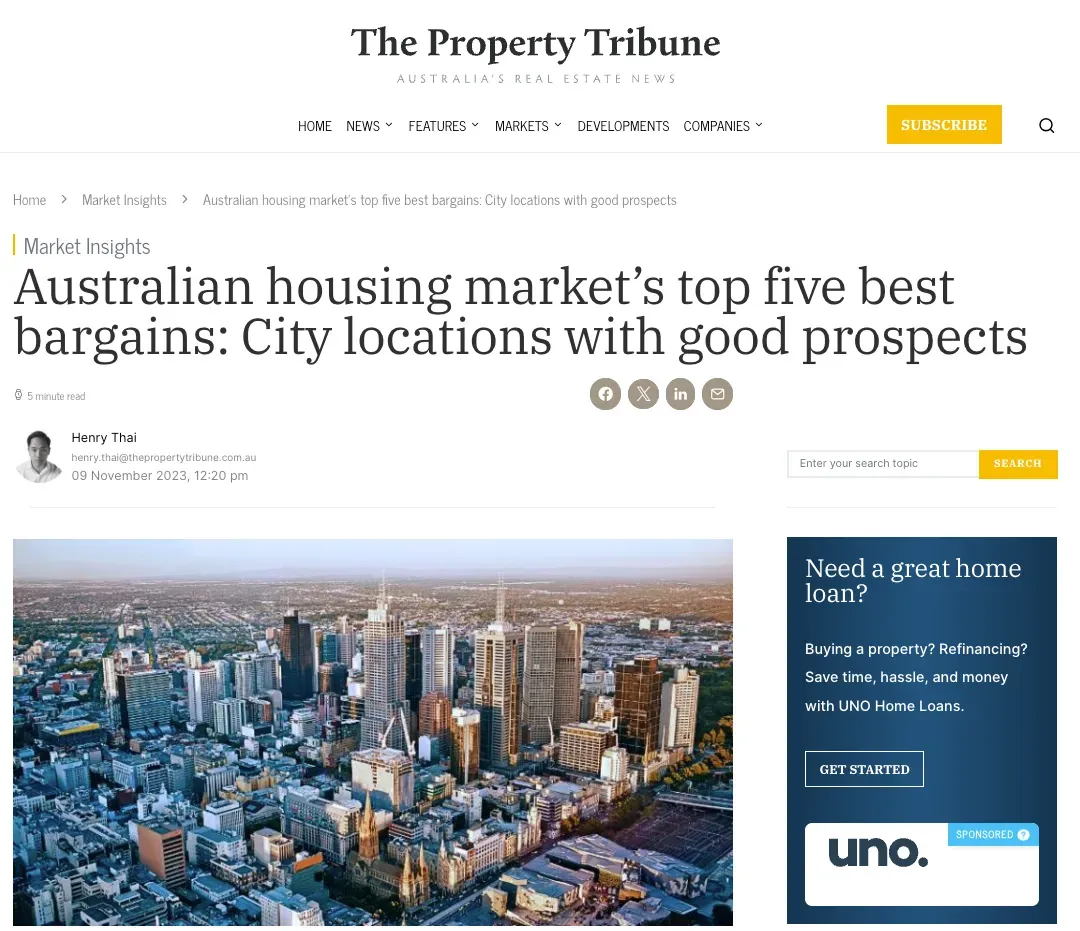
The Australian property market is well into the spring selling season, a time when both nature and the real estate markets blossom.
As spring turned the corner, we saw property listings on the up and more homes heading under the hammer.
Despite a 2022 malaise, with soaring interest rates tempering transaction activity, this year has seen price rise after price rise. PropTrack recently found that four capitals hit new peaks, and while the quarterly rate of price rises slowed, according to CoreLogic, the month-on-month figure accelerated.
This month has also seen interest rates move up once again, following four months of pauses.
Top five cheap locations
Hotspotting’s latest City Cheapies with Prospects ranks affordable locations that are oustanding with respect to population growth, infrastructure programmes, and capital growth prospects over the next six months.
The research considers factors such as rising sales activity and potential for capital growth, available dwellings at affordable prices, strong infrastructure both existing and planned, and proximity to major job nodes.
City of Melbourne, metro Melbourne,
City of Salisbury, northern suburbs of Adelaide,
City of Armadale, southern suburbs of Perth,
Southern Moreton Bay Islands, south east Queensland, and
City of Canning, south eastern suburbs of Perth.
Hotspotting director, Terry Ryder, said the latest city cheapies with prospects encompass a variety of local government areas primed for super capital growth in the future.
Ryder noted the Adelaide region of Salisbury is currently seeing high investor demand owing to its low vacancy rates, rising rents, and strong rental yields.
“Along with affordable prices, this attractive combination is providing strong opportunities for entry-level investors,” said Ryder.
Hotspotting general manager, Tim Graham, said the Armadale region of Perth features some of the most budget-priced houses of any capital city, and also offers strong infrastructure, services, and amenities.
“Armadale is also the fourth fastest-growing LGA in Western Australia and is strategically located in Perth’s south-east transport corridor, with access to large employment nodes,” said Graham.
“In the Southern Moreton Islands region of Greater Brisbane, Macleay and Russell islands offer median house prices in the mid-high $300,000 range. This affordability, together with significant lifestyle appeal, has seen demand and sales activity rise since 2020.”
Ryder said the City of Canning in Perth has also seen strong demand across home buyers and investors.
“With the City of Canning experiencing strong growth – particularly in the number of families moving to the area – demand for residential dwellings, infrastructure, and amenities is high,” he said.
“The City Centre Regeneration Program aims to ultimately transform Canning into Perth’s ‘southern CBD’ and will feature 10,000 homes for 25,000 new residents.”
City of Melbourne
“Despite facing challenges during the pandemic, Melbourne has shown resilience and stability in its property market,” said Ryder.
The city has several major projects playing its favour, according to the report, including the suburban rail loop, North East Link, biomedical precinct, Docklands development, Melbourne Square project, and the Southbank Arts precinct.
The report also noted the city has strong population growth and good rental yields.
“However, the rising interest rates and shifting lifestyle demands have caused investors and homeowners to look at options such as units and townhouses instead of standalone houses.”
The City of Melbourne, with its high-density dwellings making up 86% of homes, has become an attractive destination for both living and working, Ryder said.
“Its strong economy, with major businesses, universities, hospitals, and government services, has been further bolstered by ongoing infrastructure projects such as the North East Rail Link and the proposed Suburban Rail Loop.
“These developments are expected to bring in significant investments and create thousands of jobs, ensuring continued growth and stability in Melbourne’s property market.”
City of Salisbury
Defence projects, the Gawler train line electrification, and several other major projects play in the favour of the City of Salisbury.
The city has also put in a robust performance across the pandemic by undergoing a construction boom, according to Graham.
This boom is made up of medium-scale projects that have created thousands of jobs, helping to bolster the local economy during the pandemic, he said.
“As a result, property prices have seen significant growth, with some suburbs experiencing 20 per cent annual growth. This pattern has continued into the first half of 2023,” Graham said.
“The presence of government investments, totalling over $4 billion, in the defence sector has further contributed to the construction boom, which has attracted various industries such aerospace, cyber-security, and food and beverage manufacturing.
“As a result, major companies have established themselves in Salisbury, leading to increased employment opportunities and a thriving property market.”
Affordability was another key factor, alongside strong industrial activity, making it a popular choice with both investors and renters.
“As a result, vacancy rates are extremely low, with some postcodes reporting a rate of only 0.5 per cent,” said Graham.
“Rents are also increasing, making rental yields strong. Overall, the combination of affordable prices, a booming economy, and strong investment opportunities make Salisbury an ideal location for entry-level investors.”
City of Armadale
Not to be confused with Armadale in Victoria or Armidale in New South Wales, this Perth locale has been among Hotspotting’s top picks for several reports.
Affordable housing and strong population growth are among the factors playing in its favour, along with several multibillion-dollar projects including ship building, container port, lithium plant, and more.
“This local government area boasts budget-friendly housing options and excellent infrastructure, services, and amenities,” said Ryder.
“As a result, Armadale has become the fourth fastest-growing LGA in Western Australia.
“Its strategic location near major employment hubs and plans for development and infrastructure projects by the Federal Government make it a desirable place for both businesses and residential properties.”
The sustained growth of this area is reflected in its remarkably low vacancy rates, which are well below one per cent, he added.
“Overall, there are significant growth and opportunity prospects for the property market in Armadale and the wider Perth region.”
Southern Moreton Bay Islands
Located between Brisbane and the Gold Coast, in the southern half of Redland Bay, the locale is home to circa 8,000 people.
“Regular passenger ferries make it easy to commute from the islands to major job nodes such as the Brisbane CBD, Brisbane Airport, and the Port of Brisbane in under 60 minutes,” said Graham.
“There are two main islands, Russell and Macleay, as well as Lamb, Coochiemudlo, and Karragarra islands.
“Two precincts in the Southern Redland Area are marked as Priority Development Areas, with plans for a new marina, upgraded infrastructure, and job opportunities.”
Graham said the median house prices on Russell and Macleay islands are in the mid to high $300,000 range, making them the most affordable locations in Greater Brisbane.
“This, coupled with the islands’ lifestyle appeal, has led to an increase in demand and sales activity since 2020,” he added.
City of Canning
Rounding out the top five, this affordable Perth location is being touted as Perth’s future ‘Southern CBD’; it is currently home to the state’s largest shopping centre – Westfield Carousel, and some of Perth’s largest industrial hubs, according to Ryder.
“Plus, it is strategically located on Perth’s south-east transport corridor, close to the expanding Western Trade Coast hub (WTC) and the CBD,” he said.
“Other significant local infrastructure projects include the Thornlie-Cockburn Link, which will be Perth’s first east-west cross-line connection.
“It’s little wonder the LGA is experiencing strong population growth, with residential construction expected to continue well into the 2040s to satisfy increasing demand.”
Elite Agent - 31st October 2023
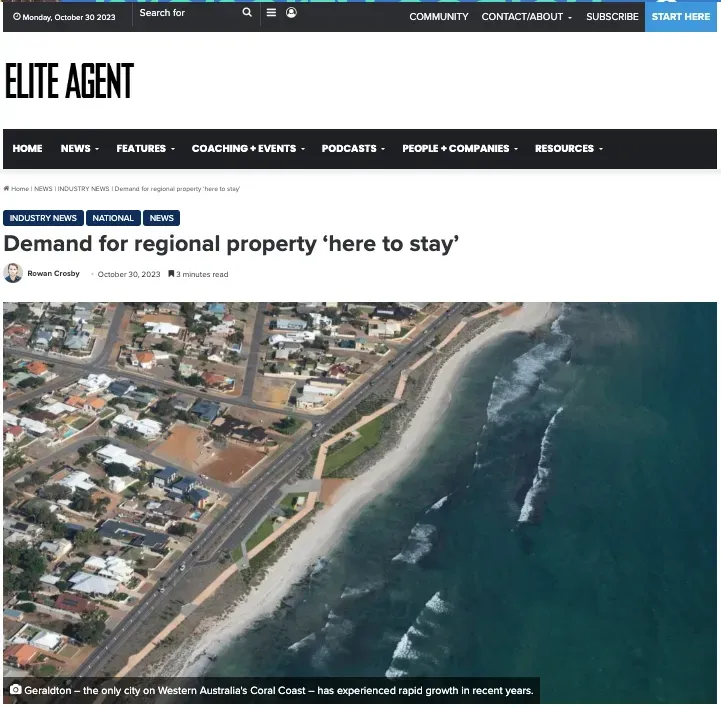
The pandemic-infused flight to the regions is here to stay, with a number of more affordable areas likely to see continued growth, according to a new report.
The Hotspotting Top 5 Regional Cheapies with Prospects Report found that there a number of affordable regional locations around the country with good growth potential, led by the City of Geraldton, (WA), Gladstone (QLD), Tamworth (NSW), the City of Mount Gambier (SA) and the Lockyer Valley (QLD).
Hotspotting Director Terry Ryder said many regional locations offered solid properties in the $200,000 to $400,000 price bracket, with the potential for long-term growth.
“Some areas have outperformed cities in the past five years with these five chosen regions all having unique features like growing economies, diverse industries, and major developments, which makes them promising areas for investors,” Mr Ryder said.
Mr Ryder said Geraldton – the only city on Western Australia’s Coral Coast – had experienced rapid growth in recent years.
“As the largest city north of Perth, this key regional centre has expanded alongside the state’s booming economy,” he said.
“The population has increased five-fold in just one year, indicating a promising future for the property market.”
“Despite this, prices remain significantly lower than other parts of the country, with an average house price of $300,000.”
He said the region’s affordability, as well as a number of other attributes, holds strong appeal for investors and homebuyers.”
Hotspotting General Manager Tim Graham said Gladstone is also becoming a “destination” town for investors and home buyers looking for a sea change, although recent data shows the prices paid in sought-after seaside locations are on a steady upward trend.
“Despite the pandemic, it has bucked the national downturn and continues to show positive trends such as falling vacancy rates, higher rents, and increased sales activity,” he said.
“Many are drawn to Gladstone’s economy, which is supported by its diverse range of projects including its transformation into Queensland’s clean energy capital with a large number of hydrogen projects.”
He said the city also boasts a regional airport and numerous local amenities, making it an attractive destination for both residents and migrants.
“With its ongoing expansion and thriving property market, Gladstone is a promising location for future growth,” he said.
Likewise, the Mount Gambier market is a steady performer and an example of the ripple effect that can occur outside major cities, which escalated during Covid, Mr Graham said.
“Offering affordable housing, a vibrant economy, and opportunities for employment and lifestyle, it’s a popular choice for both intrastate and interstate residents looking to relocate to the Limestone Coast,” he said.
“The region’s key industry, forestry, is undergoing expansion, with plans for a forestry industry development and research centre.”
Mr Ryder said Mount Gambier offered investors a median house price of $376,000 and yields above five per cent.
“Rental availability is extremely tight, with vacancies below one per cent, making it a strong choice for investors seeking both affordability and cash flow,” he said.
According to Mr Graham, Tamworth’s affordability and rural lifestyle also made it attractive for those seeking a lower cost of living.
“Government officials encourage this trend, leading to new developments in the city and surrounding areas,” he said.
“Supported by industries like agriculture, mining, tourism, aviation, and healthcare, Tamworth has a solid economy.
He said the University of New England’s upcoming campus would further boost the education sector, while Tamworth’s tourism industry and reputation as the national equine capital contributed to its stability.
“With a strong property market, low vacancies, and high rental yields, Tamworth is a promising option for investors, with double-digit annual growth in units,” he said.
Mr Ryder said the Lockyer Valley, located between Brisbane and Toowoomba, was a highly popular agricultural region with a diverse range of crops.
“It is home to a UQ campus, light industry, and serves as the gateway to the Surat Basin mining and renewables sectors,” he said.
“The region is rated among the top 10 most fertile farming areas in the world. It is widely known as Australia’s salad bowl, growing the most diverse range of commercial fruit and vegetables of any area in the nation.”
Mr Ryder said the region is also well-connected, with the Warrego Highway providing easy access to both Toowoomba and Ipswich.
“With its rustic charm, affordable housing, and large blocks of land, the Lockyer Valley’s population is expected to grow by 40 per cent by 2041,” he said.
Smart Property Investment - 17th October 2023
A new report by Hotspotting has revealed the five top locations for robust capital growth prospects at rock-bottom prices. According to the Top 5 Cheapies with Prospects report, investors would be well-placed to seek out these markets.
The report compared the following metrics: rising sales activity, high levels of affordable stock, strong infrastructure, and proximity to major job nodes.
So what are Hotspotting’s five top picks for investors? Here is their final shortlist.
1. City of Melbourne
With a steady stream of newcomers and public works projects galore, the City of Melbourne is predicted to be a haven for investors.
Hotspotting director Terry Ryder shared that “despite facing challenges during the pandemic, Melbourne has shown resilience and stability in its property market”.
“Its strong economy, with major businesses, universities, hospitals and government services, has been further bolstered by ongoing infrastructure projects such as the North East Rail Link and the proposed Surburban Rail Link,” the director revealed.
With high-density dwellings comprising 86 per cent of residential property, rental yields are reliable and strong, making the City of Melbourne “a favourable option for long-term investors”.
2. City of Salisbury, Adelaide
The northern Adelaide region of Salisbury is another hotspot that the report recommends to investors.
The area is currently experiencing a construction boom, with developments like the Edinburgh Parks Precinct and Riverlea Estate leading property prices to witness growth rates of up to 20 per cent per annum.
Jobs are rising, and Hotspotting general manager Tim Graham noted: “As a result, vacancy rates are extremely low, with some postcodes reporting a rate of only 0.5 per cent.”
“Overall, the combination of affordable prices, a booming economy and strong investment opportunities make Salisbury an ideal location for entry-level investors,” Mr Graham observed.
3. City of Armadale, Perth
Over in Western Australia, southern Perth has seen “a remarkable turnaround in recent years”, according to Mr Ryder.
He revealed that the city’s post-COVID-19 upward trend “has persisted throughout 2023, making Perth the strongest property market in the nation”.
The City of Armadale is a particularly high performer due to its abundance of budget-friendly accommodation, proximity to major employment hubs and federal infrastructure projects.
A $4.3-billion ship building project, $4-billion container port, $1.8-billion lithium plant, and $800-million rail line and station are just a handful of Armadale’s upcoming projects.
Overall, the Armadale region of Perth “features some of the most budget-priced houses of any capital city,” according to Mr Graham.
4. Southern Moreton Bay Islands, Qld
For a touch of coastal leisure, Hotspotting noted that investors would do well to look to Queensland’s Moreton Bay.
With a population of around 8,000 people and median house prices in the mid-to-high $300,000 range, the Southern Moreton Bay Islands are “the most affordable locations in Greater Brisbane,” stated Mr Graham.
Another major drawcard are the regular ferry services that convey commuters to the Brisbane CBD, Brisbane Airport and the Port of Brisbane in under 60 minutes.
Mr Graham shared that the affordability of the Southern Moreton Bay Islands, “together with significant lifestyle appeal, has seen demand and sales activity rise since 2020”.
5. City of Canning, Perth
Perth is featured not once, but twice on the Hotspotting report, with Mr Ryder sharing that the City of Canning “has gone from strength to strength”.
The region is prophesied to become Perth’s southern CBD, with a 10-year City Regeneration Program, numerous industrial hubs and Western Australia’s largest shopping centre making Canning a honeypot for home buyers and investors alike.
Strong immigration is another asset, with nearly half of residents born overseas.
With this in mind, Mr Ryder feels “it’s little wonder the LGA is experiencing strong population growth, with residential construction expected to continue well into the 2040s to satisfy increasing demand”.
Elite Agent - 16th October 2023
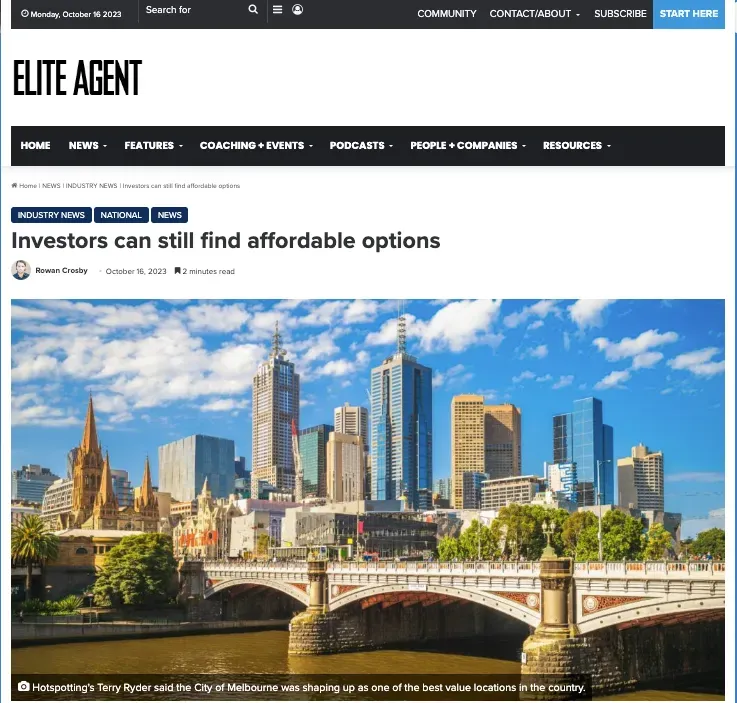
Despite near-record high property prices across the country, there are still affordable locations for investors, according to a new report.
According to Hotspotting, there are affordable areas in Perth, Melbourne, Brisbane and Adelaide, that are likely to offer the best strategic property buying and investing potential over the next six months.
Hotspotting General Manager Tim Graham said the Armadale region of Perth features some of the most budget-priced houses of any capital city, and also offers strong infrastructure, services, and amenities.
“Armadale is also the fourth fastest-growing LGA in Western Australia and is strategically located in Perth’s south-east transport corridor, with access to large employment nodes,” Mr Graham said.
“One notable aspect of Perth’s property market is the high level of sales activity in its cheaper suburbs, which is attributed to government incentives for first-home buyers that have contributed to the strong performance in this market.”
“This local government area also boasts of budget-friendly housing options and excellent infrastructure, services, and amenities.”
In the Southern Moreton Islands region of Greater Brisbane, Macleay and Russell islands offer median house prices in the mid-high $300,000 range.
This affordability, together with significant lifestyle appeal, has seen demand and sales activity rise since 2020.
“Regular passenger ferries make it easy to commute from the islands to major job nodes such as the Brisbane CBD, Brisbane Airport, and the Port of Brisbane in under 60 minutes,” Mr Graham said.
“There are two main islands, Russell and Macleay, as well as Lamb, Coochiemudlo, and Karragarra islands.
“Two precincts in the Southern Redland Area are marked as Priority Development Areas, with plans for a new marina, upgraded infrastructure, and job opportunities.”
Mr Graham said the median house prices on Russell and Macleay islands are in the mid-high $300,000 range, making them the most affordable locations in Greater Brisbane.
Australian Property Investor Magazine - 20th Sept 2023
Adramatic resurgence in the property market over the past few months is pointing towards a price resurgence for the rest of 2023 and into 2024.
Sales hotspots reveal that seven out of ten property markets around Australia now have positive sales trend activity.
Investors and upsizers are being drawn back to the market as interest rate hike fears subside and families look to utilise savings and equity buffers built up during the pandemic’s spending hiatus.
Hotspotting General Manager Tim Graham said some of the market turnarounds had been dramatic, with the City of Sydney leading the way.
“The recovery signs we noted six months ago, and more strongly three months ago, have strengthened further – and now Sydney is Australia’s strongest market,” Mr Graham said.
“Some 80 per cent of suburbs there have positive sales trends, which is the best percentage in the nation.”
The revival is widespread across all sectors, with units notably to the fore.
Based on a $750,000 budget, we reveal the top three suburbs in which to invest in real estate in four major cities, and uncover the city that presents the best investment opportunity.
Hotspotting Director Terry Ryder said Perth has been the nation’s strongest market for the past year, with the Western Australian capital continuing to thrive.
“The cheaper markets are the strongest, while the middle markets and the inner-city are also attracting solid demand,” he said.
“The turnaround in the Melbourne market has been quite dramatic.
“Three months ago, we reported a glimmer of recovery but overall Greater Melbourne was still struggling market.
“Now the city’s markets are pumping, with 73 per cent of suburbs recording positive activity.”
Mr Graham said it has been a similar story in Brisbane, which has come charging back over the past quarter, when it was classified as having its weakest market in some eight years, but now is on the busiest in the nation.
“The Adelaide market also continues to distinguish itself for its consistency of solid market performance,” Mr Graham said.
Apartments on the rise
Mr Ryder said the rise of apartments as the dwelling of choice for more and more buyers is undeniable.
“In several of our capital cities, the strongest market precincts are the inner-city areas where apartments dominate,” Mr Ryder said.
“The number one municipality in Greater Melbourne is the City of Melbourne, and the City of Sydney has similar status in the Greater Sydney market in this Spring survey.
“Over the next 12 months, the competition in these markets is expected to ramp up, with upward pressure being driven by renters and home buyers.”
-- Darren Ventor, co-founder, DIYBA, on his three national hotspots for investors
Mr Ryder said the City of Hobart leads the market in the Tasmanian capital, while the Brisbane inner precinct is a stand-out in the Queensland capital, and inner Perth is among the strong markets in the WA capital.
“Lifestyle and affordability are the core drivers of this compelling national trend,” Mr Ryder said.
Top 10 hotspots for property upsizers
While apartments attract buyer attention, new research has revealed the top suburbs for those upsizers seeking more space.
The Property Credit findings, based on 13 criteria relating to specific property features combined with broader suburb variables, found that Perth accounted for six of the top 15 suburbs for city dwellers contemplating a more spacious abode.
Also with three suburbs in the top 10 was Canberra, an often-overlooked investor option.
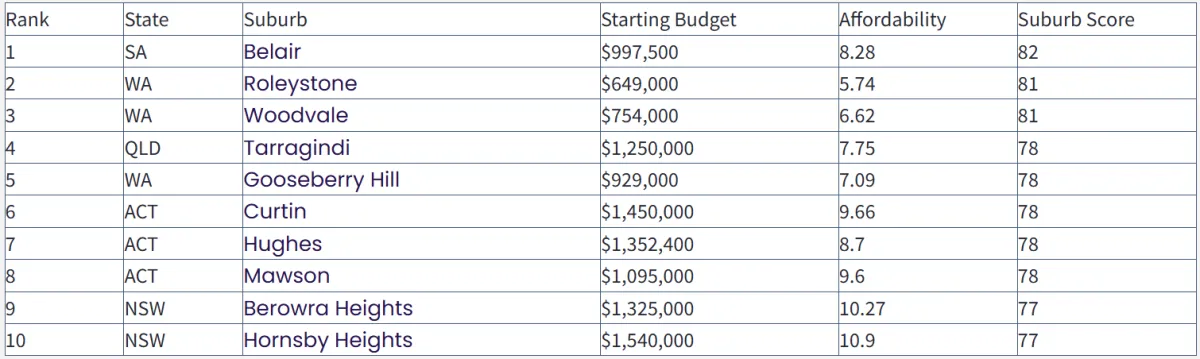
The lists assigned a score out of 100 based on maximising investment potential and lifestyle.
In Sydney, Berowra Heights and Hornsby Heights stand out in the top 20 with suburb scores of 77 and starting budgets that offer exceptional value.
For Melbourne upsizers, Eltham North is the go-to suburb with a starting budget of $1,150,000 and a commendable suburb score of 77. It was the only Victorian suburb in the top 20, while Lysterfield also scored a 75.
Residing outside the top 20 but with scores above 75 were Sydney’s Kareela and Barden Ridge.
Queensland’s top three were Tarragindi, Mount Crosby and Seventeen Mile Rocks.
Regional hotspots
Other hotspotting research, this time conducted by online property investing portal DIYBA, singled out three local council areas for their investor potential, two of which were in regional areas.
Focusing on potential capital growth and rental yields, the research singled Kwinana Council in southern Perth, and regional centres Rockhampton Regional Council in Queensland and Gawler Council in South Australia.
The City of Kwinana is known as a coastal heavy and light industrial economic powerhouse of the Western Australian economy, with its more inland residential component incorporating leafy suburbs such as Orelia, Medina, Calista, Parmelia and Leda. Median rents have risen from around $300 to $500 since late 2018.
Like Kwinana, Rockhampton was seen as having strong capital growth prospects and delivered high rental yields. Suburbs such as Wandal, The Range, Park Avenue and Kawana have seen property prices and rents soar in the past five years.
Town of Gawler, north of Adelaide with suburbs such as Willaston, Gawler West, East and South, and Evanston, hasn’t delivered the same level of rent hikes as the previous hotspots but its capital growth since mid 2018 has been exceptional.
DIYBA co-founder, Darren Venter, said population growth was a key factor in their continued potential for investors.
“Specific pockets and suburbs within these council areas in particular are expected to rise in capital growth and/or cashflow due to an increasing population driven by affordability and the assistance of economic growth from employment, and the need to house the new and expanding population.
“Investors and home buyers will be attracted to the low, if any, holding cost of the properties in these markets.
“Over the next 12 months, the competition in these markets is expected to ramp up, with upward pressure being driven by renters and home buyers.”
Elite Agent - 19th Sept 2023
Property prices will continue to grow after a “massive improvement” in conditions over winter, led by the big cities.
According to the Hotspotting Price Predictor Index (PPI), the City of Sydney has been the standout market over the past quarter, while a number of other areas in the bigger cities have also shown a resurgence.
Hotspotting General Manager Tim Graham said larger cities were performing best.
“The big cities are back,” Mr Graham said.
“While Perth and Adelaide remain as busy as before, the nation’s three biggest cities have mounted significant comebacks.
“Sydney, Melbourne, and Brisbane are all markets on the rise, with Sydney ranked as the No.1 market nationwide based on having 82 per cent of suburbs with positive sales trends.”
Mr Graham said some of the market turnarounds had been dramatic.
“The recovery signs we noted six months ago, and more strongly three months ago, have strengthened further – and now Sydney is Australia’s strongest market,” he said.
“Some 80 per cent of suburbs have positive sales trends, which is the best percentage in the nation.
“The revival is widespread across all sectors, with units notably to the fore.”
Hotspotting Director Terry Ryder said the rate of price growth in cities and regional markets across Australia was likely to accelerate in the wake of major uplifts in sales activity in many locations.
“Now we are seeing growth momentum in most corners of the nation,” Mr Ryder said.
“Among the capital cities and regional jurisdictions of the nation, only two – Canberra and Darwin – remain in the doldrums.
“Everywhere else, resurgence and growth are the dominant themes.”
He said some of the other top-performing markets included Blacktown, Brisbane North, Casey, Gold Coast, Gladstone, Melbourne City, Stirling, Tea Tree Gully, and Wollongong.
Mr Ryder said Perth has been the nation’s strongest market for the past year, with the Western Australian capital continuing to thrive.
“The cheaper markets are the strongest, while the middle markets and the inner-city are also attracting solid demand,” he said.
“The turnaround in the Melbourne market has been quite dramatic.
“Three months ago, we reported a glimmer of recovery but overall Greater Melbourne was still a struggling market.
“Now the city’s markets are pumping, with 73 per cent of suburbs recording positive activity.”
Mr Graham said it was a similar story in Brisbane, which has come charging back over the past quarter, when it was classified as having its weakest market in some eight years, but now is on the busiest in the nation.
“The Adelaide market also continues to distinguish itself for its consistency of solid market performance,” Mr Graham said.
“While the larger capital cities were struggling over the past year, Adelaide continued to attract steady buyer demand – and seven out of 10 suburbs still have good buyer activity. Consistency markets are the strongest cohort in Adelaide.”
He said that more affordable locations are also doing well.
“The revival in buyer demand in Sydney, Melbourne, and Brisbane has included recovery in the affordable areas,” he said.
“The City of Blacktown has led the resurgence in western Sydney, the City of Casey is prominent in the Greater Melbourne comeback, and outer-ring precincts of Greater Brisbane have seen buyer demand recover.
“Meanwhile, the bottom end continues to thrive in the Adelaide and Perth markets.”
Mr Ryder said the rise of apartments as the dwelling of choice for more and more buyers is also undeniable.
“In several of our capital cities, the strongest market precincts are the inner-city areas where apartments dominate,” he said.
“The No.1 municipality in Greater Melbourne is the City of Melbourne, and the City of Sydney has similar status in the Greater Sydney market in this Spring survey.”
Despite the focus on larger cities, Mr Ryder said that there is still steady demand for regional locations.
“We’ve seen multiple headlines suggesting that demand in regional markets has collapsed and that prices are no longer rising,” he said.
“Our analysis refutes that.
“Regional markets remain strong and indeed we have recorded a significant upturn in buyer demand in the regional areas of the eastern states.”
The Herald Sun - 5th Sept
Property investors may benefit from more growth in values by targeting apartments over houses – especially in Sydney’s coastal areas and inner city suburbs.
A new report identified Sydney was now home to 15 of the best 75 markets for capital growth potential across the country, the second highest concentration of growth areas after Perth.
Many of the areas where prices were expected to outperform the rest of the market were higher density areas near expanding infrastructure, according to research group Hotspotting’s Price Predictor Index.
They included Avalon Beach, Clovelly, Rose Bay, Waterloo, Zetland and Meadowbank, among others.
The Hotspotting report showed unit purchasers in these areas would benefit from above average growth in property values, higher rents relative to mortgage costs and lower vacancies.
It comes as recent PropTrack modelling showed home prices across Sydney were expected to rise by an average of about 3-6 per cent over 2023 – despite interest rate rises reducing buyers’ borrowing capacity.
Hotspotting identified 74 “supercharged suburbs” where sales volumes have been consistently rising for three quarters or more, which was reported as a reliable indicator of future price growth.
“Sustained rises in sales volumes will be followed by a rise in prices,” Mr Ryder said.
“History shows us there is a correlation between sales volumes and price movements – the number of sales changes first and prices react – with a time lag. This is true whether markets are rising or falling.”
Hotspotting general manager Tim Graham said the 74 supercharged suburbs list was dominated by Western Australia, which was deemed the nation’s best property market at present.
“With 26 of the 74 supercharged suburbs being in WA, and especially in Perth, this is further proof that homebuyers and investors continue to be highly active on the west coast,” he said.
“Interestingly, NSW was the second-best performer when it came to the number of suburbs on the list – with 15 of the 74 – with many of these suburbs being some of the Sydney’s most desirable as well.”
Some of the higher density NSW suburbs on the supercharged list included Wolli Creek, Zetland, Waterloo and Ultimo.
Local agents revealed these areas were once oversupplied with apartments, but the glut of available homes had long disappeared and rising popularity with buyers and a slowdown in new construction meant demand now exceeded supply.
Right Property Group director Victor Kumar told a Property Investment Professionals of Australia panel that spring would be a key test for the NSW housing market.
“The NSW housing market has been quite resilient,” he said. “But I believe the true tell will come once more stock comes onto the market, which may lead to copycat sellers rushing to the market.”
The Herald Sun - 4th Sept 2023
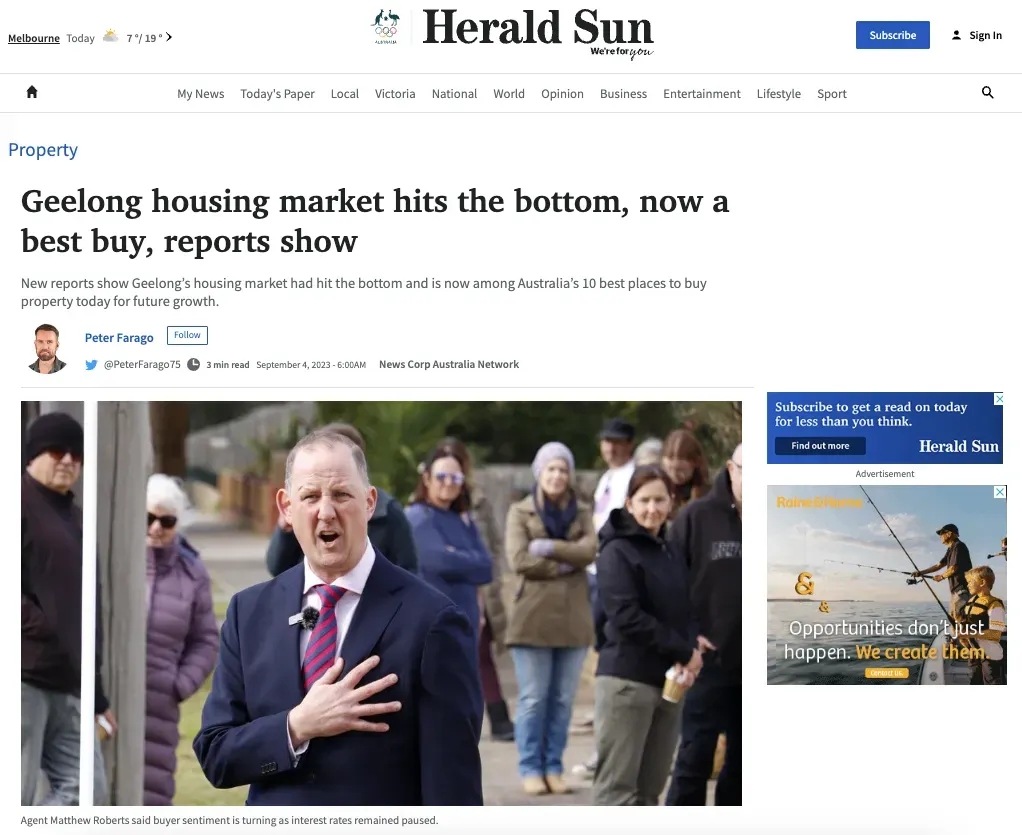
Geelong has been named as one of the nation’s best buys in a report identifying the nation’s top future property hot spots.
The Hotspotting National Top 10 Best Buys 2023 report comes amid mounting evidence of a recovery in Geelong’s property market after the post-Covid slump.
The report shows Geelong remains a hot spot for homebuyers on the back of strong population growth, economic diversification and the success of the Armstrong Creek urban growth corridor as a job creator.
Billions in investments, including defence manufacturing contracts, local infrastructure and a $294m Geelong Convention Centre were other reasons to buy in the region, the report showed.
Hotspotting general manager Tim Graham said recovery was the underlying theme in Geelong, where previously declining suburbs were now showing stronger sales activity, a pointer to future price growth.
The firm’s two most recent Price Predictor Index reports showed Geelong continues to attract significant buyer demand.
“Hotspotting attributed this to the strong economy and its affordable prices, relative to Melbourne,” Mr Graham said
Greater Geelong is a steady, highly consistent market that continues to see solid demand in 2023, he said.
“Many suburbs continued to have busy markets, with Lara, Highton, Ocean Grove, Corio, Armstrong Creek, and Grovedale all recording more than 200 annual house sales,” Mr Graham said.
“Newcomb, Corio, Norlane, and Whittington offer the area’s lowest prices, with Norlane recording a median house price of $460,000 and Corio $510,000.
“Many Geelong suburbs have capital growth rates averaging around 10 per cent per year for the past decade – while Barwon Heads, Indented Head and Queenscliff averaged 13 to 14 per cent per year.”
National valuation firm Herron Todd White has reclassified Geelong as reaching the bottom of the market on it’s national property clock in August.
Herron Todd White Geelong property valuer Leigh Burns said he agreed with the assessment.
“We’re either at the bottom or the near the bottom and waiting for recovery,” Mr Burns said.
“In the last 24 to 36 months we’ve seen the prices rise fairly dramatically in some areas, and it’s either stabilised or started to drop off depending on locality,” he said.
Values in satellite suburbs such as Lara and Leopold were flat, while the northern suburbs also had remained steady, he said.
Conversely, Armstrong Creek had suffered as there was a lot of “very similar” properties and not as many buyers.
Elite Agent - 4th September 2023

The property market across the country continues to look increasingly positive, with an expert tipping more growth is still ahead for many areas.
The Hotspotting Top 10 National Best Buys report, revealed several areas across the country are outperforming led, by Queensland and Western Australia.
Hotspotting Director Terry Ryder said price data in the first seven months of the year has turned increasingly positive as property markets rebound.
“It’s important to note that the upturn in fortunes occurred long before the RBA decisions in July and August to pause its increases to the official interest rate,” Mr Ryder said.
“Just as the decline in major markets like Sydney and Brisbane started well before the first interest rate rise in May 2022.
“This is because there are greater influences on property market outcomes than the level of interest rates.”
Queensland showing strength
Hotspotting General Manager Tim Graham said Toowoomba continued to be one of the strongest regional markets in Queensland, with a high number of consistent suburbs and no declining locations.
He said Mount Lofty was one of the nation’s top performers, while Darling Heights and Middle Range also performed well.
“Based on CoreLogic data for the 12 months to May 2023, Newtown, East Toowoomba, Harristown, Highfields, South Toowoomba, Wilsonton and Wilsonton Heights recorded the city’s highest annual increases in median house prices – up 15 per cent to 17 per cent,” Mr Graham said.
Mr Graham said the Brisbane Olympic Precinct was also a location showing promise, with Woolloongabba lifting its median house price four per cent and its median unit price nine per cent in the 12 months to April 2023.
“Fairfield’s median house price jumped 22 per cent, while the median unit price for Annerley rose 13 per cent,” he said.
“Very few houses are available in the region for under $1 million, and the impact of preparations for the Olympic Games is set to increase those prices further.”
Adelaide Now - 4th Sept 2023
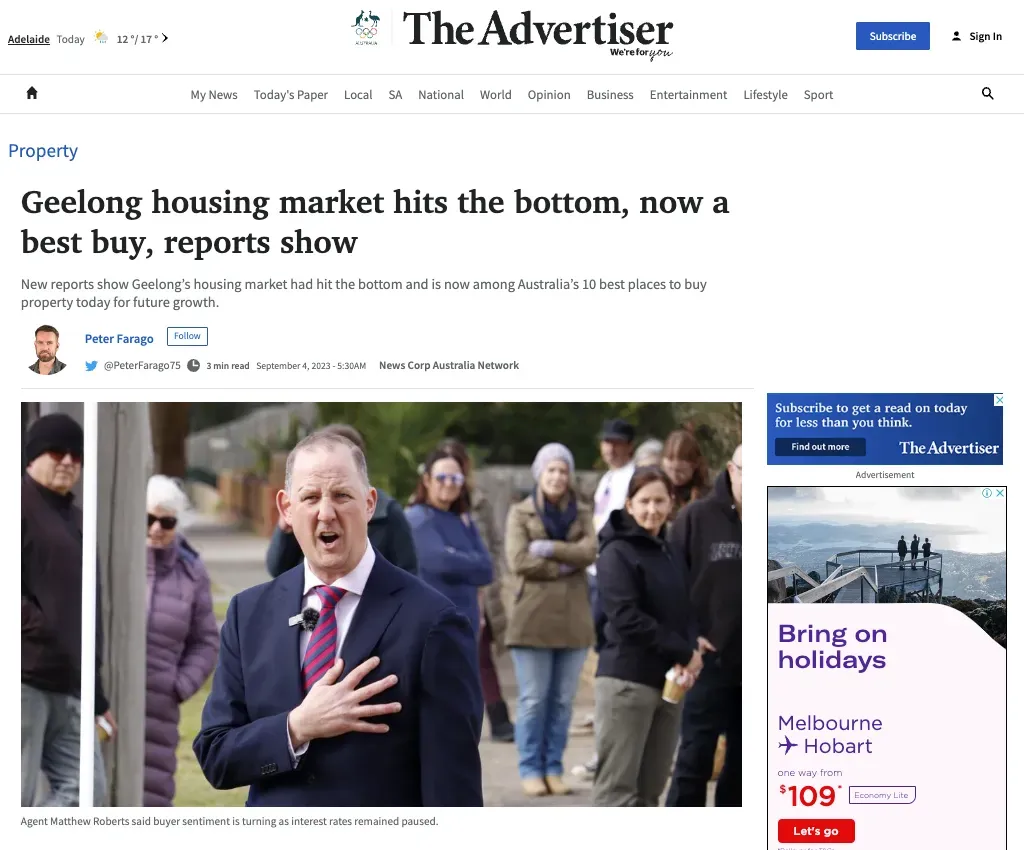
Geelong has been named as one of the nation’s best buys in a report identifying the nation’s top future property hot spots.
The Hotspotting National Top 10 Best Buys 2023 report comes amid mounting evidence of a recovery in Geelong’s property market after the post-Covid slump.
The report shows Geelong remains a hot spot for homebuyers on the back of strong population growth, economic diversification and the success of the Armstrong Creek urban growth corridor as a job creator.
Billions in investments, including defence manufacturing contracts, local infrastructure and a $294m Geelong Convention Centre were other reasons to buy in the region, the report showed.
Hotspotting general manager Tim Graham said recovery was the underlying theme in Geelong, where previously declining suburbs were now showing stronger sales activity, a pointer to future price growth.
The firm’s two most recent Price Predictor Index reports showed Geelong continues to attract significant buyer demand.
“Hotspotting attributed this to the strong economy and its affordable prices, relative to Melbourne,” Mr Graham said
Greater Geelong is a steady, highly consistent market that continues to see solid demand in 2023, he said.
“Many suburbs continued to have busy markets, with Lara, Highton, Ocean Grove, Corio, Armstrong Creek, and Grovedale all recording more than 200 annual house sales,” Mr Graham said.
“Newcomb, Corio, Norlane, and Whittington offer the area’s lowest prices, with Norlane recording a median house price of $460,000 and Corio $510,000.
“Many Geelong suburbs have capital growth rates averaging around 10 per cent per year for the past decade – while Barwon Heads, Indented Head and Queenscliff averaged 13 to 14 per cent per year.”
National valuation firm Herron Todd White has reclassified Geelong as reaching the bottom of the market on it’s national property clock in August.
Herron Todd White Geelong property valuer Leigh Burns said he agreed with the assessment.
“We’re either at the bottom or the near the bottom and waiting for recovery,” Mr Burns said.
“In the last 24 to 36 months we’ve seen the prices rise fairly dramatically in some areas, and it’s either stabilised or started to drop off depending on locality,” he said.
Values in satellite suburbs such as Lara and Leopold were flat, while the northern suburbs also had remained steady, he said.
Conversely, Armstrong Creek had suffered as there was a lot of “very similar” properties and not as many buyers.
Hayeswinckle, East Geelong agent Mathew Roberts said buyer sentiment had turned a corner after the Reserve Bank paused official interest rates for consecutive months.
Mr Roberts said sellers who were coming to the market at realistic prices and were finding buyers in short time.
“People realise that if your price looks right, it’s in a good location, it’s still going to sell and there’s still plenty of buyer out there,” Mr Roberts said.
“A lot of property went on to the market at the right level and it sold and now we’re into August, September, October looking towards spring and we’ve tried to cash a few people out before the spring rush.
“But we think the stock is coming and our numbers have certainly increased but that might be because we’ve had a slow year up until this point.”
Mr Roberts said the bottom of the market was one of the best times to upgrade or downsize because the changeover costs can be discounted.
McGrath, Geelong director David Cortous said stronger demand for recently built and renovated homes would push a strong case for capital growth next year.
“Building costs have gone through the roof and aren’t going to come back. And you’ve got a lag on building so there’s got to be supply issues.
“As a result of that I think you’ll get to see more value on existing homes in built-up areas. “And when I say more value, that’s actually on the capital on the house whereas in the past has always been the land that it’s sitting on “you’re going to see an uplift on new homes and renovated home, especially in built up areas.
The Property Tribune 1st September
Spring is upon us and the property market is singing. Australian property prices were found to have risen 0.28% last month, with the PropTrack data also recording a year-on-year rise of 2.64%, and a 3.51% rise in home prices so far this year.
PropTrack Home Price Index August 2023
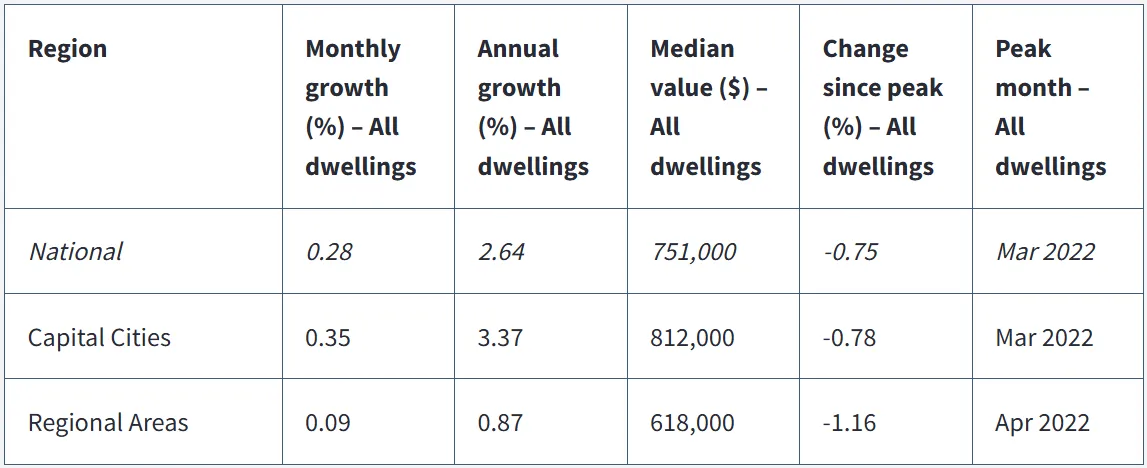
Source: PropTrack.
The auction market is also a hit with bidders, with the first weekend of spring to see 2,401 homes go under the hammer.
Hotspotting’s latest Top 10 National Best Buys report likewise found that Australian property markets have rebounded, with affordable capital city locations and major regional areas offering solid homebuying and investment opportunities.
The research considered a comprehensive suite of metrics, including economic and property fundamentals such as infrastructure, employment nodes, urban renewal as well as lifestyle and interstate migration factors.
Australia’s top 10 growth locations
City of Stirling, WA,
Toowoomba, QLD,
Greater Geraldton, WA,
City of Salisbury, SA,
Inner West, NSW,
Brisbane Olympic Precinct, QLD,
City of Townsville, QLD,
City of Hume, VIC,
City of Belmont, WA, and
City of Geelong, VIC.
Toowoomba
Hotspotting general manager, Tim Graham, said the regional Queensland location was previously on the National Top 10 Municipalities list in the Summer 2022-2023 edition of The Price Predictor Index.
“Some 14 of the 25 Toowoomba suburbs analysed in the report were classified as rising markets, with six others rated as consistency markets,” he said.
The city’s stellar performance continued in the Autumn and Winter 2023 editions of the report.
“The Winter 2023 edition reported that Toowoomba continued to be one of the strongest regional markets in Queensland, with a high number of consistency suburbs and no declining locations,” Graham added.
“Based on CoreLogic data for the 12 months to May 2023, Newtown, East Toowoomba, Harristown, Highfields, South Toowoomba, Wilsonton and Wilsonton Heights recorded the city’s highest annual increases in median house prices – up 15% to 17%.”
-- Tim Graham, Hotspotting
Your Investment Property - 25th August 2023
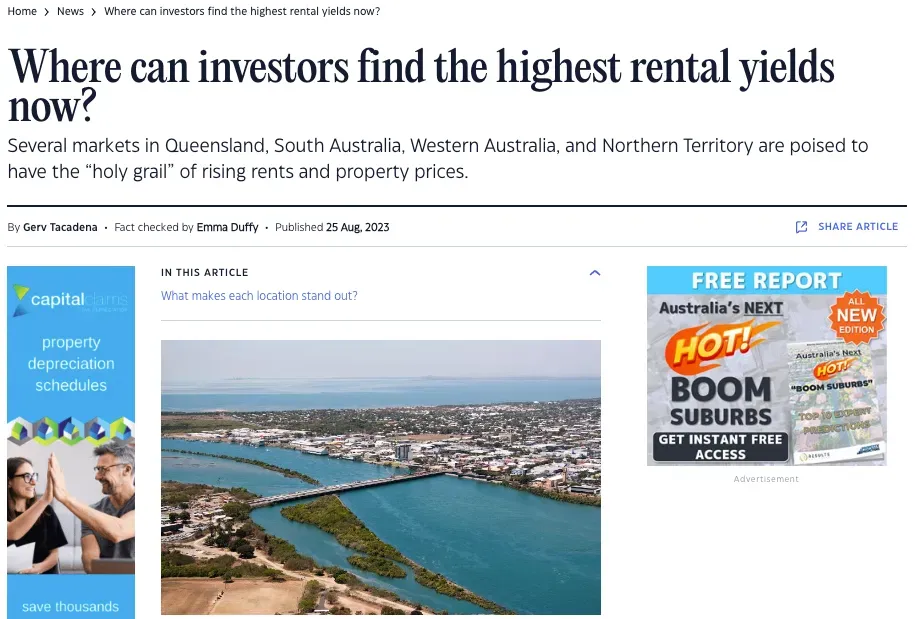
A new report from Hotspotting revealed the top locations in Australia right now where investors can enjoy the “holy grail” of rising rents and property prices, as rental yields go beyond 6.5%.
The quarterly Hotspotting Pulse Report, exclusively provided to Your Investment Property, identified several locations in Queensland, South Australia, Western Australia, and Northern Territory where investors can take advantage of strong market fundamentals, including rising rental yields, robust growth outlook, and tight vacancy rates.
Hotspotting general manager Tim Graham said if investors can attain strong yields in low-risk areas facing price growth, they are poised to secure sensible investments in the present economic landscape.
“One of the most noticeable features in this quarter’s Pulse is that in almost every one of the locations the median house price has risen in the past three months – but the median yield has also increased,” he said.
Mr Graham said the abundance of areas experiencing both rising yields and property values signifies a strong market environment for investors looking to enter or expand their property portfolios.
The Property Tribune - 25th August 2023
The Perth housing market has yet to reach its full potential.
More affordable markets are predicted to perform well.
Those markets are also centres of employment or seeing infrastructure upgrades.
Perth property prices recently hit new records. Data from the Real Estate Institute of Western Australia (REIWA) revealed Perth’s real estate market broke house price records across the 2022-2023 financial year. As July wrapped up, REIWA data also revealed Perth house prices beat the 2014 peak, reaching a new high of $560,000.
A new Hotspotting report on the Perth property market reveals that the growth is yet to stop, as Perth’s full potential has not been fully realised.
The Property Tribune can exclusively reveal Hotspotting’s insights and analysis into which Perth locations are predicted to have more sales and price growth across the next six months.
Perth’s top five property hotspots
City of Stirling,
City of Canning,
City of Armadale,
City of Belmont,
City of Gosnells.
The list of attractions to the Western Australian capital includes relative affordability, excellent rental yields, an enviable lifestyle, and more.
“According to the CoreLogic Home Value Index published early in August, the median house price for Perth is $625,000 – less than half the median price in Sydney, which is now over $1.3 million, and a long way below Melbourne’s $924,000,” said Hotspotting general manager, Tim Graham.
“It also falls well short of the $960,000 in Canberra and the $820,000 in Brisbane,” he said.
“Even Adelaide and Hobart are significantly more expensive than Perth. Indeed, in Adelaide, you pay $100,000 more for the average house than you do in Perth.
“Only Darwin among the capital cities has cheaper houses than Perth.”
Realestate.com.au - 21st August 2023
SOUTHPORT is emerging from the shadows of Surfers Paradise as an investor hotspot, according to a new report.
The Hotspotting National Top 10 Apartment Hotspot report revealed the top apartment locations for the next six months with Southport the only Gold Coast suburb to make the list.
Hotspotting general manager Tim Graham said the 2018 Commonwealth Games left Southport with a major legacy – extensive infrastructure.
Now, major new enterprises are adding to the precinct’s reputation as a centre for economic activity, employment, and enterprise, he said.
“The Games was the catalyst for the light rail network and the $1.8 billion Gold Coast University Hospital,” Mr Graham said.
“The latter forms part of the Gold Coast Health and Knowledge Precinct, predicted to have 26,000 jobs when completed.”
Mr Graham said Southport was also declared a Priority Development Area by the Gold Coast City Council in 2013.
“Southport has undergone serious gentrification since then, introducing vibrancy to what was an older-style suburb, bringing diversification of industry and catering for population growth,” he said.
“This, together with the lifestyle advantages of this precinct – including access to The Broadwater – augurs well for the property market as job opportunities expand.
“Vacancy rates here are low and usually more stable than the Gold Coast tourist spots that attract the transient population, and prices are more affordable.”
There is also a higher-than-average number of renters seeking homes, providing openings for investors, Mr Graham said.
“The median price for houses here is $850,000 but units are around $500,000, providing a high level of affordability and yields above six per cent, supported by vacancies well below one per cent,” he said.
Amir Mian, of Amir Prestige is marketing 4 Drury Ave, Southport — a rundown Queenslander house on a sprawling 1057sq m block.
“This would definitely suit mum and dad investors or someone who can see the redevelopment potential here,” Mr Mian said.
“I could see six villas built here — you can literally walk to the schools and shopping centres and HOTA is nearby. It’s a really great precinct there.”
Mr Mian said Southport was a central suburb that offered a lifestyle suited to a lot of buyers.
“There’s a huge market for people who want to be central on the Gold Coast,” he said.
The property goes under the hammer on September 29.
Elite Agent - 14th August 2023
Strong demand for apartments has made units an enticing proposition for investors, with a host of locations likely to see rising prices in the next six months.
According to Hotspotting’s National Top 10 Apartment Hotspot report, Queensland, NSW, Victoria, South Australia and the ACT all feature suburbs where apartments are likely to outperform.
According to the report, most of the in-demand apartment locations are in Queensland, which is currently experiencing a high level of population growth.
Hotspotting General Manager Tim Graham said Annerley, in Brisbane, is likely to benefit from the positive impacts of the 2032 Olympics, as a near neighbour of the main event venue, Woolloongabba.
“Beyond of the Olympics’ influence, Annerley is a well-located and well-connected suburb in Brisbane’s inner-south,” Mr Graham said.
He said units in the suburb sell quickly and are priced affordably compared to houses.
Also in Queensland, the Sunshine Coast has been one of Australia’s strongest markets since 2020, boosted by the region’s big infrastructure spend and its key role in the exodus to affordable lifestyle trend.
The Property Tribune - 11th August 2023
The Australian apartment market has been sharply in focus due to its resilience, affordability, and the important role it plays in housing supply.
Apartments have also garnered attention as performance begins to outpace standalone houses, with Hotspotting director, Terry Ryder, pointing out apartments recorded faster rental growth, superior price growth rates over most of the past 12 months, and a growing share of new dwelling approvals.
“There is a plethora of reasons why apartments are increasingly becoming the property of first choice for home buyers and investors,” Ryder said.
Apartment stock is relatively low
Hotspotting general manager, Tim Graham, noted that apartments comprised only 46% of dwellings in Australia’s most densely populated city, Sydney.
“In London, apartments comprise 94% of dwellings, while in Singapore it is 93% and in Hong Kong, it is 84%,” Graham said.
Furthermore, apartment stock in smaller capitals like Hobart is a mere 15% of homes.
The Property Tribune - 19th July 2023

Read the full article here.
Over 35,000 interstate migrants decided to call Queensland home in the year to December 2022, according to data from the Australian Bureau of Statistics.
The big smoke exodus was apparent prior to Covid.
A 'hill change' was among the notable trends.
Queensland has claimed four out of the top 10 spots on Hotspotting's latest Exodus to Affordable Lifestyle National Top 10 report.
In a search for the top affordable lifestyle locations with the best upside potential for the next six months, Hotspotting considered whether an area had strong sales activity and potential for capital growth; good stock levels at reasonable prices; strong infrastructure, both existing and planned; and proximity to major jobs hubs.
Top 10 affordable lifestyle locations
City of Geraldton, Western Australia,
City of Toowoomba, Queensland,
Rural City of Murray Bridge, South Australia,
Gladstone, Queensland,
City of Mandurah, Western Australia,
Hunter Valley, New South Wales,
Mitchell Shire, Victoria,
City of Mount Gambier, South Australia,
Cairns, Queensland,
Lockyer Valley, Queensland.
Big city exodus not a pandemic trend
The shift to smaller cities and regional hubs had been well underway prior to the pandemic. Hotspotting General Manager, Tim Graham, highlighted the fact that people had been making the move for over a decade.
“Statistics demonstrate that Sydney and Melbourne have been losing population to other parts of the country for 10 and five to six years respectively,” said Graham.
Hotspotting Director, Terry Ryder, echoed the sentiment, adding many were looking for more affordable lifestyle locations – particularly those located in Sydney.
“According to the latest stats from the ABS, the Sunshine State’s net population increased by 2.2% – or 116,000 new residents – in the year to December 2022, with about 35,500 being interstate migrants,” he said.
“Interestingly, Sydney net interstate migration [recorded] a fall of about 31,500, with many of these people heading to the more affordable lifestyle markets throughout Queensland.”
Ryder said the exodus from big cities had been thrust into the spotlight in recent years because many assumed that its momentum was due to the pandemic.
“However, its growth has been primarily due to individuals and families seeking a better lifestyle and affordability that is made possible through remote working that advances in technology have allowed for,” he said.
Will the big cities make a comeback?
Unlikely, said Graham, who noted that while many speculated a post-pandemic shift would happen, it simply hasn’t eventuated.
“There is little evidence that this will be the case as those who have gone through the effort to relocate and uproot their families will likely not be willing to do so again,” he said.
“Consequently, the regions have outperformed the capital cities in price growth for the past five years due to the exodus trend. And, as many markets are experiencing a downturn in prices, regional areas are proving to have more resilience.”
Ryder also observed a ‘hill change’ trend, with many looking for hinterland and country regions.
Australian Broker News - 19th July 2023

Queensland has won the lion’s share of exodus to an affordable regional lifestyle, with the Sunshine State taking four of the top 10 spots in Hotspotting’s latest property rankings.
The Hotspotting Exodus to Lifestyle – National Top 10 report has revealed the top affordable lifestyle locations with the best upside potential, based on the following property metrics:
rising sales activity with potential for capital growth,
plenty of houses at affordable prices,
strong infrastructure, both existing and planned, and
proximity to major job nodes.
Tim Graham, Hotspotting general manager, said the “exodus to affordable lifestyle” has shaken up the real estate game for the past five to 10 years.
The trend has been thrust into the spotlight in recent years, however, because many assumed its momentum was due to the COVID-19 pandemic, Ryder said.
“However, its growth has been primarily due to individuals and families seeking a better lifestyle and affordability that is made possible through remote working that advances in technology have allowed for,” he said.
“As of recently, the most desirable areas for relocation have been Queensland and Western Australia, with Queensland at the very top of the list.”
Graham noted that over the past five years, the regions have outperformed the capital cities in price growth and were proving to be more resilient as many markets were experiencing a downturn in prices.
Elite Agent - 18th July 2023
Queensland and Western Australia are set to be the big winners as people continue to flee the big cities and seek out affordable lifestyle locations.
Hotspotting Director Terry Ryder said the majority of Sydney and Melbourne buyers had been targeting the Sunshine State because of its relative affordability and great lifestyle, despite Covid coming to an end.
While regional Western Australia has come back into favour amongst buyers as the local economy had recovered from its post-mining boom slump.
Hotspotting General Manager Tim Graham said prior to Covid, it had become increasingly apparent that more and more people were leaving the largest cities and heading for smaller cities or regional areas.
“While media outlets suggested that this was a product of the pandemic lockdowns, the reality is that this major population shift has been underway for more than a decade,” Mr Graham said.
“Statistics demonstrate that Sydney and Melbourne have been losing population to other parts of the country for 10 and five to six years respectively.”
Realestate.com.au - 15th July 2023

There are no signs yet of the great migration to the Sunshine State stopping or going into reverse, with four Queensland regions named among the top 10 affordable locations poised for more growth.
The latest Exodus to Affordable Lifestyle report by Hotspotting has named Toowoomba, Gladstone, Cairns and the Lockyer Valley as the regions to watch over the next quarter, as other popular coastal and hinterland spots become out-of-reach for the majority of buyers.
Hotspotting general manager Tim Graham said the past five to 10 years had ushered in a new trend that was shaking up the real estate game – the exodus to affordable lifestyle.
“Prior to the Covid-19 pandemic it had become increasingly apparent that more and more people were leaving the largest cities and heading for smaller cities or regional areas,” he said.
“Statistics demonstrate that Sydney and Melbourne have been losing population to other parts of the country for 10 and 5-6 years respectively.”
Mr Graham said that while some commentators had suggested that people would start to return to the bigger cities, that was not happening according to their analysis.
“There is little evidence that this will be the case as those who have gone through the effort to relocate and uproot their families will likely not be willing to do so again,” he said.
“Consequently, the regions have outperformed the capital cities in price growth for the past five years due to the exodus trend.
“And, as many markets are experiencing a downturn in prices, regional areas are proving to have more resilience.”
But Mr Graham said it was important to take into account factors such as the economy, transport links, infrastructure, affordable housing and the lifestyle offered.
Rounding out the top 10 regions to watch were Geraldton and Mandurah in Western Australia, Murray Bridge and Mount Gambier in South Australia, the Hunter Valley in NSW and Mitchell Shire in Victoria.
The Urban Developer - 14th July 2023

Planning Changes Pave Way for Chatswood Tower Blitz
Taller towers are on the horizon for Sydney’s Lower North Shore with multiple development applications hitting the planning portals.
More than four towers were lodged in Chatswood in the past month contributing to the 4000 homes earmarked in Willoughby City Council.
The suburb, 10km north of Sydney CBD and with a Westfield shopping centre, benefited from changes to Willoughby Local Environmental Plan and Development Control Plan drafted last year.
This included “developing Chatswood as a key commercial centre” and extending the CBD from the Pacific Highway, Chatswood station to the east.
The plan permitted mixed-use buildings up to 90m in an effort to move the suburb into Sydney’s top 10 suburban office markets.
Thirteen rezoning proposals around Chatswood were also approved around the CBD “facilitating high-density residential development in an effort to increase housing supply and capacity for growth in the area”.
Hotspotting general manager Tim Graham said the latest edition of the Property Price Index found Sydney’s market was recording consistent sales quarter by quarter.
“Inner-city precincts with a high content of apartments continue to attract solid demand,” Ryder said.
“In the biggest cities, the strongest markets tend to be the more expensive areas where interest rate levels are less impactful because there are many cash buyers, while the cheaper outer-ring precincts are struggling.”
The changes spurred on investment in the area including Coronation Property which bought a 2000sq m site last year at 57-61 Archer Street, Chatswood.
Four other large-scale development applications have been lodged to council since June 20.
The Property Tribune - 11th July 2023
Perth, Adelaide, and Hobart have the strongest property markets with rising sales suggesting prices could be on the rise.
According to the Hotspotting Price Predictor Index (PPI) for Winter 2023, currently, there are several areas across Australia where sales activity is weak, but prices remain strong because there is a shortage of listings of properties for sale.
Hotspotting General Manager Tim Graham said while it may not be fashionable, the City of Gosnells is a standout for attracting strong buyer demand – because it offers affordability in an area with good amenities.
“In simple terms, it’s what the mainstream buyer is looking for, whether they’re home-buyers or investors,” said Graham.
“Of the nine Gosnells suburbs in our analysis, eight have positive rankings – four rising, three consistency and one recovering markets.
“Most of these locations have median house prices in the $300,000s and $400,000s, providing a level of affordability that Melbourne and Sydney residents can only dream about – and it’s attracting investors from the eastern states in large numbers, too.”
Realestate.com.au - 7th July 2023
EIGHT Hobart suburbs have defied the downturn trend and been classified as “rising” areas in a national property report.
Across the state’s regional areas, seven more suburbs made the list and are now seen as on the rise.
Hotspotting managing director Terry Ryder said Tasmania was the only market jurisdiction in Australia that increased the number of locations ranked as rising markets in the Winter 2023 Price Predictor Index.
“Overall, it is one of the most bullish markets we’ve recorded for Tasmania in the eight years of our surveys,” he said.
“There are only 11 locations classified as declining markets, compared with 27 just three months ago. These include Bridgewater, Invermay, Midway Point, Queenstown and St Helens.
“The number of locations with negative (plateau or declining) classifications has halved from autumn to winter — 65 to 33.
“Markets that were struggling are now recovering.
“Tasmania, led by Hobart, is among the jurisdictions with the strongest market pulses, having appeared previously to be well past their market peaks.”
Hotspotting general manager Tim Graham said there were areas where sales activity was weak, but prices remained strong due to a shortage of properties for sale.
“This is the most common complaint from property professionals and investors,” he said.
“There is demand from buyers but a serious shortage of stock for sale.”
The Hotspotting index tracks housing sales volume rather than median price changes and asserts that a sustained rise in sales volume is a superior indicator of future pricing growth.
News.com.au & Courier Mail - 27th June 2023
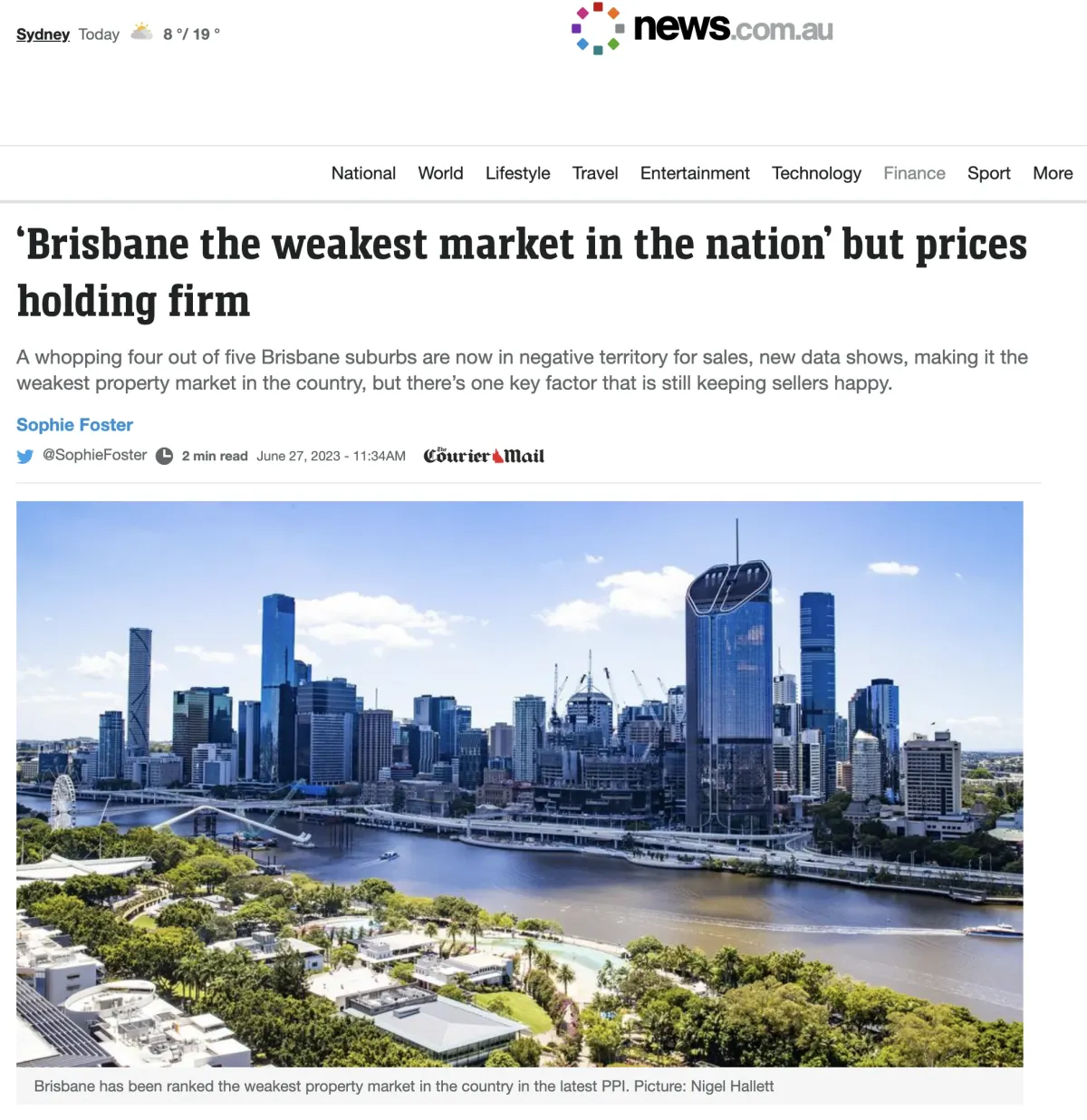
Brisbane has been ranked the weakest property market in the country, but home prices continue to defy pressure to fall, holding up stubbornly thanks to one key factor.
Hotspotting’s Winter 2023 Price Predictor Index ranked Brisbane as the weakest sales market in Australia with only 12 suburbs named as rising, and a whopping four out of five now in negative territory.
Hotspotting General Manager Tim Graham added that “currently, there are areas across Australia where sales activity is weak but prices remain strong – because there is a shortage of listings of properties for sale”.
“This is the most common complaint from property professionals and investors throughout the nation – there is demand from buyers but a serious shortage of stock for sale. Examples include Brisbane and Regional Queensland, where sales activity is weak but prices are holding up stubbornly.”
Some of regional Queensland’s previously buoyant centres were seeing sales subsiding, with locations with negative rankings outnumbering positive ones by two to one now.
The West Australian - 26the June 2023
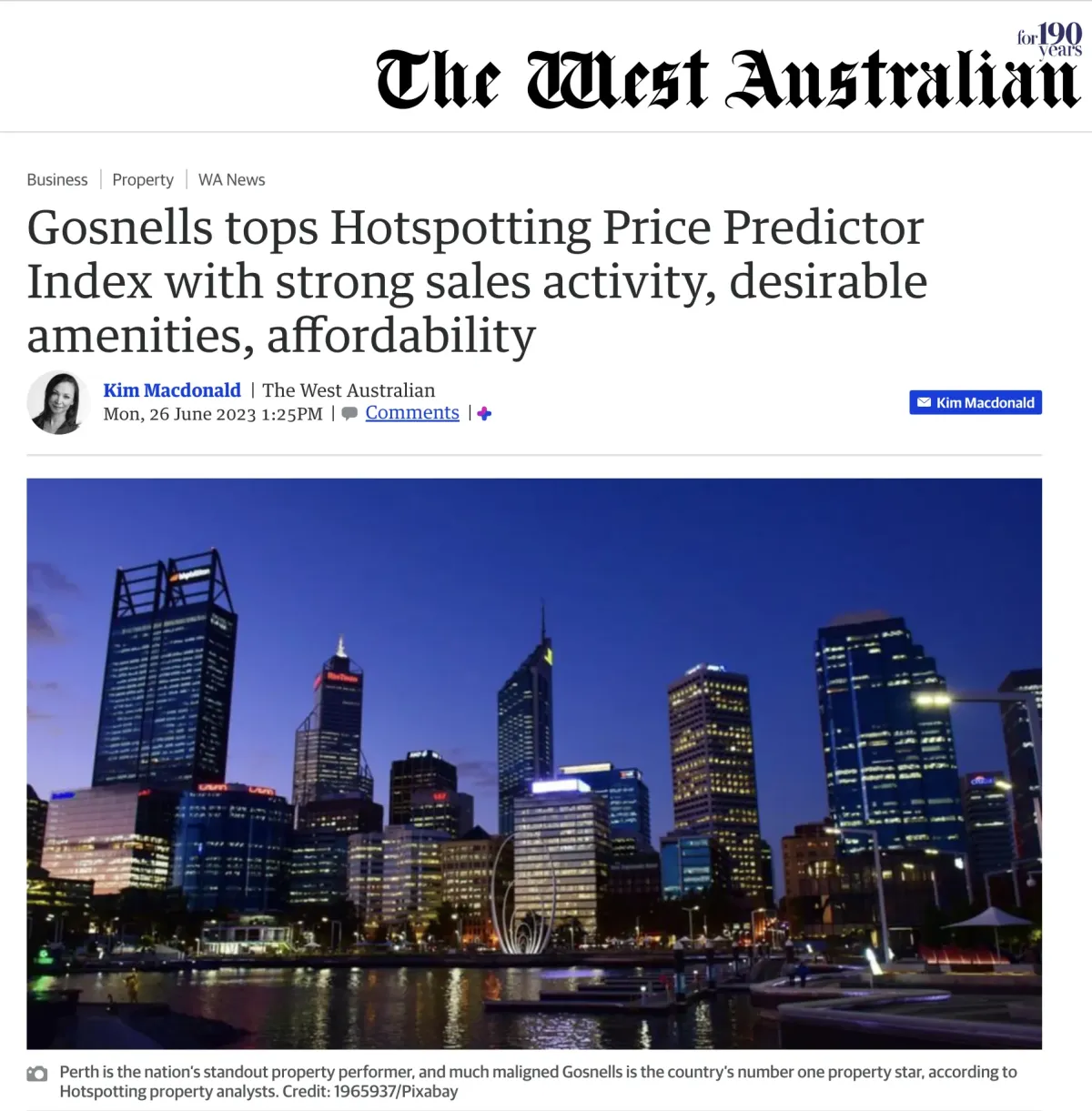
Perth is the nation’s standout property performer, and much maligned Gosnells is the country’s number one property star, according to Hotspotting property analysts.
Hotspotting Price Predictor Index for Winter 2023 has put Gosnells in the pole position, with its strong sales activity, desirable amenity, and affordable homes expected to boost prices soon.
Canning, Mandurah and Stirling are also on Hotspotting’s list of the country’s top ten performers because the areas — like Gosnells — have strong sales activity, good amenities and are relatively affordable.
Hotspotting general manager Tim Graham said Gosnells “may not be fashionable, and it’s certainly not upmarket,” but it stood out for attracting strong buyer demand.
“In simple terms, it’s what the mainstream buyer is looking for, whether home buyers or investors,” he said.
“Of the nine Gosnells suburbs in our analysis, eight have positive rankings — four rising, three consistency and one recovering markets.
“Most of these locations have median house prices in the $300,000s and $400,000s, providing a level of affordability that Melbourne and Sydney residents can only dream about — and it’s attracting investors from the eastern states in large numbers, too.”
The Winter 2023 Report said the Perth market was more robust now than in its Autumn report — when it was also highlighted as the most robust market in Australia — with more locations recording positive sales trends.
The report found 71 per cent of local government areas studied have strong sales, including 59 with rising sales — indicative of looming price increases — and 72 with consistent markets.
This compares to two-thirds with a rising sales activity in the Autumn report and 63 consistent markets in Autumn.
“Perth has maintained its status as undoubtedly the nation’s busiest and most buoyant property market,” said the report.
“Perth’s strong sales activity record has maintained upward pressure on prices at a time when some cities have recorded falling prices.”
Recent data from SQM Research recorded an 11.5 per cent increase in Perth’s house price index from 12 months to May 2023. Perth also has the lowest median house price of any capital city in Australia, except for Darwin.
“Perth’s affordability relative to other capital cities is a big factor in ongoing demand from home-buyers and investors.
“It’s the bottom end of the city’s market, as well as the consistently solid middle markets, which maintain the nation-leading demand levels.”
The regional WA market has started to reverse the signs of decline seen in our two previous quarterly surveys, led by a revival in the Mandurah market.
The report found growing evidence of recovery across the country, with improved activity in Hobart, Sydney, some sectors of Melbourne, and the regional markets in NSW, Victoria, WA, South Australia and Tasmania.
“Western Australia, South Australia, and Tasmania — headed by their capital cities Perth, Adelaide, and Hobart — are the jurisdictions with the strongest market pulses,” said Mr Graham.
“Although locations with negative rankings still outnumber those with positive ones, the gap has closed in this Winter survey, with the number of plateau markets reducing and the number of consistency and recovering locations rising,” he said.
“Jurisdictions, where there is growing evidence of recovery in activity, include Hobart, Sydney, some sectors of Melbourne, and the regional markets in NSW, Victoria, WA — where the key market of Mandurah has made a resurgence — South Australia and Tasmania.”
Smart Property Investment - 16th June 2023
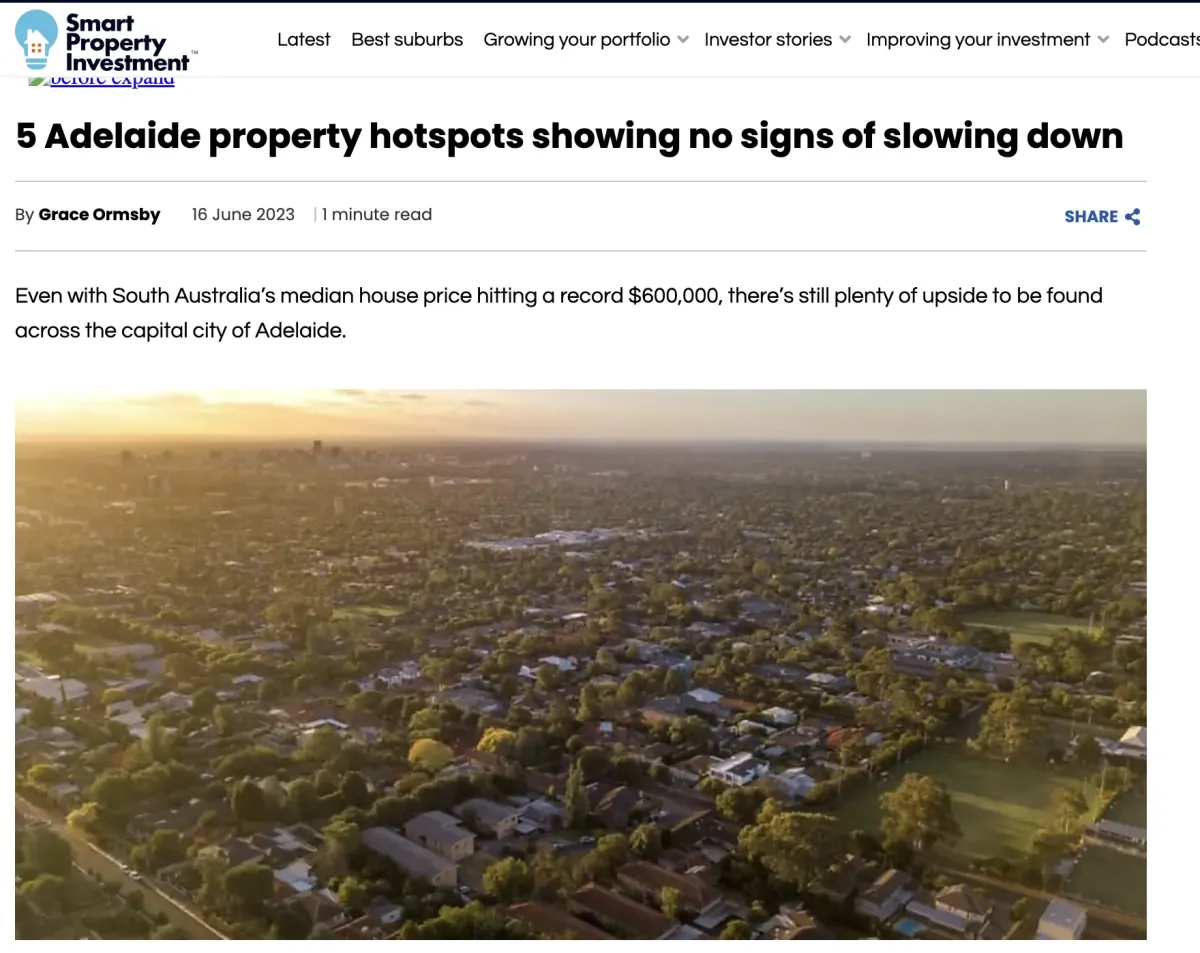
Even with South Australia’s median house price hitting a record $600,000, there’s still plenty of upside to be found across the capital city of Adelaide.
Smart Property Investment recently reported on the nearly 10 per cent lift in property prices seen across South Australia over the past 12 months, with the Real Estate Institute of South Australia having noted that the state’s market “has continued to show its resilience and strength”.
In a new document from Hotspotting, the Top 5 Adelaide Hotspot Report, that perspective is affirmed.
It’s a sentiment shared by Hotspotting general manager Tim Graham, who also noted that South Australia’s steadiness of performance “has become its trademark”.
“Adelaide, after two years — from mid-2020 to mid-2022 — in which sales activity kept rising and rising, is now dominated by locations where sales volumes are no longer increasing but have remained consistent at high levels,” he said.
What that means is that the city has “continued to deliver price growth at a time when larger cities have had falling prices”.
News.com.au - 14th June 2023
A new report by leading property analysts at Hotspotting.com.au suggests investors seeking affordable property with prospects in the next six months should look further afield than their own backyards.
The Hotspotting report names five regional ‘cheapies with prospects’ across the country that meet the criteria of having affordable buy-in prices, solid rental returns, potential for price growth and growing populations.
It comes as new figures show Australia faces a population boom fuelled by a rise in net overseas migration of up to 1.755 million by 2028.
Regional areas are predicted to grow at phenomenal speeds, particularly in Queensland as migrants form NSW and Victoria seek out more affordable living options.
Hotspotting general manager Tim Graham said many regional areas had outperformed the big cities in the past three years.
“Affordable prices, higher yields and superior growth: it’s a win-win-win situation for investors,” Mr Graham said.
“Of course, not every regional centre in the nation is a future hotspot. A location needs to have more to offer than cheap real estate to be featured in this report — it must also have growth drivers likely to lead to capital growth over time.”
The Age - 6th June 2023
Hotspotting general manager Tim Graham said Canning was on the real estate radar with its strong population growth, affordable housing close to the CBD, new train stations with links to the CBD and a $76 million 10-year city centre regeneration program.
He said suburbs experiencing growing demand included Cannington (median house price $435,000) as well as Lynwood ($460,000) and Parkwood ($555,000).
“Many of these locations have median house prices in the $400,000s and $500,000s, but riverfront suburbs like Rossmoyne, Shelley and Riverton are more expensive,” he said.
Most City of Canning suburbs recorded moderate to strong growth in their median house prices in 2022.
Bentley, Cannington, East Cannington, and Queens Park – all with median house prices between $435,000 and $510,000 – each recorded more than 100 annual house sales, according to Hotspotting analysis.
The Property Tribune - 29th May 2023

Australian property market predictions: Top 5 affordable locations with potential
continued in 2023.
“The market started to turn around in 2020, at the start of the pandemic, with its busy market coupled with strong buyer demand continuing since then,” he said.
Graham added many of Perth’s stand-out municipalities are also at the affordable end of the market, including the City of Canning, which can attribute its popularity to its cluster of affordable suburbs with excellent amenities, green space and train links.
Many suburbs were noted to have affordable median prices between $435,000 to $555,000, with the suburb also home to more expensive, riverfront locales, too.
Australian Broker News - 30 May 2023
Tim Graham, Hotspotting general manager, said regional Australia had generally performed better than capital cities due to their more affordable options for all kinds of buyers.
“With technology allowing more people to work remotely, more people have opted out of the big, congested, expensive cities and moved to smaller cities and to regional areas,” Graham said. “This has been happening for the past decade and has become more visible in the past three years or so.”
“Now, following massive price growth in 2020 and 2021 in particular, some of these regional locations – such as Byron Bay, the Sunshine Coast, the Mornington Peninsula and the Southern Highlands – have become so expensive that they’re no longer attracting large numbers of new residents.”
Latest Blog Update
Stay up to date with the latest hotspots in Australia by following our blog and socials.
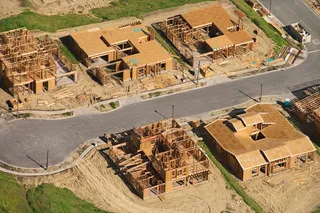
Housing Targets Slip Further From Reach
Read the latest real estate & finance news, property market trends and housing information and insights. ...more
hotspotting
October 15, 2026•1 min read
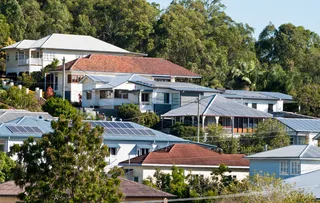
Listings Rise in Smaller Capitals
Read the latest real estate & finance news, property market trends and housing information and insights. ...more
hotspotting
October 15, 2026•1 min read
Rent Growth Slows
Read the latest real estate & finance news, property market trends and housing information and insights. ...more
hotspotting
October 15, 2026•1 min read
Contact Us

© Australian Hotspot Advocacy 2026 - All rights reserved.